Caiman
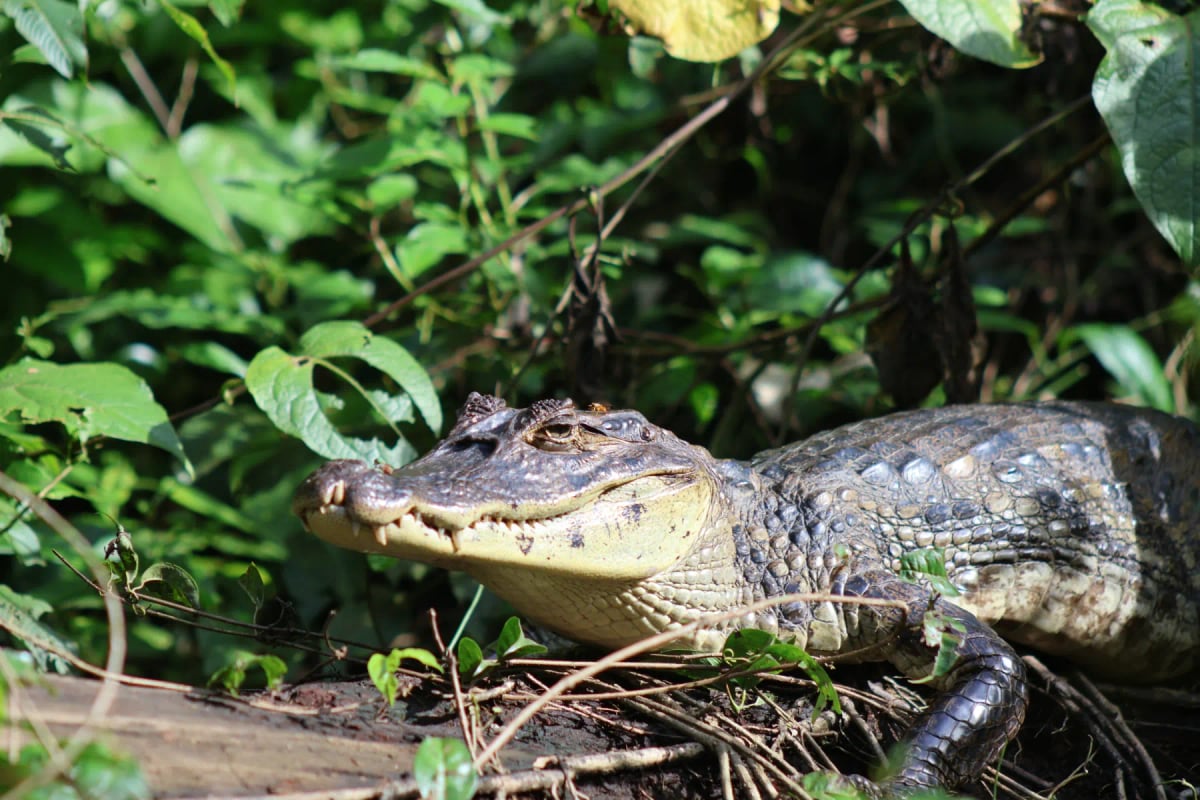
Caimans are crocodilians native to Central and South America, with the spectacled caiman being the most widespread species across the region. They occupy rivers, lakes, swamps, and flooded grasslands from Mexico down to northern Argentina. Adults typically measure between one and a half and two and a half meters, though the black caiman can reach up to five meters, making it one of the largest predators in the Amazon basin. Caimans are opportunistic hunters that target fish, amphibians, birds, crustaceans, and small mammals. Juveniles begin with insects and aquatic invertebrates before graduating to larger prey. Mostly nocturnal, they spend the daylight hours basking on banks to regulate body temperature. Although listed as Least Concern overall, several populations have declined due to habitat loss and commercial hunting for their skins. They remain a keystone species in the wetland ecosystems they inhabit.
Habitat and distribution
Caimans occupy one of the broadest ranges of any crocodilian group in the Americas, stretching from southern Mexico through Central America and across nearly all of South America to northern Argentina. They are found in a wide variety of freshwater environments, including slow rivers, oxbow lakes, seasonally flooded savannas, mangrove fringes, and dense swamp forest. The spectacled caiman is the most widespread species and tolerates degraded or human-modified habitats better than most of its relatives. The black caiman is largely restricted to the Amazon basin, while the yacare caiman dominates the Pantanal wetlands of Brazil, Bolivia, and Paraguay. Elevation plays a role in their distribution too, as most species prefer lowland areas below 1,000 meters, though some populations have been recorded at higher altitudes in Andean foothills.
Appearance
At first glance, caimans are easy to mistake for true crocodiles, but several features set them apart. Their snouts tend to be broader and more rounded, and the lower teeth are not visible when the mouth is closed, unlike in crocodiles. Most species fall between 1.5 and 2.5 meters in length, though the black caiman is a significant exception, capable of reaching up to five meters and weighing over 300 kilograms. The body is armored with rows of osteoderms, which are bony plates embedded beneath the scales of the back and belly. The spectacled caiman gets its name from a bony ridge between the eyes that resembles the bridge of a pair of spectacles. Coloration varies by species and age, ranging from olive green to dark brown, with juveniles often showing distinct banding on the tail.
Diet
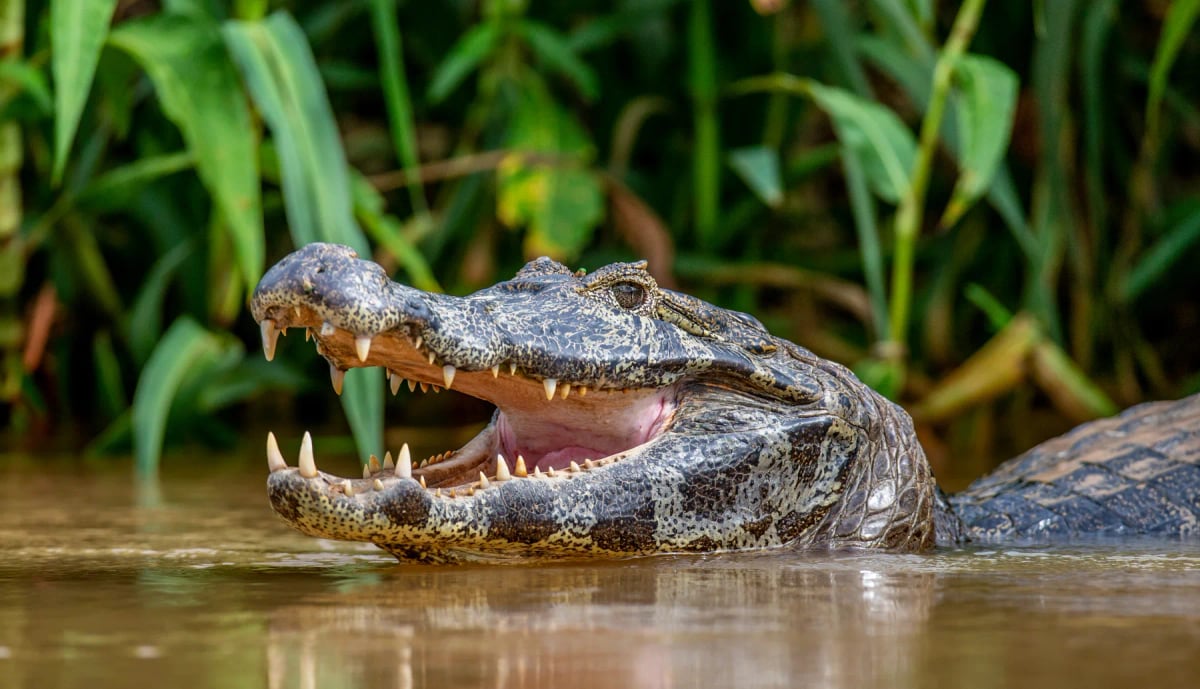
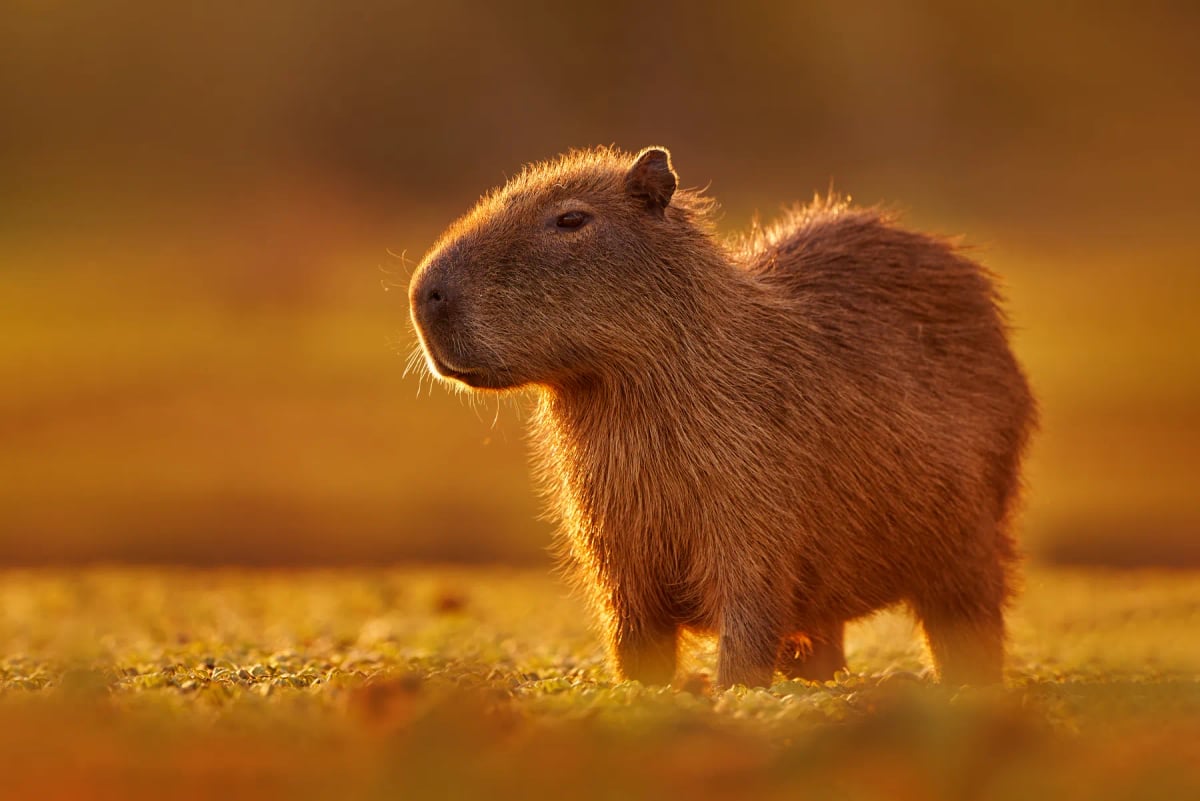
Feeding habits shift considerably as caimans grow. Hatchlings and juveniles focus on insects, aquatic invertebrates, and small crustaceans, which provide the protein needed for rapid early growth. As they mature, their prey range expands to include fish, amphibians, water birds, and small to medium-sized mammals that come to the water's edge to drink. Adults are opportunistic predators and will take whatever is available, with fish making up the bulk of the diet for most species. The black caiman, by contrast, is powerful enough to tackle larger prey such as capybara, deer, and even anacondas. Caimans swallow stones, known as gastroliths, which are thought to aid digestion and may also help control buoyancy while swimming. Feeding activity peaks at night, when prey animals are less alert and the caiman's ambush tactics are most effective.
Behavior
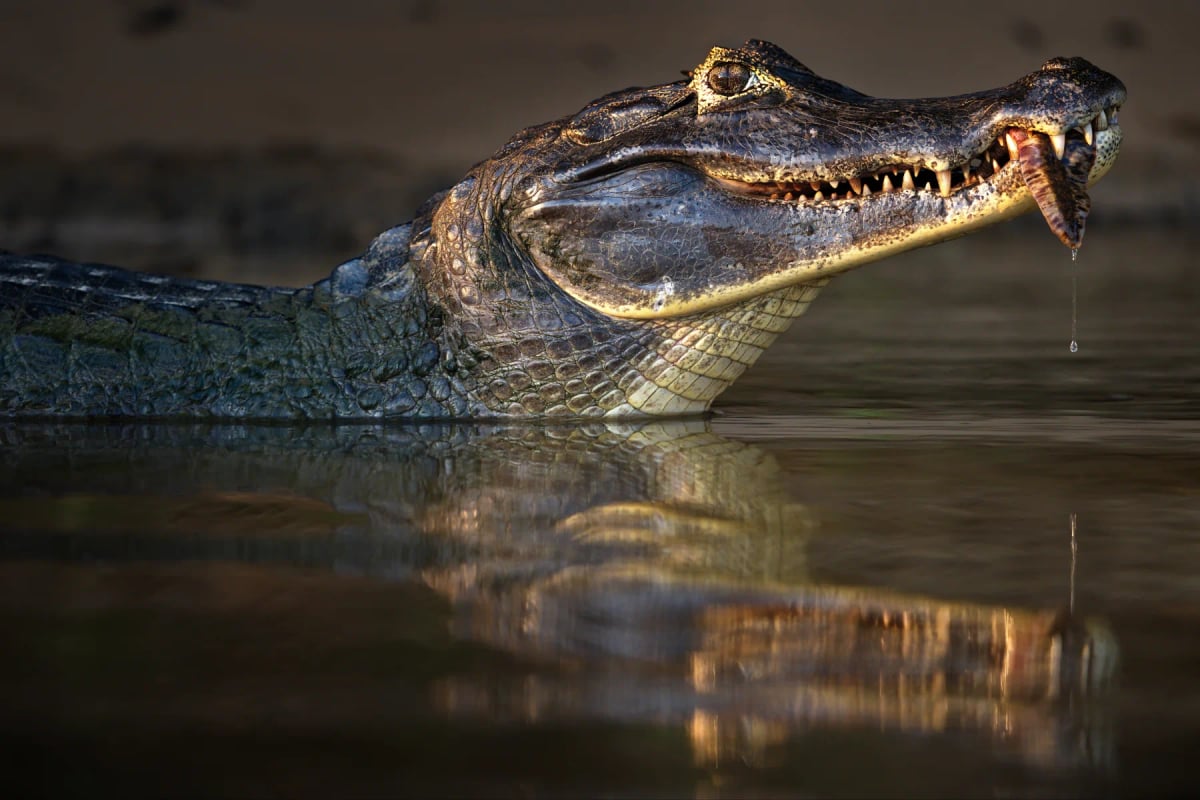
Being ectothermic, caimans depend on external heat sources to regulate their body temperature, and basking on riverbanks or floating at the water surface during the day is essential to that process. Once the sun sets, they become far more active, using the cover of darkness to ambush prey. Although adults are largely solitary outside of the breeding season, dry season conditions can force dozens or even hundreds of individuals to congregate around the same shrinking water bodies. Females show notable maternal care, constructing mound nests from vegetation and soil, guarding them through the incubation period, and then carrying hatchlings to the water in their mouths. Vocalizations play an important role in communication, particularly among young calling to their mother and during the breeding season when males compete for females. Territory disputes between males can turn aggressive.
Conservation
The IUCN lists most caiman species as Least Concern, but this broad status masks real pressures facing certain populations and species. Throughout the twentieth century, commercial hunting for their skins drove dramatic declines across much of the range, and some populations have never fully recovered. The black caiman was once pushed close to local extinction in parts of the Amazon before protections helped numbers rebound. Today, the greatest ongoing threats are wetland drainage for agriculture, water pollution, and the conversion of floodplains into farmland. The dwarf caimans of the genus Paleosuchus are considered more secure due to their preference for remote forest streams. Regulated harvesting programs in countries such as Venezuela and Colombia have shown that sustainable use can coexist with conservation when properly managed. Caimans remain keystone predators whose removal would unbalance the wetland ecosystems they inhabit.
Where it is found
The Caiman can be found in places such as:
Researched and written by Juan Pablo. Sources: IUCN Red List, scientific literature and regional field guides. Last updated: .
Technical factsheet


Frequently Asked Questions
What do caimans eat?
Caimans are opportunistic predators whose diet changes as they grow. Juveniles feed on insects, small crustaceans, and aquatic invertebrates, while adults target fish, amphibians, water birds, and mammals that venture near the water. Fish make up the bulk of most adult diets. The black caiman is powerful enough to take large prey such as capybara and deer. Feeding peaks at night, when ambush conditions are most favorable.
Where do caimans live?
Caimans are found across Central and South America, from southern Mexico to northern Argentina. They inhabit slow rivers, lakes, swamps, flooded savannas, and mangrove edges. Most species prefer lowland areas, though some populations live in the foothills of the Andes. The spectacled caiman has the widest range and adapts well to habitats modified by humans, while the black caiman is largely confined to the Amazon basin.
Are caimans dangerous to humans?
Most caiman species pose a low risk to healthy adults, as they are generally shy and retreat into water when approached. However, the black caiman, which can exceed five meters in length, is large enough to be genuinely dangerous. Attacks on humans are rare but have been recorded, particularly in areas where the animals have lost their natural wariness. Children and small adults near riverbanks face a greater risk than larger individuals.
How big do caimans get?
Size varies considerably depending on the species. Most caimans reach between 1.5 and 2.5 meters when fully grown. The black caiman is the clear exception, capable of reaching up to five meters and weighing over 300 kilograms, making it one of the largest predators in the Amazon basin. At the other end of the scale, the dwarf caimans of the genus Paleosuchus rarely exceed 1.6 meters, making them among the smallest crocodilians in the world.
Why do caimans swallow stones?
Caimans deliberately swallow stones, known as gastroliths, and researchers believe these serve at least two purposes. First, the stones help grind up tough food in the stomach, aiding digestion much like a built-in grinding mechanism. Second, the added weight is thought to improve buoyancy control, helping the animal stay submerged at a comfortable depth without expending extra energy. This behavior is shared with several other reptiles and some birds.
Are caimans endangered?
Most caiman species are listed as Least Concern by the IUCN, but that overall status covers significant variation between species and regions. Commercial hunting for their skins caused serious population declines throughout the twentieth century, and some populations have never fully recovered. Today the main threats are wetland drainage, water pollution, and the conversion of floodplains to farmland. The black caiman was once close to local extinction in parts of the Amazon before legal protections allowed numbers to recover.
Do caimans take care of their young?
Yes, and to a degree that surprises many people. Female caimans build mound nests from soil and rotting vegetation, and the heat generated by decomposition helps incubate the eggs. The female guards the nest throughout the incubation period and responds to the calls of hatchlings by opening the nest and carrying the young to the water in her mouth. She may continue to watch over the group of juveniles for several weeks after hatching.