African Grey Parrot
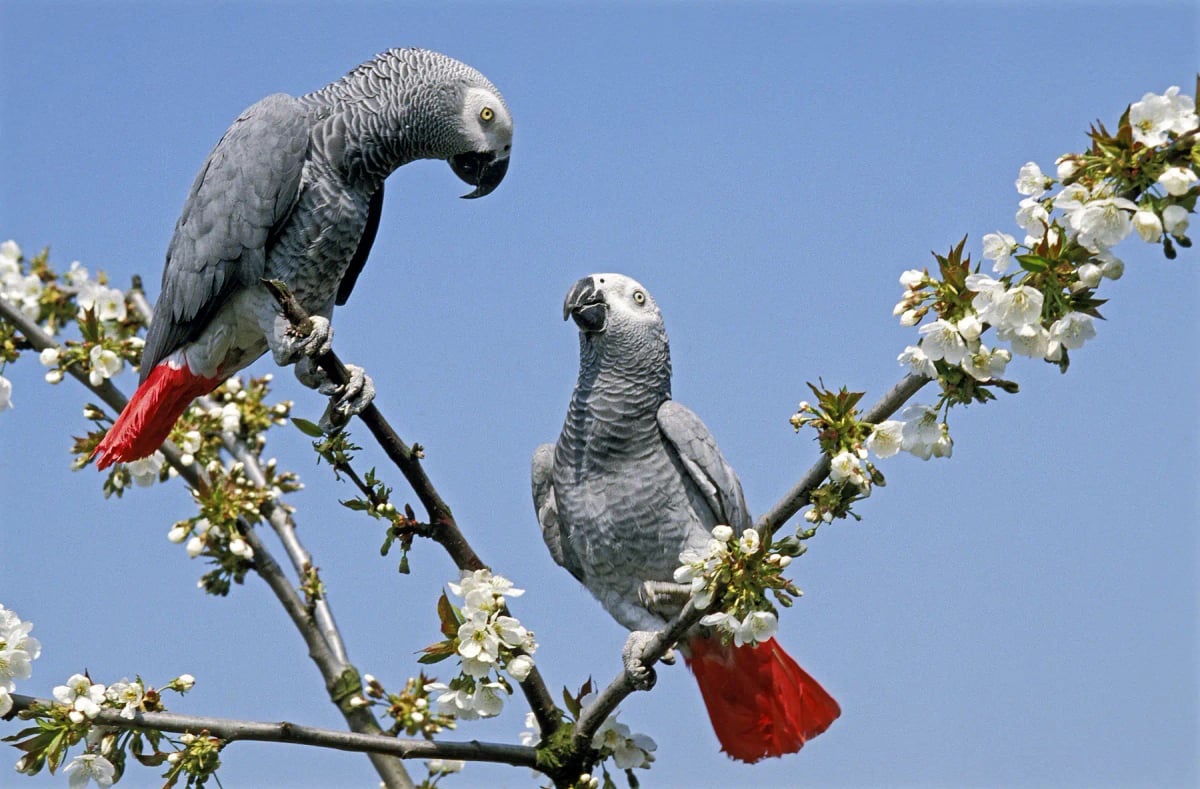
The African grey parrot (Psittacus erithacus) also spelled African gray parrot and known as the Congo grey parrot, is native to the rainforests and forest edges of Central Africa and the Gulf of Guinea. One of the most cognitively advanced birds ever studied, it can learn hundreds of words, associate them with meaning and solve problems at a level comparable to young children. Its grey plumage, scarlet tail and pale face are immediately recognizable. Highly social in the wild, it forms large communal roosts and maintains strong bonds within flocks. It is listed as Endangered due to relentless trapping for the pet trade and accelerating habitat loss from commercial logging.
African grey, Congo grey and Timneh parrot
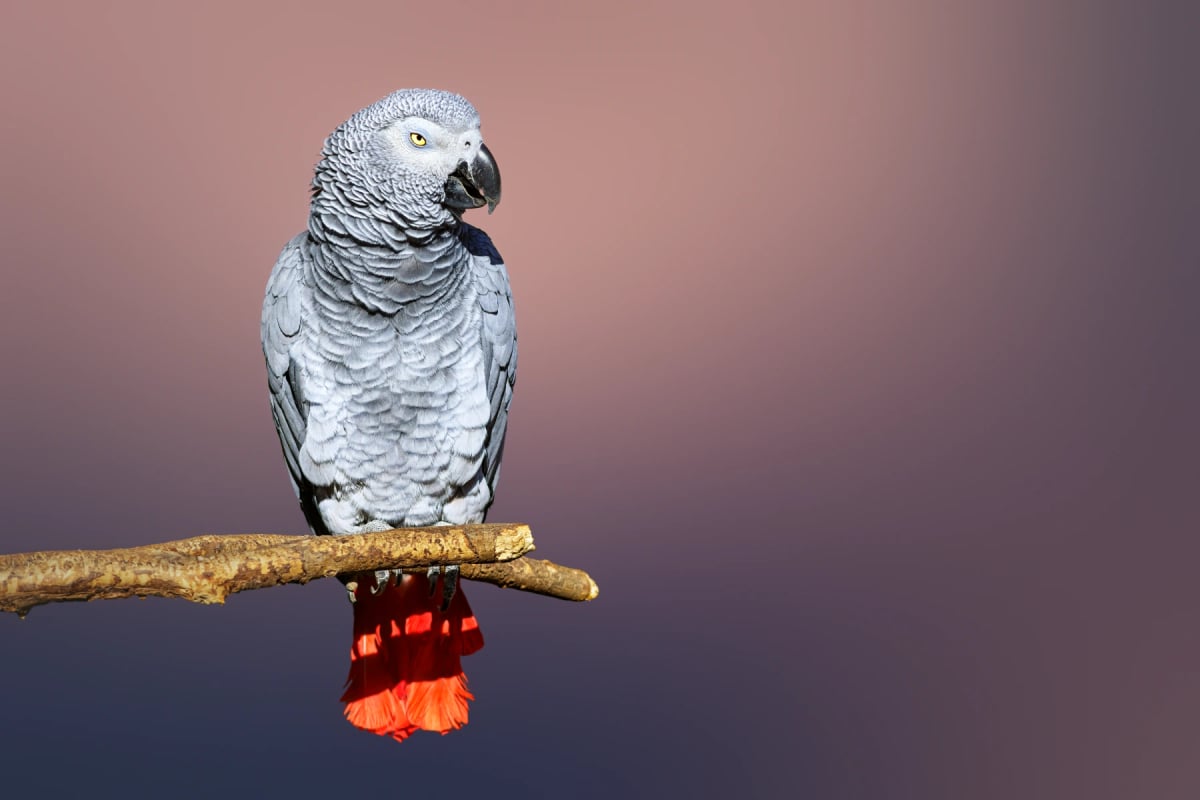
The African grey parrot is written both ways in English: grey in British English and gray in American English, so African grey and African gray are the same bird. Its scientific name is Psittacus erithacus, and in Spanish it is called loro gris africano or yaco. Until 2012 it also included a smaller, darker West African form, which has since been recognized as a separate species, the Timneh parrot, Psittacus timneh. The two are easy to tell apart. The Congo grey, the bird on this page, is larger, paler grey and has a bright scarlet tail and an all black bill. The Timneh is smaller, darker charcoal grey, with a dull maroon tail and a horn colored upper bill. The Congo grey lives from southeastern Côte d'Ivoire and Ghana east across Nigeria and the Congo Basin to western Kenya and Tanzania, while the Timneh lives farther west, from Guinea-Bissau and Sierra Leone to western Côte d'Ivoire. Both are Endangered, and both were heavily trapped for the pet trade.
Habitat and distribution
African grey parrots inhabit the lowland rainforest belt of Central and West Africa, with the largest concentrations found in the Congo Basin. They use primary forest, forest edges, gallery forests along rivers and secondary growth, generally avoiding elevations above 2,200 meters. Outside dense forest they are often seen flying between feeding and roosting sites at dusk, sometimes in flocks of hundreds. The species has broad habitat tolerance but depends on mature forest for nesting, using natural cavities in large old trees that require decades to develop and cannot be replaced by secondary growth.
Diet
African grey parrots feed primarily on seeds, fruits, nuts and berries in the forest canopy, with oil palm fruits being particularly important throughout much of their range. They also consume flowers, leaf buds and bark and occasionally take insects and snails. Their powerful hooked beak can crack open hard seed shells that most other birds cannot access. They travel considerable distances daily between roosting areas and productive feeding trees, and their seed dispersal through dung contributes modestly to forest regeneration across the broad territories they cover each day.
Intelligence
The cognitive abilities of African grey parrots are among the most extensively documented of any bird. Laboratory studies, most famously by researcher Irene Pepperberg with a bird named Alex, showed that grey parrots can learn over 100 object labels, understand concepts of color, shape and number, and answer questions by combining words in novel ways. They have demonstrated problem solving, causal reasoning and a basic understanding of zero. In the wild, this intelligence is reflected in complex social communication, individual vocal signatures and the ability to remember food source locations across large territories.
Behavior
African grey parrots are highly social outside the breeding season, roosting in communal sites that may contain hundreds of individuals. They pair for life and both parents participate in raising chicks. Communication within flocks is complex, with individuals developing unique contact calls and learning vocalizations from their social group over time. They are largely arboreal and rarely descend to the ground. During the heat of the day they rest quietly in the canopy, becoming active again in late afternoon as they move toward feeding areas before returning to communal roosts at dusk.
Conservation
The African grey parrot has declined severely across its range due to two compounding threats: illegal trapping for the pet trade and habitat loss from commercial logging. Hundreds of thousands of birds were exported from Africa through the 1990s and 2000s, and illegal capture continues despite a CITES Appendix I listing in 2016 that banned international commercial trade. Deforestation removes nesting and foraging habitat, and the species' dependence on mature forest makes it particularly sensitive to logging pressure. The collapse has been worst in West Africa: in Ghana, surveys found that about 99 percent of grey parrots had disappeared since 1992, leaving only scattered birds in a few forest reserves. The global population is very uncertain, with estimates ranging from about 0.6 to 13 million birds, most of them in the Congo Basin. The species was uplisted to Endangered by the IUCN in 2016, the same year the CITES ban was agreed. Captive breeding programs and community education initiatives are part of conservation strategies, but wild populations continue to decline across much of the range.
Where it is found
The African Grey Parrot can be found in places such as:
Researched and written by Juan Pablo. Sources: IUCN Red List, scientific literature and regional field guides. Last updated: .
Technical factsheet


Frequently Asked Questions
How many African grey parrots are left in the world?
Nobody knows exactly. Estimates for the wild population range widely, from about 0.6 million to 13 million birds, because the species lives in vast, remote forests that are hard to survey. What is clear is that numbers have fallen sharply: in Ghana around 99 percent of grey parrots disappeared between 1992 and 2014, and declines have been reported in many other countries. Most of the remaining birds live in the Congo Basin, above all in the Democratic Republic of the Congo, which is why the IUCN lists the species as Endangered.
Is it African grey or African gray?
Both are correct. Grey is the usual British spelling and gray the American one, so African grey parrot and African gray parrot refer to the same bird, Psittacus erithacus. Ornithological lists often use Grey Parrot or Congo Grey Parrot. The name comes from its plumage, a soft ash grey with a scalloped pattern, set off by a bright scarlet tail. The Timneh parrot, a darker West African relative with a maroon tail, used to be called the Timneh African grey but is now considered a separate species.
How big is an African grey parrot?
The African grey is a medium-sized, stocky parrot about 33 centimeters long, with a wingspan of around 46 to 52 centimeters, and it weighs roughly 400 to 500 grams. It has a large head, a strong black hooked bill and a short, square scarlet tail. Males and females look almost the same, although males tend to have a slightly larger head and darker plumage. Young birds have dark grey eyes that turn pale yellow as they mature, which is one way to tell a juvenile from an adult.
Do African grey parrots talk in the wild?
Not with human words, but they are highly vocal. Wild grey parrots use a large variety of whistles, clicks and screeches to keep in contact with their flock and partner, and each bird has its own contact call. A study in Cameroon found that wild greys also imitate the calls of other birds and even bats, with some individuals using up to about 200 different sounds. Their famous ability to copy human speech is the same talent for vocal learning, which in the wild helps them fit into the local dialect of their flock.
Who was Alex the parrot?
Alex was an African grey parrot studied by the scientist Irene Pepperberg for about 30 years, from 1977 until his death in 2007. Pepperberg bought him in a pet shop in Chicago, and his name came from her Avian Learning EXperiment. Alex learned more than 100 words and could name objects, colors, shapes and materials, count up to six and understand concepts such as same and different, bigger and smaller, and even something close to zero. His work changed how scientists think about bird intelligence. His last words to Pepperberg were reported as: You be good, see you tomorrow. I love you.
How intelligent is the African grey parrot?
The African grey parrot is considered the most cognitively advanced bird ever studied. Laboratory research, most famously by scientist Irene Pepperberg with a bird named Alex, showed that grey parrots can learn over 100 object labels, understand concepts of color, shape and number, and combine words in novel ways. They have demonstrated causal reasoning and a basic grasp of zero, abilities comparable to those of young children. In the wild, this intelligence supports complex social communication and spatial memory across large territories.
Where does the African grey parrot live?
The African grey parrot is native to the rainforests and forest edges of Central and West Africa. The Congo Basin holds the largest remaining populations, with the Democratic Republic of Congo being the global stronghold. The species also occurs in Gabon, Cameroon, the Republic of Congo, Côte d'Ivoire, Ghana, Nigeria, Uganda, Rwanda, Burundi, Angola and the western edges of Kenya and Tanzania. The Timneh parrot of West Africa, once considered the same bird, is now a separate species. It depends on mature primary forest for nesting, using natural cavities in large old trees that take decades to develop.
Can African grey parrots talk?
African grey parrots are the most capable talking birds known to science. They can learn hundreds of words and, unlike most parrots that mimic without understanding, grey parrots can use words in context and associate them with real meaning. They have been documented answering questions, identifying objects by color or shape, and even expressing preferences. This ability reflects their highly developed vocal learning system and social intelligence, both of which are essential for communication within their complex wild flock structures.
Why is the African grey parrot endangered?
The African grey parrot is listed as Endangered by the IUCN due to two compounding threats: massive trapping for the international pet trade and habitat loss from commercial logging and agriculture. Hundreds of thousands of birds were exported from Africa through the 1990s and 2000s. A CITES Appendix I listing in 2016 banned international commercial trade, but illegal capture continues. Deforestation removes nesting sites in old trees that take decades to form and cannot be replaced by secondary growth.
How long do African grey parrots live?
In the wild, African grey parrots live up to around 23 years. In captivity, with proper care, they can live considerably longer, with some individuals reportedly reaching 40 to 60 years, though the higher end of those figures is difficult to verify. Their long lifespan, combined with their high intelligence and strong social bonds, means that captive grey parrots require substantial long term commitment and social stimulation. In the wild, experienced older birds contribute significantly to flock navigation and communication.
What does the African grey parrot eat?
The African grey parrot feeds primarily on seeds, fruits, nuts, and berries in the forest canopy. Oil palm fruits are particularly important throughout much of its range. It also consumes flowers, leaf buds, bark, and occasionally insects and snails. Its powerful hooked beak can crack open hard seed shells that most other birds cannot reach. Each day it travels considerable distances between roosting areas and productive feeding trees, contributing modestly to forest regeneration through seed dispersal.