Tapir
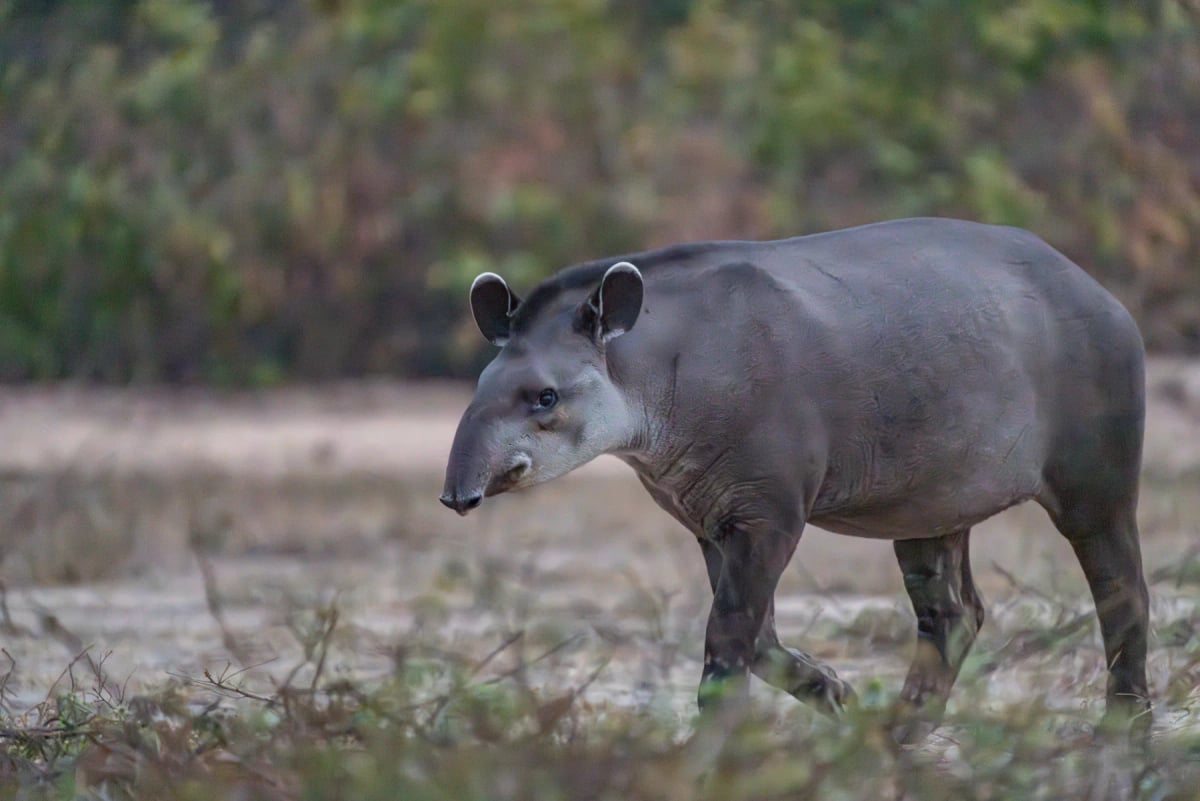
Tapirs are large, stocky mammals that have roamed Earth largely unchanged for millions of years, making them one of the oldest surviving groups of large animals. Four species are alive today: the South American tapir, Baird's tapir of Central America, the mountain tapir of the Andes, and the Malayan tapir of Southeast Asia. All four share a short, flexible snout that works like a small trunk, helping them pull leaves, shoots, and fruit into their mouths with precision. They are strong swimmers and spend a good deal of time in rivers and lakes, cooling off and escaping predators. Tapirs live alone and are most active at night. As they wander through the forest eating fruit, they deposit seeds far from the parent plant, making them vital for forest regeneration. Three of the four species are classified as Endangered or Vulnerable by the IUCN.
Species
Four species of tapir are alive today, and each occupies a distinct part of the world. The South American tapir (Tapirus terrestris) is the most widespread, roaming lowland forests and grasslands across much of South America. Baird's tapir (Tapirus bairdii) is the largest animal native to Central America and ranges from Mexico down into Colombia. The mountain tapir (Tapirus pinchaque) lives at high elevations in the Andes, making it the only tapir adapted to cold cloud forest conditions. The Malayan tapir (Tapirus indicus) is the sole species found in Asia, recognizable by the bold white patch that covers its midsection. Despite living on opposite sides of the world, all four share the same flexible snout, stout body, and broadly similar way of life.
Habitat and distribution
Across their range, tapirs are tied closely to water. They favor tropical and subtropical forests, flooded grasslands, and the edges of rivers and lakes, where they drink, cool down, and take refuge from threats. The South American tapir is at home in the Amazon Basin and the Pantanal wetlands. Baird's tapir favors lowland rainforests and swampy areas from southern Mexico to northwestern South America. The mountain tapir is found at elevations between roughly 2,000 and 4,700 metres in the Andes of Colombia, Ecuador, and Peru. The Malayan tapir inhabits lowland rainforests in Thailand, Malaysia, Sumatra, and parts of Myanmar. All four species depend on intact, undisturbed forest and reliable access to fresh water to survive and reproduce.
Diet
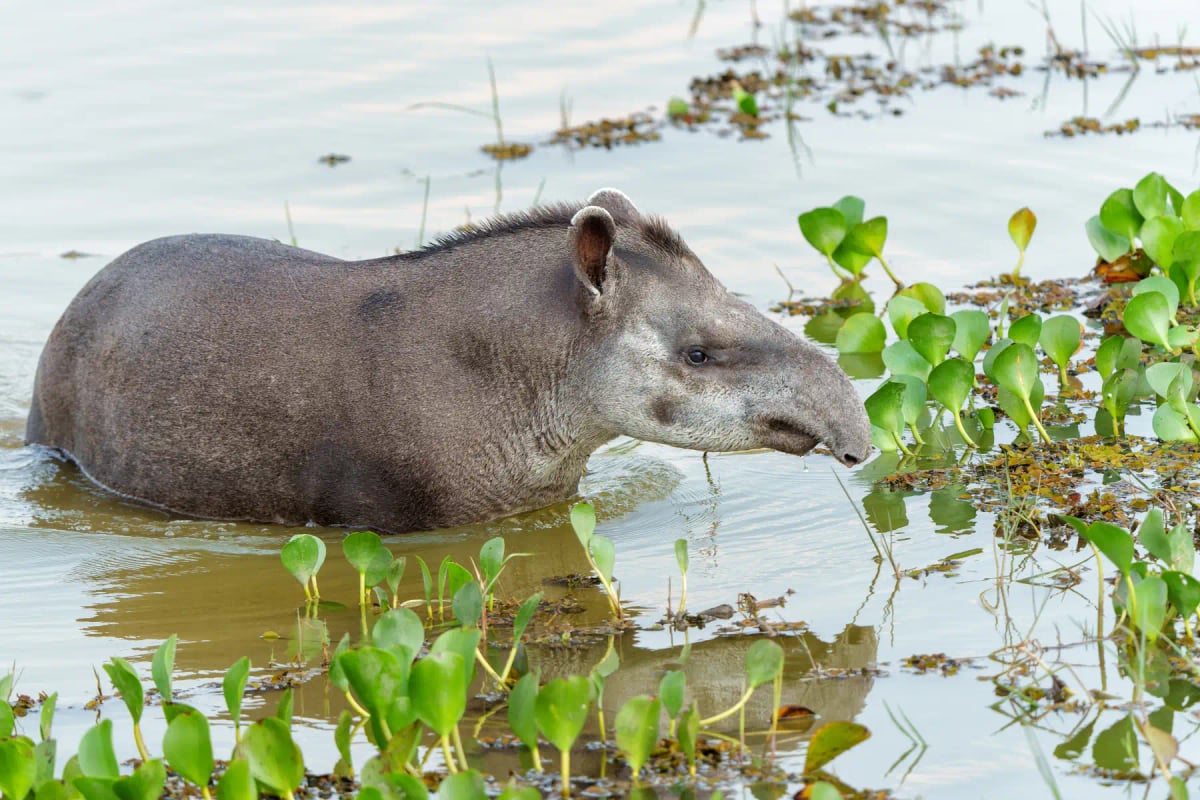
Tapirs are herbivores with a broad and flexible diet. They browse on the leaves, stems, and shoots of a wide variety of plants, and they eat fallen fruit whenever it is available. Their short, muscular snout acts much like a small trunk, bending and curling to strip leaves from branches or pick up fruit from the forest floor with surprising precision. Aquatic plants also feature in their diet, and tapirs will wade into shallow water to feed. Because they swallow seeds whole and travel considerable distances each night, they deposit those seeds far from where they were eaten. This makes tapirs among the most important seed dispersers in their ecosystems, helping forests regenerate and maintain the diversity of plant species that many other animals depend on.
Behavior
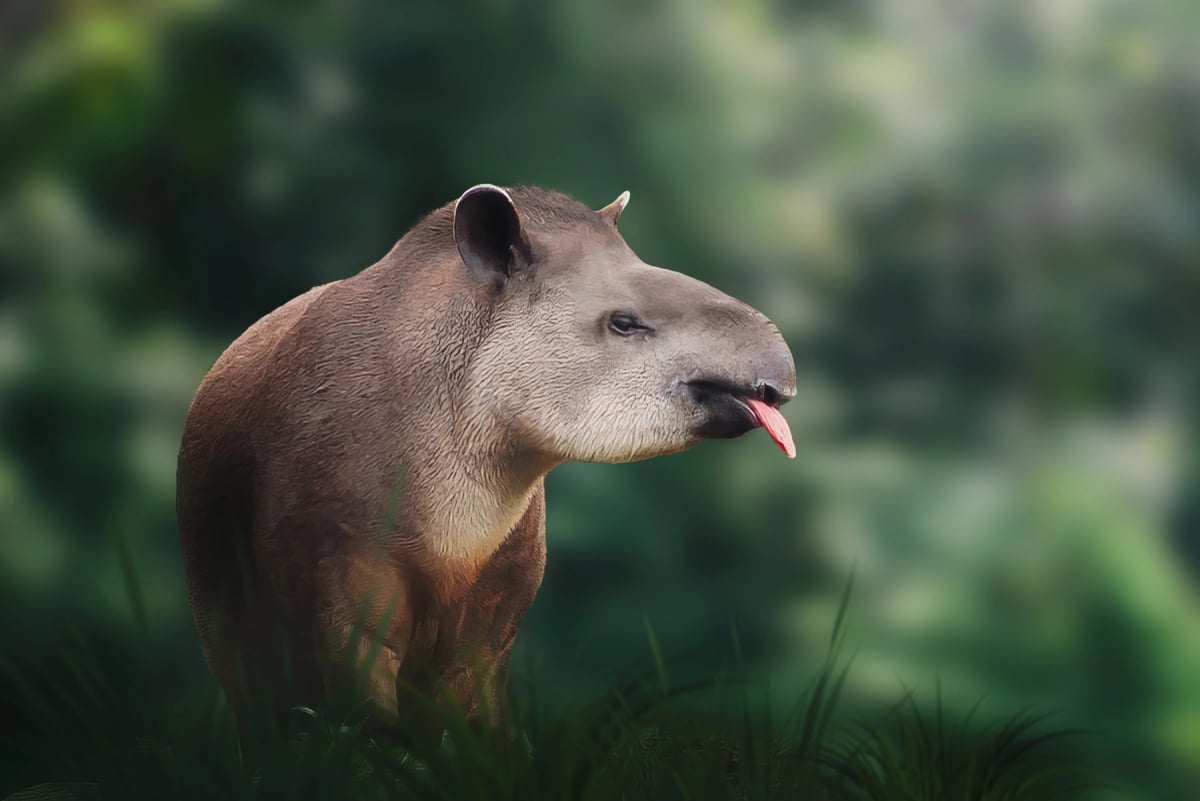
Solitary by nature, tapirs spend most of their lives alone, coming together only to mate. They are active mainly at night and during the hours around dawn and dusk, resting in dense cover during the heat of the day. Water plays a central role in their daily routine. Tapirs are powerful swimmers and will cross wide rivers with ease, diving below the surface to escape predators such as jaguars and pumas. Wallowing in mud or shallow water also helps them shed parasites and regulate their body temperature. Each individual maintains a home range that it marks with urine and spray. When alarmed, tapirs produce a high whistle and can move through thick undergrowth at a speed that surprises most people who encounter them in the wild.
Conservation
Three of the four tapir species are classified as Endangered on the IUCN Red List, while the South American tapir holds Vulnerable status. The greatest threats they face are the loss of forest habitat to agriculture and cattle ranching, hunting for meat and hides, and collisions with vehicles on roads that cut through their territory. Tapirs reproduce slowly, with females giving birth to just one calf at a time after a gestation period of around 13 months, so populations recover very gradually from any losses. Conservation efforts focus on protecting large forest reserves, creating wildlife corridors that link fragmented habitats, and working with local communities to reduce hunting pressure. In several countries, tapirs are a protected species under national law, though enforcement remains a challenge in remote areas.
Where it is found
The Tapir can be found in places such as:
Researched and written by Juan Pablo. Sources: IUCN Red List, scientific literature and regional field guides. Last updated: .
Technical factsheet




Frequently Asked Questions
What do tapirs eat?
Tapirs are herbivores that feed on leaves, stems, shoots, and fallen fruit. They use their flexible snout to strip leaves from branches or pick fruit off the forest floor. They also eat aquatic plants, wading into shallow water to reach them. Because they travel long distances each night and swallow seeds whole, they help spread plants across the forest, acting as one of nature's most effective seed dispersers.
Where do tapirs live?
Tapirs are found in two very separate parts of the world. Three species live in Central and South America, from southern Mexico to Argentina, while one species, the Malayan tapir, lives in Southeast Asia. All four prefer habitats close to water, including tropical forests, wetlands, and riverbanks. They need large areas of undisturbed forest to survive, which is why deforestation is such a serious threat to all four species.
Are tapirs good swimmers?
Yes, tapirs are excellent swimmers and genuinely love the water. They cross wide rivers with ease and can dive beneath the surface to escape predators like jaguars and pumas. Water is also central to their daily routine as they cool off in rivers and lakes during the hottest parts of the day and wade in to feed on aquatic plants. Their love of water is one of the most distinctive and well known aspects of their behavior.
Are tapirs endangered?
Three of the four tapir species are classified as Endangered by the IUCN: Baird's tapir, the mountain tapir, and the Malayan tapir. The South American tapir is listed as Vulnerable. The main threats are habitat loss due to farming and cattle ranching, hunting, and collisions with vehicles. Tapirs also reproduce slowly, with just one calf born after a pregnancy of around 13 months, so their populations take a long time to recover.
How long have tapirs existed on Earth?
Tapirs are among the oldest surviving large mammals on the planet. Their ancestors appeared over 50 million years ago, and the animals alive today look remarkably similar to those early relatives. While many large mammals have come and gone over millions of years, tapirs have remained largely unchanged, earning them the informal title of living fossils. Their survival across such an enormous stretch of time is a testament to how well suited their body plan is to life in the forest.
Do tapirs live alone or in groups?
Tapirs are solitary animals. Each individual spends most of its life alone, coming together with others only to mate. They are most active at night and around dawn and dusk, resting in dense cover during the day. Every tapir keeps its own home range, which it marks with urine. When threatened, they let out a sharp, high whistle and can sprint through thick undergrowth at a speed that catches most people off guard.
Why is the tapir's snout so special?
The tapir's short, flexible snout is one of its most remarkable features. It works much like a small trunk, bending and curling to grab leaves, pull shoots from branches, and pick up fruit from the ground with great precision. It is packed with muscles and sensitive nerve endings, making it a highly capable tool for finding and handling food. This distinctive snout is shared by all four species and is one of the clearest signs of how closely related they all are.