Giant Otter
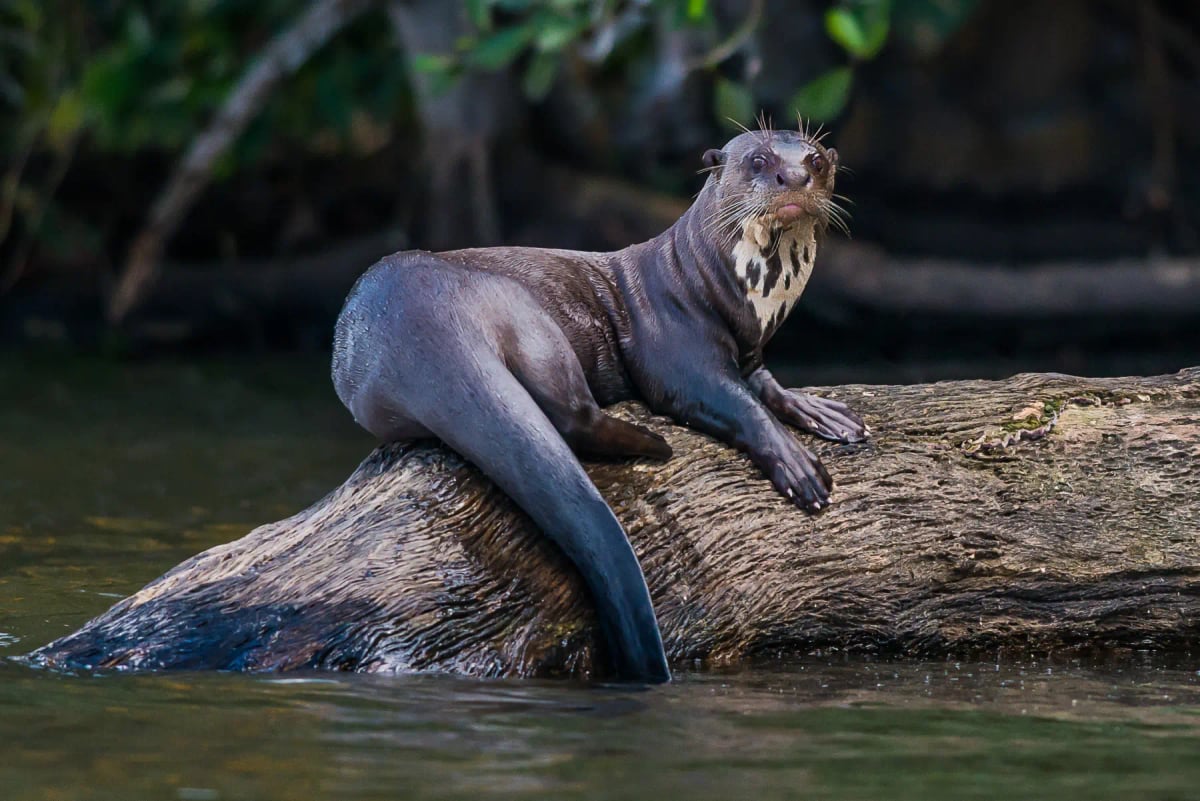
The giant otter (Pteronura brasiliensis) is the world's longest otter, with adults reaching up to 1.7 metres from nose to tail. Found across the Amazon and Orinoco river systems of South America, it favours slow rivers, oxbow lakes, and flooded wetlands where fish are plentiful. Unlike most mustelids, it is intensely social, living in tight family groups of up to eight members that share campsites, raise cubs together, and defend their stretch of river with a remarkable range of loud calls. Hunting takes place during daylight hours, with the whole group often working together to corner fish. Mercury contamination from gold mining, destruction of riverside forest, and decades of commercial hunting for its dense, velvety pelt have pushed the species to Endangered status. Fewer than 5,000 mature individuals are thought to remain across its entire range.
Habitat and distribution
Giant otters are found across a broad sweep of tropical South America, from Venezuela and the Guianas in the north to Bolivia and Brazil in the south. Their stronghold is the Amazon basin, though healthy populations also live in the Orinoco and Pantanal river systems. Within these landscapes, they seek out slow rivers, oxbow lakes, and seasonally flooded wetlands where fish gather in high numbers. Dense gallery forest along the riverbank matters too, providing safe spots for the campsites these animals build and maintain as a group. Populations have vanished from several parts of their former range, including Uruguay, Argentina, and much of the Atlantic coast of Brazil, largely due to hunting pressure in the twentieth century and ongoing habitat loss.
Diet
Fish make up the vast majority of the giant otter's diet, with species such as catfish and characins being among the most commonly taken prey. A single adult can consume up to three kilograms of fish in one day. Crabs, small snakes, and the occasional small caiman are also eaten when the opportunity arises. Hunting takes place during the day, which sets the giant otter apart from many other predators sharing its waterways. Groups often work together to herd schools of fish into shallow water, where individual otters dart in to make a catch. Prey is typically consumed at the surface while the otter floats on its back, holding the fish firmly with its front paws and eating headfirst.
Behavior
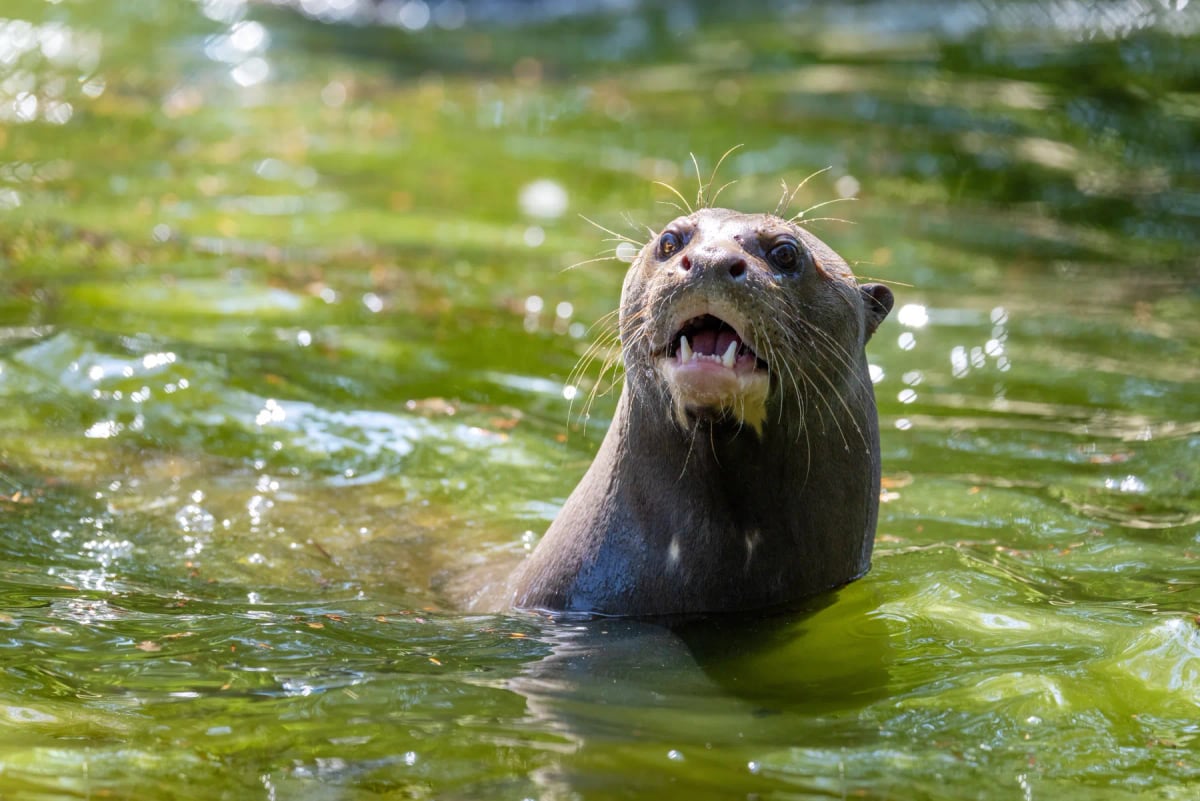
Few freshwater animals are as sociable as the giant otter. Family groups typically consist of a breeding pair and their offspring from several seasons, sometimes reaching eight or more individuals. The whole group shares a territory, which they mark and defend actively against neighbouring families. Communication is remarkably rich: researchers have identified more than twenty distinct vocalisations, used to express everything from alarm to greeting. Cubs are raised communally, with older siblings helping to watch and carry the young. The group also builds and regularly maintains campsites along the riverbank, clearing vegetation to create open resting areas. Activity is concentrated during daylight hours, and at night the family retreats together to a shared den, usually dug into a bank beneath the roots of riverside trees.
Threats
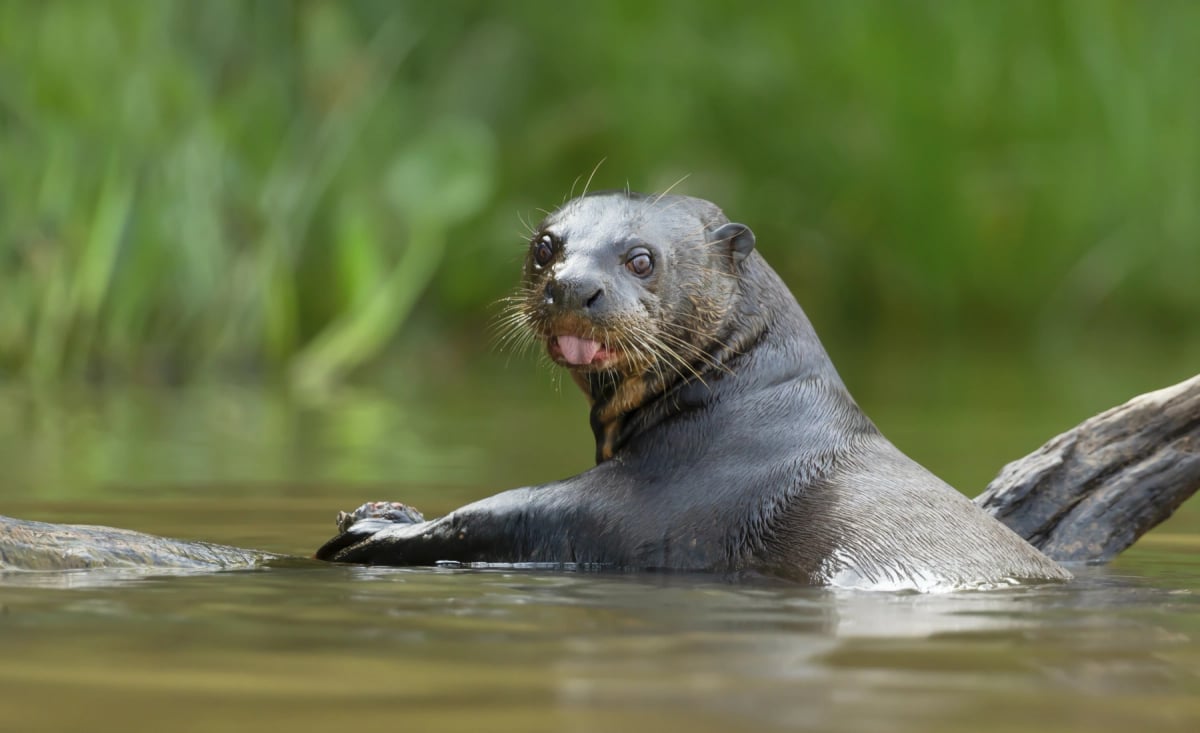
Commercial hunting for the giant otter's dense, velvety pelt nearly wiped the species out by the 1970s, when international trade in its fur was finally restricted. Today the pressures are different but no less serious. Gold mining across the Amazon releases mercury into rivers, which accumulates in fish and then in the otters that eat them, causing neurological damage and reducing reproductive success. Clearing of riverside forest removes the sheltered bank habitat that family groups depend on for campsites and dens. Overfishing reduces the availability of prey, and boat traffic disturbs breeding groups during sensitive periods. In some areas, otters are still killed by fishers who see them as competition. All of these pressures combine to make recovery difficult across much of the species' range.
Conservation
Listed as Endangered on the IUCN Red List, the giant otter receives legal protection in every country where it is found. The ban on international pelt trading, introduced through CITES in 1973, allowed some populations to begin recovering after decades of overexploitation. Protected areas such as Manu National Park in Peru and the Xingu basin reserves in Brazil provide critical refuges. Ongoing conservation work includes population monitoring through camera traps and photo identification of individuals by their unique throat markings. Community programmes in several river regions have had success in reducing conflict between otters and local fishers. Mercury pollution from illegal mining remains one of the hardest challenges to address, and tackling it will be essential for the survival of remaining populations over the long term.
Where it is found
The Giant Otter can be found in places such as:
Researched and written by Juan Pablo. Sources: IUCN Red List, scientific literature and regional field guides. Last updated: .
Technical factsheet

Frequently Asked Questions
How big do giant otters get?
Giant otters are the longest otters in the world, with adults reaching up to 1.7 metres from nose to tail. They can weigh between 22 and 32 kilograms. Males are typically larger than females, but both sexes are powerfully built, with broad, flat tails and large webbed feet that make them exceptional swimmers.
What do giant otters eat?
Fish are the cornerstone of the giant otter's diet. Adults can eat up to three kilograms of fish per day, targeting species like catfish and characins. They also eat crabs, small snakes, and occasionally small caimans. Groups often work together to herd fish into shallow water, then each otter grabs its own catch and eats it at the surface.
Where do giant otters live?
Giant otters are found in tropical South America, across countries including Brazil, Peru, Colombia, Bolivia, Venezuela, and Guyana. They favour slow rivers, oxbow lakes, and flooded wetlands where fish are easy to find. Dense forest along the riverbank is also important, as it provides shelter for the campsites these animals build and maintain as a family group.
Are giant otters dangerous to humans?
Giant otters are not typically a threat to people, but they are bold and vocal animals that will defend their territory and family if they feel threatened. There are recorded cases of otters confronting boats or people who get too close to a den site. In general, they are curious rather than aggressive, and attacks on humans are rare.
Why are giant otters endangered?
Giant otters were hunted heavily throughout the twentieth century for their dense, velvety fur, which brought them close to extinction. Today, mercury pollution from gold mining poisons the fish they eat and harms their health. Loss of riverside forest, overfishing, and boat traffic add further pressure. Fewer than 5,000 mature individuals are thought to remain across their entire range.
Do giant otters live alone or in groups?
Giant otters are among the most social freshwater mammals on the planet. They live in tight family groups that usually include a breeding pair and offspring from several seasons, sometimes totalling eight or more individuals. The whole family shares a territory, hunts together, raises cubs communally, and sleeps in a shared den at night.
How do giant otters communicate?
Giant otters have one of the richest vocal repertoires of any otter species. Researchers have identified more than twenty distinct calls, used for greeting family members, raising the alarm, or keeping the group together while hunting. Their loud, high calls can carry far across open water. They also use scent markings at campsites to signal their presence to neighbouring groups.