Anaconda
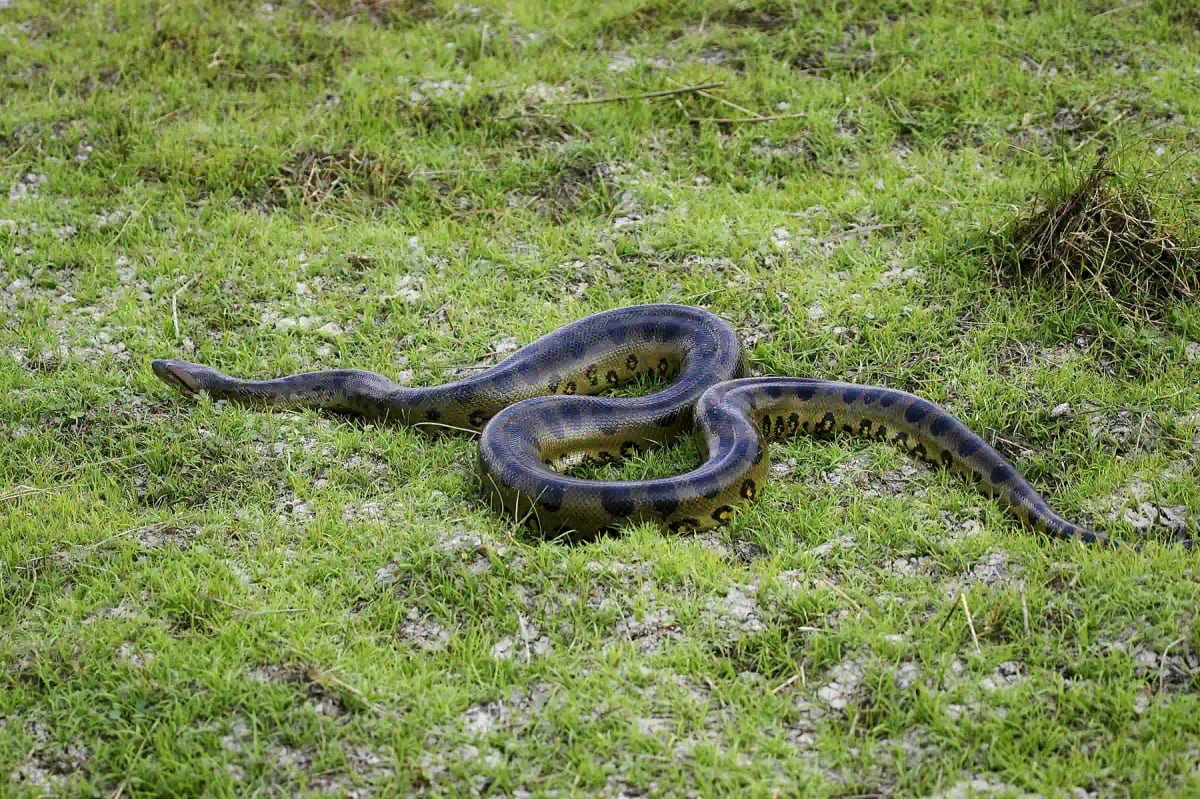
The green anaconda is the heaviest snake in the world and one of the longest. Females, far bigger than males, usually measure four to five meters, and the largest verified one, from Venezuela, was 5.21 meters and 97.5 kilograms. It lives in slow rivers, swamps and flooded plains of the Amazon and Orinoco basins, from Trinidad to the Pantanal. Anacondas are ambush predators that kill by constriction, taking fish, birds, caimans, capybaras and even deer. Despite their reputation, they almost never attack people. Habitat loss and persecution reduce local populations, but the species remains widespread.
Where are anacondas found?
The green anaconda lives in the Amazon and Orinoco river basins and in the upper Paraguay River, with populations in Bolivia, Brazil, Colombia, Ecuador, French Guiana, Guyana, Paraguay, Peru, Suriname, Venezuela and the island of Trinidad, its only home outside the mainland. It is never far from water: slow rivers, oxbow lakes, swamps, flooded forests and seasonally flooded grasslands. In the dry season anacondas gather in the pools that stay wet, which is when they are easiest to see. The best places are the Llanos of Venezuela and Colombia, the Pantanal and the clear rivers of Bonito in Brazil, the Llanos de Moxos in Bolivia and the Nariva Swamp in Trinidad. Inside the rainforest they are just as common, but much harder to find.
How long does an anaconda get?
The green anaconda is the heaviest snake in the world, but its length is often exaggerated. Females are much larger than males: an adult female usually measures four to five meters and weighs 30 to 70 kilograms, while males rarely pass three meters. The largest verified anaconda, measured by the biologist Jesús Rivas among more than 900 animals in the Venezuelan Llanos, was a female of 5.21 meters and 97.5 kilograms. A snake shot in Guyana in 1937 was reported at 5.9 meters and 163 kilograms, but it was never verified. Stories of anacondas of 10 or even 20 meters, like the one told by the explorer Percy Fawcett, have never been confirmed, and old rewards for a live anaconda of nine meters were never claimed. The reticulated python of Asia is longer, but much lighter.
Green anaconda and the other anacondas
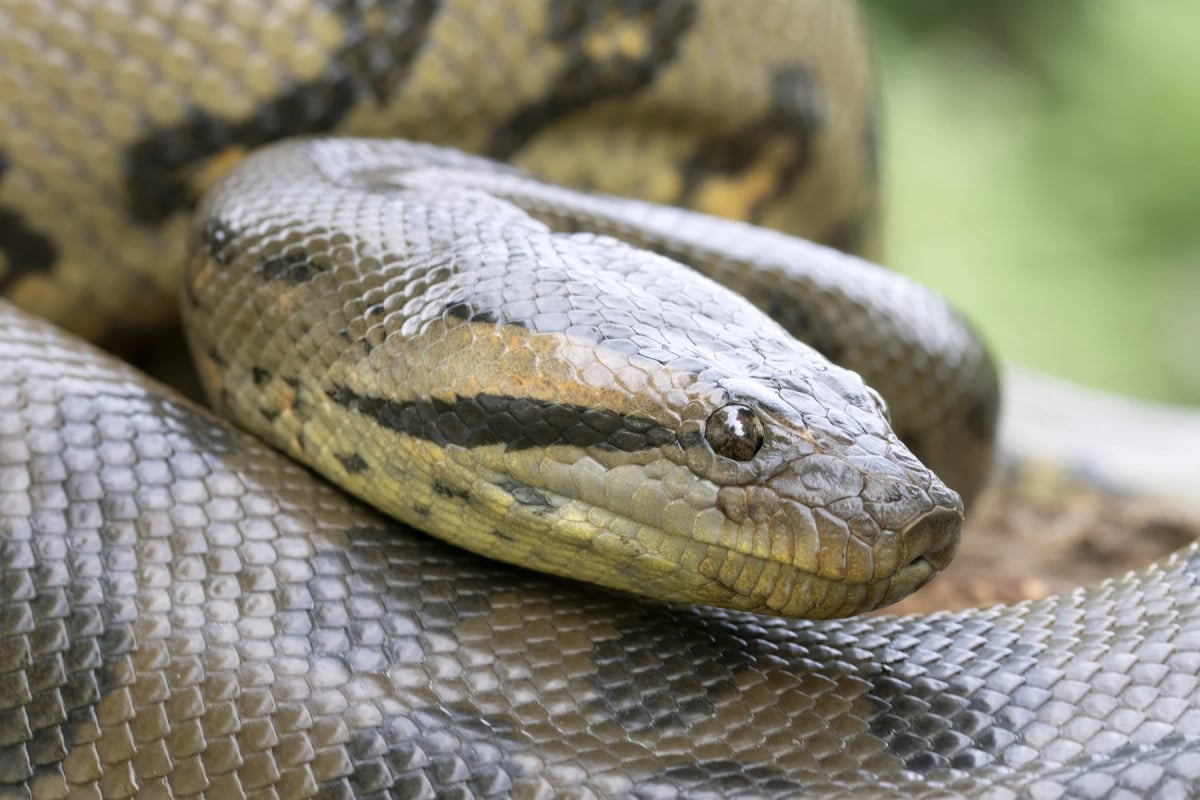
Anacondas belong to the genus Eunectes, Greek for good swimmer, part of the boa family. The green anaconda (Eunectes murinus) is the largest and best known. The yellow anaconda (Eunectes notaeus) is smaller, rarely above four meters, and lives further south, in the Pantanal and the Paraguay and Paraná basins. Two more are rarely seen: the dark spotted anaconda of northeastern Brazil and French Guiana, and the Bolivian anaconda of the Beni. In 2024 a team led by Jesús Rivas proposed that the green anaconda is really two species: a northern green anaconda (Eunectes akayima) in Venezuela, Colombia, Ecuador, the Guianas and Trinidad, and the southern one in Peru, Bolivia, southern Brazil and Paraguay. The genetic difference is real, but other scientists questioned how the name was assigned, and the IUCN still treats them as a single species.
What does an anaconda eat?
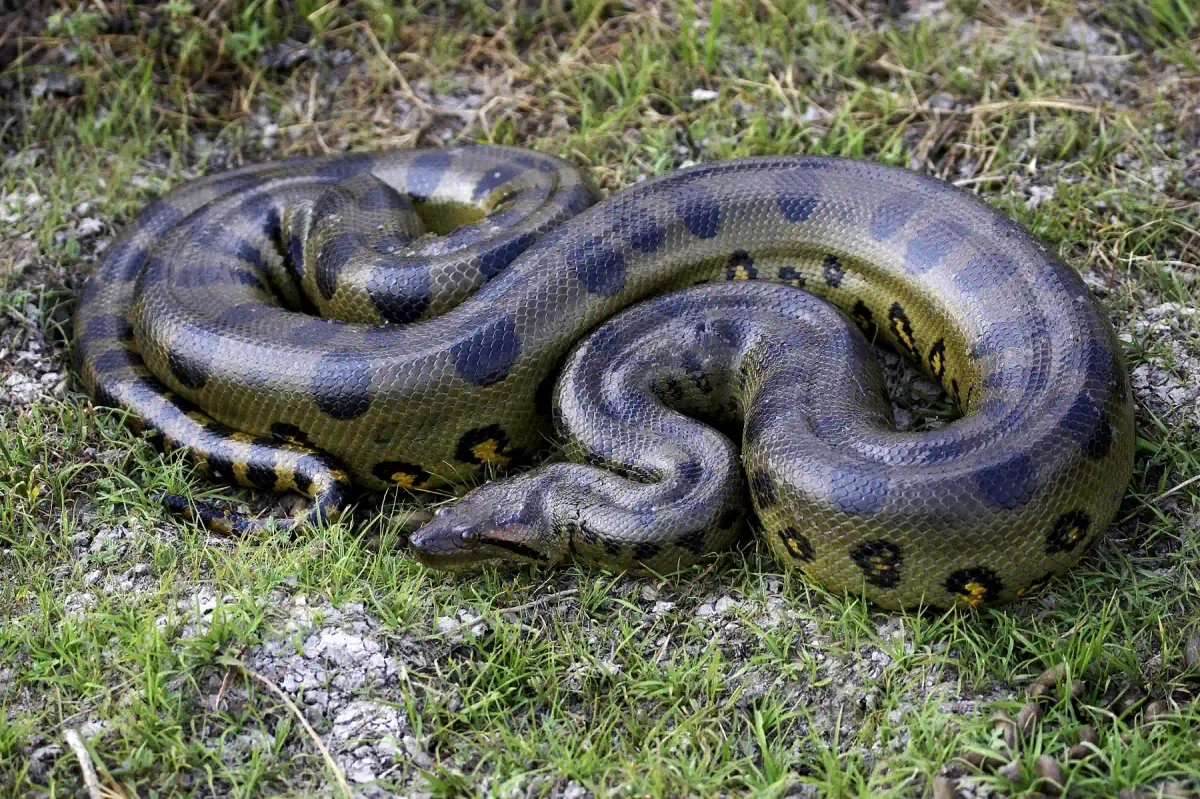
The green anaconda is a generalist predator that eats almost any animal it can overpower, and its menu grows with its size. Young anacondas feed mainly on fish, frogs, small birds and rodents. Large females take capybaras, caimans, turtles, deer, peccaries, wading birds and, now and then, other anacondas. It hunts by ambush, waiting motionless in shallow water with only its eyes and nostrils above the surface. When prey comes close it strikes, holds on with its teeth and wraps its coils around the body, squeezing until the blood flow stops and the heart fails. Then it swallows the prey whole, head first. After a big meal an anaconda can go weeks or even months without eating while it digests.
Behavior and reproduction
The green anaconda is solitary and can be active at any hour, hunting at night and basking on riverbanks or floating vegetation during the day. In water it moves with ease; on land it is slow and heavy. It breeds in the dry season, when several males find a female by her scent and coil around her in a breeding ball that can include a dozen males and last two to four weeks. The female keeps the eggs inside her body and gives birth to live young six or seven months later, usually 20 to 40 babies of 70 to 90 centimeters, fully independent from the first day. During pregnancy the female barely eats, and researchers in Venezuela have documented females eating a male after mating, a meal that may help them through that long fast.
Are anacondas dangerous to humans?
A large female anaconda is strong enough to kill a person, but in practice it almost never happens. There is no well documented case of a green anaconda killing and eating an adult human, and the stories that circulate, from river villages or from social media videos, are rarely confirmed. Anacondas are shy: when a person comes close they usually slip into the water. Most bites happen when someone grabs or tries to capture one, and the bite, although painful, is not venomous. Much of the fear comes from legends and from Hollywood films such as Anaconda (1997), which show giant snakes that chase people. The real danger runs the other way: many anacondas are killed on sight by people who fear them or worry about their livestock.
Is the anaconda endangered?
No. The green anaconda is listed as Least Concern by the IUCN, thanks to its huge range and its ability to live in very different wetlands. It is also listed in Appendix II of CITES, which controls the international trade in its skin and in live animals. That does not mean it is safe everywhere. Local populations suffer from the draining of wetlands, the burning and clearing of the Amazon and the Pantanal, mercury from gold mining and oil spills in the rivers. Many are killed out of fear, run over on roads or hunted for their skin and fat, used in traditional medicine. Because a female needs years to reach breeding size and gives birth only every year or two, populations recover slowly once they are hit.
5 Curiosities
Here are five quick anaconda facts: • The green anaconda is the heaviest snake in the world, though the reticulated python of Southeast Asia can exceed it in length. • Females are far larger than males, sometimes more than four times their weight, one of the most extreme size differences between sexes of any snake. • Anacondas are viviparous, giving birth to live young rather than laying eggs. • They can remain submerged for up to ten minutes, using eyes and nostrils positioned on top of the head to breathe and watch for prey. • After a large meal, an anaconda can go weeks or even months without eating again.