King Cobra
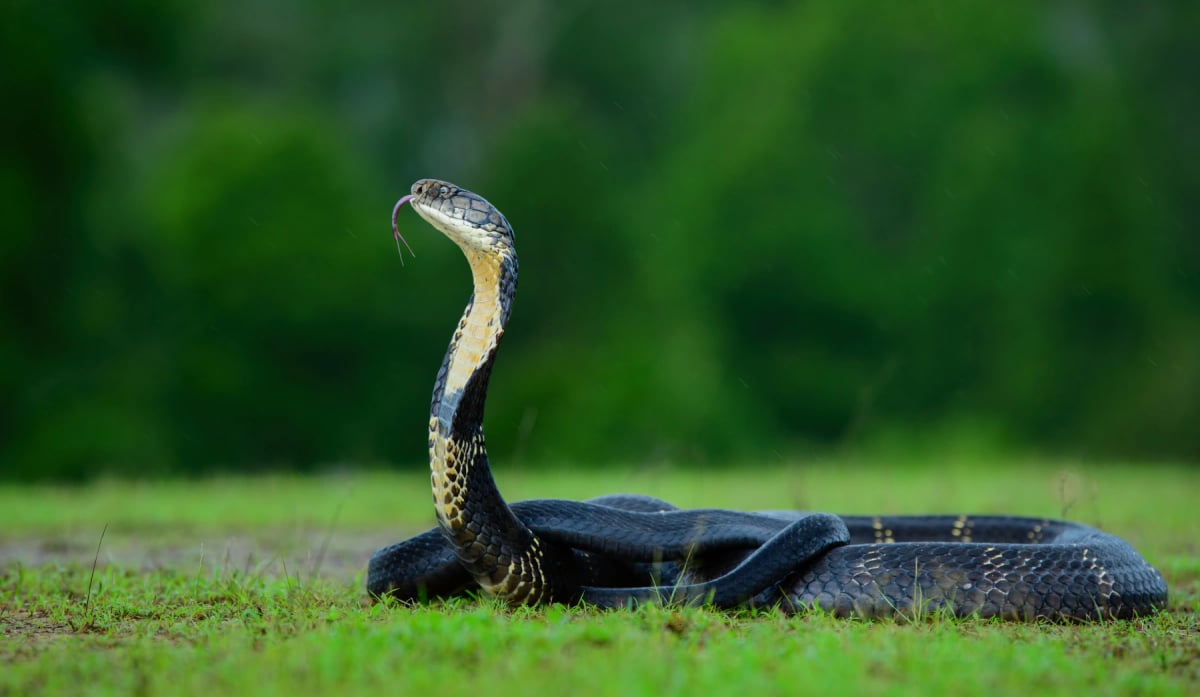
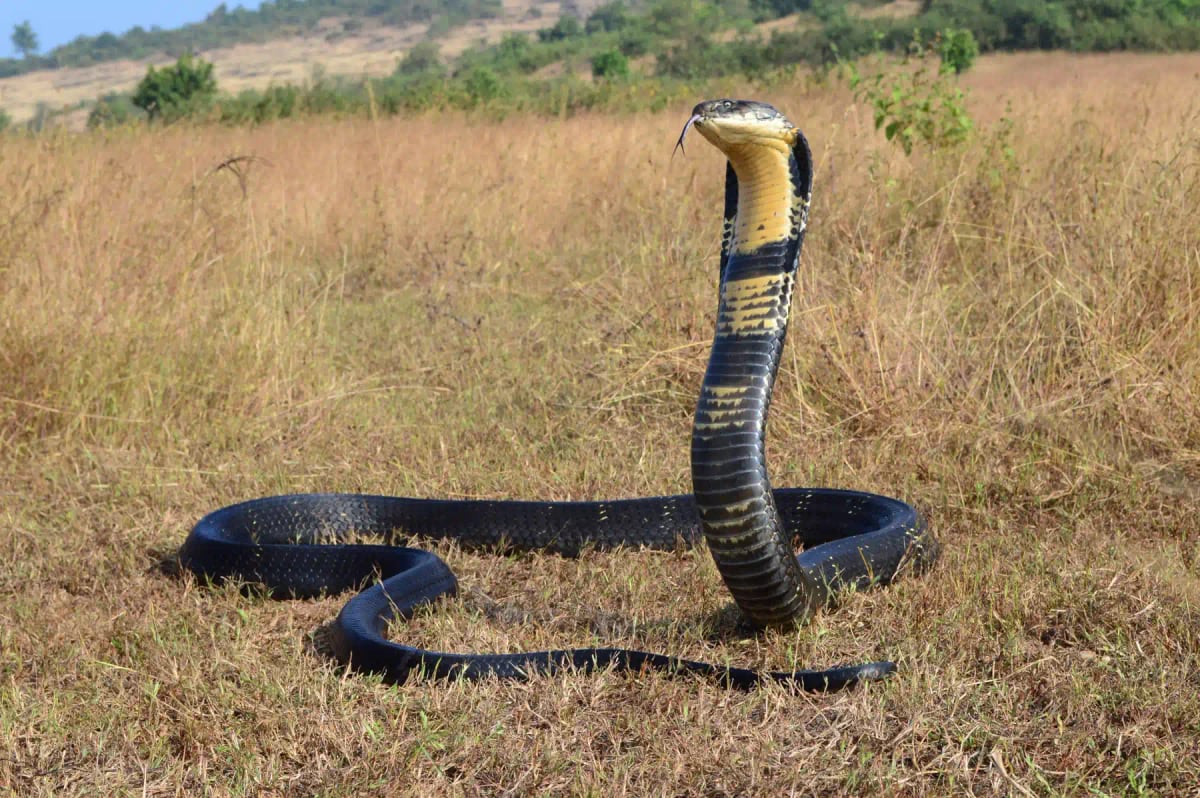
The king cobra is the world’s longest venomous snake, reaching nearly six meters. Native to South and Southeast Asia, it inhabits forests, mangroves and agricultural edges. Unlike most snakes, it specializes in eating other snakes, including venomous species such as kraits and young pythons. When threatened, it raises its forebody and spreads its hood, delivering a powerful hiss. Though feared, it generally avoids people. Logging, agricultural expansion and the wildlife trade have reduced its habitat, and it is listed as Vulnerable.
Habitat and distribution
The king cobra ranges from the forests of the Western Ghats and the northeastern hills of India across most of mainland Southeast Asia, reaching southern China and the island of Hainan. It is also found in the Philippines, Borneo, Sumatra, and the Malay Peninsula. The species occupies dense rainforests, bamboo thickets, mangrove swamps, and the edges of cultivated land near water. It tends to stay close to streams and rivers, where prey is more abundant. Elevation is not a barrier; king cobras have been recorded at altitudes above 2,000 meters.
Diet
The king cobra feeds almost entirely on other snakes. Its scientific name, Ophiophagus hannah, translates directly to "snake eater." Common prey includes rat snakes, pythons, and other cobra species. It also takes monitor lizards and small mammals when snakes are scarce. The king cobra locates prey using its forked tongue to detect chemical signals, then strikes with precision and injects venom that acts quickly on the nervous system. Meals can be infrequent; a large prey item may sustain an individual for weeks before it needs to hunt again.
Behavior
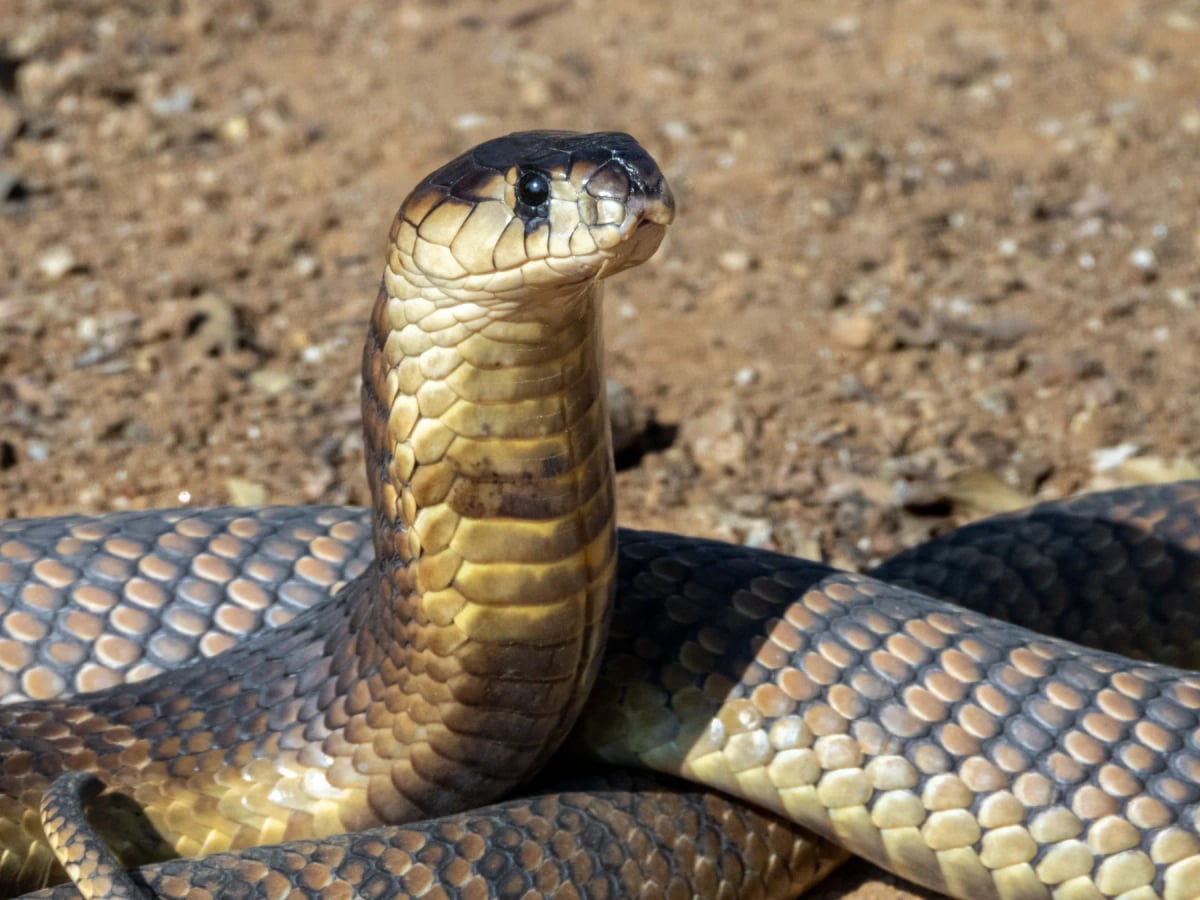
The king cobra is primarily diurnal and solitary outside of the breeding season. It is an active hunter that pursues prey rather than waiting to ambush it. When cornered or provoked, it performs one of the most dramatic threat displays in the reptile world: it raises the front third of its body to standing height, spreads its narrow hood, maintains direct eye contact, and produces a distinctive low growl rather than a typical snake hiss. Despite its size and reputation, the king cobra prefers to retreat when given the option and rarely strikes without clear provocation.
Reproduction
The king cobra is the only snake species known to build a nest. Females gather leaves and plant debris into a mound that insulates the eggs and generates heat as the material decomposes. Clutches range from 20 to 40 eggs and are guarded by the female, who coils near the nest and strikes aggressively at intruders. Males may also remain nearby during early incubation. The female abandons the nest shortly before the eggs hatch, a behavior thought to prevent her from instinctively preying on her own offspring. Hatchlings emerge fully venomous.
Conservation
The king cobra was uplisted to Vulnerable on the IUCN Red List in 2010 after assessments revealed widespread population declines across its range. The main threats are habitat loss from deforestation and agricultural expansion, hunting for skin, food, and traditional medicine, and capture for the live animal trade. Persecution by people who fear it also contributes to local declines. The species is legally protected in many countries within its range, though enforcement varies considerably. Habitat connectivity is critical, as king cobras require large territories and are sensitive to forest fragmentation.
Where it is found
The King Cobra can be found in places such as:
Researched and written by Juan Pablo. Sources: IUCN Red List, scientific literature and regional field guides. Last updated: .
Technical factsheet

Frequently Asked Questions
Is the king cobra the most venomous snake in the world?
The king cobra is not the most toxic snake on a drop by drop basis, since species such as the inland taipan and several mambas produce stronger venom. What makes it so feared is the large volume it injects in a single bite, enough to affect the nervous system of an adult elephant. It also ranks as the longest venomous snake in the world, which adds to its dangerous reputation.
How big does a king cobra grow?
King cobras typically reach between three and five point eight meters in length, making them the longest venomous snakes on the planet. Most adults weigh between six and nine kilograms, though larger individuals have been recorded in dense, undisturbed forest. Despite this impressive size, the species moves with remarkable speed and agility through vegetation and water when hunting or escaping danger.
Can a king cobra kill an elephant?
A single bite from a king cobra can deliver enough venom to kill an adult elephant within hours, since the toxin overwhelms the nervous system and affects breathing. Confirmed elephant deaths from this cause are rare in practice, mostly because elephants avoid the snake and bites usually happen by accident. Even so, the case is often cited to illustrate the sheer potency of a full envenomation.
What does a king cobra eat?
The king cobra feeds almost exclusively on other snakes, including venomous species like kraits and even pythons, which is reflected in its scientific name Ophiophagus, meaning snake eater. It also takes monitor lizards and small mammals when snakes are scarce. Because large prey can sustain it for weeks, the king cobra does not need to hunt as often as many other predators of similar size.
Where do king cobras live?
King cobras range across South and Southeast Asia, from the forests of India and Nepal through Myanmar, Thailand, Indonesia and the Philippines, reaching southern China as well. They favor dense rainforest, bamboo thickets, mangroves and the edges of cultivated land close to water, where prey is abundant. The species has also been recorded at high elevations, showing it can adapt to a wide range of forest environments.
Are king cobras aggressive toward humans?
King cobras are generally shy and prefer to avoid people rather than confront them. When cornered, they raise the front part of the body, spread their hood and produce a low growl as a warning before considering an attack. Most bites happen when the snake is surprised or someone tries to handle or kill it, not because the animal is actively seeking conflict with humans.
How long do king cobras live?
In the wild, king cobras typically live around twenty years, though exact figures are hard to confirm given how elusive the species is in dense forest. Individuals in professional care under controlled conditions have been known to live longer, since they face none of the natural risks found in the wild, such as predation, habitat loss or human conflict.