Komodo Dragon
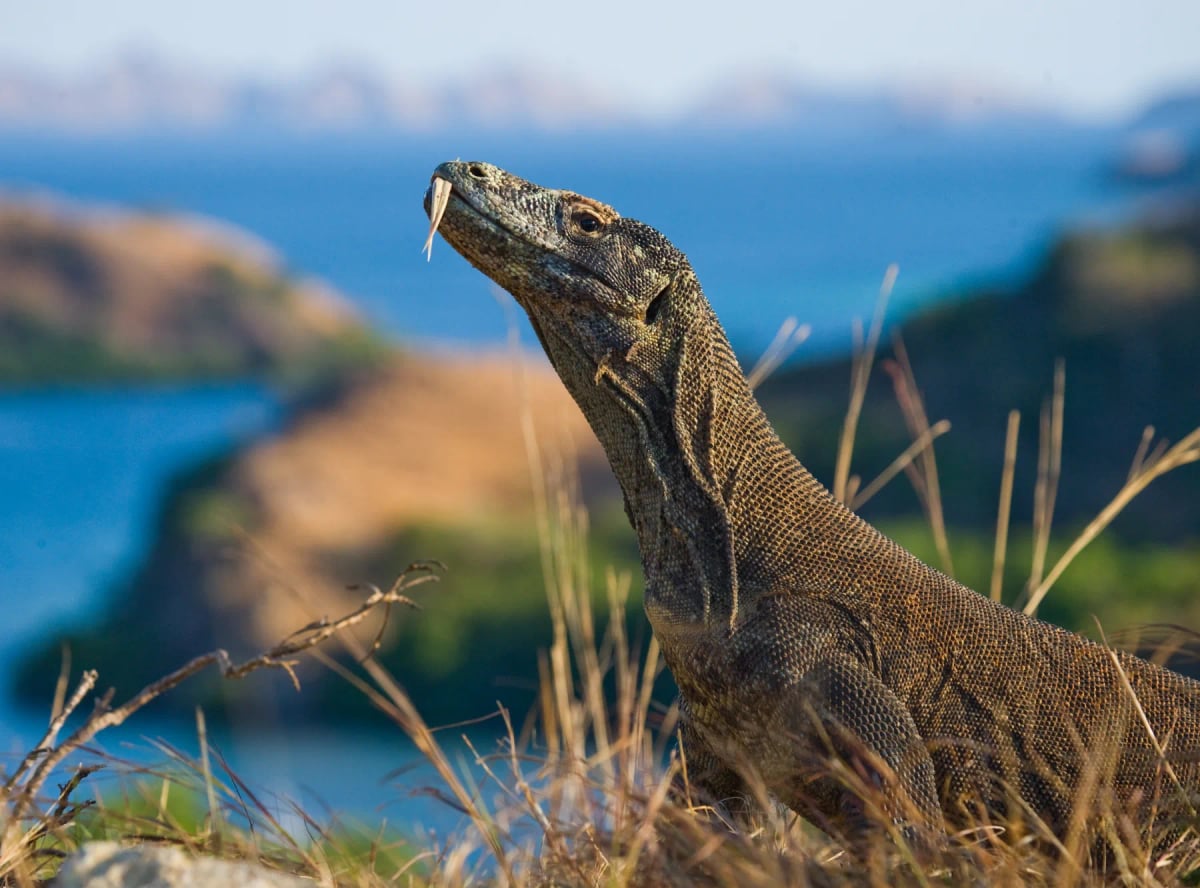
The Komodo dragon is the largest living lizard, restricted to a few Indonesian islands such as Komodo, Rinca and Flores. Reaching up to 3 meters in length and nearly 90 kilograms, it is a formidable ambush predator that hunts deer, boar and occasionally water buffalo. Its bite delivers venom that lowers blood pressure and prevents clotting, weakening prey that may escape the initial attack. Mostly solitary, it relies on stealth and sudden bursts of speed. With fewer than 6,000 individuals left, it is classified as Endangered due to habitat loss, rising seas and human disturbance.
Habitat and distribution
The Komodo dragon is one of the most geographically restricted large predators on Earth. It lives exclusively on five small islands in the Indonesian province of East Nusa Tenggara: Komodo, Rinca, Flores, Gili Motang and Padar. Its preferred habitat is dry savanna grassland, open woodland, and dry forest at low elevations, though it also moves through scrub and along beaches. The entire wild population exists within and around Komodo National Park, a UNESCO World Heritage Site established in 1980. Its restricted range makes it exceptionally vulnerable to any localized threat.
Diet
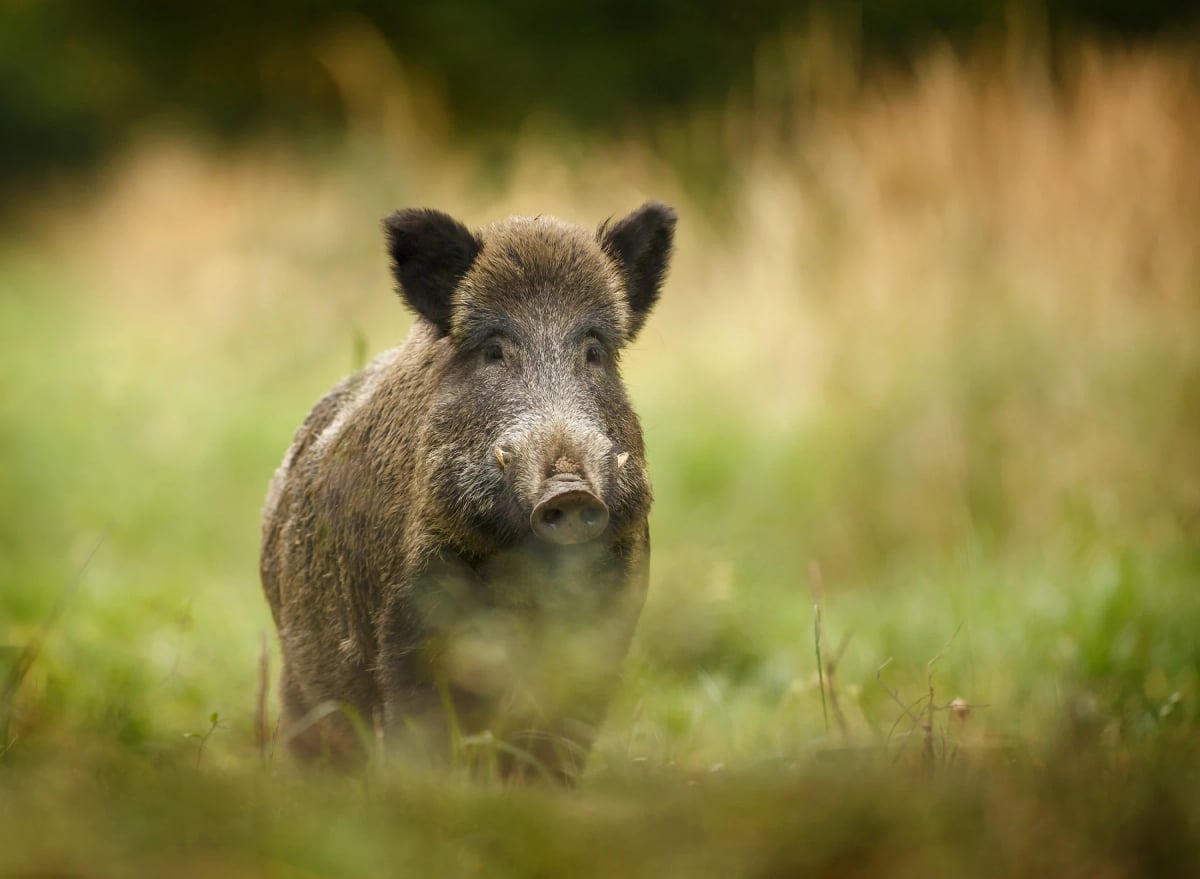
The Komodo dragon is an apex predator that feeds on a wide range of prey, including deer, wild boar, goats and carrion. Large adults are capable of bringing down water buffalo many times their own weight. The dragon ambushes prey from concealment, delivering a bite that introduces venom through grooves in its teeth. The venom contains anticoagulant compounds that cause blood pressure to drop and prevent clotting, steadily weakening prey that manages to escape. The dragon then follows the wounded animal using its forked tongue to track blood and chemical traces over considerable distances.
Behavior
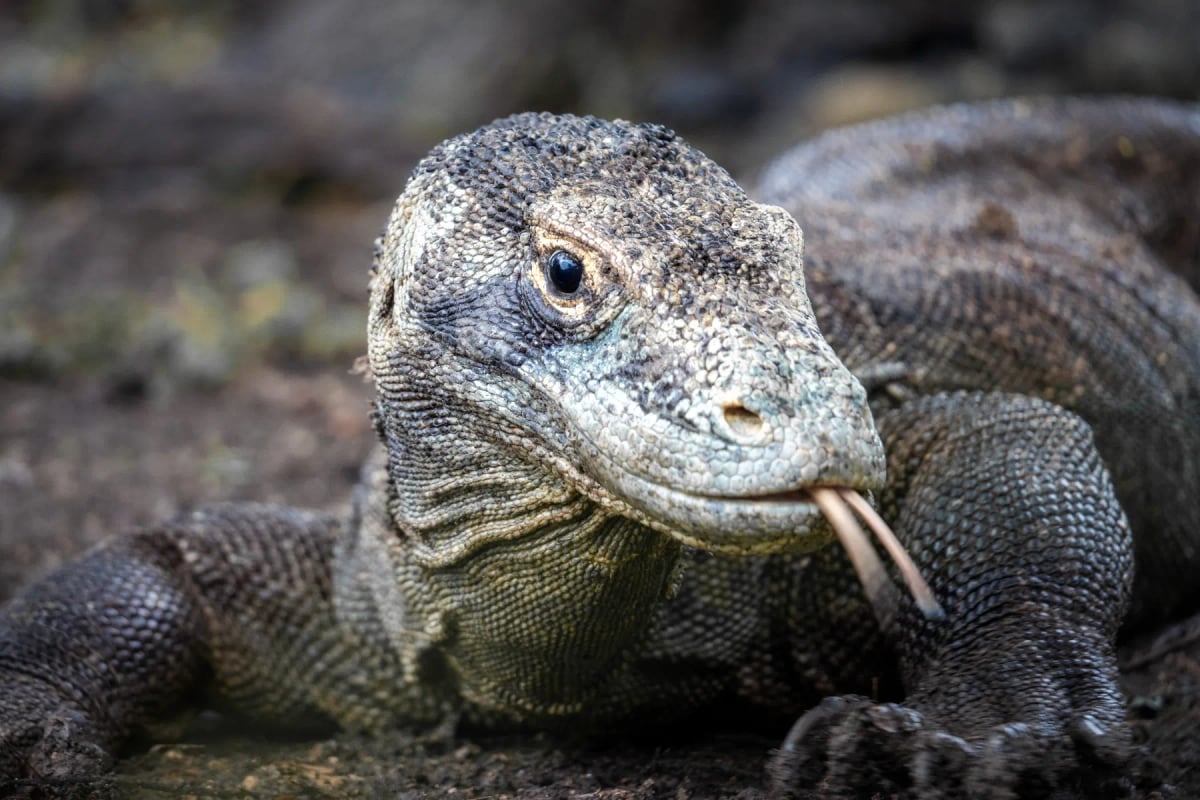
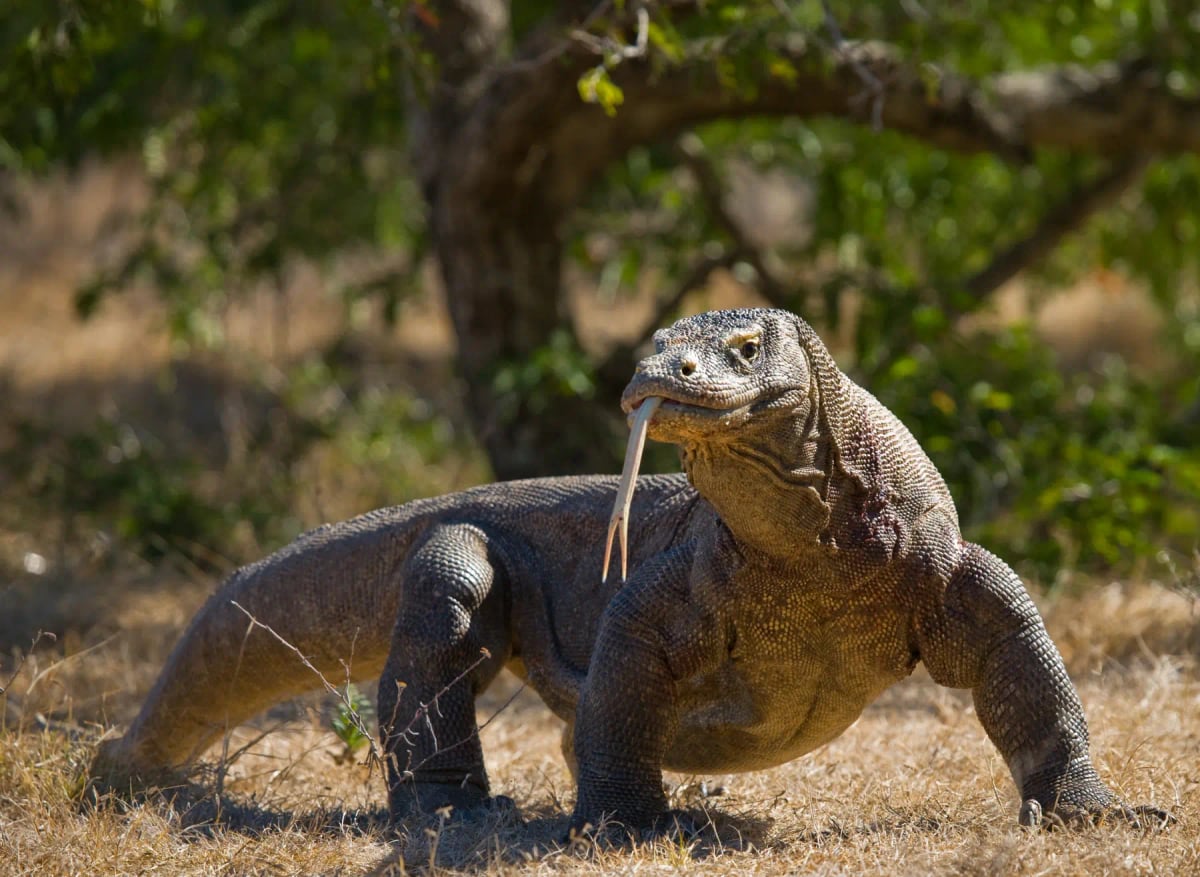
Komodo dragons are solitary and largely territorial, with males establishing dominance hierarchies through wrestling bouts where they rear up on their hind legs. They are ambush hunters that rely on patience, camouflage, and explosive short bursts of speed rather than sustained pursuit. Despite their bulk they can sprint briefly at up to 20 kilometers per hour. They are also capable swimmers and move between islands. Younger individuals are more arboreal, spending time in trees to avoid cannibalism by larger adults. Komodo dragons have keen senses of smell through their forked tongue and can detect carrion from several kilometers away.
Reproduction
Mating occurs between May and August, and females lay clutches of 15 to 30 eggs between July and September. Nests are often dug into hillsides or built within abandoned megapode mounds, which provide natural insulation. The incubation period lasts around eight months, with hatchlings emerging in April. Females are capable of parthenogenesis, reproducing without a male when none is available, a trait that can be useful in isolated island populations. Hatchlings are independent from birth and immediately climb trees to escape predation by adults, remaining arboreal for the first few years of life.
Conservation
The Komodo dragon was reclassified from Vulnerable to Endangered on the IUCN Red List in 2021. The estimated wild population of around 6,000 individuals is concentrated within Komodo National Park, leaving it with almost no buffer against localized threats. Rising sea levels driven by climate change are projected to reduce available habitat on the islands by up to 30 percent by the end of the century. Additional pressures include prey depletion from poaching, illegal killing of dragons, and growing tourism disturbance. Indonesia has taken steps to restrict access and strengthen park protection, but the species remains highly vulnerable given how little land it occupies.
Researched and written by Juan Pablo. Sources: IUCN Red List, scientific literature and regional field guides. Last updated: .
Technical factsheet


Frequently Asked Questions
Is the Komodo dragon venomous?
Yes, the Komodo dragon produces venom in glands along its lower jaw, delivered through grooves in its teeth during a bite. The venom contains compounds that lower blood pressure and prevent clotting, which weakens prey over time even if it manages to escape the initial attack. This combination of a powerful bite and venom allows it to bring down animals far larger than itself, such as water buffalo.
Where can you see Komodo dragons in the wild?
Komodo dragons live only on a handful of small Indonesian islands, mainly Komodo, Rinca and Flores, all within or near Komodo National Park. The park, a UNESCO World Heritage Site, offers guided tours where visitors can observe the dragons in their natural habitat with rangers present for safety. Outside this small area of Indonesia, the species does not exist anywhere else in the world.
How big is a Komodo dragon?
Adult Komodo dragons typically measure between two and three meters in length and can weigh up to ninety kilograms, making them the largest living lizards on the planet. Males tend to grow larger than females. Their size, combined with strong claws and serrated teeth, allows them to take down prey such as deer and wild boar with relative ease despite moving slowly most of the time.
Can a female Komodo dragon reproduce without a male?
Yes, female Komodo dragons are capable of parthenogenesis, a process that allows them to produce viable offspring without mating with a male. This ability has been documented in zoos and is thought to help isolated populations persist when individuals end up separated on small islands without access to a mate. Offspring produced this way are typically male, which can help establish new breeding populations.
Why are Komodo dragons endangered?
The Komodo dragon was reclassified as Endangered in 2021 because its entire wild population, estimated at around six thousand individuals, is confined to a few small islands. Rising sea levels linked to climate change threaten to shrink available habitat significantly in the coming decades. Poaching of prey species, illegal killing, and disturbance from growing tourism add further pressure on a population with very little room to adapt.
Are Komodo dragons dangerous to humans?
Komodo dragons can be dangerous, and attacks on humans, though rare, have occurred and occasionally proved fatal. Most incidents happen when people approach too closely or wander into the dragon's territory without a guide. Their venomous bite and powerful jaws make any encounter risky, which is why visits to Komodo National Park require trained rangers who know how to keep a safe distance from the animals.