Coquí
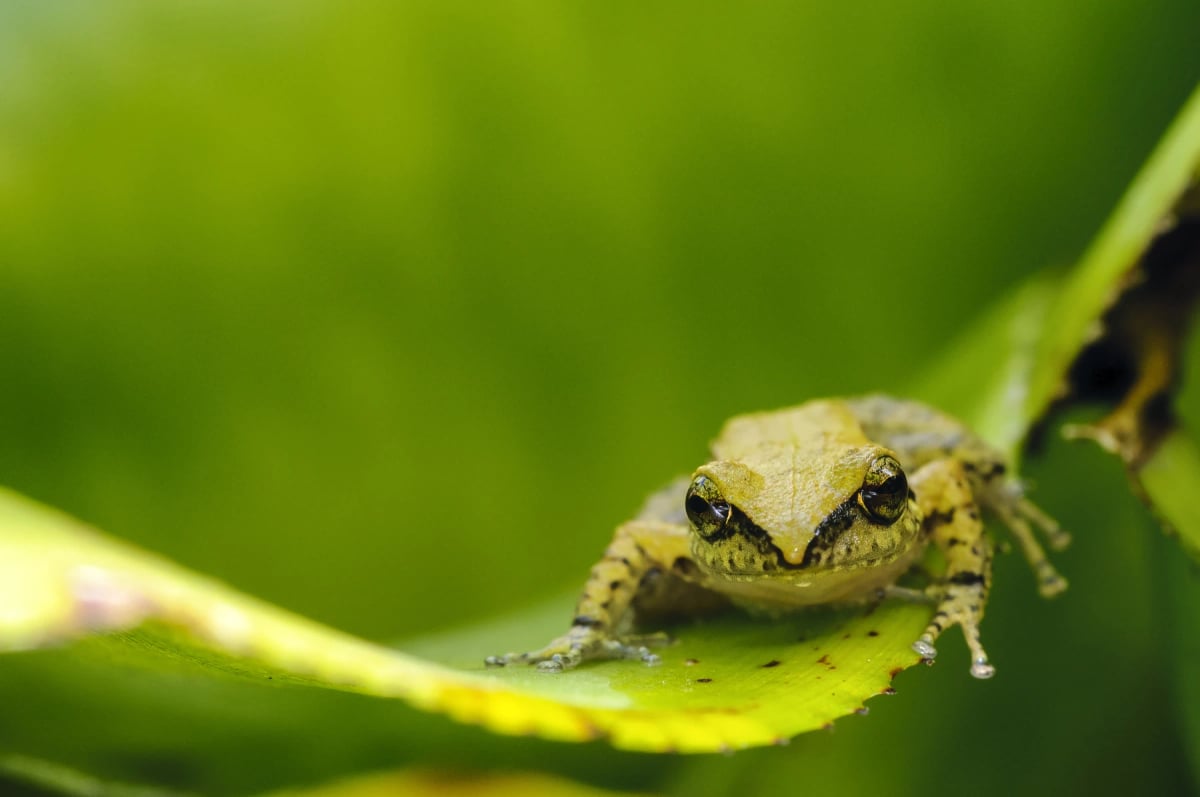
The common coquí is a tiny tree frog native to Puerto Rico, measuring between 2.8 and 4 cm in length. Males are slightly smaller than females and typically weigh just 2 to 4 grams. What makes this frog remarkable is not its size but its voice. Every night, males call out with a sharp two note sound that has become the defining soundtrack of Puerto Rico. The first note, a low "co," warns other males to stay away. The second note, a bright "kee," draws females closer. This species skips the tadpole stage entirely, with fully formed froglets hatching directly from eggs. It feeds on small insects and invertebrates, helping keep pest numbers in check. The coquí is also a proud cultural symbol, woven into Puerto Rican music, folklore, and everyday life for generations. Outside its home island it is a different story: introduced to Hawaii in the late 1980s, the same frog is now treated there as an invasive pest.
Habitat and distribution
Found nowhere else on Earth in its native form, the coquí is endemic to Puerto Rico. It occupies an impressive range of environments across the island, from the dense canopy of the El Yunque rainforest to coastal scrubland, mountain slopes, backyard gardens and even city parks. It tends to shelter in bromeliads, leaf litter, tree bark and the undersides of broad leaves during the day, becoming active after sunset. Bromeliads matter more than anything else here, because the pockets of water and damp debris they trap give the frog somewhere cool to wait out the daylight. Elevation is no barrier for this species: populations have been recorded from sea level all the way up to the high mountain forests of the Cordillera Central. Introduced populations are now established in Hawaii, the Dominican Republic, Costa Rica, the US Virgin Islands and, very marginally, in a few California nurseries, while the frogs released decades ago in Florida and Louisiana died out. Even so, the coquí remains inseparable from Puerto Rico, where it turns up in virtually every corner of the island.
Appearance
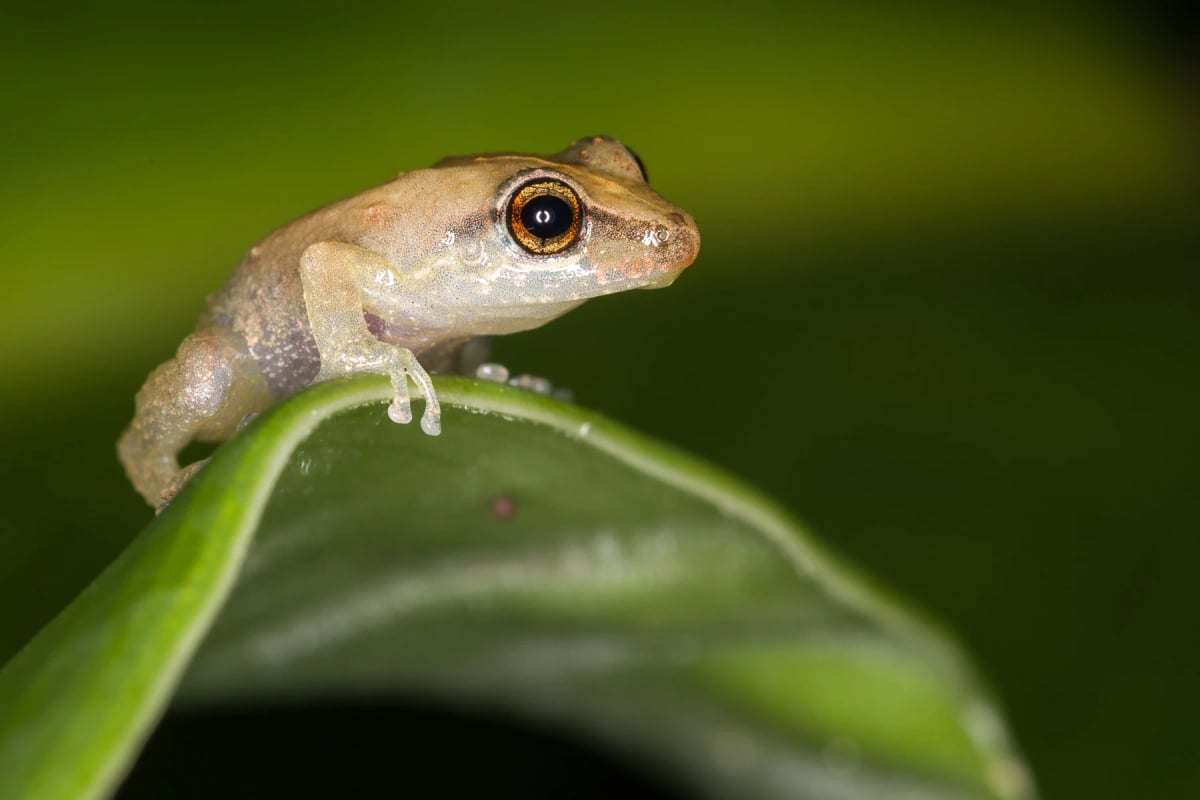
Small enough to sit comfortably on a human thumbnail, the coquí measures between 2.8 and 4 centimeters and weighs just 2 to 4 grams, about as much as a single grape. Females tend to be slightly larger than males. The skin color varies considerably among individuals, ranging from pale tan and warm brown to olive and soft green, often with darker streaks or spots along the back that help the frog blend into leaves and bark, and many animals carry a pale stripe or a pair of light marks between the eyes. The belly is generally paler. One of the most useful features for a frog that spends its life climbing vegetation is the set of enlarged toe pads, which provide grip on smooth or wet surfaces. The eyes are large relative to the head, giving the coquí good vision in low light conditions as it hunts through the night.
Call
Few sounds are more immediately linked to a place than the call of the coquí is to Puerto Rico. Only the males sing, and they do so almost every night of the year, beginning shortly after dark and often continuing until dawn. The call consists of two distinct notes. The first, a low and resonant "co," functions as a territorial warning directed at other males. The second, a bright and rising "kee," serves to attract females. Researchers have found that the pitch shifts with elevation, so a coquí singing in the mountains does not sound quite like one singing near the coast. When males call in groups, as they typically do, the result is a layered chorus that can reach over 90 decibels near dense vegetation, about the level of heavy traffic. Puerto Ricans who relocate abroad commonly describe missing this sound, and recordings of the coquí are frequently used to evoke the island in music and film.
Ecological role
Within the food webs of Puerto Rico, the coquí plays a role at two levels simultaneously. As a predator, it feeds at night on a wide range of small invertebrates, including beetles, moths, flies, spiders and other insects, and because the frogs are so densely packed they remove tens of thousands of invertebrates from every hectare of forest each night. This appetite makes the species a natural regulator of invertebrate populations, particularly ones that could otherwise damage crops or spread into homes. As prey, the coquí is an important food source for snakes, birds and larger frogs. Because it is so abundant and widespread, it moves a significant amount of energy through the ecosystem. It also skips the aquatic larval stage entirely, which means it depends on moist terrestrial environments rather than standing water, connecting it to a broader range of habitats than most amphibians.
The coqui frog in Hawaii
The coquí reached Hawaii in the late 1980s, hidden in potted plants shipped from Puerto Rico, and it landed on islands with no native frogs and nothing that hunts them. Densities there have been measured at around 91,000 frogs per hectare, far beyond what the species reaches at home, and the chorus that Puerto Ricans carry with them as a memory of the island is classed in Hawaii as noise pollution that lowers property values. State agencies spray a citric acid solution on infested vegetation, nurseries are inspected before plants move between islands and residents are asked to report new calls. The frogs also reshape the forest, stripping out leaf litter invertebrates and altering the way nutrients cycle. It is the same animal singing the same song, and the whole difference lies in where it is standing.
Cultural significance
For generations, the coquí has meant far more to Puerto Ricans than a frog that sings at night. It is one of the most recognized symbols of Puerto Rican identity, appearing on handicrafts, murals, jewelry, clothing and public art across the island and in Puerto Rican communities throughout the United States. The saying "de aquí como el coquí," from here like the coquí, is used to claim the island as home. Children grow up hearing lullabies and folk songs that feature the frog, and its image is used in education from an early age to teach pride in local nature and heritage. There is a widely shared belief that coquís taken off the island stop singing, a story that speaks to the deep bond between the species and its homeland. Whether or not the science supports it fully, the sentiment captures something real about how central this small frog is to Puerto Rican life.
Where it is found
The Coquí can be found in places such as:
Researched and written by Juan Pablo. Sources: IUCN Red List, scientific literature and regional field guides. Last updated: .
Technical factsheet



Frequently Asked Questions
What is a coqui?
The coqui (Eleutherodactylus coqui) is a tiny tree frog native to Puerto Rico, where it is the unofficial national symbol. It measures 2.8 to 4 centimeters and weighs a few grams, but the males produce a two note call, co kee, that carries across the island every night. It is also unusual among frogs because it never passes through a tadpole stage: fully formed froglets hatch straight from the egg.
How big is a coqui frog?
Very small. An adult coqui measures between 2.8 and 4 centimeters from snout to vent, roughly the size of a human thumbnail, and weighs only 2 to 4 grams, about the weight of a grape. Females are slightly larger than males. Its volume is completely out of proportion to its body: a chorus of these frogs can pass 90 decibels, which is comparable to standing beside heavy traffic.
Why are coqui frogs a problem in Hawaii?
Because Hawaii has no native frogs and nothing that preys on them. The coqui arrived in the late 1980s in potted plants from Puerto Rico and reached densities of around 91,000 frogs per hectare, far above what it manages at home. The nightly chorus is treated there as noise pollution that lowers property values, and the frogs strip leaf litter invertebrates out of the forest. Control relies mainly on spraying citric acid solution and inspecting nursery plants.
Where does the name coqui come from?
From the frog itself. The name imitates the two note call the males make after dark, co kee, and it was carried into Spanish from the sound rather than from any description of the animal. The scientific name, Eleutherodactylus coqui, keeps it: Eleutherodactylus means free toes, a reference to the lack of webbing between the digits, and coqui is the local name for the sound.
Do coquis stop singing when they leave Puerto Rico?
It is one of the best known stories on the island, and it is not literally true. Coquis introduced to Hawaii sing so relentlessly that entire communities campaign against them, which settles the question. What is real is the attachment behind the story: for Puerto Ricans living abroad, the absence of that sound is one of the sharpest reminders of home, and the legend puts a shape to that feeling.
What does the coquí eat?
The coquí feeds mostly at night on small insects and invertebrates it finds among leaves and vegetation. Its menu includes beetles, flies, moths, spiders, and other tiny creatures. Because it eats so many insects, it helps keep pest populations under control naturally. For a frog that weighs just a few grams, it has a surprisingly big impact on the small animals living around it.
Where do coqui frogs live?
The coqui is native only to Puerto Rico, where it is found from sea level to the high forests of the Cordillera Central, in rainforest, coastal scrub, gardens and city parks. It shelters by day in bromeliads, leaf litter and tree bark, and comes out after dark. Introduced populations have taken hold in Hawaii, the Dominican Republic, Costa Rica, the US Virgin Islands and a handful of California nurseries, but Puerto Rico is the only place where it belongs.
Does the coquí go through a tadpole stage?
No, and that is one of the most fascinating things about it. The coquí skips the tadpole stage completely. Fully formed baby frogs hatch directly from eggs laid on land, usually tucked inside bromeliads, leaf litter, or other moist hiding spots. The male guards the eggs until they hatch. This makes the coquí unusual among frogs, which typically spend part of their lives in water as tadpoles.
How loud is the coquí's call?
The coquí punches well above its weight when it comes to volume. Near dense vegetation where males are calling together, the chorus can exceed 90 decibels, which is comparable to the noise of heavy traffic. Only males call, and they do so almost every night of the year. The call serves two purposes: the first note warns rival males away, and the second note attracts females.
Is the coquí endangered?
The common coquí is listed as Least Concern on the IUCN Red List, meaning it is not currently at risk of extinction. It is abundant across Puerto Rico and adapts well to a wide range of environments. However, some other species within the Eleutherodactylus group have declined sharply. Habitat loss, disease, and climate change remain real concerns for amphibians in general, so monitoring populations over time is still important.
Why is the coquí so important to Puerto Rican culture?
The coquí is one of the strongest symbols of Puerto Rican identity. Its call is so tied to the island that many Puerto Ricans who move abroad say they deeply miss that nightly sound. The frog appears in folk songs, lullabies, art, jewelry, and murals across the island and in Puerto Rican communities in the United States. For many people, hearing a coquí is simply what home sounds like.
What are the coquí's natural predators?
Despite being small, the coquí is not without enemies. Snakes, birds, and larger frogs all prey on it regularly. In Puerto Rico, the red tailed hawk and various snake species are among the main predators. Its mottled brown and green coloring helps it stay hidden among leaves and bark during the day. At night, while it is active and calling, it relies on quick movements and its small size to avoid being caught.