Dingo
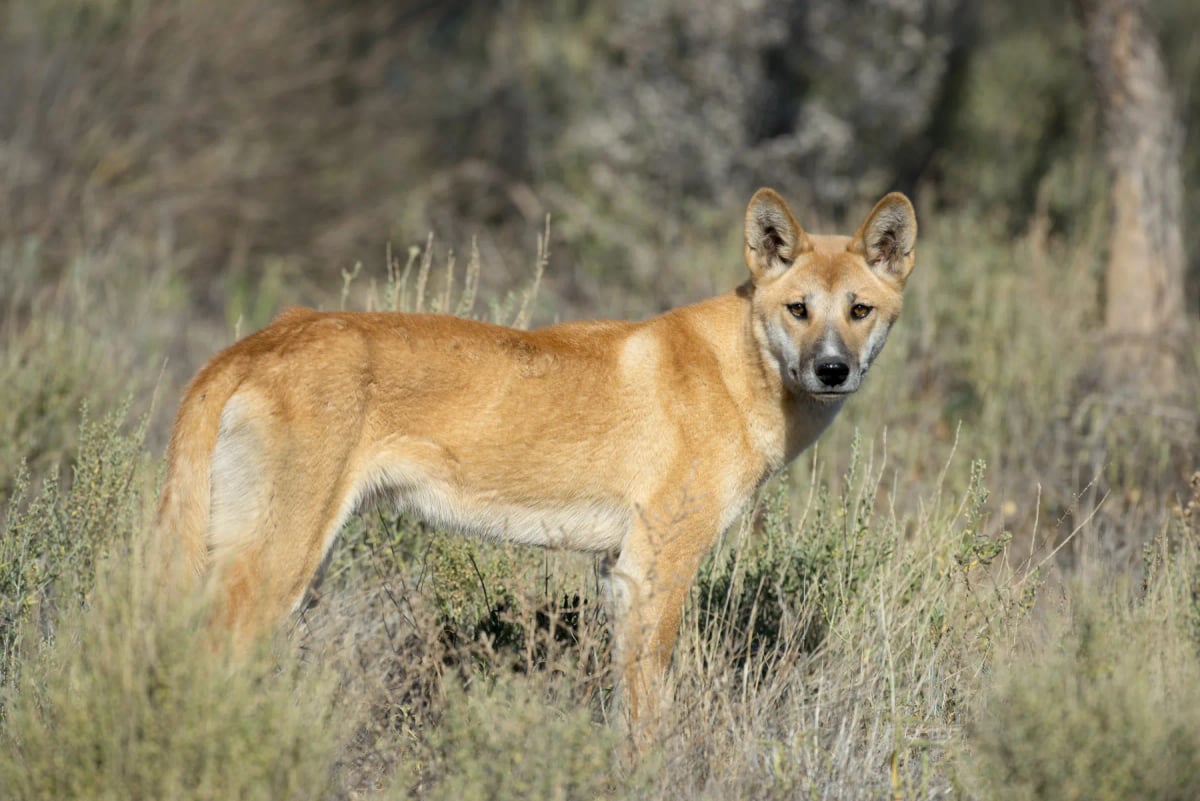
The dingo is Australia's wild dog, descended from domestic dogs brought to the continent by seafaring peoples from Southeast Asia roughly 3,500 years ago. Lean and athletic, with erect ears, a bushy tail, and a coat that ranges from sandy yellow to reddish brown, dingoes are built for endurance across open terrain. They roam deserts, grasslands, tropical forests, and coastal scrublands across most of mainland Australia. Dingoes hunt alone or in small family groups, taking kangaroos, wallabies, rabbits, birds, and lizards. As the continent's largest terrestrial predator, they play a vital role in keeping herbivore and introduced species populations in check. They communicate through howls rather than barks. Their greatest threat today is interbreeding with domestic and feral dogs, which erodes the genetic integrity of pure dingo populations. They are classified as Vulnerable on the IUCN Red List.
Origins
Genetic and archaeological evidence points to dingoes arriving in Australia between 3,500 and 4,000 years ago, most likely brought by seafaring peoples from maritime Southeast Asia. They descended from partially domesticated dogs and, once on the continent, reverted to a wild existence. Because they arrived after Australia separated from other landmasses, they had no native competitors of similar size and quickly became the top predators on land. Fossil records suggest they spread across most of mainland Australia within a relatively short period. Notably, dingoes never reached Tasmania, which had already been separated from the mainland by rising seas long before the dingo's arrival. This ancient journey makes them one of the most ecologically significant introductions in Australian natural history, shaping the structure of the continent's ecosystems for thousands of years.
Habitat
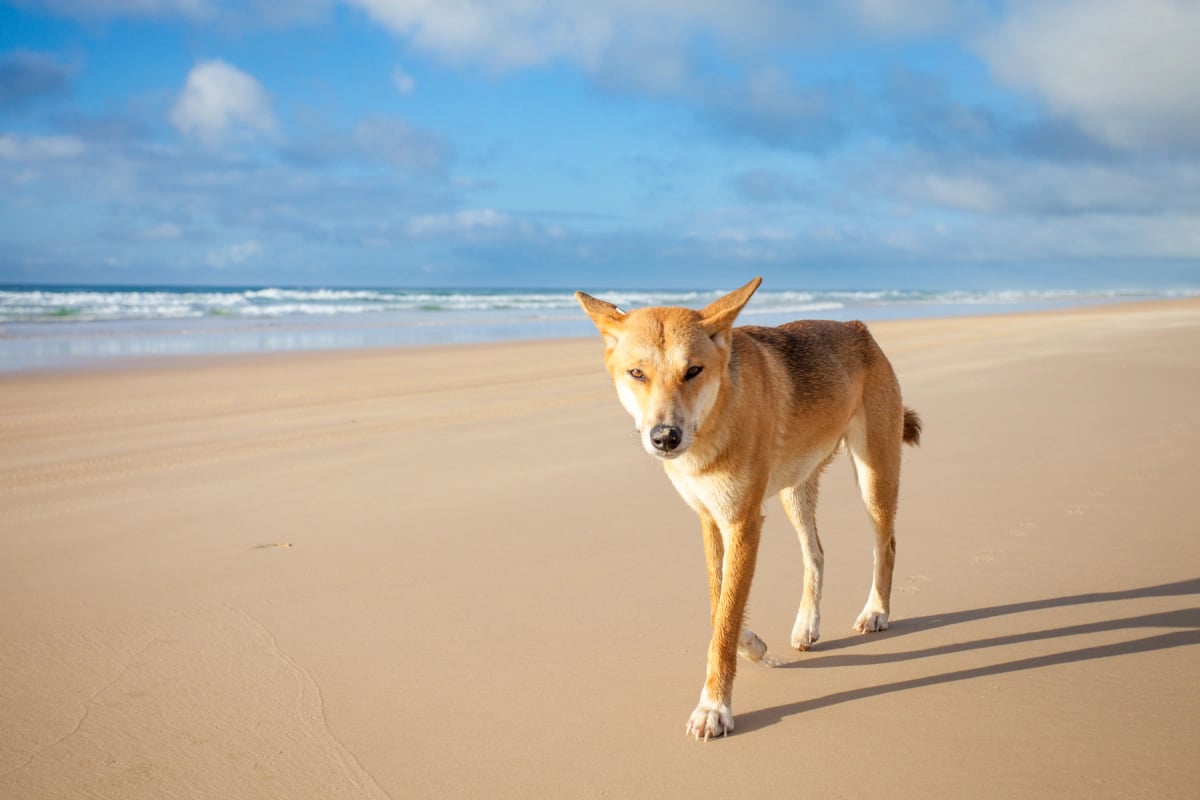
Few Australian animals match the dingo's ability to thrive across such a wide range of environments. They are found in the scorching red sands of the central deserts, the open grasslands and savannas of the interior, tropical woodlands in the north, and coastal scrublands along the edges of the continent. They are largely absent from Tasmania and have been pushed out of heavily farmed regions in the southeast and southwest, partly due to the construction of the famous Dingo Fence, one of the longest structures in the world. Within their range, dingoes adjust their behavior and diet to suit local conditions. They tend to shelter in rock outcrops, hollow logs, or dense vegetation during the hottest parts of the day, becoming more active in the cooler hours of early morning and evening.
Diet
As Australia's largest land predator, the dingo sits at the top of the food chain and its diet reflects that position. Kangaroos and wallabies make up a significant portion of their meals, particularly where these animals are abundant. They also hunt rabbits, lizards, birds, small mammals, and insects, adapting to whatever prey is available in a given season or region. Dingoes will scavenge when the opportunity arises. When hunting large prey like kangaroos, family groups work together, chasing animals over long distances and relying on stamina rather than speed. This role as a predator of herbivores helps control grazing pressure on vegetation. In areas close to farms and stations, dingoes occasionally take livestock such as sheep and calves, which has led to long and ongoing conflict with pastoral communities across Australia.
Behavior
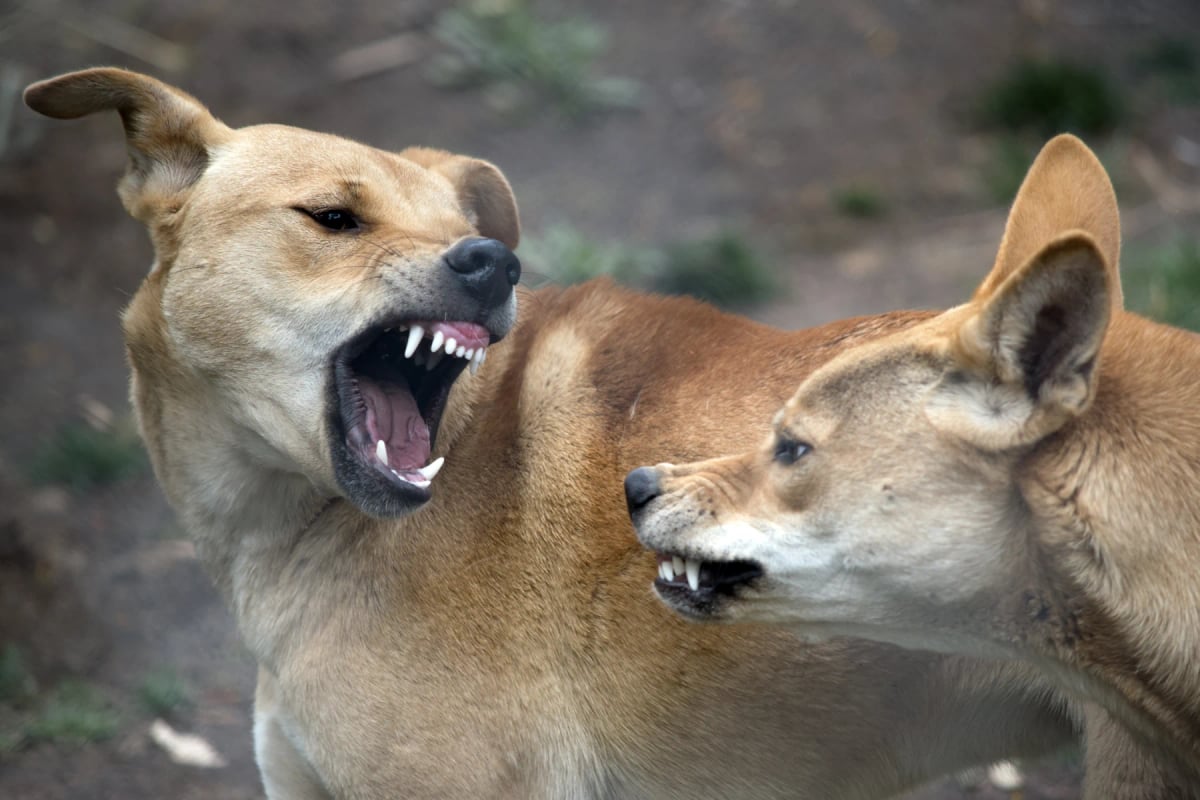
Social life for dingoes revolves around small family groups, typically a dominant breeding pair and their offspring from recent seasons. While lone dingoes are common, particularly among young males searching for new territory, family groups cooperate when tackling large prey or defending their range. They are most active around dawn and dusk, though in cooler regions they may move about during the day as well. Unlike domestic dogs, dingoes rarely bark. Instead, they rely on howling to communicate across distances, which helps groups stay in contact and warn neighboring packs away from their territory. They also use scent markings at regular points along their range. Dingoes breed once a year, with pups born in den sites dug into the ground or found in natural shelters. Both parents and older offspring typically help raise the young.
Conservation
Protecting the dingo is complicated by the fact that attitudes toward the animal vary sharply depending on who you ask. The IUCN classifies the dingo as Vulnerable, and the single greatest threat to the species is hybridization with domestic and feral dogs. When dingoes breed with these dogs, the resulting offspring carry a mixed genetic heritage, and over generations this erodes the traits that make a true dingo. Estimates suggest that truly pure dingo populations are now relatively rare, particularly in the southeast. Beyond hybridization, dingoes face lethal control programs in pastoral areas, where they are poisoned, trapped, and shot to protect livestock. The Dingo Fence, stretching over 5,600 kilometers, was built specifically to keep dingoes out of sheep country in the south. Ironically, research increasingly shows that dingoes benefit ecosystems by suppressing populations of foxes and feral cats, which are themselves serious threats to native wildlife.
Researched and written by Juan Pablo. Sources: IUCN Red List, scientific literature and regional field guides. Last updated: .
Technical factsheet

Frequently Asked Questions
Are dingoes dangerous to humans?
Dingoes are wild animals and can be unpredictable, especially around food. Serious attacks on adults are rare, but there have been documented incidents involving young children, most notably on Fraser Island. Feeding dingoes encourages bold behavior and makes encounters more risky. Giving them space and never offering food is the safest approach. Treat them with the same respect you would give any large wild predator.
Do dingoes live alone or in groups?
Dingoes can do both. They often form small family groups built around a dominant breeding pair and their young from recent seasons. However, lone dingoes are also common, particularly younger males that have left their family to find their own territory. Whether alone or in a group, they are capable hunters. Family groups tend to cooperate when taking on large prey like kangaroos, relying on endurance to wear animals down.
Why don't dingoes bark like regular dogs?
Dingoes do have the physical ability to bark, but they almost never do. Instead, they communicate through howls, which carry much farther across open terrain and help groups stay in contact or warn rival packs away. Scientists believe this difference from domestic dogs is linked to their thousands of years living without human contact. Howling is far more useful for a wild animal covering large distances across the Australian landscape.
Where in Australia do dingoes live?
Dingoes are found across most of mainland Australia, from the central deserts to tropical woodlands in the north and coastal scrublands around the edges of the continent. They are largely absent from Tasmania and have been pushed out of heavily farmed areas in the southeast and southwest. The Dingo Fence, one of the longest structures in the world at over 5,600 kilometers, was built specifically to keep them out of sheep farming regions in the south.
What is the biggest threat to dingoes today?
The greatest threat to dingoes is interbreeding with domestic and feral dogs. When this happens over many generations, the genetic traits that define a true dingo gradually disappear. Truly pure dingo populations are now considered quite rare, especially in southeastern Australia. Lethal control programs on farms, where dingoes are killed to protect livestock, also take a significant toll. These pressures together have led the IUCN to classify the dingo as Vulnerable.
Are dingoes actually dogs?
Dingoes are closely related to domestic dogs and share the same species classification, Canis lupus dingo, but they are not pets gone wild. They descended from partially domesticated dogs brought to Australia by seafarers from Southeast Asia around 3,500 years ago and have lived as wild animals ever since. Over thousands of years of independence from humans, they developed behaviors and traits distinct from any domestic breed, making them a unique and ecologically important animal.
Do dingoes help the Australian ecosystem?
Yes, and more than many people realize. As the largest land predator in Australia, dingoes keep kangaroo and wallaby populations from growing out of control, which protects vegetation from overgrazing. Research also shows they suppress populations of foxes and feral cats, two introduced predators that cause enormous damage to native wildlife. Removing dingoes from an area often triggers a chain reaction that ends up harming the very ecosystems people were trying to protect.