Goitered Gazelle
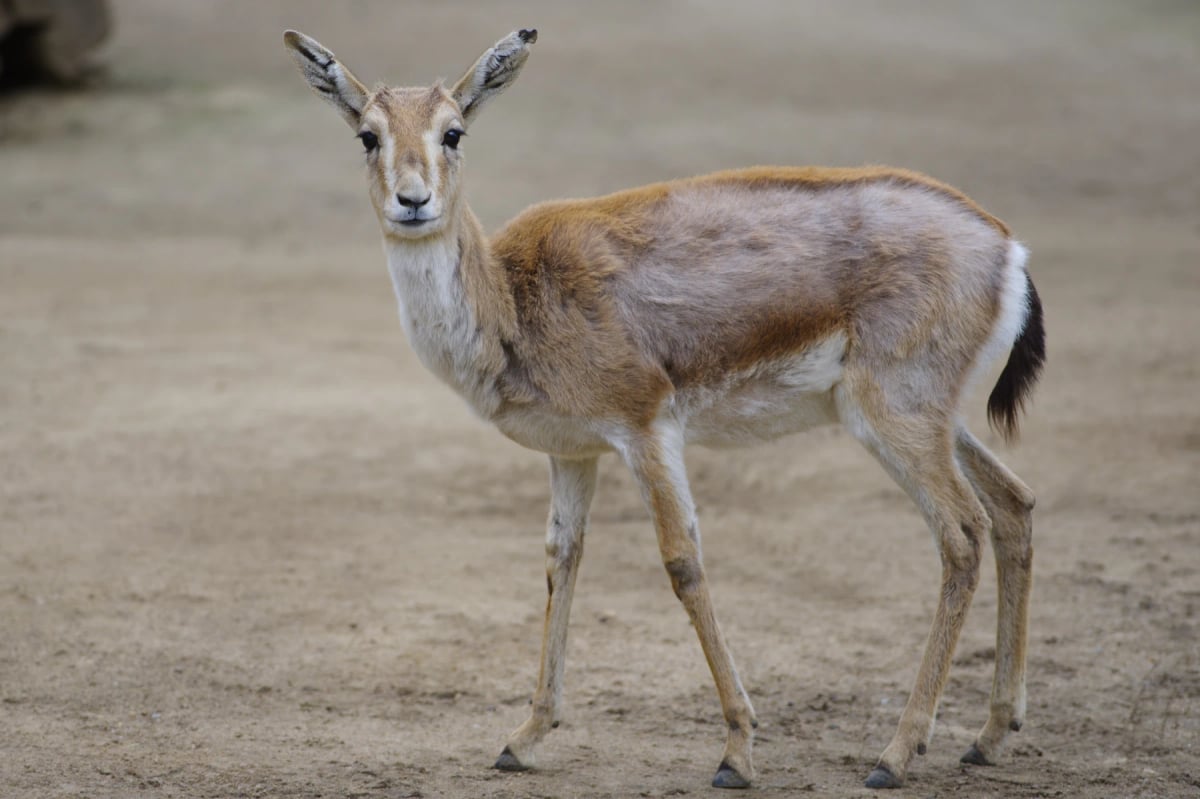
The goitered gazelle is a medium-sized antelope of the deserts and steppes of Central and Western Asia. Its name comes from one of its most striking traits: during the rutting season, males develop a noticeably swollen throat that acts as a resonating chamber, letting them produce loud, carrying calls while competing for females. Outside the rut, both sexes are slender and pale, with coats that blend into sandy and stony terrain. They are capable of reaching speeds close to 70 km/h, making them one of the faster runners among Asian ungulates. Populations graze on grasses, low shrubs, and seasonal herbs, and can go long periods with little water. Despite a wide range stretching from the Caucasus to Mongolia, numbers have dropped significantly because of poaching, the spread of livestock, and fencing that breaks up traditional migration routes. The IUCN lists the species as Vulnerable.
Habitat and distribution
Goitered gazelles are found across a broad sweep of Central and Western Asia, from the Caucasus region in Georgia and Azerbaijan eastward through Iran, the Central Asian republics, and into China and Mongolia. They favor flat or gently rolling terrain: gravel plains, sandy deserts, semi-deserts, and open steppes where shrubs and grasses grow in scattered patches. Elevations vary considerably, and some populations reach upland plateaus well above 3,000 meters. The gazelles tend to avoid dense vegetation and mountainous ground with heavy snow cover in winter, since deep snow makes it hard for them to reach food. In Pakistan and Afghanistan they occupy drier lowland plains and plateau edges. Across this entire range, the common thread is open, arid land with good sightlines that allow the animals to spot predators from a distance.
Diet
Food choices shift with the seasons across the gazelle's arid home range. In spring and early summer, fresh grasses and flowering herbs make up most of the diet, providing moisture that reduces the need to drink. As summer advances and those plants dry out, the animals switch to drought-tolerant shrubs such as saxaul and various saltbush species, which retain some nutritional value even when desiccated. In autumn they take advantage of any remaining seeds and dried grasses. Goitered gazelles are able to extract enough water from their food for long periods, an important adaptation in landscapes where surface water is scarce or seasonal. They are selective feeders, choosing the most nutritious plant parts available rather than grazing indiscriminately, and they will travel considerable distances when local forage runs low.
Distinctive features
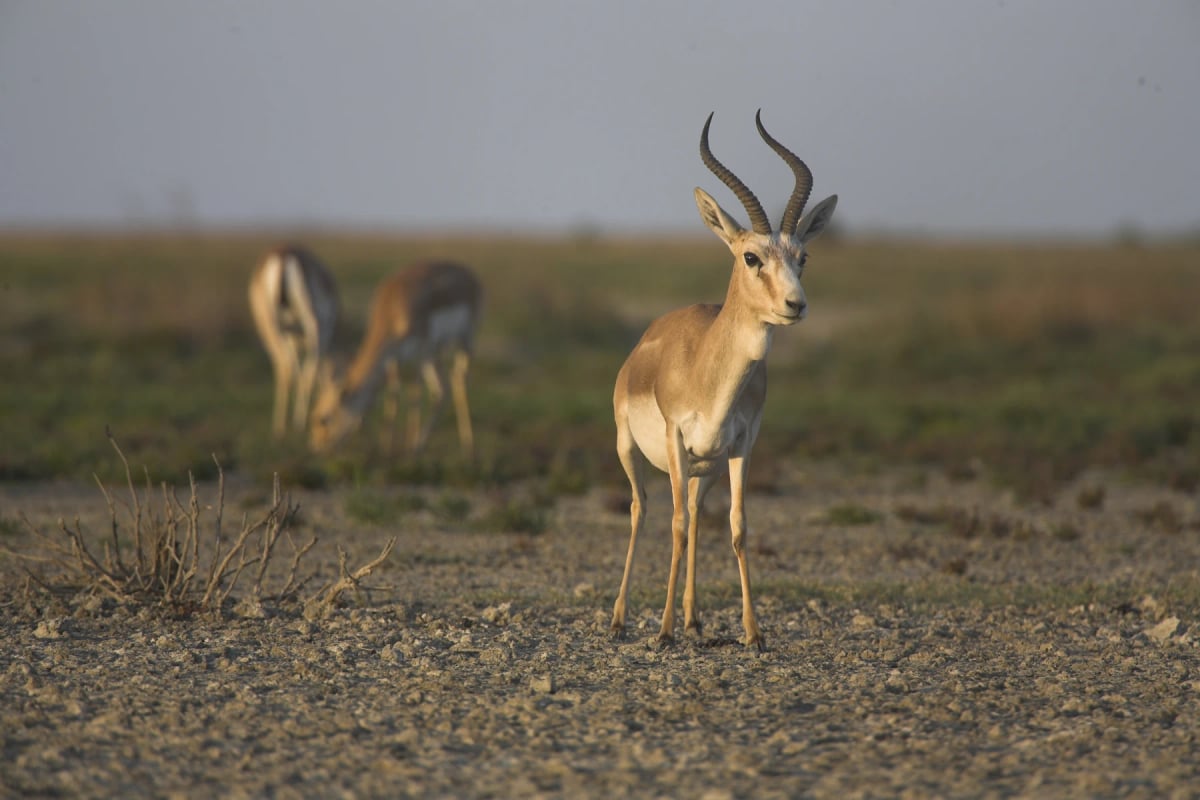
One feature sets this gazelle apart from most of its relatives: the enlarged larynx that gives it its common name. During the rutting season, the throats of adult males swell noticeably, forming a bulge that works as a resonating chamber and amplifies their deep, bellowing calls across open terrain. Outside the rut, both sexes look slender and understated. The coat is pale sandy or tawny on the back, fading to white on the belly, a pattern that blends well with stony and sandy ground. Only males carry horns, which curve gently backward and then sweep upward at the tips. At full speed these animals can reach close to 70 km/h, and they are capable of sustaining a fast pace over considerable distances, a quality that helps them escape wolves, cheetahs, and other predators.
Behavior
Social structure in goitered gazelles is flexible and changes throughout the year. For much of the time, females and their young form small groups separate from adult males, which tend to be more solitary. During autumn and early winter, however, the rut brings large numbers of animals together as males compete intensely for access to females, using their resonating throat calls, chasing rivals, and engaging in horn clashes. After the rut, herds can number in the hundreds during seasonal movements across the steppe. These migrations follow traditional corridors between summer and winter ranges, but border fences and roads increasingly interrupt them. Births typically happen in spring, with females usually producing twins. The young are able to stand and move within hours of birth, which is essential when predators are never far away.
Conservation
The IUCN classifies the goitered gazelle as Vulnerable, reflecting serious population declines across much of its range over recent decades. Poaching remains the most immediate threat: the animals are hunted for meat and, in some areas, for traditional medicine. The spread of livestock grazing puts pressure on the same sparse vegetation the gazelles depend on, particularly in drier years. Infrastructure expansion, including roads, pipelines, and border fences, fragments habitats and blocks the migration routes that populations have used for generations. In some countries, legal protection exists on paper but enforcement is inconsistent. Conservation efforts include protected areas such as national parks and nature reserves in Iran, Kazakhstan, and China, as well as international cooperation to monitor cross-border populations. Reducing illegal hunting and restoring connectivity between fragmented habitats are considered the priorities for the survival of the species over the long term.
Where it is found
The Goitered Gazelle can be found in places such as:
Researched and written by Juan Pablo. Sources: IUCN Red List, scientific literature and regional field guides. Last updated: .
Technical factsheet



Frequently Asked Questions
Why is it called the goitered gazelle?
The name comes from the throat of adult males, which swells visibly during the mating season. This enlarged larynx works like a resonating chamber, amplifying deep, bellowing calls that carry far across open desert and steppe. Outside the rut, the swelling disappears and males look as slender as females. The trait is unique enough among gazelles that it became the defining feature of the species' common name.
Where do goitered gazelles live?
Goitered gazelles range across a wide belt of Central and Western Asia, from Georgia and Azerbaijan in the Caucasus all the way east through Iran, Kazakhstan, Uzbekistan, Turkmenistan, Tajikistan, Kyrgyzstan, Afghanistan, Pakistan, China, and Mongolia. They prefer open, arid landscapes: sandy deserts, gravel plains, and semi-arid steppes with scattered low shrubs. Good visibility is key for them, as it helps them detect predators early.
What do goitered gazelles eat?
Their diet changes with the seasons. In spring they rely on fresh grasses and herbs, which also provide enough moisture to reduce drinking. As plants dry out in summer, they shift to shrubs such as saxaul and saltbush. They are selective feeders, always picking the most nutritious parts available. One remarkable ability is extracting enough water from their food to survive for long periods in landscapes where surface water is scarce.
How fast can a goitered gazelle run?
Goitered gazelles can reach speeds close to 70 km/h, placing them among the faster runners in Asia. More impressive than their top speed is their ability to sustain a rapid pace over long distances. This stamina is crucial when escaping predators such as wolves and cheetahs across open terrain where there is nowhere to hide. Speed and endurance together make them genuinely difficult to catch.
Are goitered gazelles endangered?
The IUCN lists the goitered gazelle as Vulnerable. Populations have dropped considerably across much of their range due to poaching for meat and traditional medicine, competition with livestock for food, and the spread of roads, fences, and pipelines that block traditional migration routes. Protected areas exist in several countries, but enforcement is uneven. Reducing illegal hunting and reconnecting fragmented habitats are the main priorities for the species.
Do goitered gazelles migrate?
Yes, they make seasonal movements between summer and winter ranges, often travelling in herds that can number in the hundreds. These migrations follow corridors that populations have used for generations. Today, border fences, roads, and other infrastructure increasingly cut across those routes, making the journeys far more difficult and sometimes impossible. Restoring safe passage along these traditional corridors is one of the key conservation challenges for the species.
How do goitered gazelles behave during mating season?
The rut takes place in autumn and early winter and transforms the social landscape completely. Males, normally solitary, compete intensely for females by using their resonating throat calls, chasing rivals across the steppe, and clashing horns. Large numbers of animals gather during this period. After mating, females give birth in spring, usually to twins. Newborns can stand and move within hours, which is essential in an environment where predators are always close.