Orca
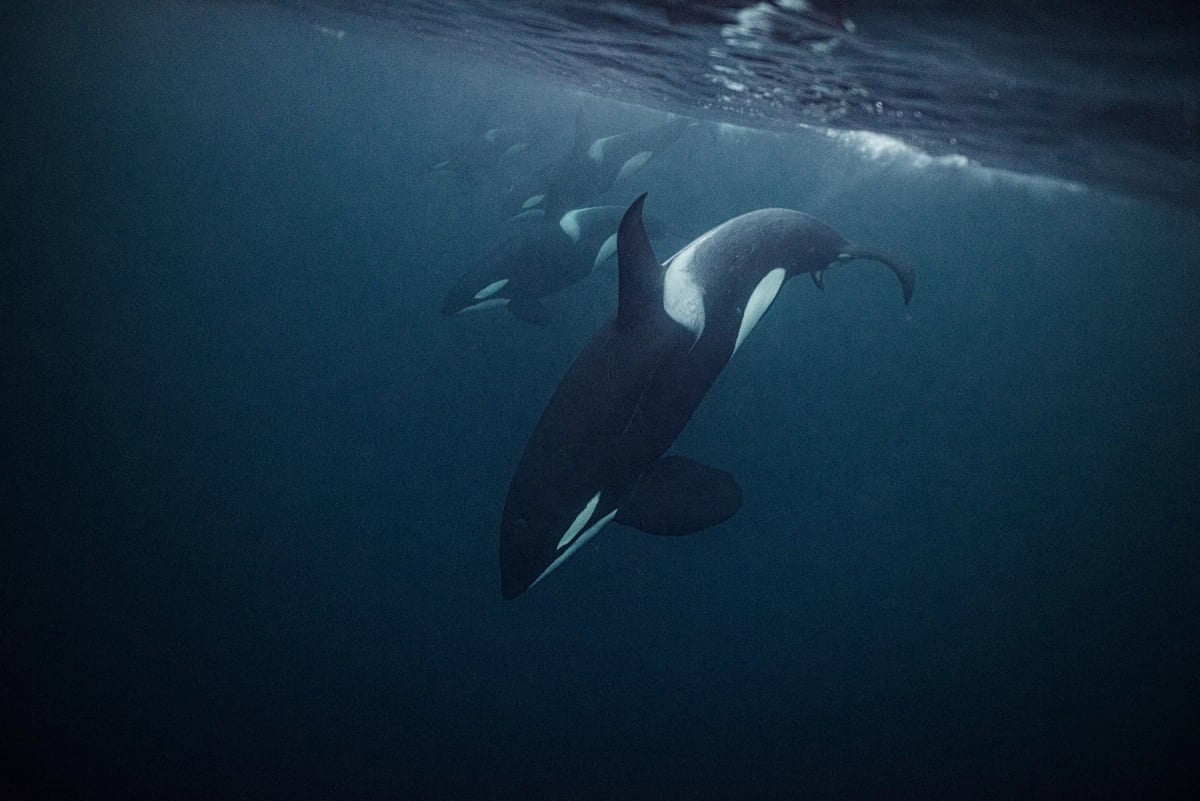
The orca, also called the killer whale, is the largest member of the dolphin family and one of the most widely distributed mammals on the planet, found in every ocean from the edge of the polar ice to tropical seas, though it is most common in cold, productive waters. Males usually reach 6 to 8 meters and around 6 tonnes, with a tall triangular dorsal fin up to 1.8 meters high that makes them unmistakable at sea. Orcas live in stable family groups led by older females, and different populations specialize in completely different prey: some eat only fish, others hunt seals, and a few take on whales far larger than themselves. Each group has its own hunting techniques and its own dialect of calls, passed from one generation to the next. There are no confirmed cases of wild orcas killing people. That combination of intelligence, cooperation and learned culture has made the orca one of the most studied animals in the ocean, and some of its populations, like the Southern Residents of the Pacific Northwest and the Iberian orcas, are now very small.
Orca or killer whale: whale or dolphin?
Orca and killer whale are two names for the same animal, Orcinus orca. Biologically it is a dolphin, the largest species in the family Delphinidae, and it belongs to the toothed whales, the same broad group as sperm whales, belugas and porpoises, so calling it a whale is not wrong, just less precise. The name killer whale comes from the old whalers who saw groups attacking much bigger whales and called them whale killers, asesina de ballenas in Spanish; over time the words switched places. The scientific name Orcinus orca has a similar, darker origin, often translated as something like belonging to the realm of the dead. Many researchers and aquariums prefer the name orca because killer whale sounds more threatening than the animal is to people. What is still debated is whether all orcas belong to one species. Populations around the world differ in size, markings, diet, calls and genes, and they do not mix even when they share the same waters. Scientists call them ecotypes, and in 2024 some proposed splitting the orcas of the North Pacific into separate species.
How big is an orca? Size and weight
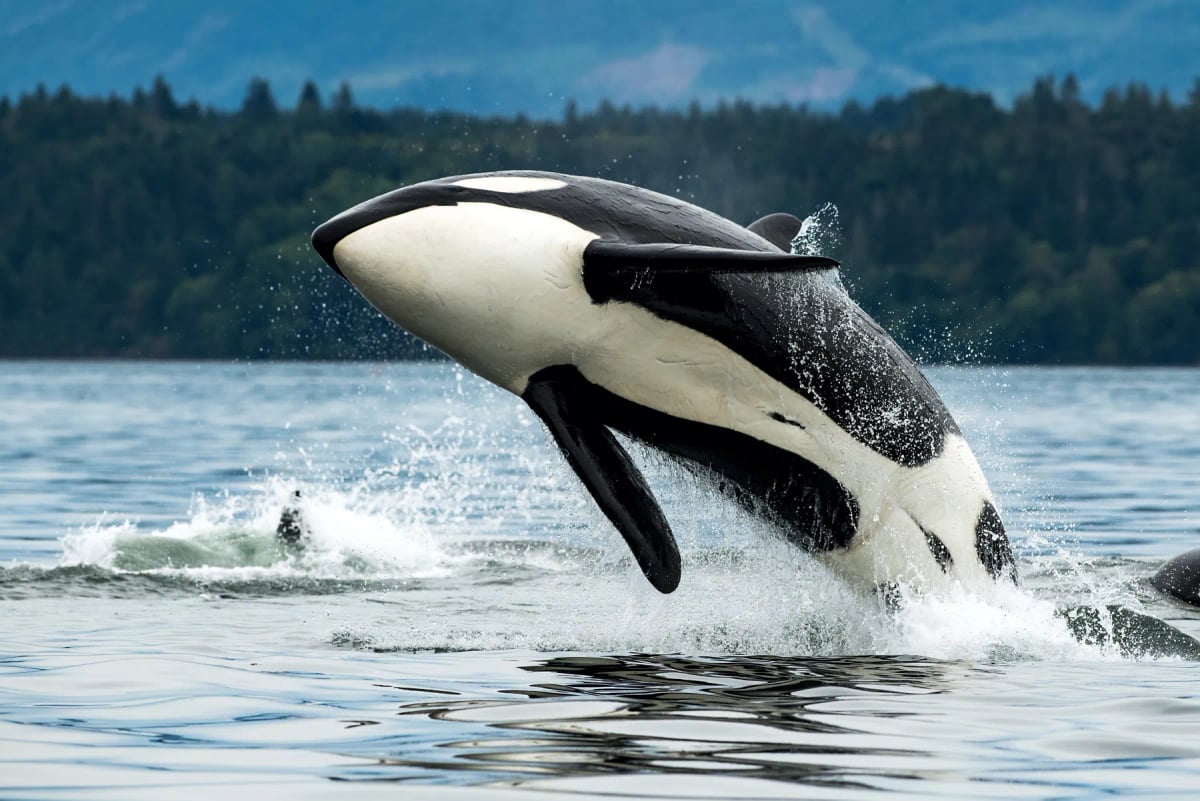
Orcas are by far the largest members of the dolphin family. Adult males usually measure 6 to 8 meters and weigh around 6 tonnes, and the largest orca ever recorded was a male of about 9.8 meters and roughly 10 tonnes. Females are smaller, generally 5 to 7 meters and 3 to 4 tonnes. Size also changes between populations: the orcas of type A in Antarctica and some North Atlantic groups are among the biggest, while some Antarctic types are a meter or two shorter. The clearest difference between the sexes is the dorsal fin. In adult males it grows straight up to about 1.8 meters, like a blade, while in females and young it is shorter and curved backward. Calves are born at about 2.4 meters and 160 to 180 kilograms. Every orca also carries a unique pattern: the white eye patch, the white belly and the gray saddle patch behind the fin differ in shape from one animal to another, and together with nicks in the fin they let researchers recognize individuals for decades. At full speed, an orca can briefly reach around 55 kilometers per hour.
Where do orcas live and where can you see them?
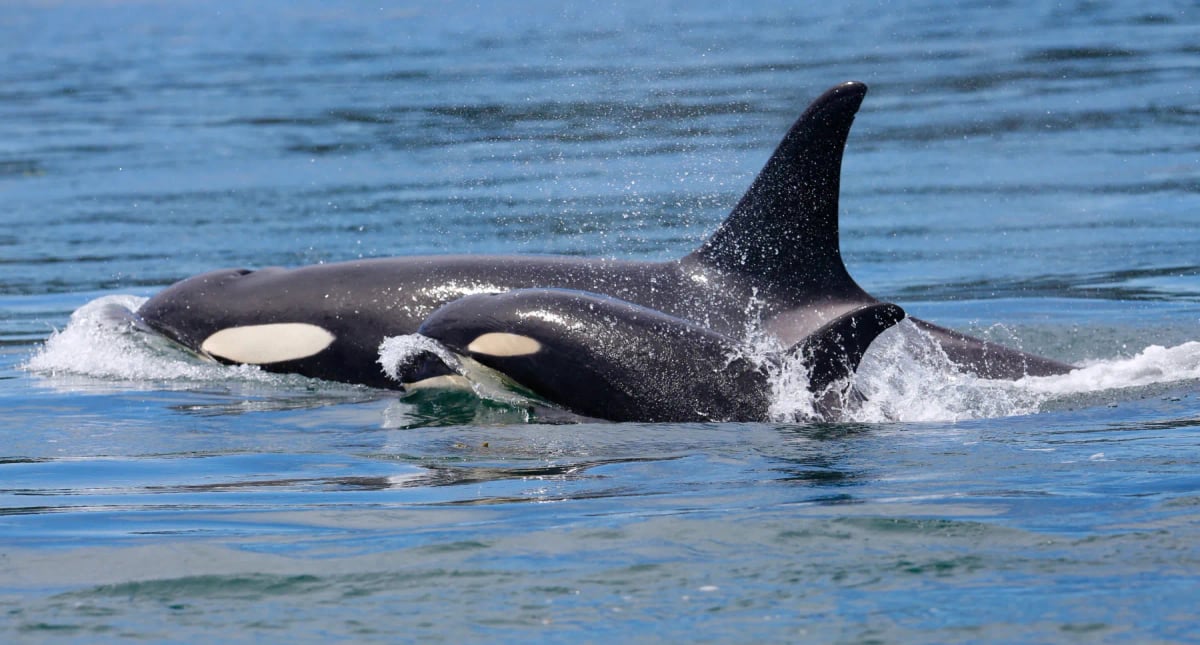
Orcas live in every ocean on Earth, a range matched by almost no other mammal, but they are far from evenly spread. They are most abundant in cold, productive waters, and the strongest populations live in the North Pacific from Washington and British Columbia to Alaska, Kamchatka and Hokkaido, in the North Atlantic around Norway, Iceland and the Faroes, and in the Southern Ocean around Antarctica, which holds the largest numbers. In warm seas they also exist, but at low densities and mostly far offshore, so sightings there are rare and unpredictable. The best places to see orcas are those where they come back every year after the same prey: the fjords of northern Norway from November to January for herring, Snæfellsnes in Iceland in winter, Johnstone Strait and the San Juan Islands in summer for salmon, Monterey Bay in spring for gray whale calves, Shetland in summer for seals, the Strait of Gibraltar in July and August for tuna, Bremer Bay in Western Australia from January to April, Punta Norte at Península Valdés from February to April, and the Antarctic Peninsula on summer cruises.
What do orcas eat?
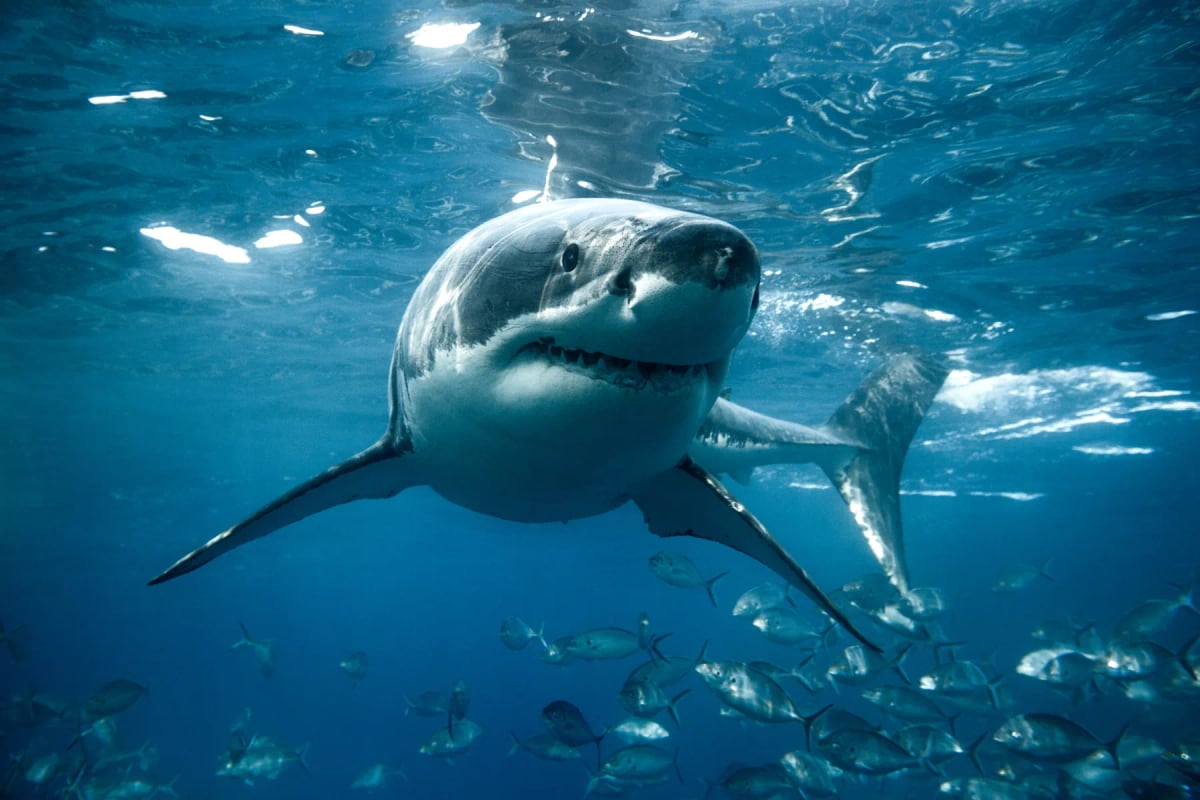
No two orca populations eat the same way. The resident groups of the North Pacific feed almost exclusively on salmon and will ignore a seal swimming past, while the transient groups sharing that same coast hunt seals, sea lions and porpoises and barely touch fish. In Norway, orcas herd herring into tight balls and stun them with blows of the tail. Off Patagonia, some individuals deliberately strand themselves on the beach to seize sea lion pups and then work their way back into the surf. In Antarctica, groups create waves to wash seals off ice floes. Off South Africa, a pair became known for killing white sharks and eating only their livers. These are learned traditions rather than instinct, taught by older animals to younger ones, and they persist for generations within a family line.
Social structure
Orca society is built around the mother. Offspring of both sexes usually stay with her for life, forming a matriline that may include three or four generations swimming together. Several related matrilines make up a pod, and pods that share a dialect form larger clans that meet seasonally. Females stop reproducing around their forties but can live decades longer, a trait shared with very few animals, and research suggests those older females act as living memory for the group, leading it to reliable feeding grounds in lean years. Males never leave their mother and tend to die within a few years of losing her. Communication runs through a repertoire of whistles and pulsed calls that differs from one family line to the next, so researchers can identify a group by sound alone.
Intelligence
The orca has one of the largest brains of any animal, with a highly developed region associated with emotion and social processing. What sets it apart is not raw problem solving but culture: behaviors invented by one individual can spread through a group and survive long after that animal dies. Hunting techniques, vocal dialects, migration routes and even fads pass between generations by teaching and imitation. One documented example is the habit of carrying dead salmon on the head, which appeared in a Pacific Northwest population, spread widely and then faded away. Orcas coordinate complex group hunts with clear role division, use echolocation with remarkable precision and recognize individual companions after years apart. Few animals outside primates show this depth of social learning.
Do orcas kill humans?
Despite the name killer whale, there is no confirmed case of a wild orca killing a person. Orcas are powerful predators fully capable of it, and they hunt animals as big as great white sharks and blue whales, yet in the wild they have consistently left people alone, even divers and snorkelers in the water beside them. The only recorded attack on a surfer, in California in 1972, left a bite wound that healed. Deaths have happened only in captivity, where at least four people were killed by orcas, most famously the trainer Dawn Brancheau, killed by Tilikum at SeaWorld Orlando in 2010. Those animals were kept in small tanks, far from their natural social life, a history that turned public opinion against keeping orcas in marine parks. In the wild, orcas often approach boats out of curiosity. The interactions off Spain and Portugal since 2020, in which a small group of Iberian orcas pushes and breaks the rudders of sailboats and has sunk a few, are the clearest exception, but nobody has been hurt, and scientists describe them as play or a learned habit rather than aggression toward people.
How many orcas are in captivity?
About 55 orcas lived in captivity in 2025, in marine parks in North America, South America, Europe and Asia. Seventeen are in the United States, all at SeaWorld parks in San Diego, Orlando and San Antonio, which stopped breeding orcas in 2016 after public pressure that grew with the documentary Blackfish. China has become the largest holder, with some 24 orcas, most of them at Chimelong Ocean Kingdom, many of them caught in Russian waters, and Japan keeps seven in three aquariums. Several countries have banned or limited orca captivity: Canada banned it in 2019, and France banned shows with marine mammals from 2026, which led Marineland Antibes to close in January 2025, leaving its last two orcas, Wikie and Keijo, waiting to be moved. Orcas in captivity often live shorter lives than wild ones, and most captive males have a collapsed dorsal fin, something seen in very few wild orcas. Live captures from the wild have nearly ended, although Russia caught orcas for Chinese aquariums as recently as 2018. Sanctuary projects, such as one planned in Nova Scotia, Canada, aim to give captive orcas a sea pen in natural water.
How many orcas are left in the world?
Nobody knows exactly, but there are at least 50,000 orcas in the world, and possibly more, with the largest numbers in the Southern Ocean around Antarctica. Globally the orca is listed as Data Deficient, because its populations differ so much that a single worldwide assessment says little: some are large and healthy, while others are in serious trouble. The Southern Residents of the Salish Sea numbered only 74 in 2025 and are listed as Endangered in the United States and Canada, held back by the decline of chinook salmon. The Iberian orcas of the Strait of Gibraltar numbered about 37 in 2023 and are listed as Critically Endangered by the IUCN, dependent on bluefin tuna. Scotland's West Coast Community is down to two males that will die without leaving calves. Chemical pollution is a particular threat: as top predators, orcas accumulate industrial compounds such as PCBs, banned decades ago, which harm their reproduction and pass to calves through milk. Underwater noise, collisions with vessels and the loss of prey caused by overfishing complete the picture, and in the Arctic, the melting ice is opening new hunting areas to them.
Where it is found
The Orca can be found in places such as:
Researched and written by Juan Pablo. Sources: IUCN Red List, scientific literature and regional field guides. Last updated: .
Technical factsheet

Frequently Asked Questions
Why is the orca's fin bent?
A collapsed or bent dorsal fin is very common in captive male orcas and rare in the wild, where only about 1 percent of males have one. The fin has no bone, only stiff connective tissue, and in captivity orcas spend most of their time at the surface, swim in circles in small tanks and may be less hydrated, so the tall fin of an adult male slowly folds over. In the wild, a bent fin usually points to injury, illness or old age.
Do orcas eat great white sharks?
Some do. Off South Africa, two male orcas known as Port and Starboard began killing great white sharks in False Bay and near Gansbaai around 2017, removing their livers, which are rich in fat, and leaving the rest. Afterward, white sharks largely abandoned those areas for years. Orcas have also killed white sharks off California and Australia, and in 2022 a group was filmed doing it off Mossel Bay. Most orcas, however, never hunt sharks at all.
What eats orcas?
Nothing. Adult orcas are apex predators with no natural enemies: no shark or other animal hunts them. Calves can be at risk from other orcas in rare cases, and large whales sometimes fight back, as humpbacks do when they chase orcas away from their prey. The real threats to orcas come from people, through pollution, the loss of prey such as salmon and tuna, underwater noise, collisions with boats and, in the past, hunting and capture for aquariums.
Can you swim with orcas?
In a few places, yes. The best known is northern Norway, around Skjervøy, where from November to January tour boats let people snorkel near orcas feeding on herring, using dry suits in water close to freezing. There is no specific regulation there, and the growing number of boats worries scientists, so choose operators that keep their distance and limit time in the water. In most countries swimming with orcas is not allowed, and approaching them in the water is never a good idea.
How fast can an orca swim?
Orcas are among the fastest marine mammals. They usually cruise at 5 to 10 kilometers per hour, but in short bursts while chasing prey they can reach about 55 kilometers per hour, speeds they keep for only a few seconds. That speed, together with teamwork, lets them catch fast prey such as dolphins, tuna and even young whales, and to chase large whales for hours until they tire.
How long do orcas live?
Females typically live between 50 and 80 years, and a few documented individuals reached higher ages. Males have shorter lives, usually 30 to 50 years. Females stop reproducing around their forties yet survive for decades afterwards, something recorded in very few species, and those older females often lead the group to feeding areas during difficult seasons.
Why do orcas attack boats in Spain and Portugal?
Since 2020 a small group in the Strait of Gibraltar and along the Iberian Atlantic coast has repeatedly pushed and broken sailboat rudders. Nobody has been injured. Researchers lean toward a learned behavior that spread within the group, possibly starting as play or as a reaction by one individual, rather than aggression. Sailors are advised to slow down and avoid maneuvers that prolong the encounter.