Lancehead
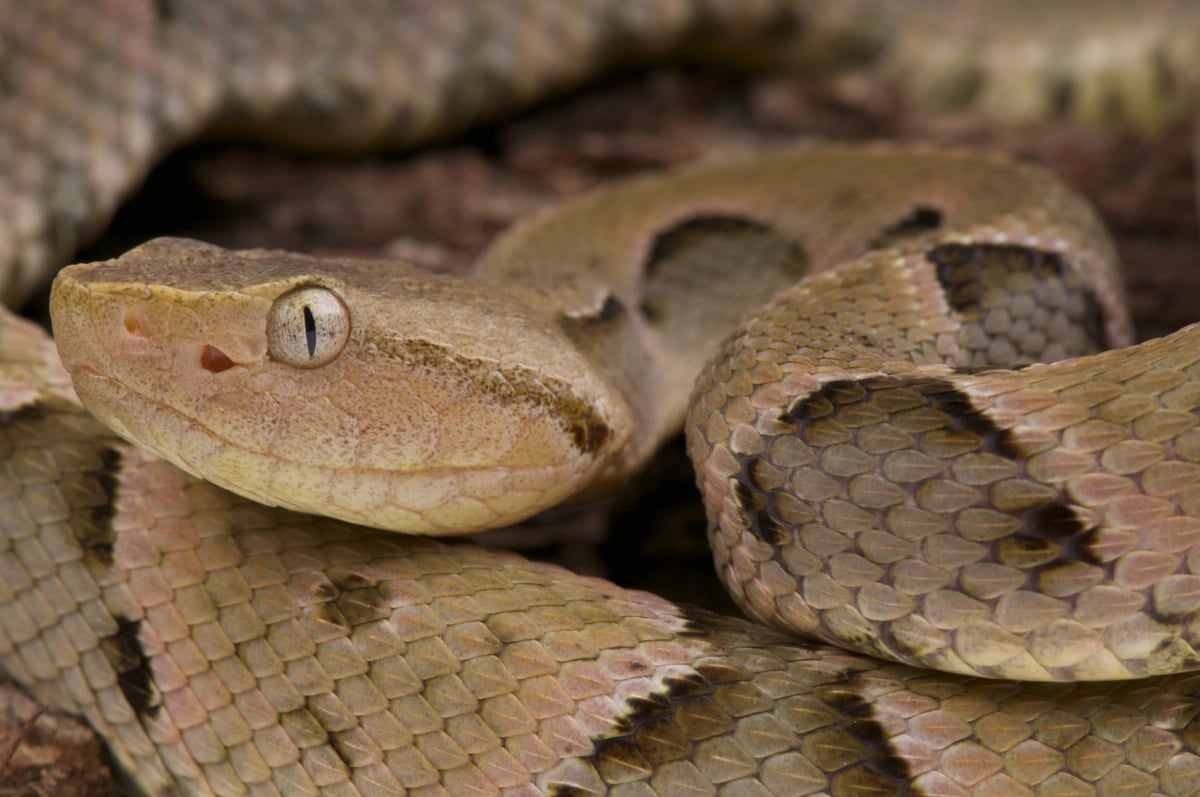
Lanceheads are a group of venomous pit vipers belonging to the genus Bothrops, found from southern Mexico to Argentina. They take their name from the broad, triangular head that tapers to a point, giving the skull a spear-like outline. Their patterned scales in shades of brown, tan and olive blend seamlessly with leaf litter and soil, making them nearly invisible on the forest floor. A pair of heat-sensing pits between the eye and nostril allows them to detect warm-blooded prey even in complete darkness. They are primarily nocturnal hunters that ambush rodents, amphibians, lizards and small birds. When threatened, they may strike quickly, delivering a hemotoxic venom capable of destroying tissue and disrupting blood clotting. Lanceheads are responsible for more snakebite incidents in Latin America than any other snake group, yet they provide genuine ecological value by keeping rodent populations in check.
Habitat and distribution
Bothrops lanceheads span an enormous range, from the tropical forests of southern Mexico all the way to the grasslands of Argentina and Uruguay. Across this territory they thrive in a remarkable variety of environments: dense rainforest, dry woodland, open savanna, riverbanks, sugarcane fields and the weedy edges of farming villages. Many species show a preference for areas near water, where prey is plentiful year round. Some, like the fer-de-lance (Bothrops asper), are equally at home in lowland jungle and on mountain slopes up to around 2,500 metres. Their ability to adapt to disturbed and agricultural landscapes is one reason this genus is so widespread and, in many areas, so frequently encountered by people working or living close to natural vegetation.
Diet
Sit-and-wait ambush hunting defines how lanceheads feed. Coiled and motionless among roots or leaf litter, they wait for prey to come within striking distance before launching a rapid bite and releasing the animal to die nearby from the venom. Juveniles rely heavily on small lizards, frogs and large insects, while adults shift toward warm-blooded prey such as mice, rats, opossums and small birds. This dietary shift with age is well documented across the genus and reflects both the snake's growing body size and its changing energy needs. By consuming large numbers of rodents, lanceheads play a real role in keeping populations of agricultural pests in check, making them quietly useful animals in the farming regions where they are so often feared.
Behavior
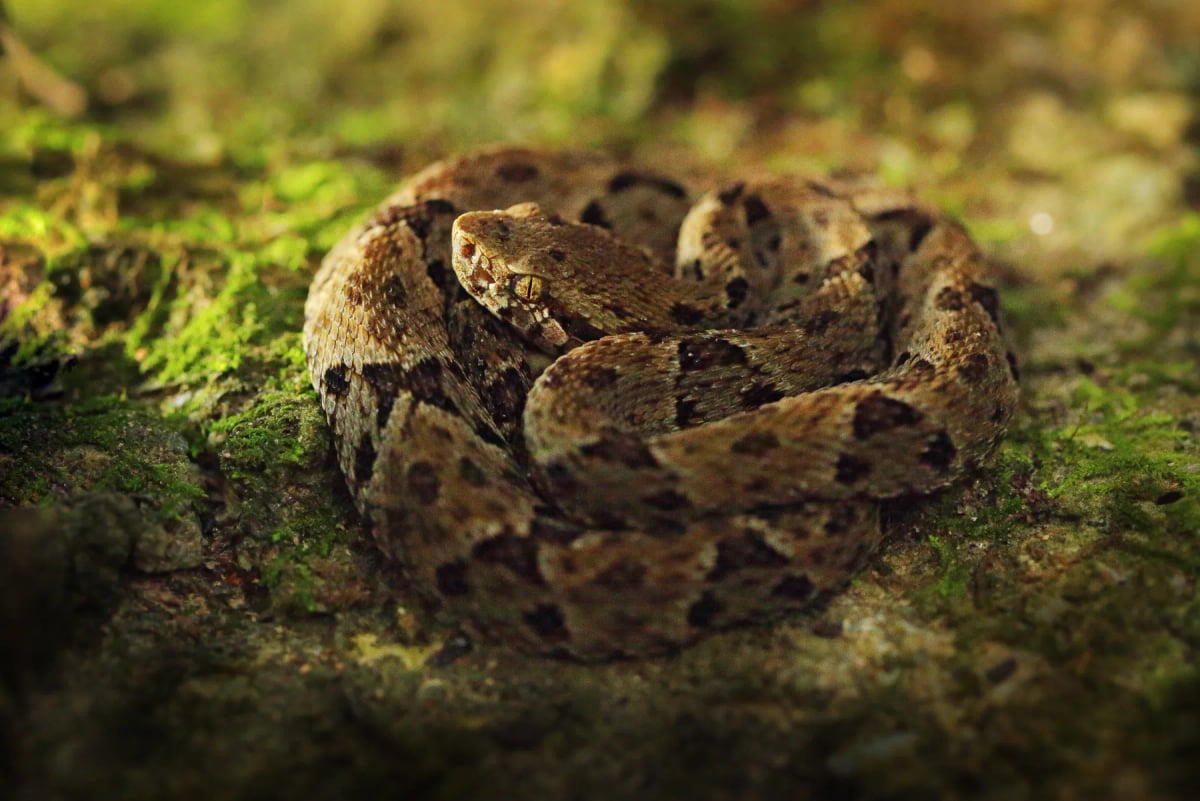
For most of the daylight hours, lanceheads rest quietly in shaded spots beneath fallen logs, dense undergrowth or thick layers of leaf litter. As temperatures drop toward dusk, they become active, using the heat-sensing pits located between each eye and nostril to detect the warmth of nearby animals in conditions where sight is of little use. Adults tend to be solitary, coming together only to mate. Females do not lay eggs but instead give birth to live young, with litter sizes ranging from a handful to more than thirty in larger species. When disturbed, a lancehead may flatten its body, vibrate its tail and strike repeatedly. This defensive response, rather than aggression for its own sake, is the main reason so many bites occur when people accidentally step on or startle a resting snake.
Venom
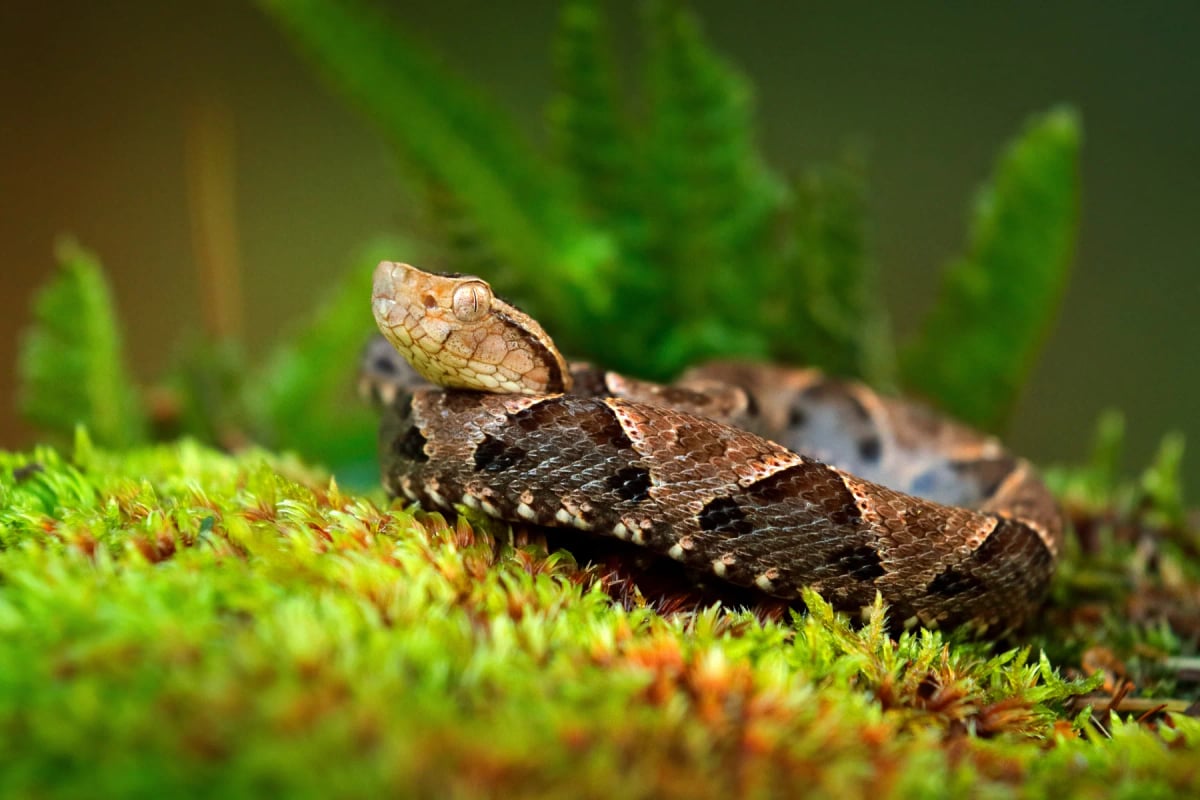
Few venoms in the Americas are as medically significant as that of Bothrops. The venom is primarily hemotoxic, meaning it attacks the blood and the walls of blood vessels rather than the nervous system. A bite can trigger uncontrolled bleeding, severe swelling, blistering and tissue death that, without treatment, may lead to the loss of a limb or even death. Some species also produce compounds with cytotoxic and proteolytic properties, breaking down tissue around the bite site at a rapid rate. Despite this, deaths are largely preventable. Polyvalent antivenom developed from Bothrops venom is produced in several Latin American countries, and prompt hospital care dramatically improves outcomes. Researchers also study Bothrops venom for potential medical uses, as some of its components have contributed to the development of drugs that treat blood clotting disorders.
Relation with humans
No other snake group causes as many bites across Latin America as Bothrops. Their preference for agricultural land and areas near human settlements puts them in regular contact with farmers, plantation workers and people walking at night. In Brazil alone, Bothrops species account for the vast majority of the roughly 30,000 snakebites reported to health authorities each year. Fear of lanceheads is deep-rooted in rural communities, and this often leads to snakes being killed on sight even when they pose no immediate threat. Ironically, removing lanceheads from an area can allow rodent populations to rise, which creates fresh problems for crops and food stores. Greater awareness of their role in local ecosystems, alongside clear guidance on how to avoid accidental bites, remains one of the most practical ways to reduce conflict between these snakes and the communities they live alongside.
Conservation
Across the genus as a whole, lanceheads are assessed as Least Concern on the IUCN Red List, reflecting the fact that most species remain relatively common within their ranges. That said, the picture is not uniform. A handful of island-endemic species face serious pressure: the golden lancehead (Bothrops insularis), found only on Ilha da Queimada Grande off the coast of São Paulo, Brazil, is listed as Critically Endangered due to its tiny habitat and the destruction of forest on the island. For more widespread species, the main concerns are habitat loss through deforestation and deliberate killing by people. Because lanceheads are so closely linked to rodent control in farming areas, their disappearance from a region can have real knock-on effects for local food production and ecosystem balance.
Where it is found
The Lancehead can be found in places such as:
Researched and written by Juan Pablo. Sources: IUCN Red List, scientific literature and regional field guides. Last updated: .
Technical factsheet








Frequently Asked Questions
Are lanceheads dangerous to humans?
Yes, lanceheads are considered the most medically important snakes in Latin America. Their hemotoxic venom causes severe swelling, bleeding and tissue damage. Bites happen most often when people accidentally step on a resting snake, especially at night or in agricultural areas. With prompt treatment and antivenom, the vast majority of bite victims recover fully. The real danger lies in delayed medical care, which can lead to lasting injury.
What do lanceheads eat?
Lanceheads eat different prey depending on their age. Young snakes hunt small frogs, lizards and large insects. As they grow, they switch to warm-blooded animals like mice, rats, small birds and opossums. They are ambush hunters that stay perfectly still and wait for prey to come close before striking. This diet makes them genuinely useful in farming regions, where they help control populations of rodents that damage crops and food stores.
Where do lanceheads live?
Lanceheads are found across an enormous stretch of the Americas, from southern Mexico down through Central America and across nearly all of South America to Argentina and Uruguay. They adapt to a wide range of environments, including rainforests, dry woodlands, savannas, riverbanks and farmland. Many species favor spots near water, and some tolerate disturbed habitats very well, which is why they are so often encountered close to villages and plantations.
How do lanceheads sense their prey?
Lanceheads have a pair of heat-sensing pits located between each eye and nostril. These organs detect the body heat of nearby animals, allowing the snake to locate warm-blooded prey even in total darkness. This makes them highly effective hunters at night. Combined with their excellent camouflage among leaves and soil, they can sit completely still and still be fully aware of any small animal moving within striking range.
Do lanceheads lay eggs?
No, lanceheads give birth to live young rather than laying eggs. This is common across the Bothrops genus. Litter sizes vary quite a bit between species. Smaller species may give birth to just a handful of young, while larger ones can produce more than thirty offspring in a single litter. The newborn snakes are fully formed and already venomous from birth, capable of hunting on their own almost immediately.
Is the lancehead endangered?
Most lancehead species are listed as Least Concern by the IUCN, meaning they are not currently at risk as a group. However, some island species face serious threats. The golden lancehead, found only on a single small island off the coast of Brazil, is Critically Endangered because its entire habitat fits within a very limited area. For widespread species, the main pressures are deforestation and deliberate killing by people who fear them.
Why are lanceheads so hard to spot in the wild?
Lanceheads have scales patterned in browns, tans and olives that blend almost perfectly with forest floors covered in dead leaves and soil. They rest motionless for long stretches of the day, which makes them even harder to notice. This camouflage is one of the main reasons so many bites happen accidentally. A person can walk very close to a resting lancehead without ever seeing it before the snake feels threatened and strikes.