Turpial
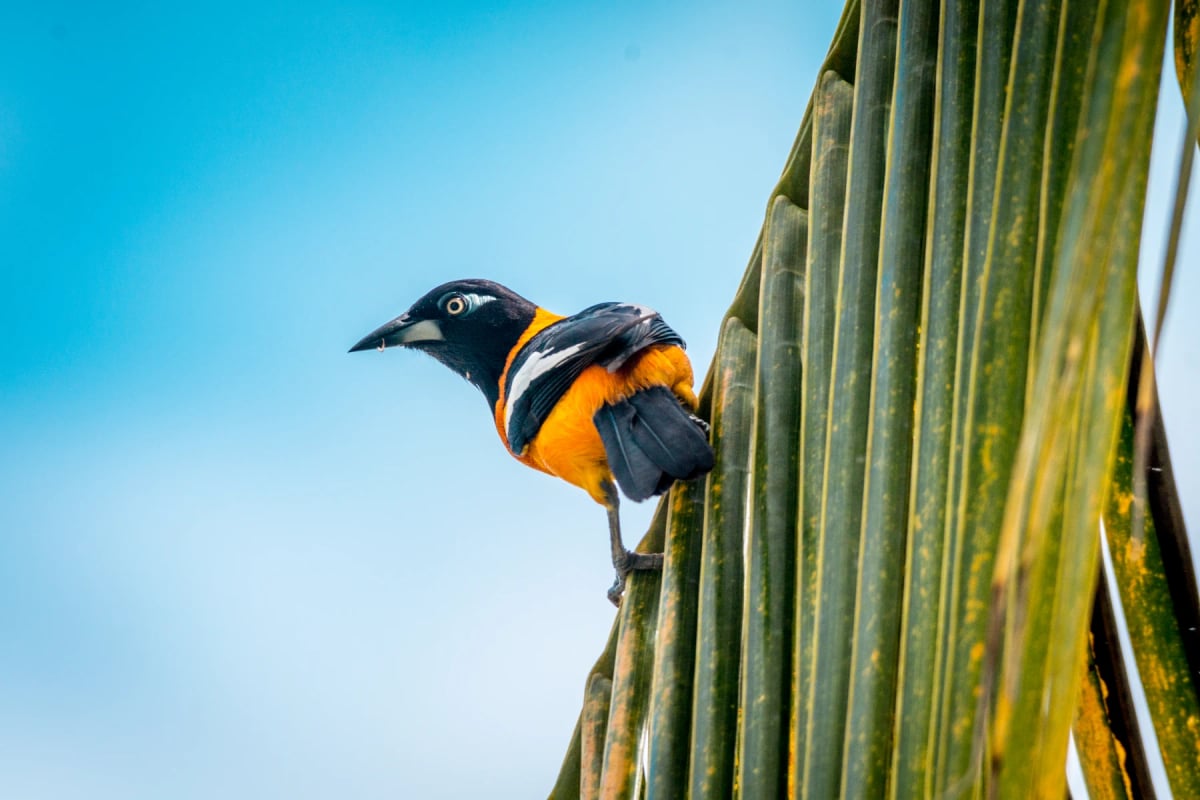
The Venezuelan troupial is the national bird of Venezuela and one of the most recognizable birds in northern South America. It belongs to the oriole family and stands out with its vivid orange body, bold black hood extending across the chest, and a patch of bare blue skin around the eye. Males and females share similar coloring, which is unusual among orioles. Rather than building its own nest, the troupial typically takes over nests already built by other bird species, a behavior known as nest piracy. It sings a series of rich, clear whistles that carry across open landscapes and are considered among the most beautiful bird songs in the region. Found in dry savannas, scrub, and open woodlands from Venezuela into Colombia and Trinidad and Tobago, it feeds on insects, fruits, and nectar, contributing to both pest control and seed dispersal.
Habitat and distribution
Across its range, the Venezuelan troupial favors dry and semiarid environments where trees and shrubs grow in scattered clusters. It is most at home in thorny scrubland, dry savannas, open woodlands, and the edges of gallery forests. Venezuela holds the largest and most stable populations, and the species also occurs across eastern and northern Colombia, where similar dry habitats extend toward the Caribbean coast. In Trinidad and Tobago it is present but less widespread. Cacti and thorny shrubs are particularly important in its habitat, as they offer both shelter and food in the form of insects and fruit. The troupial tends to avoid dense, closed canopy forest, preferring landscapes with open ground and good visibility, which suits its territorial and ground feeding habits.
Appearance
Few birds in South America are as instantly recognizable as the Venezuelan troupial. Its body is a deep, vivid orange that covers the breast, belly, and back, while a bold black hood extends from the head down across the chest in a clean, sharp border. The wings are black with a prominent white stripe that becomes visible in flight. One of its most distinctive features is the patch of bare blue skin surrounding each eye, which gives the bird an alert, striking expression. Unlike most orioles, males and females share nearly identical plumage, making them difficult to tell apart in the field. The bill is strong and slightly curved, well suited to probing flowers for nectar and pulling insects from bark and foliage.
Song
The song of the Venezuelan troupial is widely regarded as one of the finest in all of northern South America. It consists of a series of rich, full whistles, typically delivered in repeating phrases from a visible perch high in a tree or on top of a cactus. Each note is clear and resonant, carrying easily across open scrubland and savanna. The bird often sings for long stretches, and neighbouring individuals sometimes respond with their own calls, creating a kind of vocal exchange across the landscape. Both males and females are capable of singing, which is another trait that sets this species apart from many other orioles. The song plays an important role in territory defense and is a deeply familiar sound in the Venezuelan countryside.
Behavior
Rather than constructing its own nest, the troupial takes over nests already built by other bird species, a strategy known as nest piracy. It drives away the original occupants, sometimes destroying eggs or chicks in the process, and then uses the nest to raise its own young. This behavior is distinct from brood parasitism, where eggs are simply left for another species to incubate. The troupial moves in, defends the nest actively, and raises its chicks itself. Outside of the breeding season it tends to be solitary and highly territorial, often chasing away other birds that enter its area. It feeds on insects, fruit, and nectar, and has been observed piercing the base of flowers to reach nectar without pollinating the plant, a habit known as nectar robbing.
Conservation
The IUCN currently rates the Venezuelan troupial as Least Concern, reflecting a population that remains widespread and reasonably stable across its range. That said, the species faces ongoing pressure in certain areas. Capture for the pet trade is a notable concern, particularly in Venezuela, where the troupial's beauty and song make it a popular cage bird. Habitat loss driven by agricultural expansion and the clearing of dry scrubland also reduces the availability of suitable territory in some parts of its range. As the national bird of Venezuela, it enjoys a degree of cultural recognition that may support public interest in its protection. Continued monitoring of wild populations and enforcement of regulations around capture and trade will be important for keeping this species secure over the long term.
Researched and written by Juan Pablo. Sources: IUCN Red List, scientific literature and regional field guides. Last updated: .
Technical factsheet






Frequently Asked Questions
What does the Venezuelan troupial eat?
The Venezuelan troupial eats a varied diet of insects, fruit, and nectar. It hunts insects among bark and foliage, feeds on berries and small fruits, and visits flowers for nectar. It sometimes pierces the base of a flower to reach the nectar without entering through the opening, which means it skips the pollination step entirely. This mix of food sources makes it useful for pest control and seed dispersal in its habitat.
Is the troupial really Venezuela's national bird?
Yes, the Venezuelan troupial was declared the national bird of Venezuela in 1958. It was chosen for its striking appearance and its beautiful song, both of which have made it a deeply familiar symbol across the country. It appears in Venezuelan art, music, and everyday culture, and its image is widely recognized even by people who have never seen one in the wild.
Why does the troupial steal other birds' nests?
The troupial does not build its own nest. Instead, it takes over nests already built by other species, driving the original owners away and sometimes removing their eggs or chicks. This is called nest piracy. Once the troupial has claimed the nest, it defends it actively and raises its own young there. It is a bold and effective strategy that saves the troupial the effort of construction while still giving it a safe place to breed.
Where does the Venezuelan troupial live?
The Venezuelan troupial is found mainly in Venezuela, where populations are largest, as well as in parts of Colombia and Trinidad and Tobago. It prefers dry environments such as savannas, thorny scrubland, and open woodlands. It tends to avoid thick forest, favouring areas with scattered trees, good visibility, and plenty of cacti and shrubs that provide both shelter and food throughout the year.
Are male and female troupials easy to tell apart?
Not at all, which is unusual for an oriole. In most species of the oriole family, males are far more colourful than females. The troupial breaks that rule: both sexes share the same vivid orange plumage, black hood, white wing stripe, and bare blue skin around the eye. This makes it very difficult to distinguish a male from a female just by looking at them in the field.
Is the Venezuelan troupial endangered?
The IUCN lists the Venezuelan troupial as Least Concern, meaning its population is considered stable overall. However, it does face some real pressures. Capture for the pet trade is a problem, especially in Venezuela, where its song and colours make it highly desirable as a cage bird. The loss of dry scrubland to agriculture also reduces the habitat available to it in some areas. Ongoing monitoring and trade regulations remain important.
What does the troupial's song sound like?
The troupial's song is made up of rich, clear whistles arranged in repeating phrases. It is loud enough to carry across open savanna and scrubland, and the bird often sings from a high, visible perch. The song is considered one of the most beautiful of any bird in northern South America. Both males and females sing, and neighbouring birds will sometimes call back and forth to each other across the landscape.