Zebra
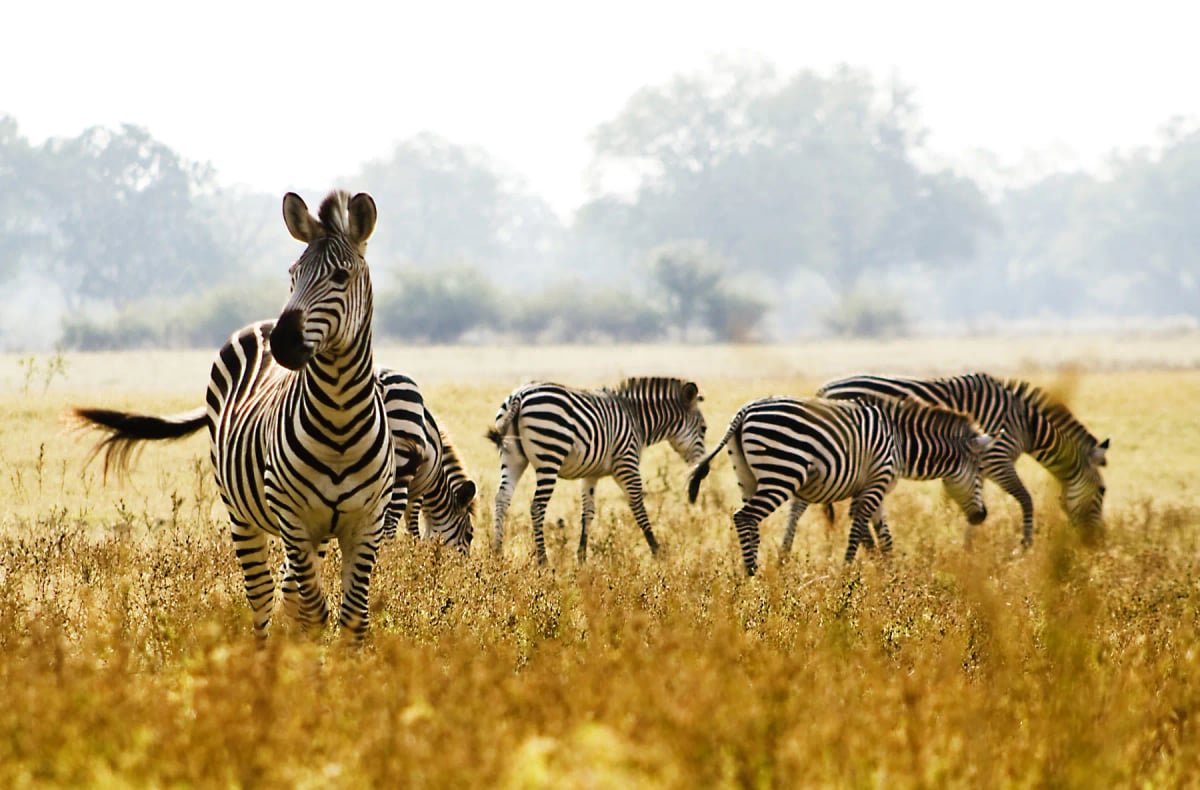
Zebras are grazing equids native to Africa, instantly recognizable by their black and white stripes that serve in camouflage, social bonding and fly deterrence. The plains zebra is the most widespread species, forming large herds across eastern and southern Africa. They migrate with seasonal rains, covering long distances to find fresh grass and water. Strong kicks and group vigilance help them defend against predators such as lions and hyenas. While some populations remain stable, others are declining due to fencing, hunting and habitat fragmentation, leading the IUCN to classify the group as Near Threatened.
Species
Africa is home to three zebra species. The plains zebra is the most numerous and widespread, ranging across eastern and southern grasslands, and is classified as Near Threatened. The mountain zebra, restricted to Namibia, Angola and South Africa, has narrower stripes, a stiff upright mane and a distinctive throat dewlap, and is considered Vulnerable. Grevy's zebra, found only in northern Kenya and a small part of Ethiopia, is the largest and most threatened, listed as Endangered, with finer stripes, larger ears and a build closer to a wild ass than a horse.
Habitat and distribution
Zebras occupy savannas, open grasslands and lightly wooded plains across eastern and southern Africa. Plains zebras range the widest, moving with the rains between Tanzania and Kenya as part of the great migration, and following long seasonal routes between Botswana's Okavango Delta and the Makgadikgadi Pans. Mountain zebras keep to rocky hills and escarpments in Namibia and South Africa, while Grevy's zebra survives in the drier, more arid country of northern Kenya, where it depends on permanent water sources scattered across an otherwise harsh landscape.
Diet
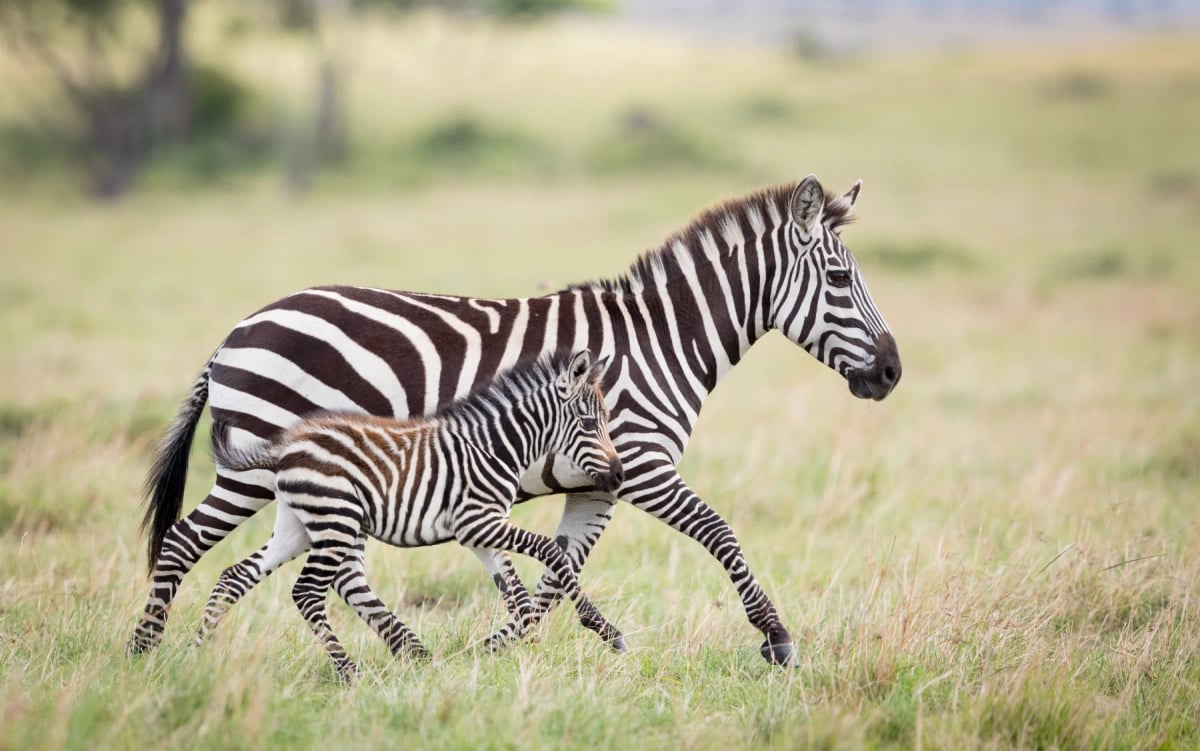
Zebras are grazers that feed mainly on grasses, including coarser and taller stems that many other herbivores avoid. Their digestion is less efficient than that of ruminants like wildebeest, so they pass food through quickly and eat large volumes to compensate. This makes them effective pioneer grazers, opening up tall grass and clearing the way for other species to reach the shorter, more nutritious growth underneath. Zebras need to drink regularly and rarely range far from a reliable water source, which strongly shapes their seasonal movements.
Behavior
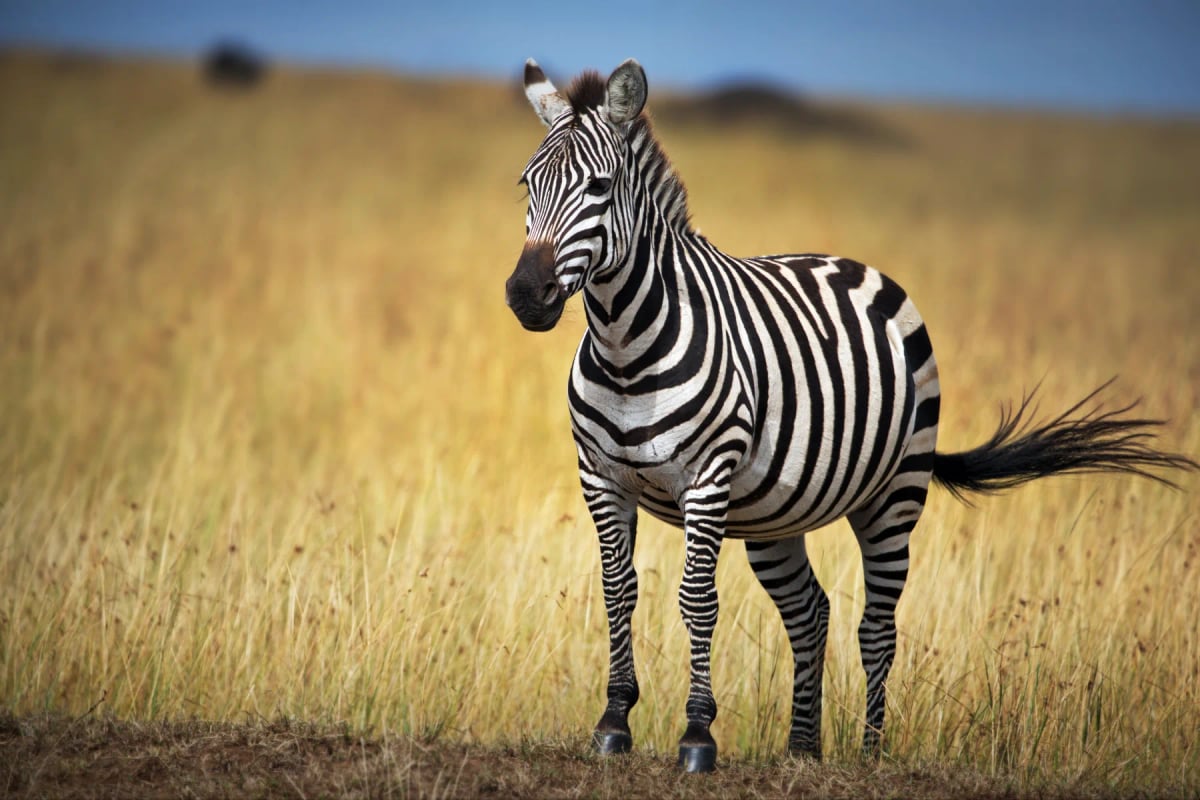
Plains and mountain zebras live in family groups led by a single stallion, with mares and their foals staying together for years. Grevy's zebra behaves differently, with males defending fixed territories around water rather than following a herd. Zebras recognize each other partly through their individual stripe patterns and communicate with brays, whinnies and body postures. When a predator approaches, the herd often bunches together, with adults positioning themselves to shield foals and lashing out with powerful kicks if cornered.
Conservation
Conservation status varies sharply between the three species. The plains zebra is Near Threatened, with populations affected by veterinary fencing that blocks ancient migration routes, along with hunting and habitat loss. The mountain zebra is Vulnerable, after the Cape population was reduced to only a few dozen animals in the twentieth century before recovering under strict protection. Grevy's zebra is Endangered, with fewer than three thousand left in the wild, squeezed by competition with livestock for water and grazing land.
5 Curiosities about the Zebra
Here are six quick facts people often miss about zebras: Every zebra has a unique stripe pattern, much like a human fingerprint, which helps foals recognize their own mothers in a crowded herd. Zebras are actually black skinned with white stripes, not the other way around. Their stripes may confuse biting flies and disrupt a predator's ability to single out one animal in a moving herd. Unlike horses, zebras have never been successfully domesticated and keep strong wild instincts. Grevy's zebra is the largest living wild equid, closer in build to a donkey than a horse. A cornered zebra's kick can injure or even kill a lion.
Where it is found
The Zebra can be found in places such as:
Researched and written by Juan Pablo. Sources: IUCN Red List, scientific literature and regional field guides. Last updated: .
Technical factsheet

Frequently Asked Questions
Why do zebras have stripes?
Scientists still debate the exact purpose of zebra stripes, but several explanations have strong support. Stripes likely help confuse biting flies, which struggle to land on a striped surface and seem less attracted to it than to solid colored coats. The pattern may also disrupt a predator's ability to pick out one animal from a fast moving herd, and stripes can help individuals recognize each other. Most researchers now think stripes serve several of these purposes together rather than just one.
Are zebras black with white stripes or white with black stripes?
Zebras are black skinned animals with white stripes, not the other way around. Early embryonic development shows the base coat is dark, and the white stripes form afterward as pigment producing cells fail to activate in certain areas. This is similar to how some other striped or spotted animals develop their patterns. Despite the common assumption, scientists consider black the zebra's underlying color, with white stripes acting as an overlay on top of it.
How fast can a zebra run?
Zebras can reach speeds of around 65 kilometers per hour over short distances, fast enough to outrun many predators, including lions over a flat sprint. They also have strong stamina and can keep running for longer stretches than a single burst, which helps them escape sustained chases. Beyond raw speed, zebras run in unpredictable, zigzagging patterns that make them harder for a predator to target, especially when several animals scatter together in different directions during an attack.
Do zebras live in herds?
Yes, most zebras live in social groups built around safety in numbers. Plains and mountain zebras typically form small family groups led by one stallion, with several mares and their foals, and these groups sometimes merge into much larger herds during migrations or near good grazing. Grevy's zebra is different, since adult males hold fixed territories near water instead of staying with a herd, while females and foals move more freely between those territories.
What is the difference between a zebra and a horse?
Zebras and horses both belong to the genus Equus, but they differ in several ways beyond the obvious stripes. Zebras have shorter, stockier bodies, stiffer upright manes and tend to be more aggressive and harder to tame than horses, which have been selectively bred for cooperation with humans for thousands of years. Zebras also tend to panic more easily under stress, which is one reason serious attempts to use them as riding or working animals have largely failed.
How many species of zebra are there?
There are three living zebra species: the plains zebra, the mountain zebra and Grevy's zebra. The plains zebra is by far the most numerous and widespread, found across much of eastern and southern Africa. The mountain zebra survives in smaller numbers in Namibia, Angola and South Africa, recognizable by its dewlap and gridded rump pattern. Grevy's zebra, the largest and rarest of the three, is now restricted mainly to northern Kenya and a small part of Ethiopia.
Are zebras endangered?
Zebra species face very different levels of risk. The plains zebra is currently classified as Near Threatened, with populations declining in some areas due to fencing and habitat loss, though many groups remain stable inside protected reserves. The mountain zebra is considered Vulnerable after past overhunting nearly wiped out some populations. Grevy's zebra is the most at risk, listed as Endangered, with fewer than three thousand individuals left in the wild, mainly in northern Kenya.