Arctic Hare
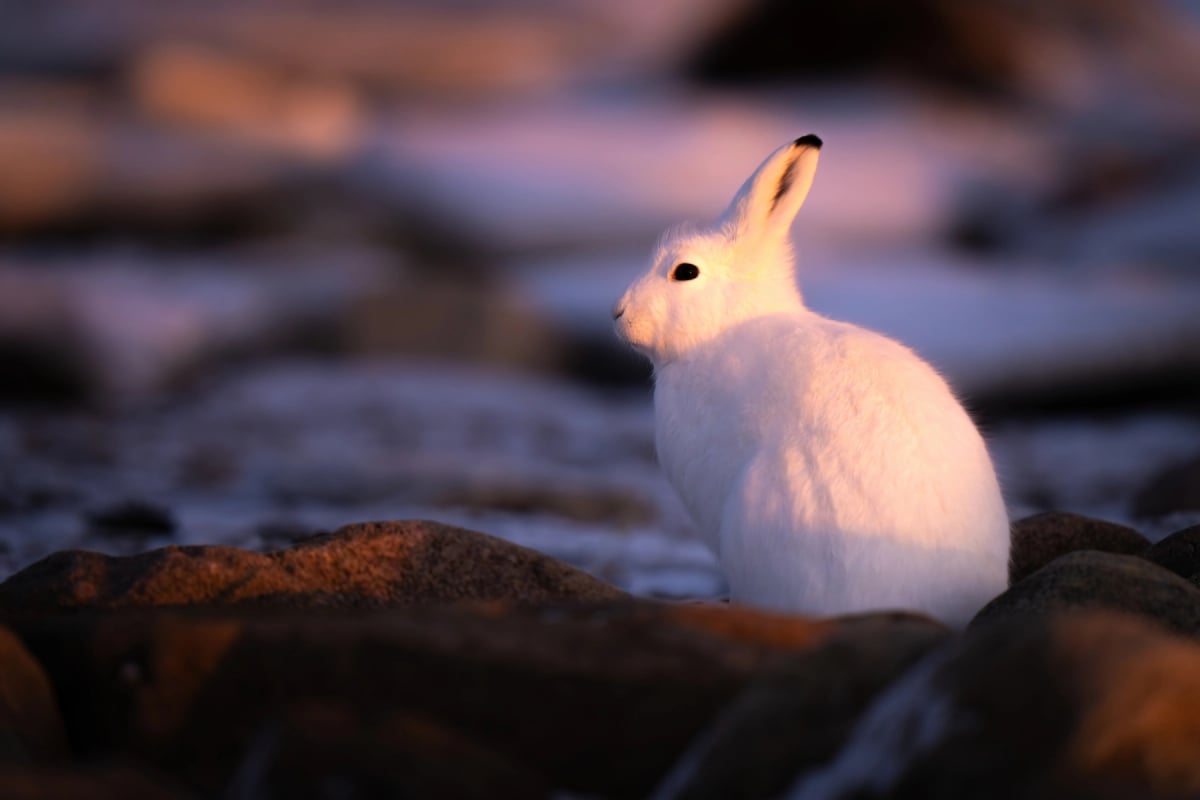
The Arctic hare is one of the largest hares in the world and one of the most cold-adapted mammals in North America. Its dense seasonal coat shifts from white in winter to grey-brown in summer, providing effective camouflage across very different tundra landscapes. In the highest Arctic latitudes it remains white throughout the year. It feeds on mosses, lichens, willow twigs, and other woody vegetation, often digging through snow to reach food. Although typically described as solitary, it can form aggregations of hundreds of individuals, a behavior rarely seen in any other hare species.
Habitat and range
The Arctic hare is found across the tundra and rocky uplands of Arctic Canada and Greenland. Its range includes the Canadian Arctic Archipelago, Baffin Island, Ellesmere Island, and northern Labrador, as well as virtually all of Greenland. It tolerates some of the harshest conditions on Earth, inhabiting windswept plateaus, coastal lowlands, and rocky slopes where plant life is sparse. At the highest latitudes, where snow cover is nearly permanent, the coat remains white all year. Population density varies with vegetation quality and fluctuates with predator pressure across different parts of the range.
Diet
The Arctic hare is a herbivore that subsists on the limited vegetation available in tundra environments. Its diet includes mosses, lichens, grasses, sedges, willow buds, and the bark and roots of woody plants. During winter, when most vegetation is buried under snow, it uses its strong front claws and sensitive nose to locate and dig up food. In summer, when plant growth is more abundant, the diet expands to include flowers and fresh shoots. Unlike many herbivores, the Arctic hare is capable of surviving on extremely low quality forage for extended periods.
Behavior
The Arctic hare is generally solitary outside the breeding season, but it is one of the few hare species known to gather in large groups. Aggregations of dozens to several hundred individuals have been documented, particularly during winter and early spring. These groupings improve collective vigilance against predators and may help individuals locate food sources. The species is highly alert and relies on speed to escape threats, reaching up to 60 km per hour in short bursts. During the Arctic winter it may shelter in snow depressions to reduce exposure to wind and cold.
Adaptations
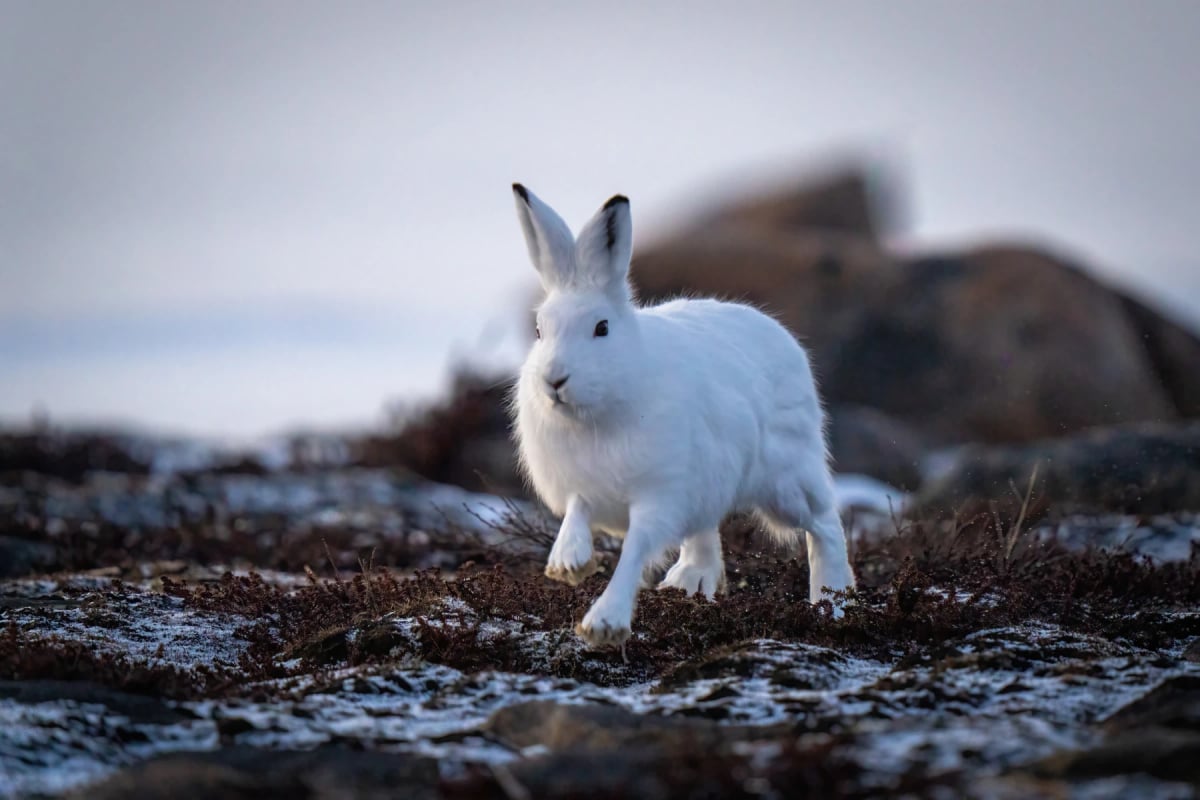
The Arctic hare is built to survive in one of the most demanding environments on Earth. Its winter coat consists of dense underfur covered by long guard hairs that trap heat efficiently and resist moisture. The ears are shorter relative to body size than those of most hares, reducing heat loss. Its large, heavily furred feet act as snowshoes, distributing weight across soft snow and providing traction on ice. The coat's seasonal color change is triggered by shifts in day length. In the permanent snow zones of the high Arctic, the coat stays white throughout the year as camouflage is never needed against bare ground.
Predators
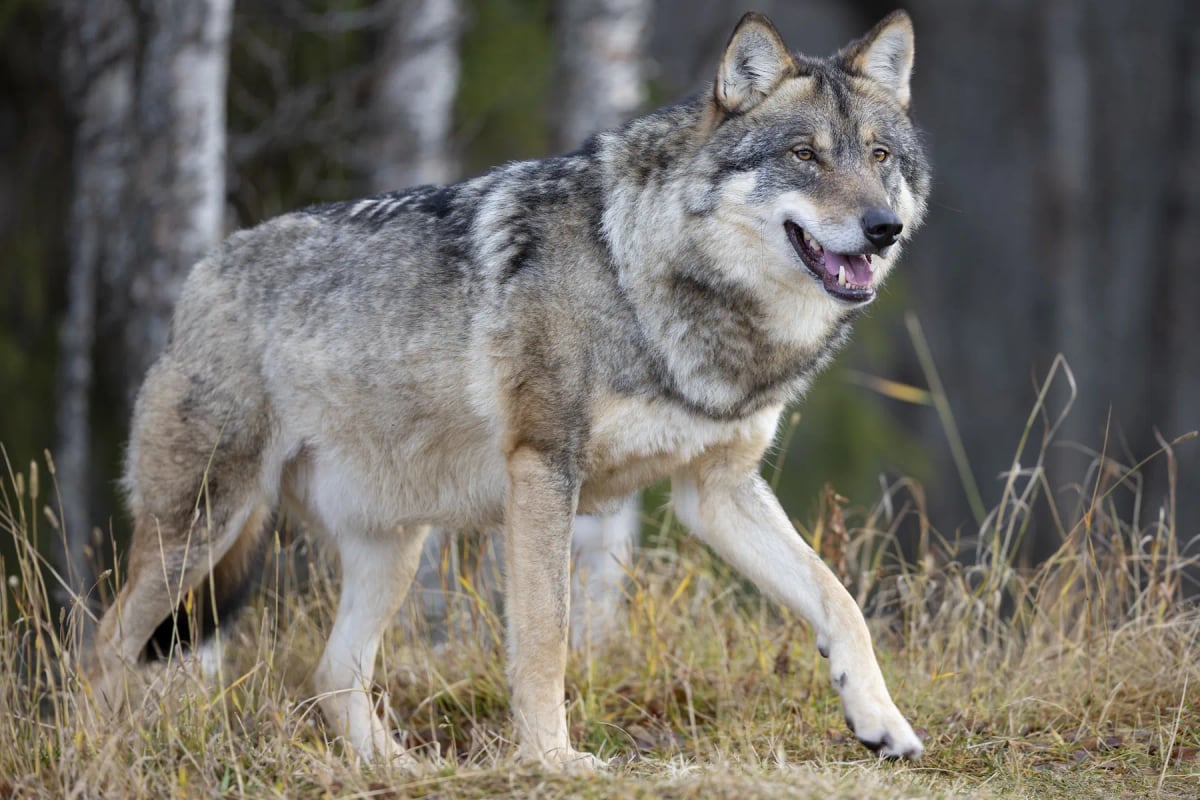
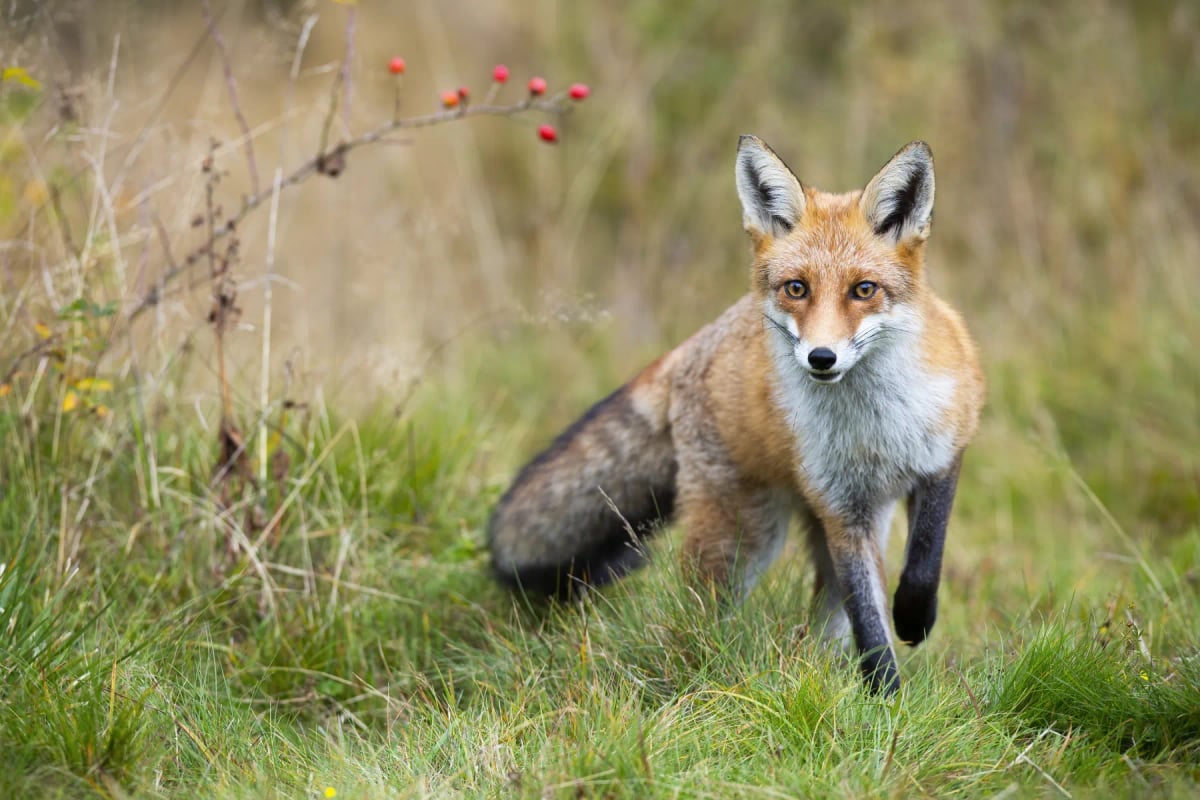
The Arctic hare is hunted by a relatively small but specialized community of predators in its tundra habitat. The Arctic fox and Arctic wolf are its main mammalian predators, while the snowy owl and gyrfalcon are its primary aerial threats. The hare relies on camouflage, speed, and group vigilance to avoid predation. Its white winter coat makes it nearly invisible against snow, and its explosive acceleration allows it to outrun many pursuers over short distances. Population cycles of Arctic hares and their predators are closely linked, with hare numbers influencing fox and owl reproduction across multiple years.
Researched and written by Juan Pablo. Sources: IUCN Red List, scientific literature and regional field guides. Last updated: .
Technical factsheet


Frequently Asked Questions
What does the Arctic hare eat?
The Arctic hare is a herbivore that feeds on mosses, lichens, grasses, willow buds, and the bark and roots of woody plants. In winter it digs through snow with its front claws to reach buried vegetation. In summer it takes advantage of flowers and fresh shoots. It can survive for extended periods on very low quality forage, a critical adaptation in a habitat where food is scarce and buried under snow for most of the year.
Why does the Arctic hare stay white?
In winter the Arctic hare's coat turns white to blend into snow, making it nearly invisible to predators like the Arctic fox, Arctic wolf, and snowy owl. In summer it molts to grey-brown to match the exposed tundra. The seasonal change is triggered by shifts in day length. In the highest Arctic latitudes, where snow cover is nearly permanent, the coat stays white year-round since camouflage against bare ground is never needed.
Where does the Arctic hare live?
The Arctic hare lives across the tundra and rocky uplands of Arctic Canada and Greenland. Its range includes the Canadian Arctic Archipelago, Baffin Island, Ellesmere Island, and northern Labrador. It is not found in Alaska, where a related but distinct species, the Alaska hare, takes its place. The Arctic hare thrives on windswept plateaus and coastal lowlands with sparse vegetation, tolerating some of the most extreme cold conditions of any mammal in North America.
How fast can an Arctic hare run?
The Arctic hare can reach speeds of up to 60 kilometers per hour in short bursts, making it one of the faster prey animals in the tundra. Its powerful hind legs provide explosive acceleration over snow and rocky ground. Large, heavily furred feet distribute its weight across soft snow and give it traction on ice, helping it outmaneuver predators. This combination of speed and agility is its primary defense, along with camouflage and the collective vigilance of group behavior.
Do Arctic hares live in groups?
The Arctic hare is usually solitary, but it is one of the few hare species known to gather in large groups. Aggregations of dozens to several hundred individuals have been documented, particularly during winter and early spring. These groupings improve collective vigilance against predators such as Arctic wolves and gyrfalcons. Each hare in a group can spend less time scanning for danger and more time feeding. This social behavior is unusual among hares and makes the Arctic hare particularly distinctive among its relatives.
What are the predators of the Arctic hare?
The Arctic hare is hunted by Arctic foxes, Arctic wolves, snowy owls, and gyrfalcons. These predators are highly specialized for tundra life and depend on hares as a key part of their diet. The hare defends itself through camouflage, explosive speed, and group vigilance. Its population cycles are closely linked to those of its predators: when hare numbers are high, fox and owl reproduction increases; when numbers crash, predator populations follow. This predator-prey dynamic is one of the defining features of Arctic ecosystems.