Spotted Hyena
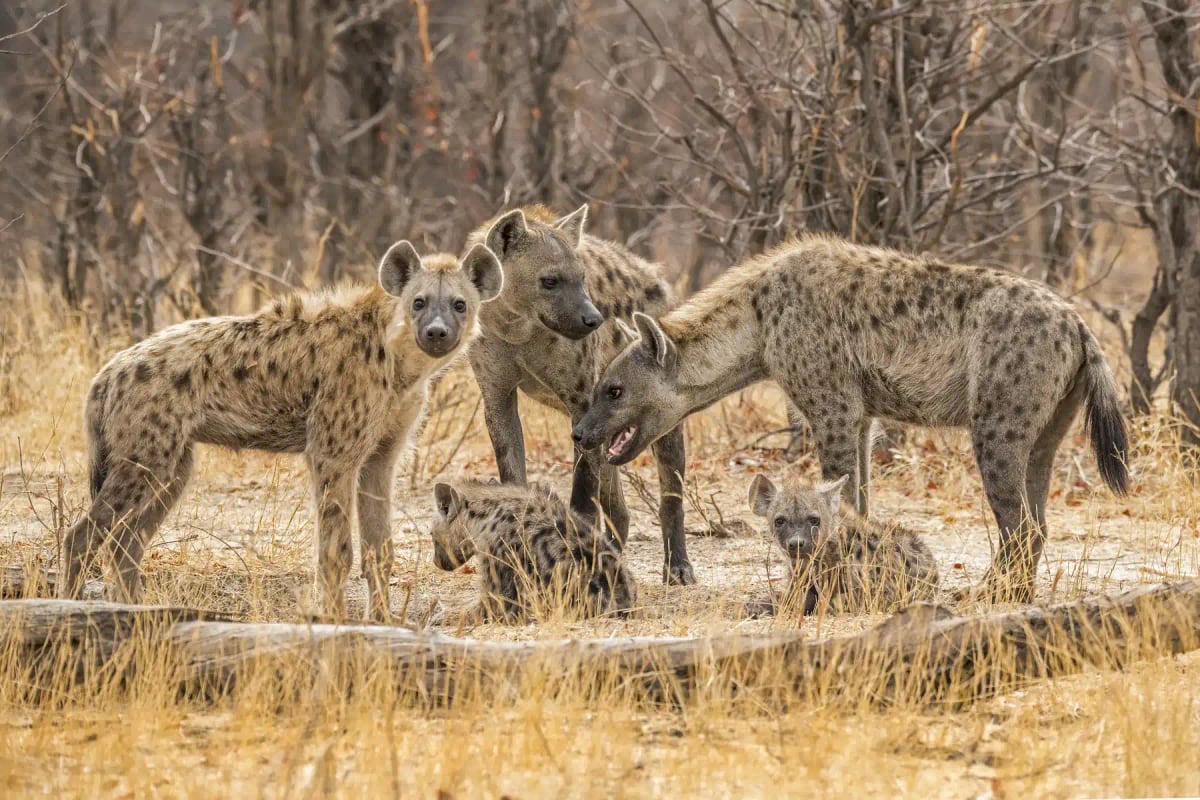
The spotted hyena (Crocuta crocuta) is Africa's most abundant large carnivore, found across most of sub-Saharan Africa from Senegal to Somalia and south to South Africa. Despite a reputation as a scavenger, studies show it kills the majority of its own food in most areas, targeting wildebeest, zebras, and antelopes in coordinated group hunts. It lives in clans of up to 80 individuals led by a dominant female, one of the few mammal societies built around female dominance. Its jaws rank among the most powerful of any mammal, capable of crushing bones that other predators leave behind. The whooping call it uses to contact distant clan members is one of the most recognizable sounds on the African savanna. Spotted hyenas thrive in open savannas and grasslands but are threatened by conflict with farming communities and habitat loss.
Habitat and distribution
Spotted hyenas range across most of sub-Saharan Africa, from Senegal in the west to Somalia in the east, and as far south as South Africa. They are highly adaptable and thrive in open savannas, grasslands, scrublands, and open woodlands. They also cope well in semi-arid environments and have even been recorded at high altitudes in Ethiopia. Dense rainforests and true deserts are the main habitat types they tend to avoid. Their ability to exploit a wide range of conditions has helped them remain Africa's most abundant large carnivore. Within their home ranges, clans patrol and defend territories that can stretch for hundreds of square kilometers, depending on prey availability and competition from neighboring clans.
Diet
Contrary to their reputation, spotted hyenas are highly capable hunters that kill the majority of what they eat in most studied populations. They prey mainly on wildebeest, zebras, and antelopes, chasing them down in coordinated group hunts that can cover several kilometers. Their jaws are among the most powerful of any living mammal, producing enough force to crack large bones that lions and leopards leave untouched. This allows them to extract the nutritious marrow inside and digest material that most other carnivores cannot. They will also scavenge when the opportunity arises, and may raid livestock near farming communities. Almost nothing edible goes to waste: spotted hyenas can consume hide, hooves, and even teeth.
Social structure
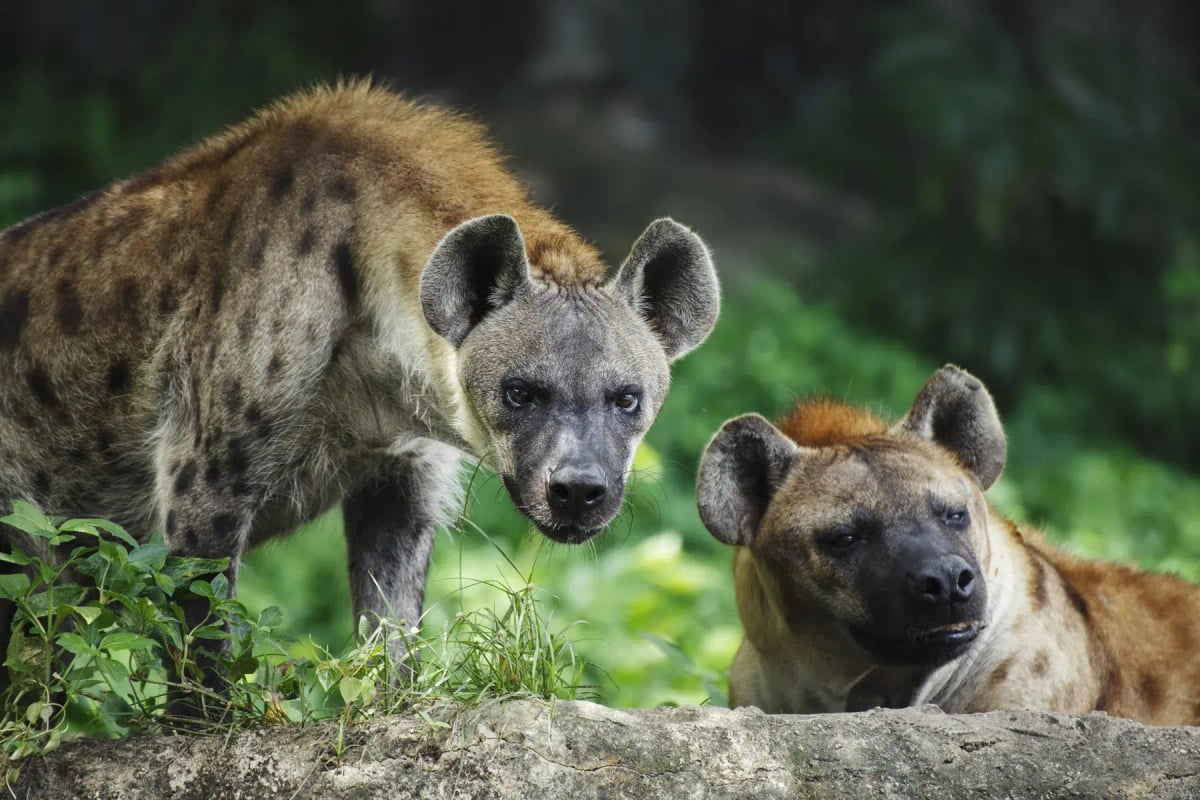
Few mammal societies are as complex as that of the spotted hyena. Clans can number up to 80 individuals and are led by a dominant female, making this one of the rare cases in mammals where females consistently outrank all males. Every animal in the clan occupies a specific position in a strict hierarchy, and that rank determines who eats first at a kill, who gets priority access to mates, and how much protection an individual receives from the group. Cubs inherit social rank from their mothers, so the offspring of high-ranking females enjoy advantages from birth. Males leave their birth clan when they reach adulthood and must join a new group, where they start at the bottom of the social ladder.
Communication
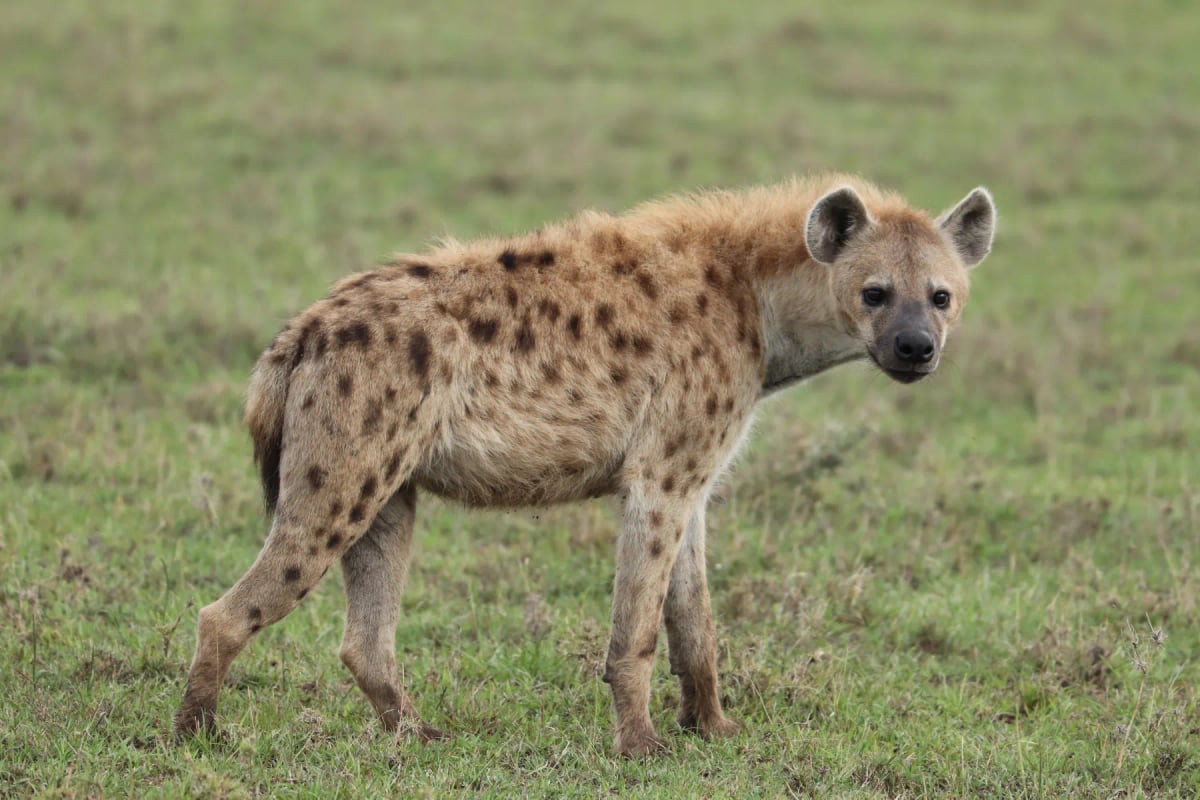
Spotted hyenas have one of the richest vocal repertoires of any carnivore. The laughing sound that made them famous is not a sign of happiness: it is a call associated with excitement, nervousness, or submission and is often heard when an individual is being chased or challenged by a dominant animal. The whoop, a rising call that ends in a moan, carries for several kilometers and is used to bring scattered clan members back together. Hyenas also grunt, growl, and produce a fast series of calls known as a giggle when competing at a kill. Scent marking plays an equally important role: they deposit secretions from glands near their tail on grass stalks to mark territory and communicate social status to other clans.
Behavior with humans
Attacks on people by spotted hyenas are rare but have been documented, particularly in areas where human settlements border wildlife habitat. Cases tend to involve individuals that have become accustomed to being near people, or animals under pressure from food scarcity. Children and sleeping adults face the greatest risk in communities where hyenas regularly enter villages at night in search of food. Livestock predation is a far more frequent source of conflict and leads many farmers and herders to kill hyenas in retaliation, sometimes using poison. Efforts to reduce this tension focus on better livestock enclosures at night and community education programs that explain the ecological role hyenas play in keeping ecosystems healthy.
Conservation
The IUCN classifies the spotted hyena as Preocupación menor, reflecting that the species as a whole remains relatively widespread and numerous across Africa. Estimates suggest a total population somewhere between 27,000 and 47,000 individuals, though reliable counts are difficult given the animal's wide range and largely nocturnal habits. While the overall picture is stable, populations in West Africa have declined sharply and the species has disappeared from several countries where it once lived. The main threats are persecution by farming and herding communities, loss of habitat to agriculture, and a reduction in wild prey. Spotted hyenas are protected in many national parks and reserves, but a significant share of their range falls outside these areas, making conflict with people one of the most pressing challenges for their survival over the long term.
Where it is found
The Spotted Hyena can be found in places such as:
Researched and written by Juan Pablo. Sources: IUCN Red List, scientific literature and regional field guides. Last updated: .
Technical factsheet





Frequently Asked Questions
Are spotted hyenas more hunters or scavengers?
Spotted hyenas are actually skilled hunters that kill most of their own food. Studies show they hunt up to 95% of what they eat in some areas, targeting wildebeest, zebras, and antelopes. They do scavenge when the opportunity arises, but the idea that they rely mainly on leftovers from other predators is a myth. They are among the most effective large predators on the African savanna.
Why do spotted hyenas laugh?
The giggling sound people call "laughing" is not a sign of amusement at all. Spotted hyenas produce it when they are nervous, excited, or submitting to a higher ranking clan member. Each individual has a slightly different giggle, which researchers believe helps hyenas recognize one another. They also make whooping calls to communicate with clan members over long distances across the savanna.
How strong is a spotted hyena's bite?
The spotted hyena has one of the most powerful bites of any mammal on Earth, with a force capable of crushing thick bones that other carnivores leave behind. This ability gives them access to the nutritious marrow inside, which most predators cannot reach. Their digestive system is also remarkably efficient, breaking down bone material and extracting nutrients that would go to waste for other animals.
Who leads a spotted hyena clan?
Spotted hyena clans are led by a dominant female, making them one of the few mammal societies where females consistently outrank males. The leading female, known as the matriarch, has first access to food and passes her high social rank on to her cubs. Clans can include up to 80 individuals, and social rank shapes nearly every aspect of daily life, from feeding order to mating opportunities.
Where do spotted hyenas live?
Spotted hyenas are found across a large part of sub-Saharan Africa, from Senegal and Mauritania in the west to Ethiopia, Somalia, and Kenya in the east, and as far south as South Africa. They do best in open savannas, grasslands, and woodlands with low tree cover. They tend to avoid dense rainforests and true desert environments, preferring areas where large prey animals are present year round.
Are spotted hyenas endangered?
The spotted hyena is currently listed as Least Concern on the IUCN Red List, meaning the species as a whole is not at immediate risk of extinction. However, populations in certain areas are declining due to habitat loss, conflict with farmers protecting livestock, and deliberate persecution. They are also sometimes caught in snares set for other animals. Continued coexistence efforts between communities and wildlife managers are important for their future.
Do spotted hyenas make good mothers?
Spotted hyena mothers invest a great deal in their cubs and are highly attentive parents. They nurse their young for up to 18 months, one of the longest nursing periods among carnivores. Cubs are born with their eyes open and with teeth already developed, which sometimes leads to aggression between siblings in the den. Females raise their young largely on their own, without regular help from males in the clan.