Beluga Whale
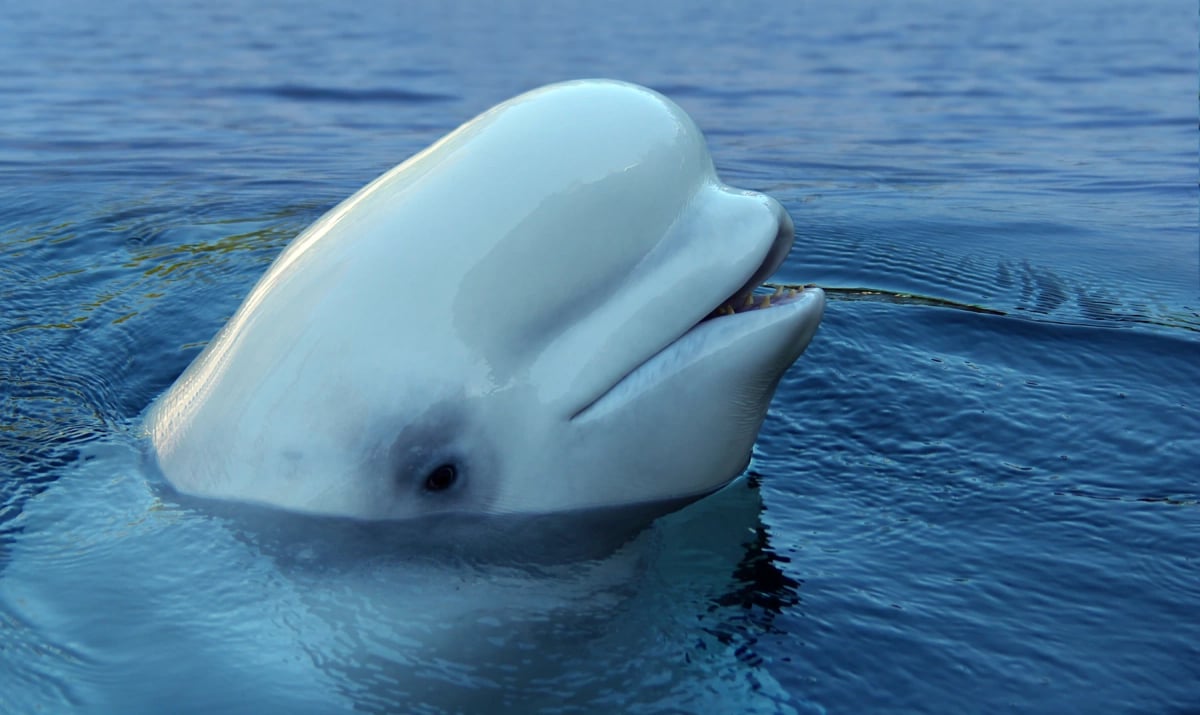
The beluga whale (Delphinapterus leucas) is a small to medium cetacean of Arctic and subarctic seas, instantly recognizable by its pure white skin and rounded, bulging forehead. Unlike most cetaceans, it has no dorsal fin, which lets it swim freely under pack ice without injury. Its flexible neck allows it to turn its head in ways no other whale can, a useful trait when navigating shallow coastal waters and river estuaries. Belugas are deeply social, typically traveling in pods that can number in the hundreds during summer migrations. They are among the most vocal of all marine mammals, producing an impressive repertoire of clicks, whistles, and chirps that sailors once heard through the hulls of wooden ships, earning them the nickname sea canaries. They feed on fish, squid, octopus, and crustaceans, diving to considerable depths to find prey.
Habitat and distribution
Belugas inhabit the Arctic and subarctic waters of Canada, Russia, Greenland, Norway, Iceland, and Alaska, with some populations venturing as far south as Japan's northern coasts. They are highly adaptable, moving between deep offshore waters, shallow coastal bays, and river estuaries with ease. Several populations travel into freshwater rivers during summer, including the St. Lawrence River in Canada and the Amur River in Russia. In winter, belugas follow the retreating pack ice and can survive in areas with heavy ice cover by locating cracks and open leads where they surface to breathe. During summer, large aggregations gather in warm, shallow coastal areas, particularly river mouths, which are thought to serve as molting grounds where they rub against gravel to shed their outer skin layer.
Built for the Arctic: key adaptations
The beluga's most striking feature is its white skin, which develops gradually as the animal matures, reaching full whiteness by adulthood. This coloration may provide camouflage against the ice and light filtering down from the surface. A thick layer of blubber, sometimes up to 15 centimeters deep, insulates belugas against water temperatures that can drop well below freezing. Unlike all other cetaceans, they lack a dorsal fin, allowing them to swim beneath ice sheets without risk of injury. Their flexible, unfused neck vertebrae let them rotate and tilt their heads in multiple directions, a rare trait among whales. Belugas can also change the shape of their forehead, or melon, which plays a role in focusing and directing the echolocation signals they use to navigate and hunt in dark or murky conditions.
Behavior and social life
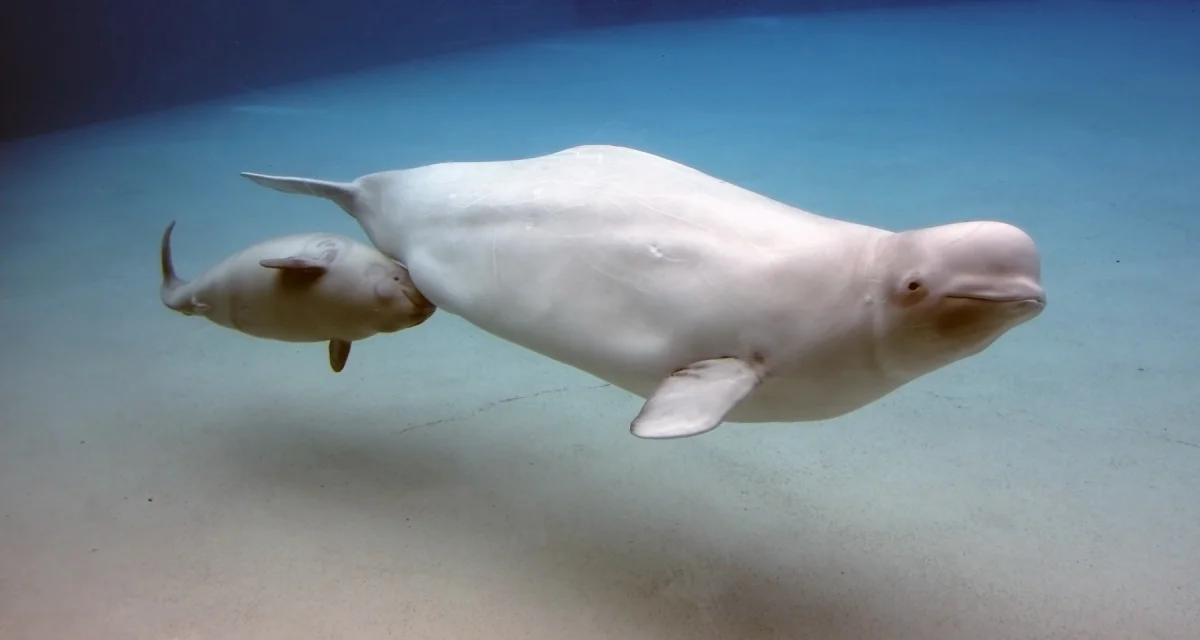
Belugas are among the most social of all cetaceans, living in groups called pods that typically range from a few individuals to several dozen. During summer migrations, thousands can gather in a single estuary. Pods often consist of animals of similar age and sex, with females and their calves forming close family units. Their vocal repertoire is extraordinary, encompassing hundreds of distinct sounds including clicks, chirps, squeals, and whistles used for communication and echolocation. This vocal richness earned them the nickname sea canaries among early sailors. Belugas are also known for playful behavior, including chasing, rubbing against each other, and interacting with objects in their environment. They are capable of mimicking sounds, including those made by humans, which points to a sophisticated level of auditory processing and social learning within their groups.
Conservation
The beluga whale is listed as Least Concern on the IUCN Red List, but this global status masks serious concern for several regional populations. The Cook Inlet population in Alaska is listed as critically endangered under the U.S. Endangered Species Act, with fewer than 280 individuals remaining. The St. Lawrence Estuary population in Canada is also considered endangered. Key threats across all populations include climate change and the rapid loss of sea ice, underwater noise pollution from shipping and industrial activity, chemical contamination, prey depletion from commercial fishing, and entanglement in fishing gear. Indigenous subsistence hunting continues in some Arctic regions and is managed carefully. Conservation efforts include protected area designations, shipping noise regulations, and ongoing population monitoring programs coordinated between governments, research institutions, and Indigenous communities.
Where it is found
The Beluga Whale can be found in places such as:
Researched and written by Juan Pablo. Sources: IUCN Red List, scientific literature and regional field guides. Last updated: .
Technical factsheet









Frequently Asked Questions
How long do beluga whales live?
Belugas are relatively long-lived mammals. In the wild, they typically reach 35 to 50 years of age, with some individuals living even longer. Age is determined by counting growth layers in their teeth, much like counting rings in a tree. Females generally outlive males. Their lifespan is comparable to that of other mid-sized cetaceans, though environmental pressures and pollution can shorten it considerably in some populations.
What do beluga whales eat?
Belugas are opportunistic predators with a varied diet that shifts depending on season and location. They feed on dozens of species, including salmon, cod, herring, capelin, and Arctic char, as well as squid, octopus, shrimp, and crabs. They are capable of sucking prey into their mouths rather than biting, thanks to their mobile lips. Adults can consume roughly 18 to 27 kilograms of food per day.
How do beluga whales communicate?
Belugas communicate through an exceptionally rich range of sounds. Beyond the clicks they use for echolocation, they produce whistles, chirps, squeals, and bell-like tones for social interaction. What makes them particularly remarkable is their ability to mimic sounds from their environment, including human voices, suggesting advanced auditory learning. Each population also appears to share distinct vocal patterns, almost like regional dialects, which researchers are still working to fully understand.
How big do beluga whales get?
Belugas are considered small to medium whales. Adult males typically measure between 4 and 5.5 meters in length and can weigh up to 1,600 kilograms. Females are noticeably smaller, usually reaching 3 to 4 meters and weighing around 700 to 1,200 kilograms. Newborn calves are roughly 1.5 meters long and are born dark gray or brownish, gradually lightening to white as they mature over the course of several years.
Do beluga whales have any natural predators?
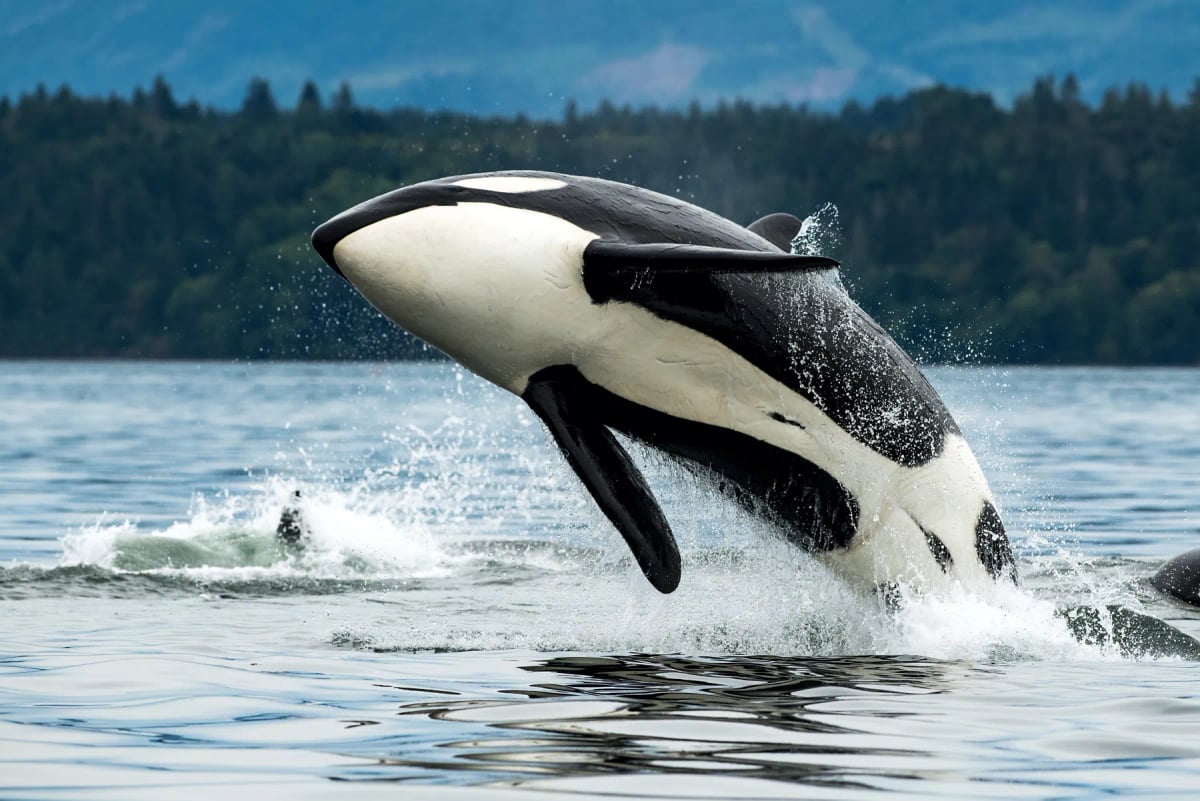
Yes, belugas face predation from two main natural threats. Polar bears hunt them in shallow water and at breathing holes in the ice, particularly targeting calves or animals that become trapped under ice sheets. Killer whales, or orcas, are the more significant predator in open water, and belugas are known to actively flee into very shallow coastal areas to escape them, a strategy that appears to be learned and passed down within pods.
How do beluga whales reproduce?
Belugas have a slow reproductive rate, which makes population recovery difficult when numbers decline. Females reach sexual maturity at around 4 to 7 years of age, while males mature somewhat later. After a gestation period of roughly 14 to 15 months, a single calf is born. Mothers nurse their young for up to two years, and calves remain closely bonded to their mothers for several years after weaning. Females typically give birth every three years.
Why are beluga whales white?
Belugas are not born white. Calves start out dark gray or brownish and gradually lighten over roughly seven to nine years until they reach the striking white of a fully mature adult. The exact purpose of the white coloration is still debated among researchers. Leading ideas suggest it provides camouflage among sea ice and snow-lit water surfaces, and may also play a role in social signaling among individuals within a pod.