Arabian Leopard
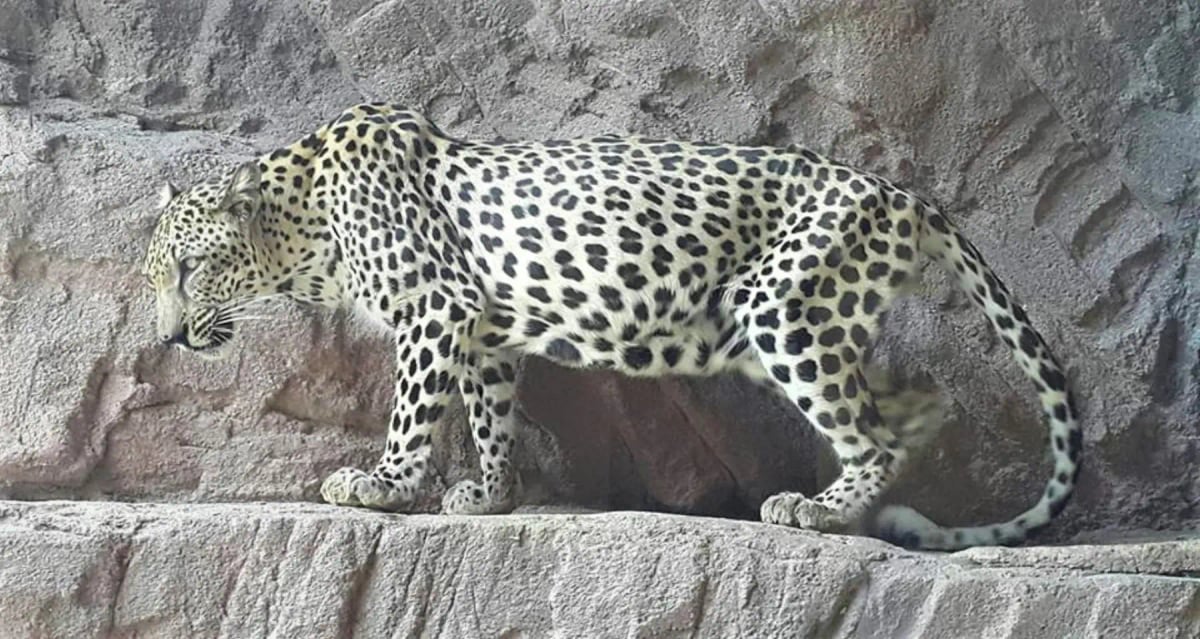
The Arabian leopard is the smallest and rarest leopard subspecies, confined to the mountain ranges of the Arabian Peninsula. Its pale coat with faint rosettes blends into limestone cliffs and rocky wadis, where it hunts gazelles, tahr, and hares. Fewer than 200 individuals are estimated to survive in the wild, though some researchers place the true number considerably lower. Decades of poaching, prey depletion, and conflict with herders have pushed this subspecies to the edge, making it one of the most endangered large cats on Earth.
Habitat and distribution
The Arabian leopard inhabits steep mountain ranges and rocky escarpments of the Arabian Peninsula, particularly the Dhofar region of southern Oman and the highlands of Yemen. It favors terrain with cliff faces, deep wadis with seasonal vegetation, and boulder fields that provide cover for resting and ambushing prey. Most sightings occur at elevations between 500 and 2,500 meters, where temperatures are cooler and prey is more concentrated than in surrounding desert plains. The subspecies once ranged more widely across the peninsula, but its distribution has contracted sharply over the past century.
Diet
The Arabian leopard is an opportunistic carnivore whose diet varies with prey availability. Its main targets are Arabian gazelles, Arabian tahr, rock hyraxes, Cape hares, and birds. It hunts almost entirely at night, using rocky terrain and vegetation to stalk prey before launching a short, powerful charge. As wild prey populations have declined across the peninsula due to unregulated hunting, some individuals have turned to raiding goat and sheep flocks, bringing them into direct conflict with local herders. These encounters often end in the leopard being killed in retaliation or trapped in snares.
Appearance
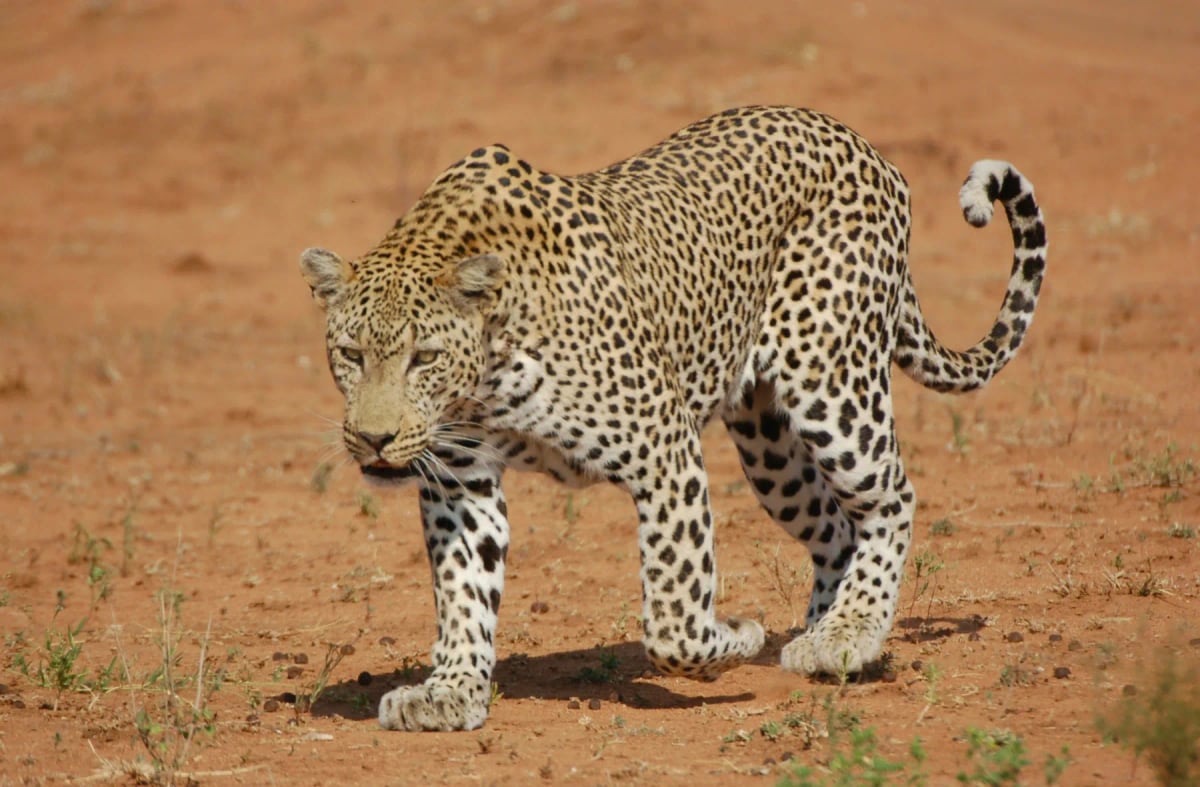
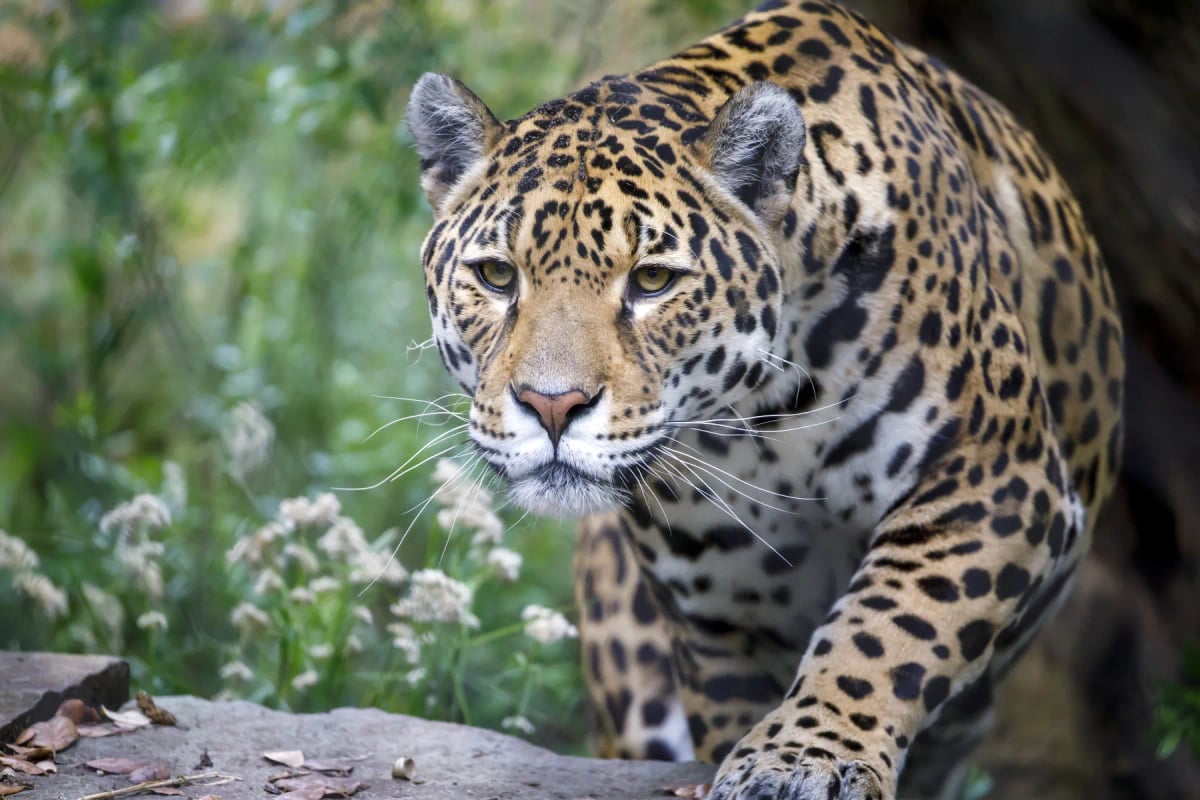
The Arabian leopard is noticeably smaller than other leopard subspecies. Males typically weigh between 20 and 30 kg, considerably less than African leopards, which can exceed 60 kg. Its coat ranges from pale yellow to cream, with rosettes that are more widely spaced and less vivid than those of its African and Asian relatives. This lighter coloration provides effective camouflage against the sandy limestone rock faces of its mountain habitat. Like all leopards, it has powerful forelimbs relative to body size, helping it drag prey onto ledges and navigate steep terrain with agility.
Conservation
The Arabian leopard is classified as Critically Endangered by the IUCN, with a wild population estimated at fewer than 200 individuals. Poaching, retaliatory killings, prey depletion, and habitat loss are the main threats. Captive breeding programs in Oman and Saudi Arabia maintain insurance populations and serve as the foundation for potential future reintroduction efforts. Protected areas such as Jabal Samhan Nature Reserve in Oman provide critical refuges for wild individuals. Conservation progress is severely hampered in Yemen, where ongoing armed conflict has made fieldwork, monitoring, and enforcement nearly impossible since 2015.
Relation with humans
Encounters between Arabian leopards and people are rare due to the cat's elusive nature and low population density. Conflicts arise almost exclusively when leopards prey on livestock, which can trigger retaliatory killings or the setting of wire snares. In some communities, traditional attitudes view the leopard as a persistent threat to livelihoods. Conservation programs now prioritize community engagement, offering livestock compensation schemes and awareness campaigns to reduce hostility. In Oman, cultural respect for the subspecies has aided protection efforts. In Yemen, however, the breakdown of governance makes coexistence strategies nearly impossible to implement.
Researched and written by Juan Pablo. Sources: IUCN Red List, scientific literature and regional field guides. Last updated: .
Technical factsheet



Frequently Asked Questions
What does the Arabian leopard eat?
The Arabian leopard is a carnivore that hunts gazelles, Arabian tahr, rock hyraxes, hares, and birds. It hunts at night, using rocky terrain and vegetation to stalk prey. As wild prey has become scarce due to overhunting across the Arabian Peninsula, some individuals have turned to attacking livestock, which brings them into conflict with local herders and greatly increases the risk of retaliatory killings.
Where does the Arabian leopard live?
The Arabian leopard lives in the mountain ranges of the Arabian Peninsula, particularly the Dhofar mountains of southern Oman and the highlands of Yemen. It prefers steep rocky terrain, cliff faces, and wadis with seasonal vegetation that provide cover for resting and hunting. The subspecies once ranged more widely across the peninsula, but its distribution has shrunk dramatically over the past century due to human pressure.
How many Arabian leopards are left in the wild?
Current estimates suggest fewer than 200 Arabian leopards remain in the wild, though some researchers believe the true number may be as low as 50 to 100 individuals. The IUCN classifies the subspecies as Critically Endangered. Captive breeding programs in Oman and Saudi Arabia maintain additional individuals, but returning them to the wild is a complex challenge that will require many years of preparation and habitat stabilization.
Why is the Arabian leopard endangered?
The Arabian leopard faces several serious threats simultaneously. Poaching and retaliatory killings by herders protecting livestock have reduced its numbers significantly. The decline of wild prey due to unregulated hunting across the Arabian Peninsula has forced leopards into more frequent conflict with humans. Habitat loss from agricultural expansion continues to shrink available territory. In Yemen, ongoing armed conflict has made conservation and population monitoring nearly impossible since 2015.
Is the Arabian leopard dangerous to humans?
Direct attacks on humans by Arabian leopards are extremely rare. As a solitary and highly elusive predator, it typically avoids human contact. Most conflicts involve livestock predation rather than confrontations with people. Like all large cats, it should be treated with caution if encountered in the wild, but its danger to humans is considered low compared to other big cats, partly because it is so rarely seen and its wild population is critically small.
What is being done to save the Arabian leopard?
Conservation efforts include captive breeding programs in Oman and Saudi Arabia that serve as insurance populations and a foundation for future reintroduction. Protected areas in Oman, including Jabal Samhan Nature Reserve, provide refuge for wild individuals. Camera trap surveys help monitor the few remaining animals. Conservationists work with local communities through livestock compensation programs to reduce retaliatory killings. International organizations coordinate recovery plans, though progress is severely limited by funding constraints and the ongoing conflict in Yemen.