Western Lowland Gorilla
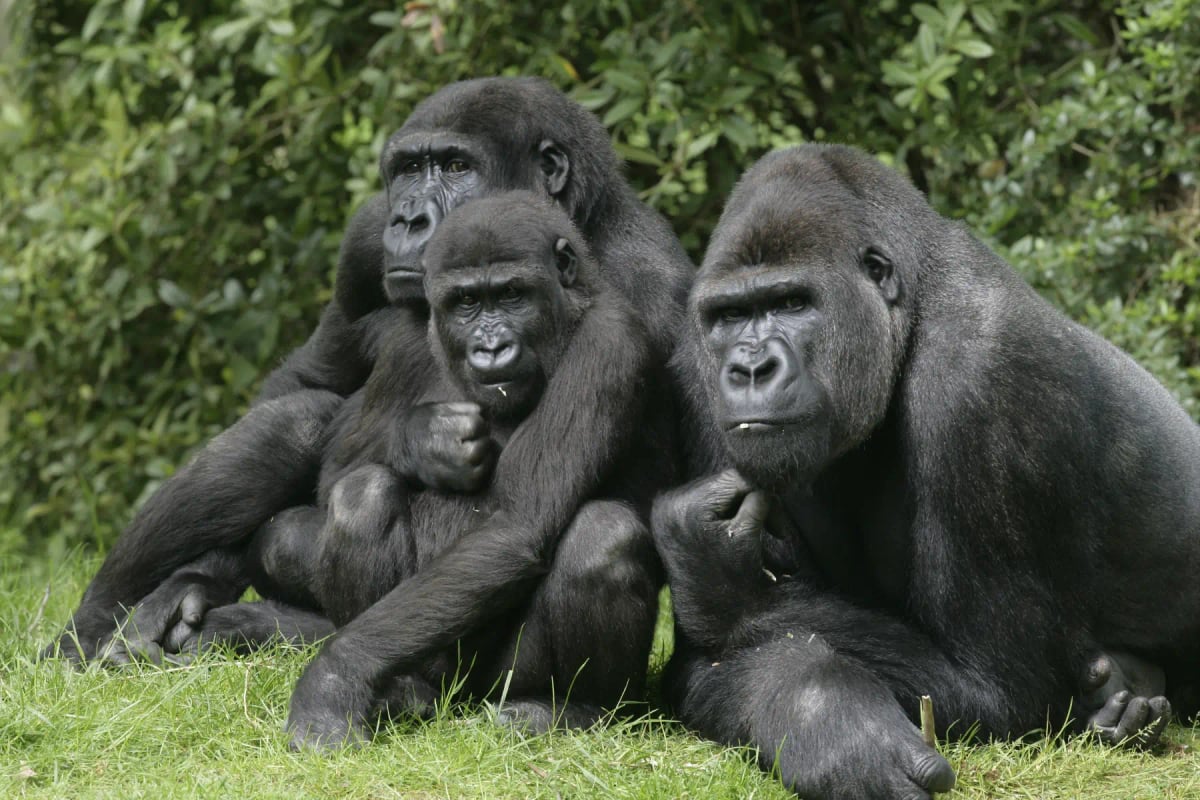
The western lowland gorilla is the smallest and most widespread of the four gorilla subspecies, living in the dense rainforests and swamp forests of Central Africa. Family groups of up to 30 individuals are guided by a dominant silverback male, who settles disputes, chooses resting sites, and keeps the group together. Their diet leans heavily on fruit, though they also eat leaves, stems, bark, and the occasional insect. Because they swallow seeds whole and carry them across large distances, they act as essential agents of forest regeneration. Populations have fallen sharply due to logging, the trade in bushmeat, and repeated outbreaks of Ebola virus disease, which can wipe out entire groups within weeks. The IUCN lists the subspecies as Critically Endangered, with current estimates placing around 360,000 individuals in the wild across seven countries in Central and West Africa.
Habitat and distribution
Western lowland gorillas are found across a broad sweep of Central and West Africa, with populations confirmed in Gabon, the Republic of Congo, Cameroon, the Central African Republic, Equatorial Guinea, Nigeria, and Angola. Gabon alone is thought to hold more than half of the entire population. These gorillas favor dense tropical rainforests, but they are also highly comfortable in swamp forests and forest clearings known as bais, where mineral-rich soils — rich in minerals — draw them in to feed on aquatic vegetation. Elevation matters too: they tend to stay below 1,600 meters, preferring lowland terrain where fruit is abundant year round. Their range can shift seasonally as they follow the availability of ripe fruit across the forest landscape.
Diet
Fruit makes up the largest share of the western lowland gorilla's diet, and groups will travel considerable distances each day to find trees in peak ripeness. When fruit is scarce, they turn to leaves, bark, stems, and the pith of certain plants to meet their nutritional needs. Termites and other insects occasionally supplement their intake, particularly during seasons when plant food is less available. One of the most remarkable aspects of their feeding habits is what happens after they eat: seeds pass through their digestive system intact and are deposited far from the parent tree, making these gorillas among the most important agents of forest regeneration across Central Africa. Without them, many tree species would struggle to spread.
Social structure
Life in a gorilla group revolves around the silverback, the dominant adult male whose silver saddle of fur signals his maturity and authority. Groups typically range from a handful of individuals up to around 30, though most average between five and ten. The silverback decides where the group rests, when it moves, and how to respond to outside threats. He is also the one who steps in to settle disagreements between other members. Younger males, called blackbacks, may eventually leave to form their own groups or challenge other silverbacks for leadership. Females and their offspring form the core of daily social life, with strong bonds developing between mothers and young that last for several years after weaning.
Threats
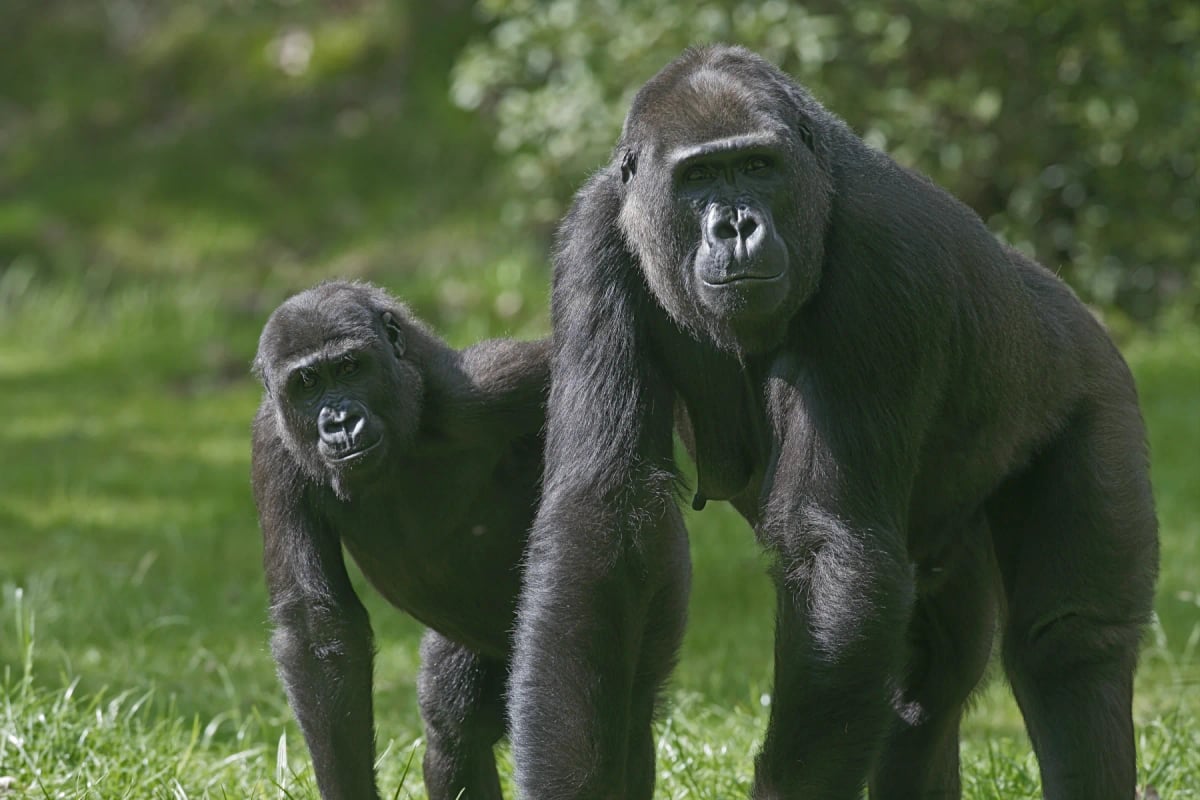
Few animals face as many simultaneous pressures as the western lowland gorilla. Commercial logging opens up previously untouched forest, which in turn allows hunters deeper access and accelerates habitat loss. The trade in bushmeat remains a persistent problem across much of the subspecies' range, with gorillas killed both for local consumption and for sale in urban markets. On top of this, outbreaks of Ebola virus disease have had devastating consequences, capable of wiping out entire groups within a matter of weeks. Because gorillas reproduce slowly, with females giving birth roughly every four to six years, populations simply cannot recover fast enough to offset these losses. The combined effect of these pressures has caused a population decline of more than 60 percent over the past two to three decades.
Conservation
Efforts to protect the western lowland gorilla operate on several fronts at once. The IUCN lists the subspecies as Critically Endangered, and this designation has helped drive investment in protected areas across Gabon, Congo, and Cameroon, where national parks and wildlife reserves provide at least some degree of refuge. Rangers carry out patrols to disrupt poaching networks, while community programs aim to give local people economic alternatives to hunting. Veterinary teams have been deployed to monitor and, where possible, vaccinate gorillas against disease. International organizations such as the WWF and the Wildlife Conservation Society coordinate research and anti-poaching efforts across borders. Despite this work, conservation remains a challenge, and sustained funding and political commitment from range states are essential to improving the outlook for this subspecies.
Where it is found
The Western Lowland Gorilla can be found in places such as:
Researched and written by Juan Pablo. Sources: IUCN Red List, scientific literature and regional field guides. Last updated: .
Technical factsheet




Frequently Asked Questions
How many western lowland gorillas are left in the wild?
Current estimates put the wild population at around 360,000 individuals, making this the most numerous of all gorilla subspecies. Even so, numbers have dropped by more than 60 percent over the past few decades due to habitat loss, hunting, and disease. Because gorillas reproduce slowly, recovering those losses takes a very long time, which is why the IUCN classifies them as Critically Endangered.
What do western lowland gorillas eat?
Fruit is the foundation of their diet, and they will travel long distances each day to find trees at peak ripeness. When fruit is hard to come by, they eat leaves, bark, plant stems, and pith. Termites and other insects round out their meals on occasion. This varied diet keeps them well nourished across different seasons and helps them survive in forests where food availability changes throughout the year.
Where do western lowland gorillas live?
They live in the tropical rainforests and swamp forests of Central and West Africa, spread across seven countries: Gabon, the Republic of Congo, Cameroon, the Central African Republic, Equatorial Guinea, Nigeria, and Angola. Gabon is thought to hold more than half the total population. They generally stay below 1,600 meters in elevation, favoring lowland areas where fruit is available throughout the year.
Why are western lowland gorillas important to the forest?
These gorillas are one of the most important agents of seed dispersal in Central Africa. When they eat fruit, the seeds pass through their digestive system undamaged and are dropped far from the original tree as the group moves through the forest. This helps many tree species spread and regenerate across wide areas. Without gorillas carrying out this role, the structure and diversity of the forest would change significantly over time.
What is the role of the silverback in a gorilla group?
The silverback is the dominant male of the group, recognized by the silver patch of fur across his back that comes with age and maturity. He makes the key decisions for the group, including where to sleep, when to move, and how to respond to threats. He also steps in to resolve conflicts between other members. His leadership holds the group together, and younger males may eventually leave to start groups of their own.
What are the biggest threats to western lowland gorillas?
Three main pressures put this subspecies at serious risk. Commercial logging opens up remote forest areas, giving hunters access to places that were previously untouched. The bushmeat trade drives hunting across the subspecies' range. And outbreaks of Ebola virus disease can devastate entire groups within weeks. Because females give birth only every four to six years, populations recover very slowly, making each of these threats especially serious.
How big do western lowland gorillas get?
Western lowland gorillas are the smallest of the four gorilla subspecies, though they are still enormously powerful animals. Adult males typically weigh between 140 and 200 kilograms and can stand around 1.7 meters tall when upright. Females are considerably smaller, usually weighing between 70 and 90 kilograms. Despite their size, they are generally calm animals and only become aggressive when they feel the group is under threat.