Saiga
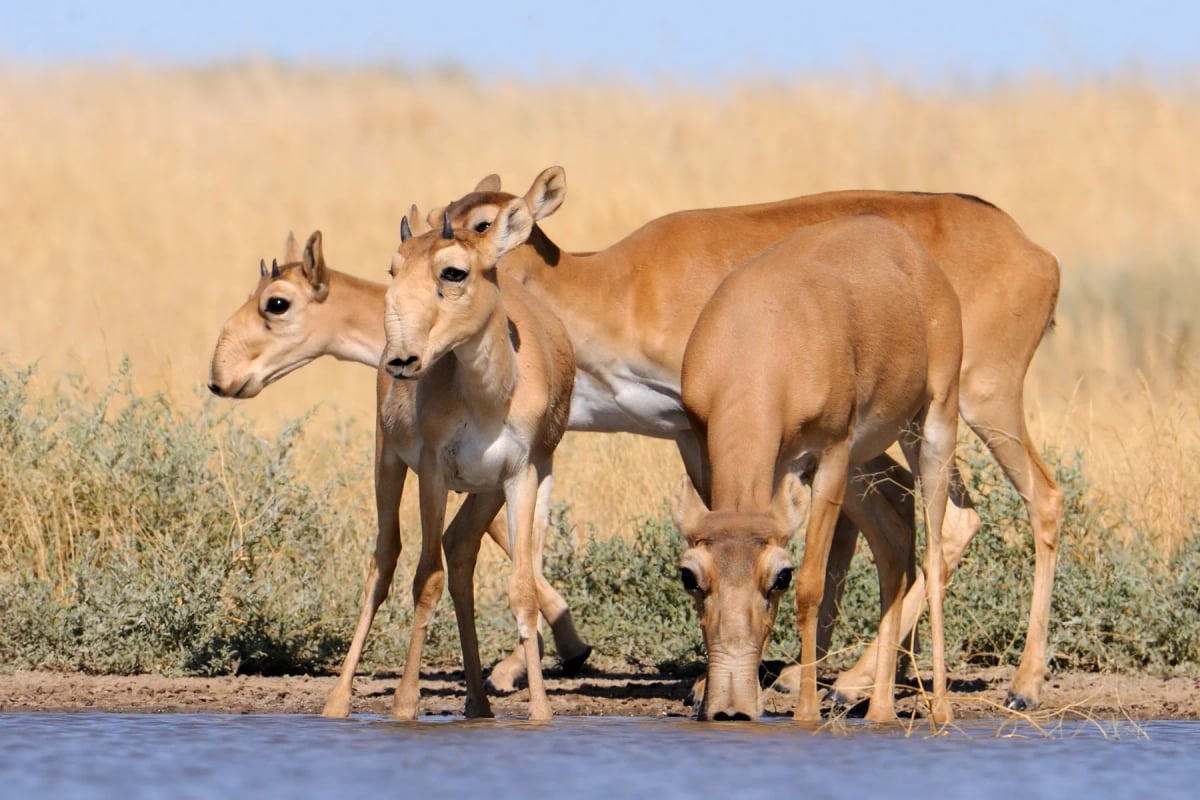
The saiga (Saiga tatarica) is an antelope of the Eurasian steppes recognized instantly by its oversized, flexible nose. That extraordinary snout warms freezing air in winter and filters clouds of dust in the dry summer months, making it one of the most unusual faces in the animal kingdom. Males grow pale, lyre-shaped horns prized in traditional medicine, which has driven heavy poaching for decades. Saigas once numbered in the millions and swept across Central Asia in herds so large they darkened the horizon. Today the species is critically endangered. Catastrophic die-off events caused by the bacterium Pasteurella multocida killed hundreds of thousands in a matter of days in 2015 alone. Remaining populations are scattered across Kazakhstan, Russia, Uzbekistan, Turkmenistan, and Mongolia. Intensive anti-poaching patrols and breeding programs have helped some groups recover, but the saiga's future depends on continued international effort.
Habitat and distribution
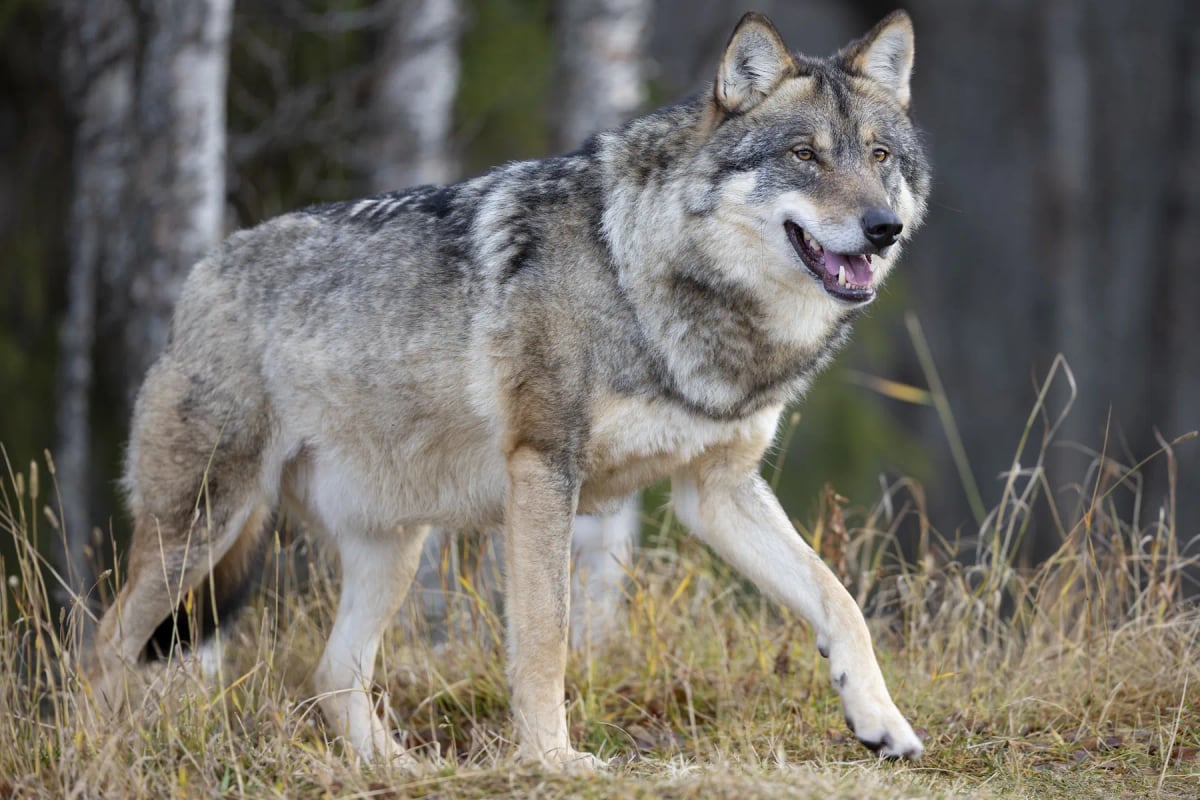
Saigas are creatures of open landscapes, living across the vast steppes and semi-deserts of Central Asia. Their range once stretched from the British Isles to Alaska during the Ice Age, but today it is far more restricted. The main populations survive in Kazakhstan, which holds the largest numbers by far, along with smaller groups in Russia, Uzbekistan, Turkmenistan, and Mongolia. They favor flat or gently rolling terrain where grasses grow low and sight lines are long, giving them early warning of predators. Seasonal migrations can cover hundreds of kilometers as herds move between summer grazing grounds and winter refuges. The open, treeless landscape of the steppe is essential to their survival, since they rely on speed and open ground to escape wolves and other predators.
Diet
Across the seasons, a saiga's diet changes considerably depending on what the steppe has to offer. In spring and summer, they graze heavily on grasses, low herbs, and flowering plants that flush across the plains after rainfall. As vegetation dries out through the summer heat, they shift to tougher shrubs and whatever green growth remains near seasonal water sources. They have been recorded eating plants that are toxic to livestock, such as certain species of Anabasis, apparently processing them without harm. In winter, when snow covers the ground, they use their hooves to scrape through to dried vegetation beneath. Saigas need to drink regularly in summer but can go longer between water sources during cooler months when moisture in plants is higher.
Behavior
Few animals on Earth are as committed to movement as the saiga. Herds travel enormous distances across the steppe throughout the year, following rainfall and fresh pasture in a pattern that can shift unpredictably from one season to the next. Outside the rutting season, males and females generally live apart. Come November and December, males compete fiercely for females, and a dominant male may gather a harem of thirty or more. The rut is physically brutal, and many males die from exhaustion or injuries before winter ends. Females give birth in May, and twins are common, which helps populations rebuild quickly under good conditions. When threatened, saigas sprint at speeds of up to 80 kilometers per hour, making them among the fastest animals on the steppe.
Appearance
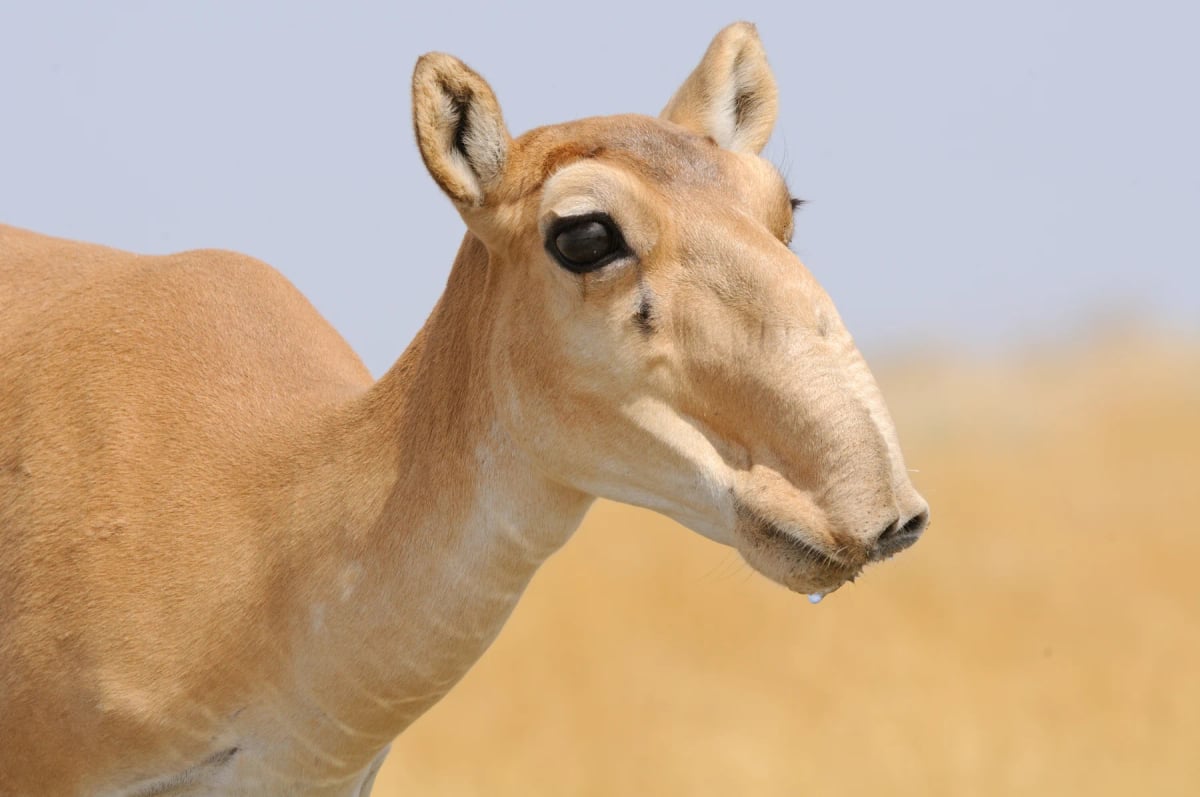
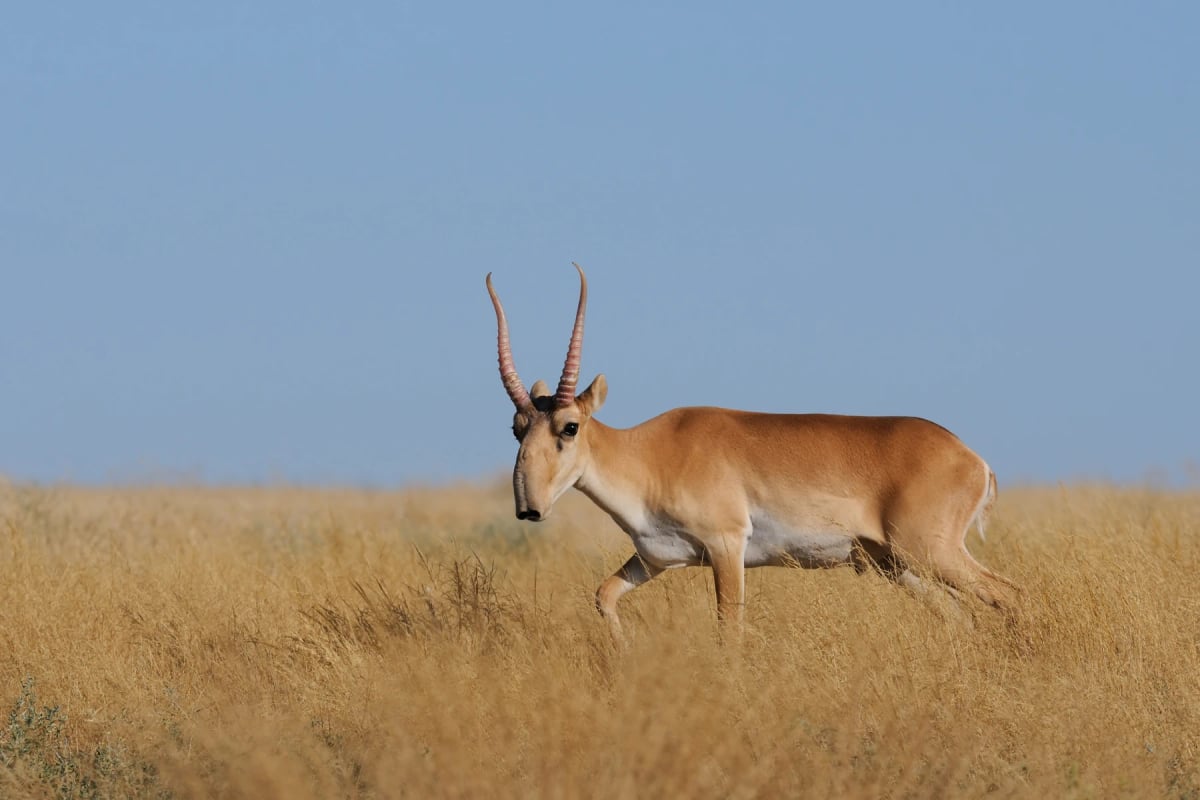
Nothing about the saiga's face is subtle. Its most striking feature is a large, bulbous nose that droops over the mouth and is packed with bones, muscles, and mucous membranes. In winter, this remarkable structure warms and humidifies the freezing air before it reaches the lungs. In the dry summer months, it filters out the dust thrown up by thousands of hooves on the move. The body is compact and built for stamina, with long, slender legs and a coat that turns from reddish brown in summer to thick, woolly pale grey in winter. Only males grow horns, which are semi-transparent, lyre shaped, and faintly ringed. Adults stand roughly 60 to 80 centimeters at the shoulder and weigh between 26 and 69 kilograms.
Conservation
The saiga is listed as Critically Endangered on the IUCN Red List, and its recent history is one of the most dramatic collapses of a large mammal in modern times. Populations fell by more than 95 percent between the 1970s and the early 2000s, driven largely by poaching for the horns of males, which are sold for use in traditional Chinese medicine. Then, in May 2015, a bacterial infection caused by Pasteurella multocida wiped out around 200,000 animals, roughly 60 percent of the entire global population, in just a few weeks. Conservation efforts across Kazakhstan, Russia, and other range states now include anti-poaching patrols, protected reserves, and international coordination under the Convention on Migratory Species. Some populations have shown signs of recovery, but the species remains extremely vulnerable.
Researched and written by Juan Pablo. Sources: IUCN Red List, scientific literature and regional field guides. Last updated: .
Technical factsheet





Frequently Asked Questions
What does the saiga eat?
Saigas are grazers that eat grasses, herbs, and flowering plants in spring and summer. When vegetation dries out, they switch to tougher shrubs. In winter, they scrape through snow with their hooves to reach dried plants underneath. Remarkably, they can eat certain plants that are poisonous to livestock without any apparent harm. They also need to drink regularly during hot months, though cooler weather reduces how often they seek water.
Where do saigas live?
Saigas live on the open steppes and semi-deserts of Central Asia. The largest populations are found in Kazakhstan, with smaller groups in Russia, Uzbekistan, Turkmenistan, and Mongolia. They prefer flat or gently rolling terrain with low grass and long sight lines, which helps them spot predators early. During the Ice Age their range covered much of Eurasia, but today it is confined to a fraction of that historical territory.
Why is the saiga endangered?
The saiga is Critically Endangered mainly because of intense poaching. The horns of males are sold for use in traditional medicine, which has driven hunters to kill them in huge numbers for decades. Populations dropped by more than 95 percent between the 1970s and early 2000s. A bacterial outbreak in 2015 then killed around 200,000 animals in just a few weeks. Habitat loss and severe winters also put pressure on populations that are already struggling to recover.
What is special about the saiga's nose?
The saiga has one of the most unusual noses in the animal kingdom. It is large, bulbous, and flexible, packed with bones, muscles, and mucous membranes. In freezing winters, it warms and humidifies cold air before it reaches the lungs. In dry summers, it filters out clouds of dust stirred up by thousands of hooves moving across the steppe. No other antelope has anything quite like it, and it is the feature most people notice first.
How fast can a saiga run?
Saigas can reach speeds of up to 80 kilometers per hour, making them one of the fastest animals on the Central Asian steppe. This speed is their main defense against wolves and other predators. Their legs are long and slender, built more for sustained speed across open ground than for navigating rough terrain. When a herd bolts, the sight of hundreds of animals sprinting across the steppe is something rarely matched in the natural world.
How do saigas reproduce?
Saigas mate in November and December during a fierce and exhausting rut. Males compete aggressively for females, and a successful male can gather a harem of thirty or more. The rut is so physically demanding that many males die from exhaustion or injuries before winter ends. Females give birth in May, and twins are very common. This high rate of twin births means populations can bounce back quickly when conditions improve and threats are kept under control.
Did saigas live alongside mammoths?
Yes. During the Ice Age, saigas roamed across a huge stretch of the Northern Hemisphere, sharing the landscape with woolly mammoths, cave lions, and woolly rhinoceroses. Their range extended from Western Europe all the way to North America. While most of those Ice Age giants went extinct, the saiga survived for thousands of years afterward. That makes it a genuine living relic of the Ice Age, still carrying the same remarkable nose its ancestors used on those ancient plains.