Takin
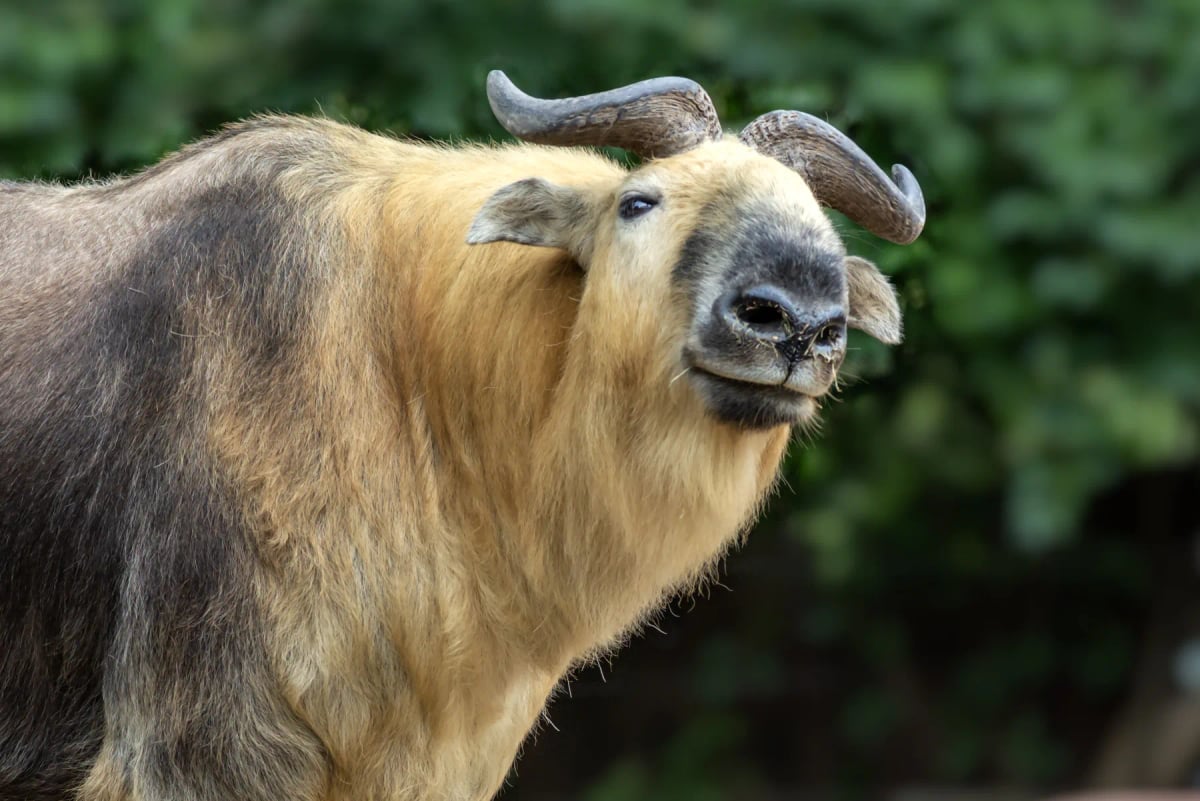
The takin is a large, stocky bovid that lives in the mountain forests and alpine meadows of the eastern Himalayas, across Bhutan, northeast India, China, and Myanmar. It looks something like a cross between a musk ox and a goat, with a broad nose that warms the thin, cold air before it reaches the lungs. A coat that produces oily secretions keeps the animal dry and insulated in wet mountain conditions. Takins move in herds and follow seasonal routes, descending to lower forests in winter and climbing toward high alpine zones in summer. They feed on bamboo shoots, grasses, leaves, and woody shrubs. Bhutan recognizes the takin as its national animal, and the species carries cultural importance across much of its range. The IUCN lists it as Vulnerable, with hunting and the loss of forest habitat being the main pressures on its survival.
Habitat and distribution
Takins occupy some of the most rugged terrain in Asia. Their range stretches across the eastern Himalayas, taking in Bhutan, the Sichuan and Yunnan provinces of China, Tibet, northeast India, and the far north of Myanmar. Within this range, they shift between habitats depending on the season. In winter, they shelter in dense temperate forests and bamboo thickets at lower elevations, where the canopy cuts the wind and food stays accessible. As snow retreats in spring, herds push upward through rhododendron scrub and open subalpine meadows, sometimes reaching elevations above 4,500 metres in summer. This reliance on a broad vertical range means takins need large, connected landscapes to complete their seasonal movements without interruption.
Diet
Feeding occupies a large part of a takin's day, and their diet shifts considerably with the seasons. During winter months at lower elevations, they rely heavily on bamboo shoots, bark, and the leaves of woody shrubs. When they move to higher ground in summer, fresh grasses, alpine herbs, and flowering plants become the main source of nutrition. Takins are browsers as much as grazers, meaning they take food from both shrubs and the ground depending on what is available. They also visit natural salt licks, which provide minerals that plants alone cannot supply. These mineral stops are important gathering points and can attract dozens of animals at once to a single location.
Distinctive features
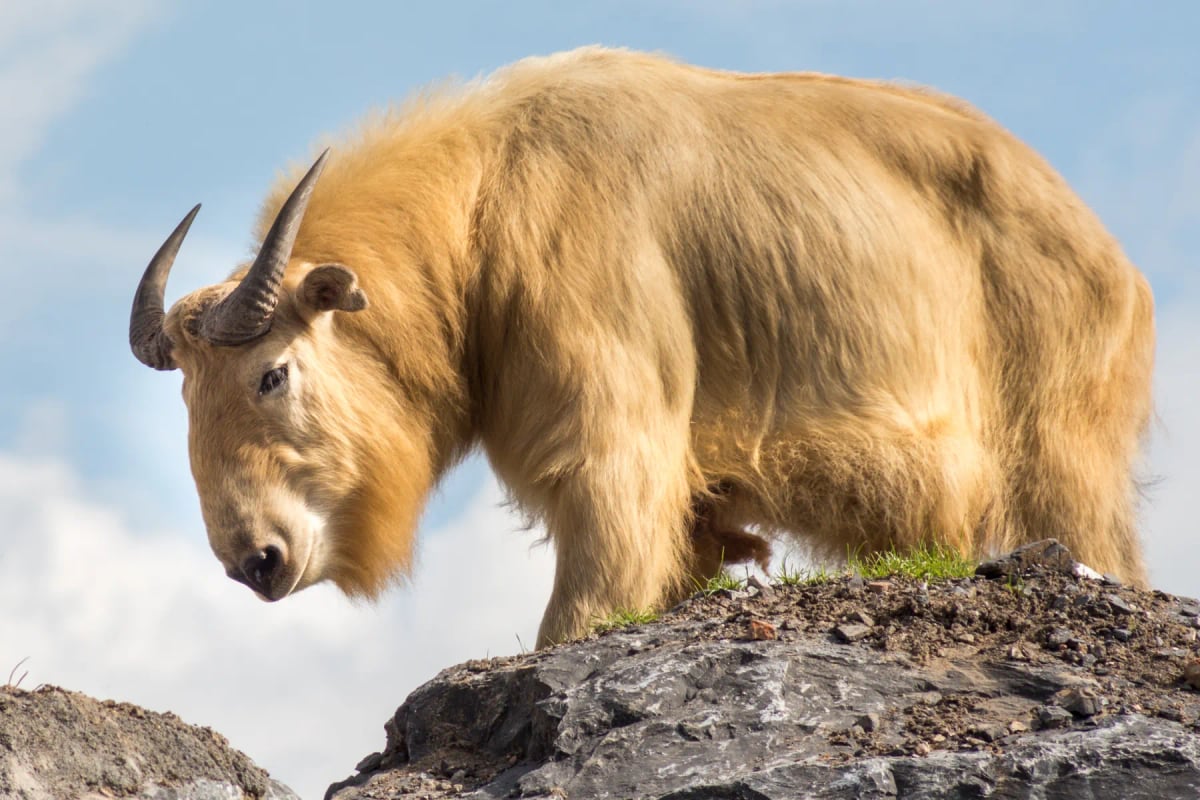
Few animals look quite like the takin. It carries the bulk of a musk ox on legs built for climbing, and its broad, Roman nose sets it apart from any other bovid in its range. That oversized nose is more than unusual in appearance: the large nasal passages are lined with a network of blood vessels that warm and moisten bitterly cold mountain air before it reaches the lungs. The coat adds another layer of protection. The outer guard hairs produce an oily, water-repellent secretion that keeps rain and snow from soaking through to the thick undercoat beneath. Adults are heavily muscled across the neck and shoulders, and their short, curved horns are present in both sexes. Coloring varies between subspecies, from golden to dark brown.
Behavior
Takins are social animals that gather in herds, and the size of those groups changes across the year. In winter, they tend to form smaller bands and spread through forested valleys where food and shelter are easier to find. By summer, larger aggregations of several dozen individuals come together on open alpine meadows. Older males sometimes live apart from the main herd for much of the year, rejoining during the breeding season in July and August. Takins are generally active in the early morning and late afternoon, resting during the hottest part of the day. When threatened, they retreat into dense vegetation rather than run across open ground, a behavior well suited to the thick mountain forest they call home.
Conservation
The IUCN classifies the takin as Vulnerable, and the pressures it faces are both persistent and widespread. Hunting for meat and traditional medicine has reduced populations across parts of its range, and the steady loss of forest to agriculture and logging removes the habitat takins depend on at lower elevations in winter. Climate change is an additional concern, as it alters the timing of seasonal plant growth that herds rely on. In Bhutan, the takin holds the status of national animal and receives strong legal protection. China also lists the species under national wildlife protection laws. Continued conservation across international boundaries is essential, given that takin populations do not stop at borders and need large connected areas to survive over the long term.
Researched and written by Juan Pablo. Sources: IUCN Red List, scientific literature and regional field guides. Last updated: .
Technical factsheet





Frequently Asked Questions
What does a takin eat?
Takins eat a wide variety of plants depending on the season. In winter, they browse on bamboo shoots, bark, and the leaves of shrubs at lower elevations. In summer, they graze on fresh grasses, alpine herbs, and flowering plants higher up the mountain. They also visit natural salt licks to get minerals that plants cannot provide on their own.
Where do takins live?
Takins live in the eastern Himalayas, across Bhutan, northeast India, parts of China including Sichuan, Yunnan, and Tibet, and the far north of Myanmar. They move between habitats throughout the year, spending winters in dense forest valleys and summers in open meadows at elevations that can exceed 4,500 metres. They need large, connected landscapes to make these seasonal journeys.
Why is the takin Bhutan's national animal?
The takin is deeply tied to Bhutanese legend. According to tradition, the saint Drukpa Kunley, known as the Divine Madman, created the animal by placing the head of a goat onto the body of a cow. Because of this story and the animal's unique presence in the country's mountain forests, Bhutan officially adopted the takin as its national animal. It is a strong symbol of the country's cultural identity.
Is the takin endangered?
The takin is listed as Vulnerable on the IUCN Red List. Hunting for meat and traditional medicine has put pressure on populations across its range, and the loss of forest to farming and logging reduces the habitat it depends on in winter. Climate change also affects the mountain plants takins rely on. Bhutan and China both have national laws that protect the species.
What does a takin look like?
The takin is a large, stocky animal that looks a bit like a cross between a musk ox and a goat. It has a very broad, Roman nose, a heavily muscled neck and shoulders, and short curved horns that both males and females carry. Its coat produces an oily secretion that acts like a natural raincoat. Coat color varies between subspecies, ranging from golden yellow to dark brown.
How do takins behave in groups?
Takins are social animals that live in herds, though group size changes with the season. In winter they form smaller bands spread across forested valleys. In summer, dozens of individuals can gather together on open alpine meadows. Adult males often live apart from the herd for most of the year and only rejoin during the breeding season in July and August. They are most active in the early morning and late afternoon.
Why does the takin have such a big nose?
The takin's large nose is a real adaptation to its cold mountain environment. The wide nasal passages are lined with blood vessels that warm and moisten the freezing air before it reaches the lungs. This protects the animal's respiratory system in temperatures that regularly drop well below zero. It is one of the most practical features of any mountain mammal, even if it also makes the takin one of the most unusual looking animals in Asia.