Tiger Snake
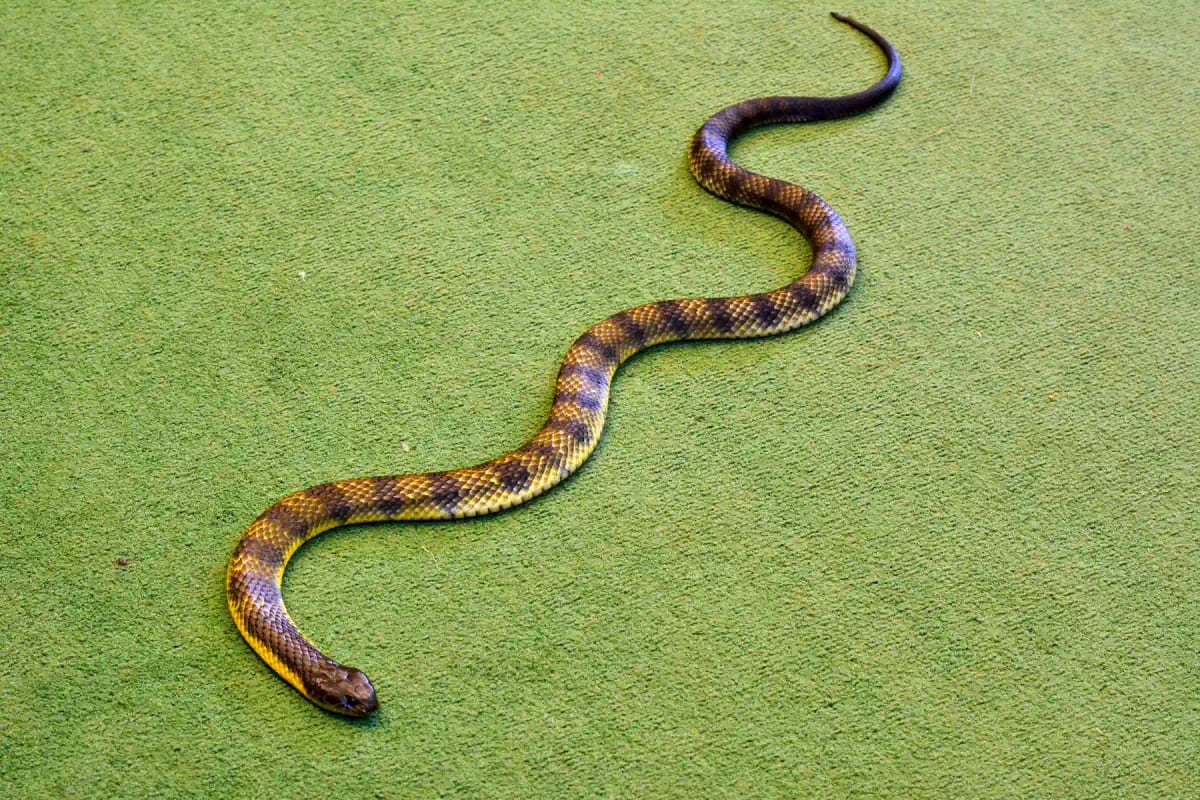
The tiger snake is one of Australia's most dangerous reptiles, a robust elapid found across southern Australia and Tasmania. Its thick body is marked with broad, pale bands on a background of olive, brown, or dark grey, though banding varies considerably between individuals and populations. It thrives in wetlands, grasslands, and coastal scrub, where it hunts frogs, lizards, fish, and small mammals. When threatened, it flattens its body and hisses loudly before striking. Its venom contains powerful neurotoxins and clotting agents capable of causing paralysis, blood disorders, and kidney damage. Before antivenom became available, bites were frequently fatal. Today, prompt medical treatment greatly improves survival. Tiger snakes are strong swimmers and can remain active well into the cooler months thanks to their tolerance for low temperatures, a trait that sets them apart from many other Australian snakes.
Habitat and distribution
Tiger snakes are distributed across the southern rim of Australia, from Western Australia's southwest coast through South Australia and Victoria to New South Wales, as well as throughout Tasmania and many of its surrounding islands. They are most at home in wetland environments: swamps, creek banks, marshes, and areas near seasonal pools. Coastal scrubland, grasslands, and farmland close to water also suit them well. Because they rely heavily on frogs as prey, tiger snakes tend to concentrate wherever amphibian populations are dense. On some Bass Strait islands, isolated populations have evolved noticeably different body sizes compared to mainland animals, reflecting adaptation to local prey availability. Elevation is not a major barrier for this species; populations exist from sea level into mountainous terrain in Tasmania.
Diet
Frogs make up the bulk of the tiger snake's diet, and its distribution closely follows that of its amphibian prey. When frogs are scarce, this snake will readily take lizards, small mammals, birds, and fish. It is an opportunistic predator that adjusts its hunting strategy to whatever is available in its habitat. Juvenile tiger snakes often target skinks and other small lizards before transitioning to larger prey as they grow. On islands with seabird colonies, some populations feed heavily on chicks and eggs, showing how adaptable this species can be. Tiger snakes typically hunt by actively searching through vegetation and water rather than waiting in ambush, though they will strike quickly once they detect prey. Food is digested slowly, and a large meal can sustain a tiger snake for several days.
Behavior
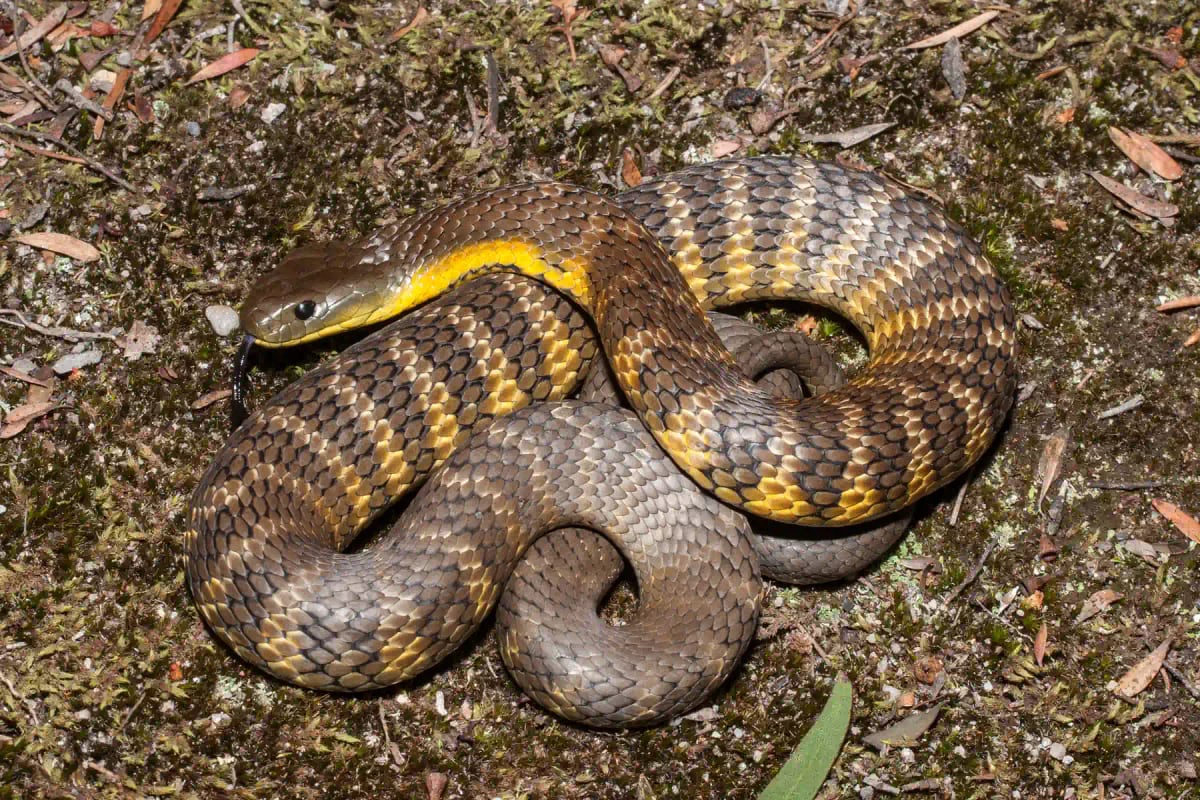
One of the tiger snake's most remarkable traits is its tolerance for cold. Unlike many Australian reptiles that become inactive in cool conditions, tiger snakes can remain active at temperatures close to 10 °C, allowing them to hunt and bask well into autumn. They are active during the day for most of the year but shift toward dusk and nighttime activity during the hottest summer months. When cornered or threatened, a tiger snake puts on a striking display: it flattens and widens its body, raises its head, and produces a loud, sustained hiss before lunging at the threat. They are capable swimmers and will cross waterways without hesitation. In colder parts of their range, tiger snakes brumate during winter, sheltering under rocks, logs, or dense vegetation until temperatures rise again.
Venom
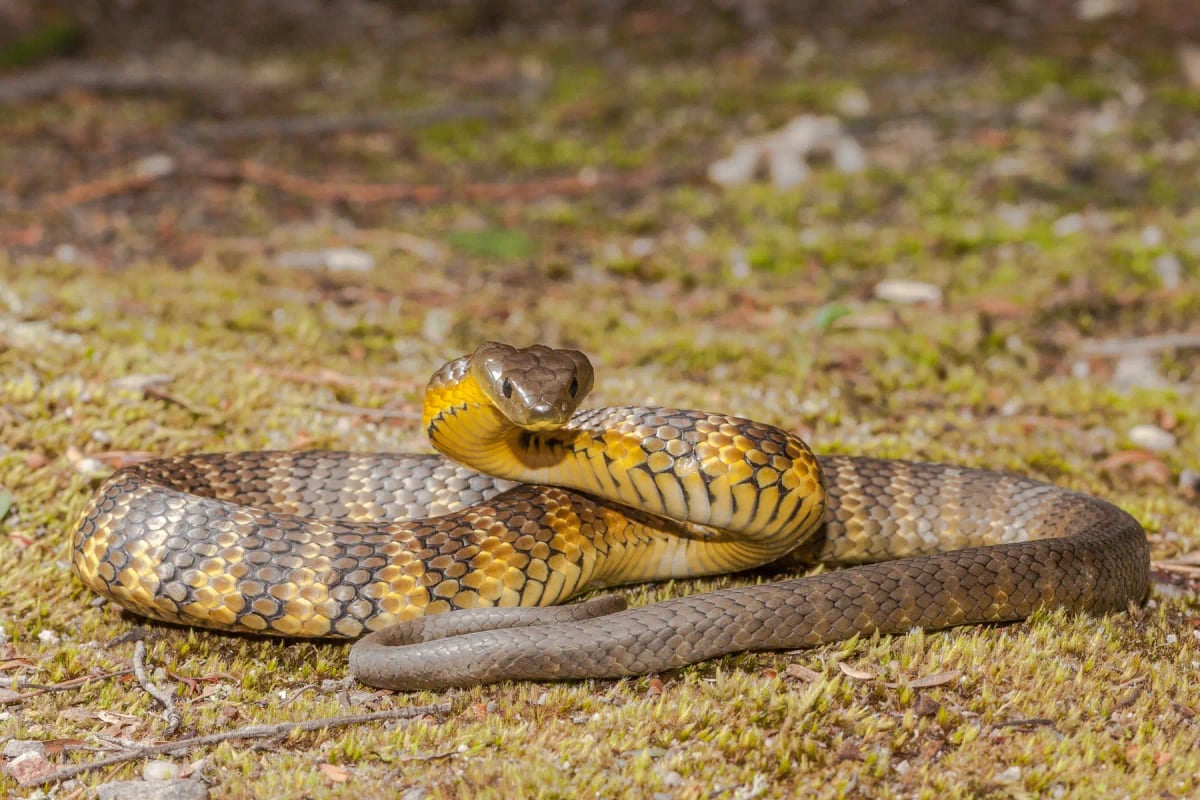
The venom of the tiger snake is among the most medically significant of any snake in Australia. It contains a combination of neurotoxins, which disrupt nerve signals to the muscles, and potent coagulants that interfere with the blood's ability to clot normally. A serious bite can lead to paralysis, uncontrolled bleeding, kidney damage, and destruction of muscle tissue. Symptoms may develop gradually in the hours following a bite, which can make the initial injury feel deceptively mild. Before antivenom was developed in the mid-twentieth century, untreated bites carried a fatality rate estimated at around 40 to 60 percent. Today, tiger snake antivenom is widely available at Australian hospitals, and deaths are rare when treatment is sought promptly. First aid should focus on keeping the patient still and applying a pressure bandage to slow venom spread.
Relation with humans
People and tiger snakes come into contact more often than many Australians might expect. Suburban gardens, farms, and parklands near rivers or wetlands can all be home to these snakes, particularly in Victoria, South Australia, and Tasmania. Most bites occur when people attempt to handle or kill the snake rather than simply moving away from it. Tiger snakes are not aggressive by nature and will retreat if given the chance. Despite their fearsome reputation, they play a valuable role in local ecosystems by keeping frog and rodent populations in check. Public education campaigns and legal protections in all Australian states have helped reduce the number of snakes killed out of fear. If you encounter one, the safest response is always to back away slowly and give it space to leave on its own.
Conservation
The IUCN classifies the tiger snake as Least Concern, reflecting that populations across its range remain broadly stable. The species benefits from its adaptability and relatively wide distribution throughout southern Australia and Tasmania. That said, local declines have been recorded in areas where wetlands have been drained for agriculture or urban development, since the loss of frog habitat directly reduces the food supply these snakes depend on. Collisions with vehicles are a significant cause of death in areas where snakes cross roads during their active season. Tiger snakes are protected under wildlife legislation in all Australian states, making it illegal to kill, collect, or keep them without a permit. Maintaining healthy wetland ecosystems is the most effective way to support stable populations of this species over the long term.
Researched and written by Juan Pablo. Sources: IUCN Red List, scientific literature and regional field guides. Last updated: .
Technical factsheet

Frequently Asked Questions
Is the tiger snake deadly to humans?
Yes, it can be. Tiger snake venom contains neurotoxins and agents that disrupt blood clotting, which can cause paralysis, kidney damage, and uncontrolled bleeding. Before antivenom existed, bites killed roughly 40 to 60 percent of untreated victims. Today, deaths are rare because antivenom is widely available at Australian hospitals. Getting medical help quickly and keeping still after a bite makes a huge difference to the outcome.
What does the tiger snake eat?
Frogs are the tiger snake's main food source, and it tends to live wherever frogs are plentiful. When amphibians are hard to find, it will also eat lizards, small mammals, birds, and fish. Young tiger snakes often start out hunting skinks before moving on to larger prey. On islands near seabird colonies, some individuals have even been known to feed on chicks and eggs.
Where does the tiger snake live in Australia?
Tiger snakes are found across the southern part of Australia, from the southwest coast of Western Australia through South Australia and Victoria to New South Wales, as well as throughout Tasmania and many nearby islands. They prefer wetland environments like swamps, creek banks, and marshes, but also turn up in coastal scrubland, grasslands, and farmland near water. They can live anywhere from sea level to mountainous areas in Tasmania.
Can tiger snakes swim?
Absolutely. Tiger snakes are strong swimmers and will cross rivers, streams, and wetlands without any hesitation. Their ability to move through water is one reason they do so well in swampy and coastal habitats. They have also been found on islands scattered across Bass Strait, which suggests that water is no real barrier for this species. Swimming also helps them hunt fish and pursue prey near the water's edge.
How does a tiger snake behave when threatened?
When it feels cornered, a tiger snake puts on a very obvious warning display. It flattens and widens its body to look larger, raises its head off the ground, and lets out a loud, drawn-out hiss. If the threat does not back off, it will strike. Despite this dramatic response, tiger snakes are not naturally aggressive. They prefer to escape rather than fight, and most bites happen when people try to handle or kill them.
Is the tiger snake active in cold weather?
Yes, which makes it unusual among Australian snakes. Tiger snakes can stay active at temperatures as low as around 10 °C, allowing them to hunt and bask well into autumn. In the hottest months, they shift to being more active at dusk and night. In the coldest parts of their range, they do brumate through winter, sheltering under rocks or logs, but their tolerance for cool conditions gives them a longer active season than most other Australian reptiles.
Are tiger snakes endangered?
Not overall. The IUCN lists the tiger snake as Least Concern, meaning populations across southern Australia and Tasmania are broadly stable. However, local numbers have dropped in some areas where wetlands have been drained for farming or housing, since fewer frogs means less food. Road collisions also kill a notable number of snakes each year. The species is legally protected in all Australian states, so killing or keeping one without a permit is illegal.