Sea Snake
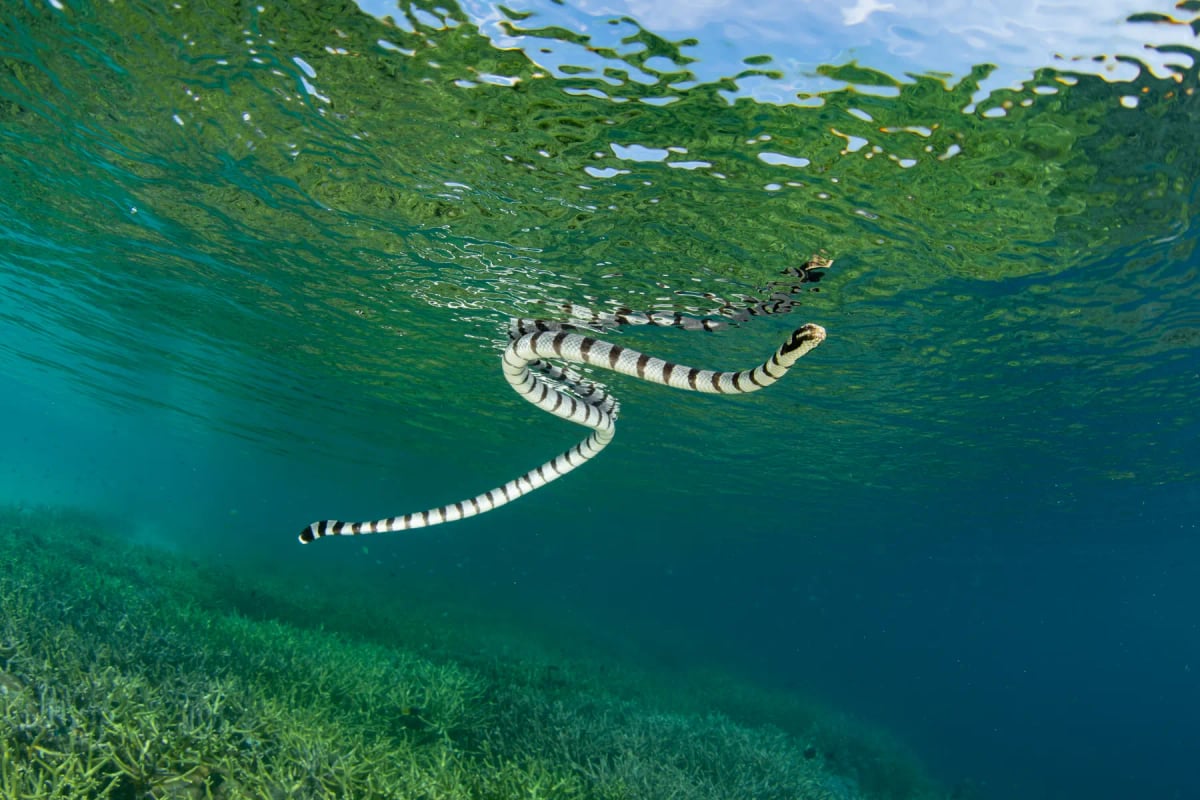
Sea snakes are a diverse group of reptiles fully adapted to life in the warm coastal and open waters of the Indo-Pacific. They belong to two main groups: the true sea snakes of the family Hydrophiidae, which give birth to live young at sea, and the sea kraits of the genus Laticauda, which return to land to lay eggs. All species share a body that is flattened from side to side toward the tail, giving them an oar-shaped paddle that makes them powerful swimmers. Adults range from around 0.5 to 2.7 meters in length depending on the species. They hunt fish and eels in reef channels and shallow coastal waters. Although their venom is highly toxic, bites on humans are rare and almost always accidental. Their greatest threats are capture as bycatch and the steady loss of healthy coral reef habitat.
Habitat and distribution
Sea snakes are found across the tropical and subtropical waters of the Indo-Pacific, ranging from the coasts of India, Sri Lanka, and Southeast Asia eastward through the Philippines, Indonesia, Papua New Guinea, and northern Australia, with some species reaching as far as Fiji and other Pacific islands. Most species prefer shallow coastal environments: coral reefs, mangrove estuaries, and sandy lagoons where fish are plentiful. The true sea snakes of the subfamily Hydrophiinae spend their entire lives in the ocean, while sea kraits of the genus Laticauda also use rocky shorelines and small islands for resting and egg laying. A handful of species venture into open ocean waters far from shore, but the majority stay close to the reef systems that support their prey.
Appearance
One of the most distinctive features of sea snakes is the tail, which is flattened from side to side into a broad paddle shape that works like an oar in the water. The body itself is also somewhat compressed, helping these reptiles move through the water with efficiency. Adults vary considerably in size: smaller species measure around 0.5 metres at maturity, while the largest, such as the yellow sea snake, can reach up to 2.7 metres. Coloration differs widely between species. Banded sea kraits display bold rings of black and white or black and yellow, while many true sea snakes wear more subdued tones of olive, grey, or brown, sometimes with faint banding. The nostrils sit on top of the snout and can be sealed shut during dives.
Diet
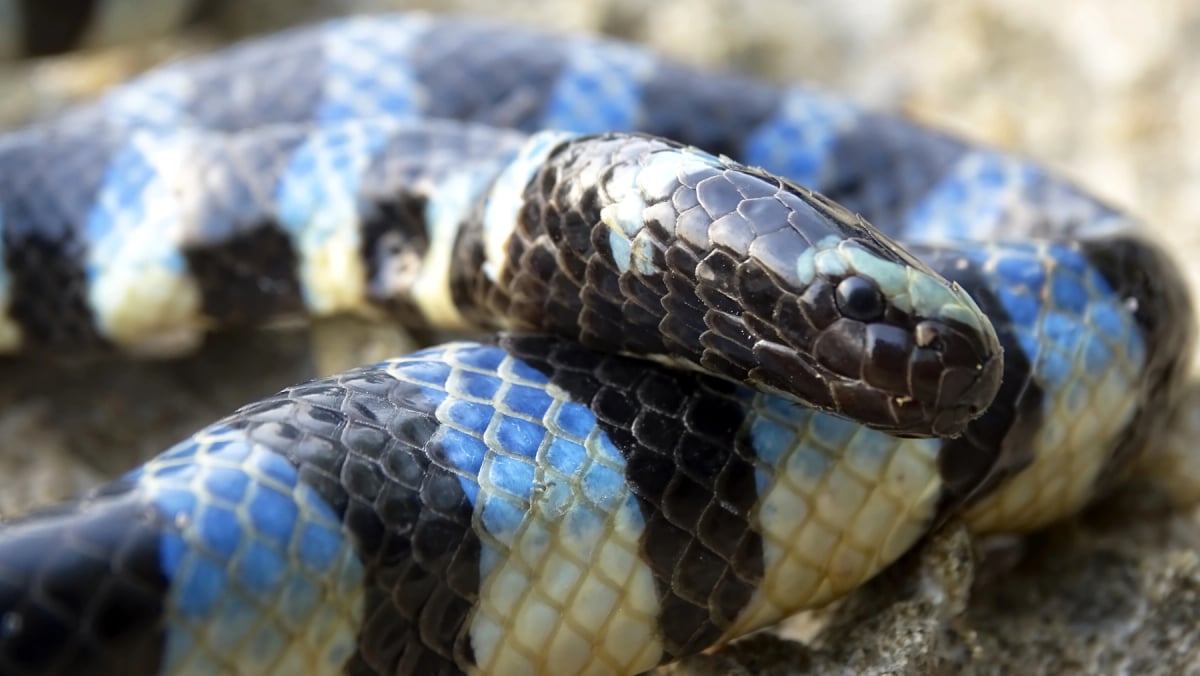
Hunting is central to the daily routine of sea snakes, and different species have developed clear preferences for particular prey. Many focus on small fish, especially eels and gobies that hide inside reef crevices and burrows in the sandy seabed. The slender, flexible snout common to many species allows them to probe narrow gaps that larger predators cannot reach. Sea snakes subdue prey with a fast, precise bite delivered by short, fixed fangs located at the front of the mouth. Their venom acts quickly on the nervous system of the target animal, immobilising it before swallowing. Some species, such as certain Emydocephalus sea snakes, feed almost exclusively on fish eggs scraped from rock surfaces, making them unusual among venomous reptiles for having such a specialized and harmless diet.
Behavior
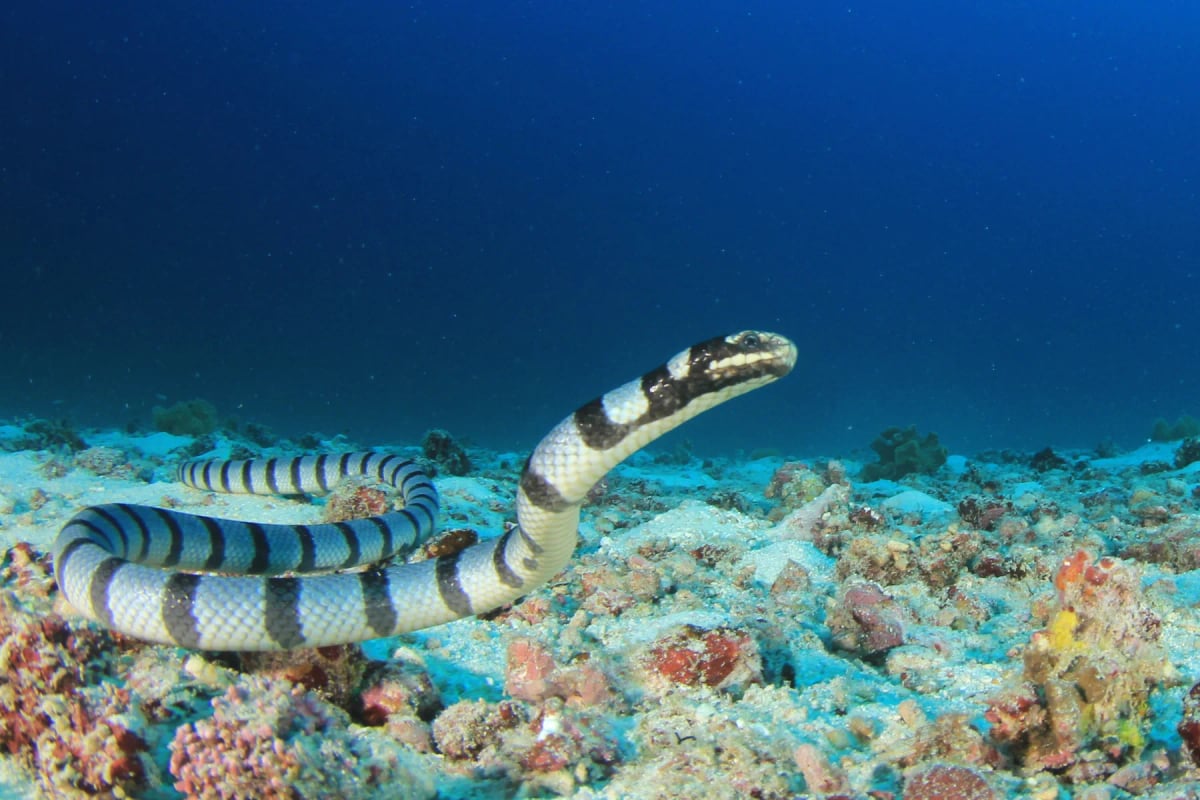
Unlike fish, sea snakes breathe air and must return to the surface regularly, though they are capable of staying submerged for up to two hours in some cases, aided by the ability to absorb a small amount of oxygen through the skin. They are generally calm animals and rarely show aggression toward people unless cornered or handled. Most species are active during the day, patrolling reef channels and sandy flats in search of prey. Sea kraits follow a more varied routine, alternating between the water, where they hunt, and land, where they rest and lay eggs in rock crevices or forest litter near the shore. During certain seasons, large aggregations of sea kraits gather at specific coastal sites, a behavior thought to be connected with mating and egg laying.
Conservation
Pressure on sea snake populations comes from several directions at once. The biggest documented threat is bycatch: vast numbers of sea snakes are accidentally caught in trawl nets and gill nets each year and die before they can be returned to the water. In some parts of Southeast Asia they are also collected for their skin and for use in local food markets. Beneath all of this sits the broader problem of coral reef degradation driven by rising ocean temperatures, pollution, and destructive fishing practices. Because sea snakes depend so heavily on healthy reefs for their food supply, the decline of those ecosystems strikes at the base of their survival. The IUCN currently lists most species as Data Deficient, meaning reliable population data is still too scarce to make a full assessment of how serious the situation truly is.
Where it is found
The Sea Snake can be found in places such as:
Researched and written by Juan Pablo. Sources: IUCN Red List, scientific literature and regional field guides. Last updated: .
Technical factsheet



Frequently Asked Questions
Are sea snakes dangerous to humans?
Sea snakes carry venom that is highly toxic, but bites on people are genuinely rare. These animals are not aggressive, and the vast majority of encounters with swimmers or fishers end without incident. Bites almost always happen when a snake is accidentally stepped on or caught in a net and handled. As long as you leave them alone in the water, sea snakes pose very little practical danger.
Where do sea snakes live?
Sea snakes are found throughout the warm coastal waters of the Indo-Pacific, from the shores of India and Sri Lanka across Southeast Asia to Australia, the Philippines, and out into the Pacific as far as Fiji. Most species prefer shallow environments such as coral reefs, mangrove estuaries, and sandy lagoons. A few species roam the open ocean, but the majority stay close to reef systems where fish are easy to find.
What do sea snakes eat?
Most sea snakes hunt fish, with a strong preference for eels and small fish that shelter inside reef crevices. Their slender snouts let them probe tight gaps in the coral where larger predators cannot reach. They use a fast, precise bite to deliver venom that paralyzes prey almost instantly. Some species, like certain Emydocephalus sea snakes, have a very different diet and feed almost entirely on fish eggs scraped from rock surfaces.
How long can sea snakes stay underwater?
Sea snakes breathe air like all reptiles, but they are impressive divers. Some species can remain submerged for up to two hours, thanks in part to a remarkable ability to absorb a small amount of oxygen directly through their skin. Their nostrils are positioned on top of the snout and seal shut completely during a dive, keeping water out. When they do surface, a single breath is usually enough before they head back down.
What is the biggest threat to sea snakes?
The greatest documented threat is bycatch. Enormous numbers of sea snakes are accidentally caught in trawl nets and gill nets every year, and most die before fishers can release them. In parts of Southeast Asia they are also hunted for their skin and sold in local food markets. On top of that, the degradation of coral reefs driven by rising ocean temperatures and pollution removes the prey base these animals depend on for survival.
Do sea snakes lay eggs or give birth to live young?
It depends on the group. True sea snakes, belonging to the subfamily Hydrophiinae, give birth to live young directly in the ocean and never need to come ashore. Sea kraits of the genus Laticauda work differently: they return to land to lay eggs in rock crevices or among forest litter close to the shore. This difference makes sea kraits a kind of bridge between fully aquatic sea snakes and their land-dwelling ancestors.
How big do sea snakes get?
Size varies quite a bit between species. The smallest reach only around 0.5 metres when fully grown, while the largest, such as the yellow sea snake, can measure up to 2.7 metres. Most species fall somewhere in between. Along with their size, the paddle-shaped tail common to all sea snakes is one of their most recognizable features, allowing them to propel themselves through the water with a powerful, side-to-side swimming motion.