Seal
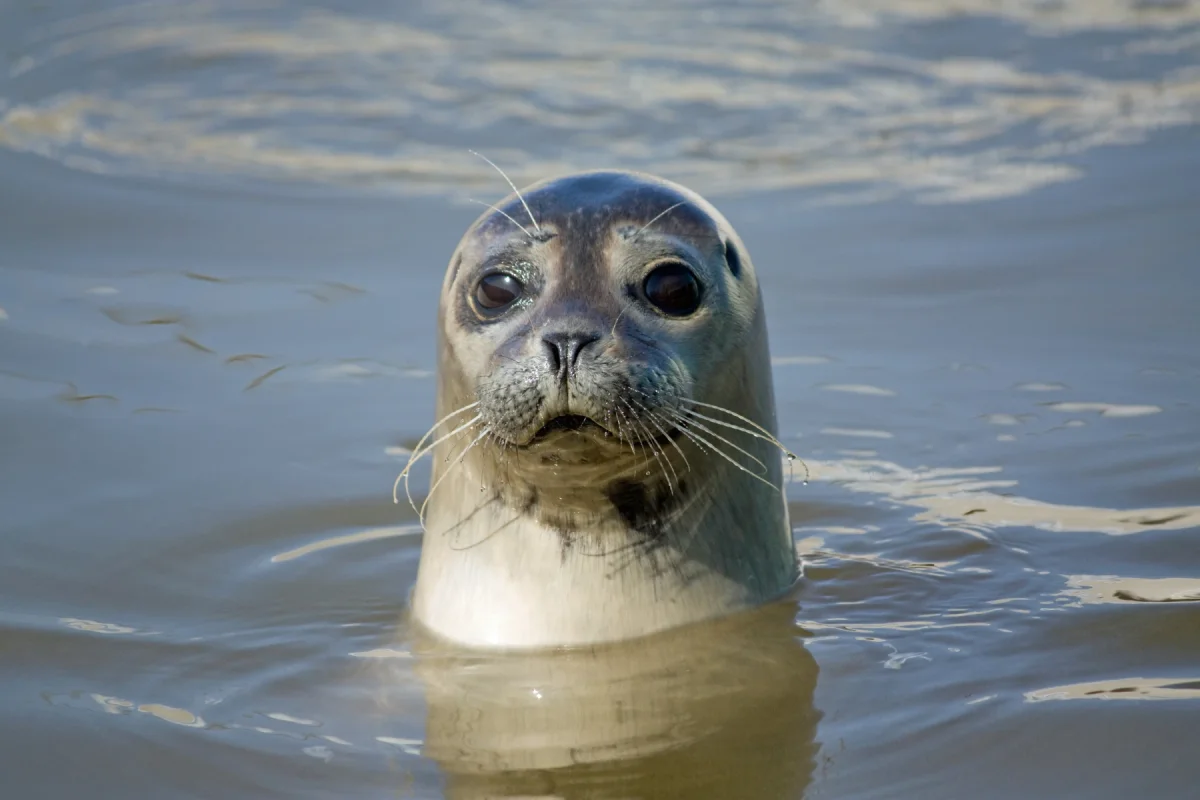
The harbor seal (Phoca vitulina) is one of the most widely distributed pinnipeds in the world, living along temperate and Arctic coasts of the North Atlantic and North Pacific. Its rounded head, large dark eyes, and coat covered in spots make it easy to recognize. A capable diver, it can stay underwater for up to 30 minutes and reach depths of more than 200 meters while hunting fish, squid, and crustaceans. Harbor seals rest on sandbanks, rocky shores, and beaches, either alone or gathered in small loose groups. Females give birth to a single pup in early summer. Pups can swim within hours of being born and are weaned in three to six weeks. The species is listed as Least Concern by the IUCN, though entanglement in fishing gear, vessel disturbance, and marine pollution continue to put pressure on local populations.
Habitat and distribution
Harbor seals have one of the broadest ranges of any pinniped, stretching across the coasts of the North Atlantic and North Pacific oceans. They are equally at home in sheltered estuaries, sandy bays, rocky shorelines, and Arctic fjords. In the Atlantic, they occur from the eastern coast of Canada and the United States all the way to Iceland, Norway, and the British Isles. In the Pacific, their range runs from Alaska down through British Columbia and into Baja California, and also covers parts of Russia and Japan. Rather than undertaking long migrations, harbor seals tend to stay close to familiar stretches of coastline throughout the year, returning repeatedly to the same spots to rest and breed.
Diet
Hunting is where the harbor seal truly excels. It feeds on a wide variety of prey, including fish such as herring, sand lance, and flatfish, as well as squid and crustaceans. The exact menu varies by location and season, since seals are opportunistic and take whatever is most available locally. To catch prey, they dive to depths of more than 200 meters and can hold their breath for up to 30 minutes, slowing their heart rate dramatically to conserve oxygen. Their large, sensitive eyes help them spot prey in murky or dimly lit water. Whiskers, known as vibrissae, are also important: they can detect the tiny movements in the water left behind by a fish that has already swum past.
Haul-out behavior
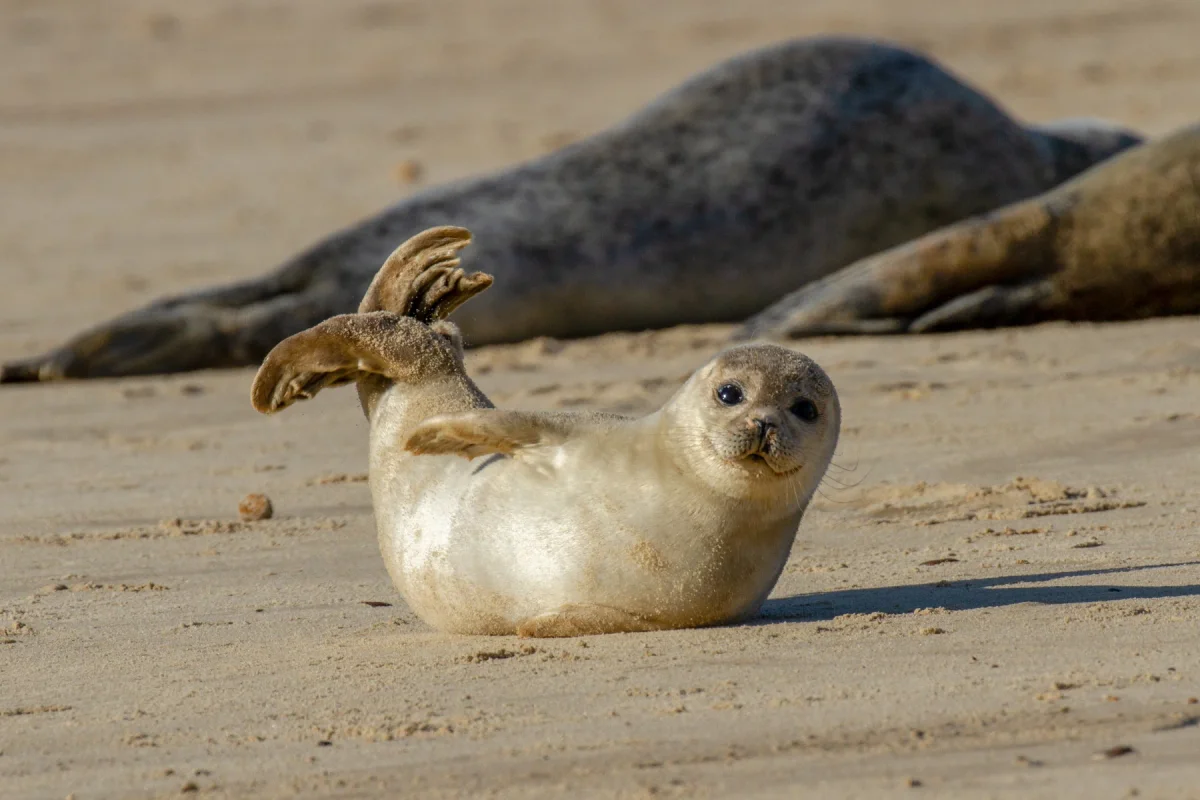
Between feeding trips, harbor seals spend a considerable amount of time out of the water. This behavior, called hauling out, takes place on sandbanks, rocky reefs, sheltered beaches, and even floating ice in colder regions. Seals use these resting sites to sleep, warm up in the sun, molt their coats once a year, and nurse their pups. Unlike many other species of pinnipeds, harbor seals tend to gather in loose, relaxed groups rather than dense colonies, and individuals often keep a comfortable distance from one another. They are sensitive to disturbance while hauled out, and repeated disruption by boats or people on foot can cause them to abandon important resting sites, which takes a real toll on their health over time.
Reproduction
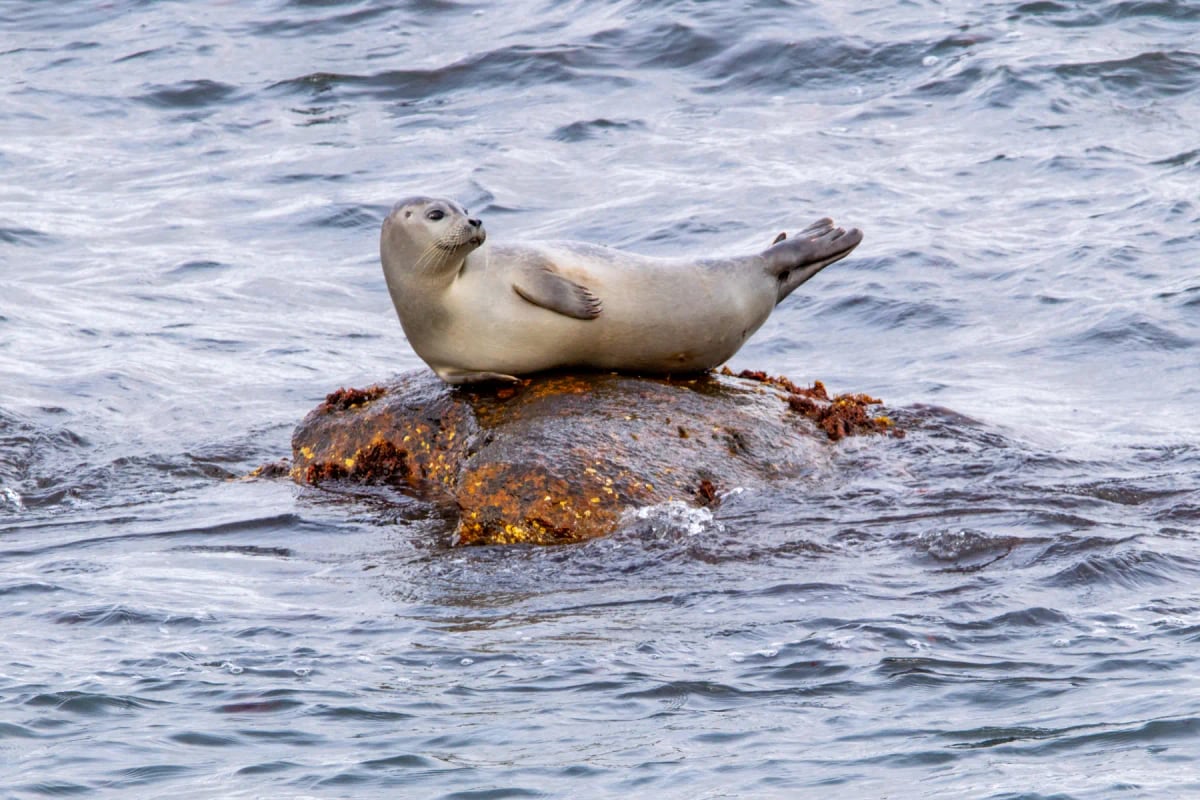
Pups are born in early summer, though the exact timing shifts depending on the region. In warmer southern areas, births can begin as early as February, while in Arctic zones they may not occur until June or July. Each female gives birth to a single pup, which arrives already capable of swimming. Within hours of being born, a pup can enter the water alongside its mother. Nursing lasts between three and six weeks, during which the pup grows rapidly on its mother's fat-rich milk. Once weaned, it must fend for itself. Mating takes place in the water shortly after the pup is weaned. Males compete for access to females, though harbor seals are far less aggressive about this than species that form large breeding colonies on land.
Conservation
The IUCN lists the harbor seal as Least Concern globally, and in many regions populations are stable or recovering following the end of large-scale culling programs in the twentieth century. Even so, the species faces a range of ongoing pressures. Entanglement in fishing nets remains one of the leading causes of death outside of natural predation. Noise and disturbance from vessel traffic can interfere with communication and push seals away from key resting areas. Oil spills and the buildup of pollutants in coastal waters affect both the seals themselves and the fish they depend on. Climate change adds further uncertainty, altering prey availability and reducing sea ice in Arctic parts of their range. Several regional populations are monitored closely due to local declines.
Where it is found
The Seal can be found in places such as:
Researched and written by Juan Pablo. Sources: IUCN Red List, scientific literature and regional field guides. Last updated: .
Technical factsheet



Frequently Asked Questions
What do harbor seals eat?
Harbor seals eat a wide variety of seafood, including fish like herring, sand lance, and flatfish, along with squid and crustaceans. They are opportunistic hunters, meaning they go after whatever prey is most available in their area at any given time. To catch a meal, they can dive to depths of more than 200 meters and hold their breath for up to 30 minutes, which makes them remarkably capable underwater hunters.
Where do harbor seals live?
Harbor seals live along the coasts of the North Atlantic and North Pacific oceans. You can find them in places like Canada, the United States, Iceland, Norway, the United Kingdom, Russia, and Japan. They favour sheltered bays, estuaries, rocky shores, and sandy beaches. Unlike some other marine mammals, they do not migrate long distances. Instead, they tend to stay close to familiar stretches of coastline all year round.
How long can a harbor seal hold its breath?
A harbor seal can hold its breath for up to 30 minutes, which is impressive for a mammal of its size. To manage this, its heart rate slows down dramatically while underwater, reducing the need for oxygen. This ability, called the diving reflex, allows it to chase prey at depths of more than 200 meters. Most dives in the wild are much shorter than the maximum, lasting just a few minutes.
Are harbor seals dangerous to humans?
Harbor seals are generally not dangerous to humans. They are naturally curious animals and will often watch people from a distance in the water. However, like any wild animal, they can bite if they feel cornered or threatened, especially when resting on a beach. It is always best to keep your distance and never try to touch or approach one. Getting too close also stresses them out and can cause them to flee important resting spots.
How long do harbor seals live?
In the wild, harbor seals typically live between 25 and 35 years, with females generally outliving males. Males tend to have shorter lives, partly because the stress of competing for mates takes a toll on their bodies over time. Predators such as sharks, orcas, and polar bears shorten many lives before old age. Entanglement in fishing nets is also a major cause of early death in many parts of their range.
Why do harbor seals come out of the water?
Harbor seals regularly leave the water to rest, a behavior called hauling out. They do this to sleep, warm up in the sun, shed their coat during the annual molt, and nurse their pups. They tend to use the same spots again and again, gathering on sandbanks, rocky reefs, and sheltered beaches in loose groups. These rest breaks are essential for their health, so repeated disturbance by people or boats can genuinely harm local populations.
Are harbor seals endangered?
Harbor seals are listed as Least Concern by the IUCN, meaning the species as a whole is not currently at risk of extinction. Populations in many regions have actually recovered since large hunting programs ended in the twentieth century. That said, certain local groups face real threats from fishing net entanglement, pollution, boat traffic, and the effects of climate change. Scientists keep a close eye on several regional populations that have shown signs of decline in recent years.