Tiger Shark

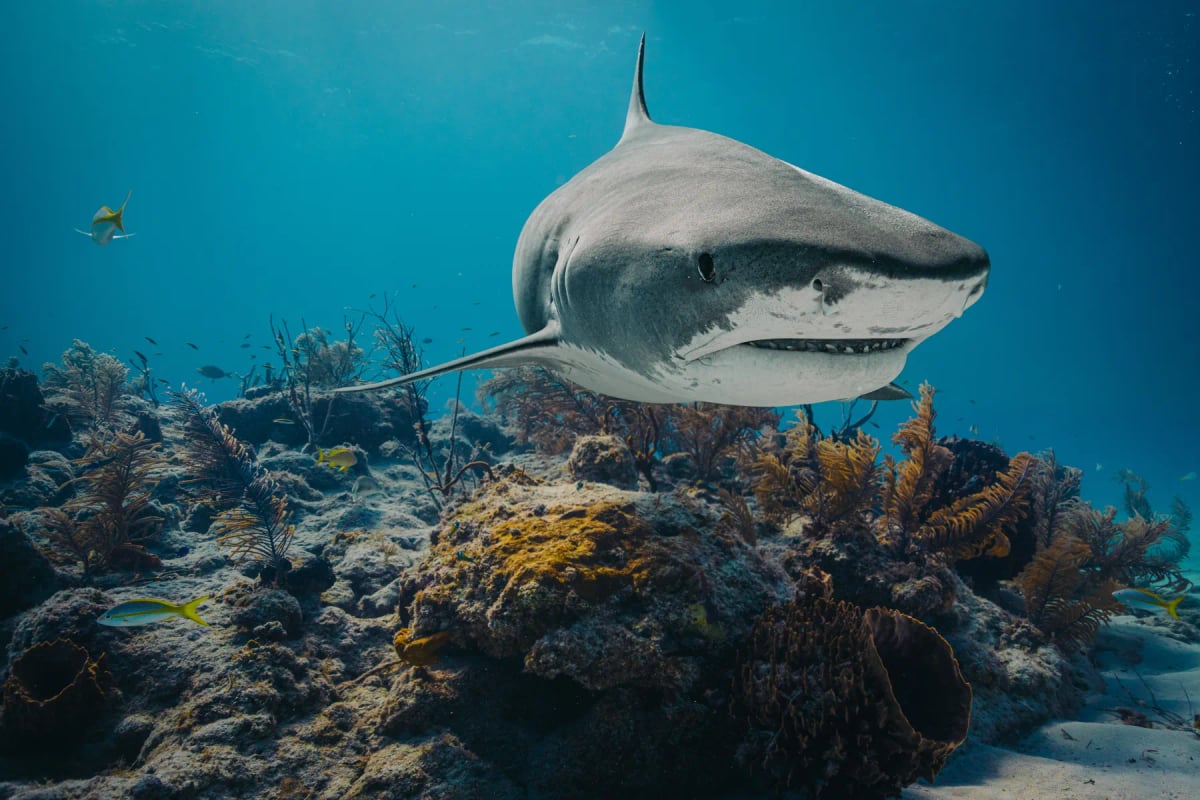
The tiger shark (Galeocerdo cuvier) is one of the largest predatory sharks in the ocean, commonly 3 to 4 meters long, with the biggest females reaching about 5 meters and more than 600 kilograms. It is named for the dark vertical stripes on its sides, which are bold in young sharks and fade as they grow. It lives in warm coastal waters around the tropics, entering shallow bays, river mouths, harbors and coral reefs, as well as the open ocean. Few animals have such a broad diet: tiger sharks eat fish, sea turtles, rays, seabirds, dolphins, crustaceans and even garbage, and their wide, serrated teeth can cut through a turtle shell. Because they hunt close to shore, they are second only to the great white in recorded bites on people, although bites are rare. The best known places to see them are Tiger Beach in the Bahamas, Hawaii, Fiji and Australia. The IUCN lists the species as Near Threatened.
Where do tiger sharks live?
Tiger sharks live in tropical and warm temperate seas around the world, mostly in water above about 22 degrees. They are equally at home in the open ocean and in shallow coastal waters, and they regularly enter harbors, river mouths, lagoons and the edges of coral reefs. Tagging shows that they can travel thousands of kilometers, moving between coasts and offshore waters with the seasons, but many return to the same areas year after year. The best known places to see them are Tiger Beach, off Grand Bahama, where divers meet them on a shallow sand flat, the coasts of Hawaii, Beqa Lagoon in Fiji, Aliwal Shoal in South Africa, and the coasts of Australia, where the bays of Shark Bay hold one of the largest populations in the world. They are also common in the Persian Gulf, the Red Sea, West Africa, the Caribbean and Southeast Asia, where they are often caught by fishers. In Hawaii and eastern Australia they come especially close to shore, which brings them into regular contact with people.
Tiger shark size, stripes and appearance
Most adult tiger sharks measure 3 to 4 meters, and the largest females reach about 5 meters, with reliable records of sharks weighing 600 to 900 kilograms; stories of 7 meter tiger sharks have never been verified. Females grow larger than males. The body is thick and heavy in front, with a very short, blunt, almost square snout and large eyes that help it hunt at night. The name comes from the dark vertical stripes and spots along its gray or brownish back, like a tiger's coat. They are bold in young sharks, which may help camouflage them in the dappled light of shallow water, and fade with age, so large adults can look almost plain gray. The teeth are unlike those of any other shark: broad, sharply hooked and serrated on both edges, like a can opener, which lets the tiger shark saw through turtle shells, bones and the tough skin of other sharks. Newborn pups measure about 50 to 75 centimeters.
Diet
Few predators in the ocean match the tiger shark when it comes to the variety of things they will eat. Their diet includes fish, rays, sea turtles, seabirds, dolphins, crustaceans, squid, and even marine mammals such as dugongs. Their jaws are built for power rather than speed, lined with large serrated teeth that can crack open a sea turtle shell without difficulty. They are also known to consume carrion and have been found with entirely unexpected objects in their stomachs, from license plates to pieces of clothing, which is why they have earned the nickname of the ocean's dustbin. Most feeding happens at night or during the low light of dusk and dawn, when the shark uses its keen senses to detect prey in murky water. This flexibility in diet is a key reason the species thrives across so many different environments.
Tiger shark attacks: how dangerous are they?
When it comes to interactions with people, the tiger shark holds a significant place in the data. It is responsible for more recorded bites on humans than any other shark species except the great white. This is partly a consequence of its habit of swimming in shallow coastal waters frequented by swimmers and surfers, and partly due to its tendency to investigate unfamiliar objects with its mouth. Most incidents occur in areas with warm, clear water such as Hawaii, Australia, and parts of the Caribbean. That said, attacks remain statistically very rare given how many people enter the ocean each year. Experts advise against swimming at dusk, dawn, or night, when tiger sharks are most active, and recommend avoiding areas near river mouths or fishing activity, where sharks may gather in greater numbers.
Behavior
Solitary by nature, the tiger shark spends most of its life moving alone through the water, covering vast distances in search of food. It is primarily nocturnal, with activity peaking after dark when it moves into shallower areas to hunt. During the day, it tends to retreat to deeper, cooler water. Despite being a slow swimmer in general cruising mode, it can accelerate quickly when pursuing prey. One of its most notable traits is its curiosity. Tiger sharks will approach and inspect objects that other species tend to avoid, which explains some of the unusual items found in their stomachs. Females are larger than males on average, a pattern common among sharks. Mating takes place in spring and early summer in the Northern Hemisphere, and the species gives birth to live young after a gestation period of around 13 to 16 months.
Conservation
Classified as Near Threatened on the IUCN Red List, the tiger shark faces sustained pressure from human activity across much of its range. Commercial and recreational fishing take a heavy toll, both through targeted catches and through bycatch, where sharks are unintentionally caught in gear set for other species. The shark fin trade remains a serious concern, as fins are removed and the rest of the animal is often discarded. Tiger sharks reproduce slowly, with females not reaching maturity until around 7 to 10 years of age and producing relatively small litters, which means populations recover slowly after being reduced. Some countries have introduced protections, including fishing restrictions and the designation of marine protected areas. However, enforcement across international waters is difficult, and the species continues to decline in parts of its range where pressure from fishing is greatest.
Where it is found
The Tiger Shark can be found in places such as:
Researched and written by Juan Pablo. Sources: IUCN Red List, scientific literature and regional field guides. Last updated: .
Technical factsheet



















Frequently Asked Questions
Tiger shark vs great white: which is bigger and more dangerous?
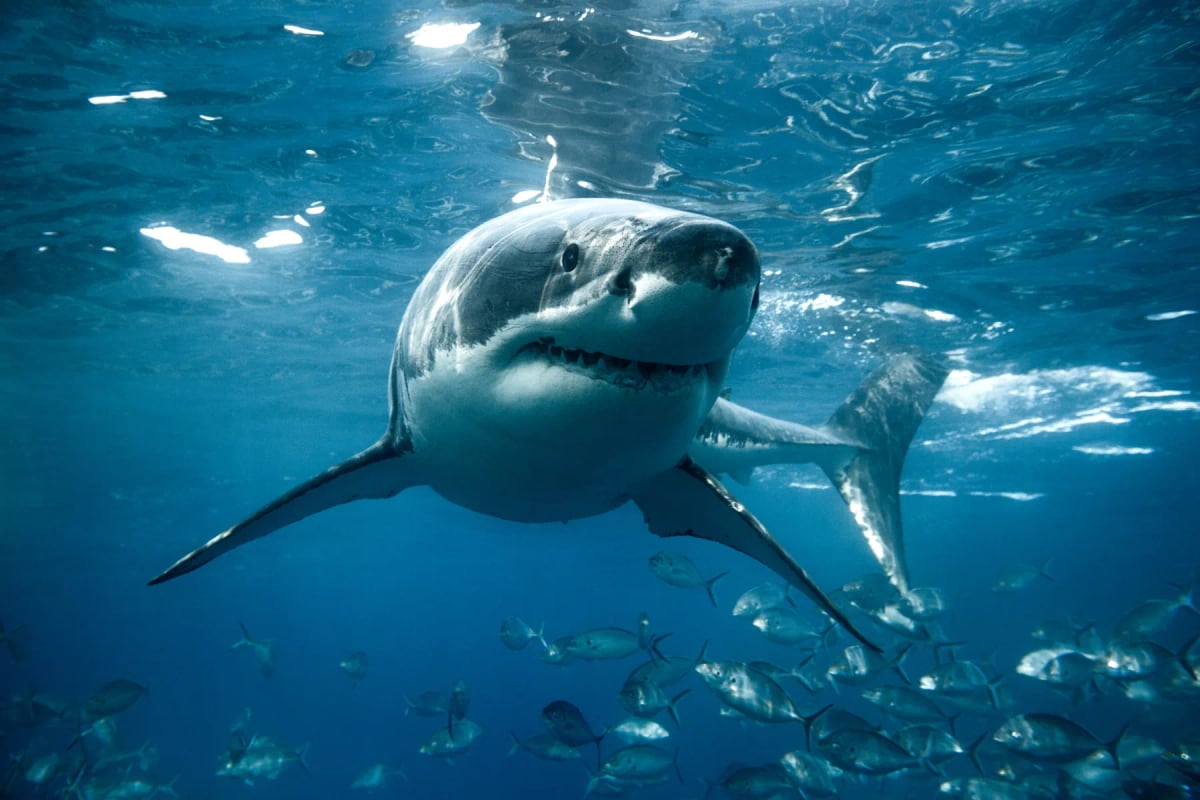
The great white is usually bigger: adults commonly reach 4 to 5 meters and can weigh well over a ton, while most tiger sharks measure 3 to 4 meters and 400 to 600 kilograms, although the largest of both species overlap. The great white also has more recorded bites on people, with the tiger shark second. They rarely meet, because the great white prefers cooler water and the tiger shark warm tropical seas, but where their ranges overlap, as in South Africa and eastern Australia, the larger great white is generally dominant.
What eats tiger sharks?
Adult tiger sharks have very few natural predators. Orcas, which are known to hunt large sharks such as great whites, are among the few animals that could take one. Young tiger sharks are more vulnerable and can be eaten by larger sharks, including adult tiger sharks. The biggest threat to the species, though, is people: tiger sharks are caught for their fins, meat and liver oil, taken as bycatch on longlines, and killed in shark control nets and drumlines on some beaches.
Where can you dive with tiger sharks?
The most famous place is Tiger Beach, off the west end of Grand Bahama in the Bahamas, where tiger sharks come close to divers on a shallow sand flat, mostly from October to January. Other well known sites are Aliwal Shoal and Protea Banks in South Africa, Beqa Lagoon in Fiji, the coasts of Hawaii and, outside the countries on this map, Fuvahmulah in the Maldives. Dives are run by specialized operators with strict safety rules, and the sharks are wild animals that should always be treated with respect.
What do tiger sharks eat?
Tiger sharks are some of the least fussy eaters in the ocean. Their diet includes fish, rays, sea turtles, seabirds, dolphins, squid, and crustaceans. They are also known to scavenge on carrion and have been found with man made objects in their stomachs, earning them the nickname of the ocean's dustbin. Their strong, serrated teeth let them crack open turtle shells, which most other predators cannot manage.
How do tiger sharks reproduce?
Tiger sharks give birth to live young rather than laying eggs. Mating typically takes place in spring and early summer in the Northern Hemisphere, and the gestation period lasts around 13 to 16 months. A female can give birth to between 10 and 80 pups in a single litter. Females do not reach maturity until they are roughly 7 to 10 years old, which means populations are slow to recover from overfishing.
Are tiger sharks endangered?
The tiger shark is currently listed as Near Threatened on the IUCN Red List. The biggest pressures on the species come from commercial and recreational fishing, bycatch, and the demand for shark fins. Because tiger sharks reproduce slowly and mature late, their populations take a long time to bounce back once numbers drop. Some countries have put protections in place, but enforcing rules across international waters remains a serious challenge.