Huemul
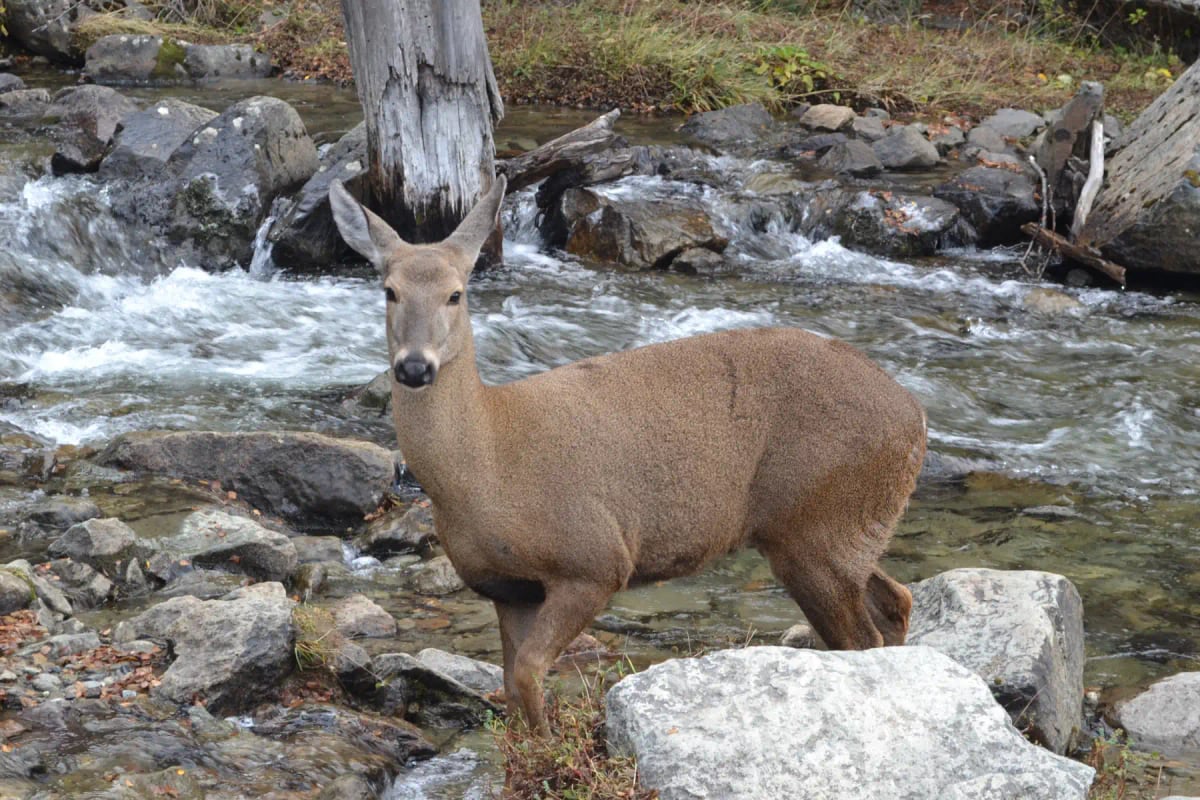
The huemul, also called the South Andean deer, is one of the rarest deer on Earth and a national symbol of both Chile and Argentina. It has a stocky build, short legs and a coat that is thick and coarse, all suited to life on steep slopes and cold valleys in the southern Andes. Adults stand around 80 to 90 cm at the shoulder, and only males carry antlers, which they shed each year after the breeding season. Huemuls browse on grasses, shrubs and the buds of native trees such as lenga beech, shifting between elevations as snow and forage availability change through the year. They are naturally cautious animals that tend to move through dense vegetation and retreat to rocky terrain when they sense danger. Fewer than 2,000 individuals survive in the wild today, the result of decades of hunting, habitat loss and pressure from livestock.
Habitat and distribution
Huemuls are found along a narrow strip of the southern Andes, stretching through Chilean and Argentine Patagonia from roughly the Biobío region in the north down to Tierra del Fuego. They prefer steep valleys, rocky ridgelines and dense native forest, particularly woodland dominated by lenga beech and ñirre. Snow depth plays a major role in their movements: in winter, many individuals descend to lower valleys where forage is easier to reach, then return to higher ground as spring arrives. Their range has shrunk dramatically over the past century. Today, most confirmed populations are fragmented and small, scattered across national parks such as Bernardo O'Higgins and Los Glaciares. Very few areas hold more than a handful of animals, which makes each remaining patch of suitable habitat critically important to the species as a whole.
Diet
Food choices shift with the seasons for the huemul. During spring and summer, fresh grasses and herbaceous plants growing along stream banks and open slopes make up a large part of its diet. As temperatures drop and snow covers the ground, it relies more heavily on shrubs, the buds of lenga beech and other woody vegetation it can reach beneath or around the snowpack. The huemul is a browser and grazer combined, giving it some flexibility when preferred plants are not available. Studies in Chilean Patagonia have recorded it feeding on more than thirty plant species across the year. Because native vegetation in its range tends to be patchy, individuals often travel meaningful distances between feeding areas, particularly in winter when energy demands are high and food is harder to find.
Behavior
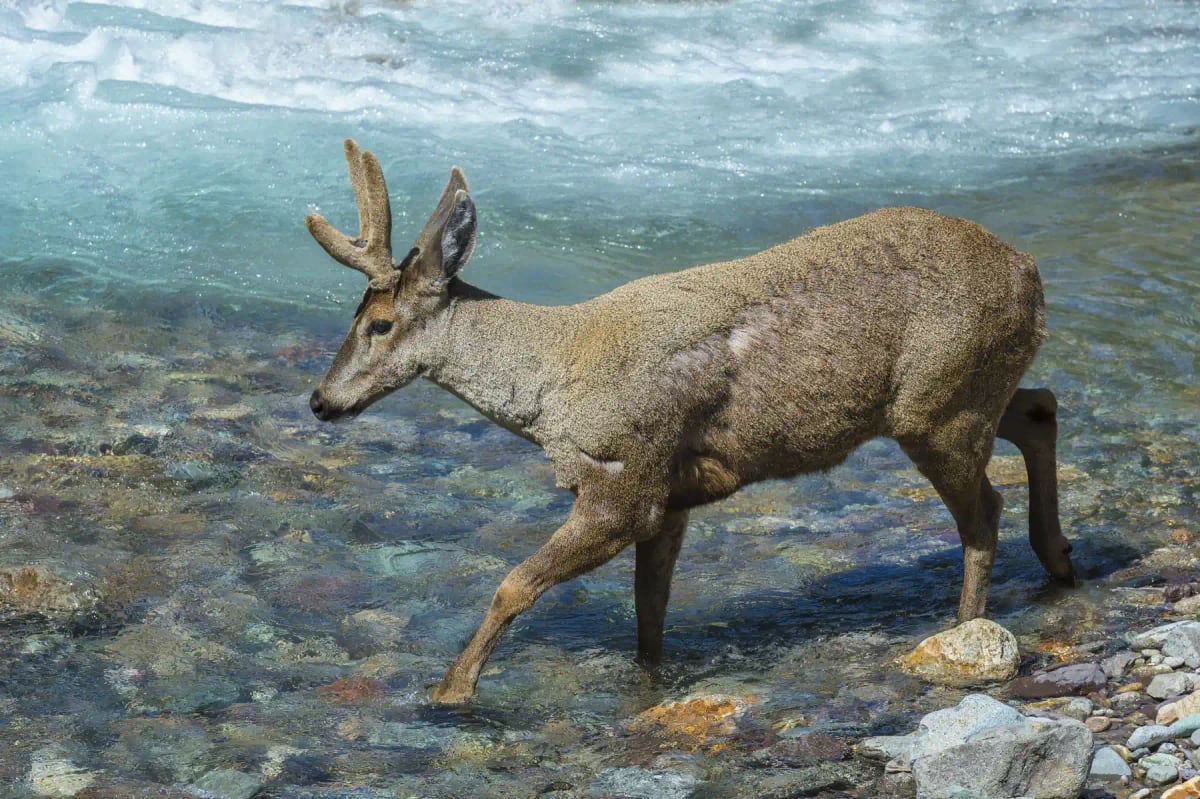
Caution defines much of the huemul's daily life. When it senses a threat, it retreats quickly into dense vegetation or climbs toward rocky terrain where it can watch its surroundings from a safe position. Activity tends to peak in the early morning and late afternoon, though animals in undisturbed areas have been observed moving at various hours. Outside the breeding season, huemuls are generally seen alone or in small groups of two or three individuals. During the rut, which takes place in autumn, males become more conspicuous as they compete for females, and clashes between rivals can be fierce. Females give birth to a single fawn in spring, keeping it hidden in thick cover during its first weeks of life. Their overall pace is unhurried, and they can navigate steep, unstable ground with notable ease.
Conservation
Fewer than 2,000 huemuls remain in the wild, and the IUCN lists the species as Endangered. The population decline that brought it to this point unfolded over more than a century, driven by hunting, the expansion of livestock ranching into Andean valleys, and the spread of diseases carried by domestic animals. Livestock compete directly with huemuls for forage and have altered vegetation in many areas. Introduced predators, particularly dogs, also pose a serious threat, especially to fawns. Conservation efforts today centre on protected areas in both Chile and Argentina, along with monitoring programs that track population trends in key sites. Cross-border cooperation between the two countries has grown in recent years, which is encouraging given that many populations straddle the international boundary. Recovery is slow, but targeted work in places like Patagonia National Park has shown that numbers can stabilise when pressure is reduced.
Cultural value
Few animals carry as much symbolic weight in South America as the huemul. In Chile, it appears on the national coat of arms alongside the Andean condor, a distinction the species has held since the coat of arms was formally established in the nineteenth century. Argentina also recognises it as a natural monument in several provinces, reflecting the animal's deep roots in Patagonian identity on both sides of the Andes. For many indigenous communities in the region, the huemul has long held a place in oral tradition and local knowledge. Today it appears in the logos of conservation organisations, regional tourism campaigns and national park branding across Patagonia. The contrast between its cultural prominence and its precarious status in the wild is striking, and advocates often use that gap to draw public attention to the urgent need for its protection.
Researched and written by Juan Pablo. Sources: IUCN Red List, scientific literature and regional field guides. Last updated: .
Technical factsheet





Frequently Asked Questions
What does the huemul eat?
Huemuls eat a mix of grasses, shrubs, herbs and tree buds depending on the season. In spring and summer they favour fresh grasses and plants growing near streams. When winter arrives and snow covers the ground, they shift to shrubs and the buds of lenga beech. Studies in Chilean Patagonia have recorded them feeding on more than thirty plant species across the year, which gives them some flexibility when food is scarce.
Where does the huemul live?
The huemul lives in the southern Andes, in a narrow stretch running through Chilean and Argentine Patagonia. It favours steep valleys, rocky ridges and dense native forest, especially areas dominated by lenga beech and ñirre. Its range has shrunk greatly over the past century, and most populations today are small and isolated, found mainly within national parks. Very few areas outside protected land still hold stable groups of these deer.
How many huemuls are left in the world?
Fewer than 2,000 huemuls survive in the wild today. That number is the result of more than a century of hunting, habitat loss and pressure from livestock and the diseases they carry. The IUCN lists the species as Endangered. Most remaining populations are fragmented and small, which makes the survival of each group especially important. Conservation work in protected areas on both sides of the Andes is helping, but recovery remains slow.
Why is the huemul endangered?
The huemul declined mainly because of hunting, the spread of livestock ranching into Andean valleys and diseases passed from domestic animals. Cattle and horses compete with huemuls for food and have degraded vegetation in many areas. Dogs introduced by humans also kill fawns and chase adults, causing serious stress. Habitat loss and the fragmentation of forest have cut populations off from one another, making it harder for the species to recover naturally.
Is the huemul on Chile's coat of arms?
Yes, the huemul appears on Chile's national coat of arms alongside the Andean condor, a place it has held since the coat of arms was formally established in the nineteenth century. It is one of the most recognisable national symbols in the country. Argentina also honours the animal as a natural monument in several provinces. Despite this cultural importance, the species remains in serious danger in the wild, which conservationists often highlight to raise awareness.
Do huemuls live alone or in groups?
For most of the year, huemuls are solitary or move in small groups of two or three animals. They tend to be cautious and quiet, preferring dense vegetation and rocky terrain. During the autumn breeding season, males become more active and sometimes fight fiercely over females. Females give birth to one fawn in spring and keep it hidden in thick cover during its first weeks of life, when it is most vulnerable to predators.
How big is a huemul?
The huemul is a medium sized deer with a stocky, compact body built for life on steep mountain terrain. Adults stand around 80 to 90 cm at the shoulder and have short legs relative to their body size. Their coat is thick and coarse, which helps them cope with the cold temperatures of the southern Andes. Only males grow antlers, and they shed them each year once the breeding season ends in autumn.