Przewalski's Horse
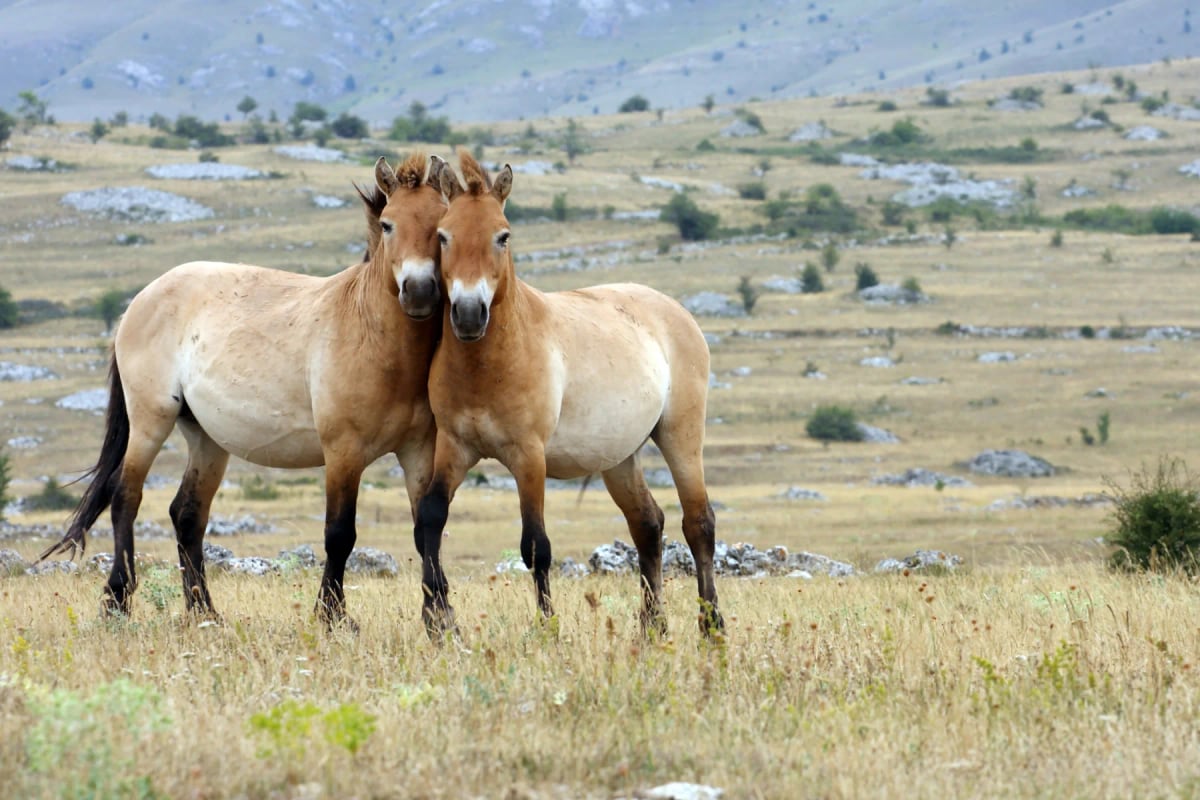
Przewalski's Horse is the only horse never domesticated by humans, making it the last truly wild horse on Earth. Stocky and compact, it stands shorter than a typical riding horse and carries a stiff, upright mane with no forelock. It disappeared from the wild in the 1960s and survived entirely in zoos until coordinated breeding programs made reintroduction possible. Today small family bands roam protected grasslands in Mongolia and the Kalamaili reserve in China, grazing coarse steppe vegetation and digging through snow in winter to reach dry forage. The recovery is one of the most celebrated stories in wildlife conservation, though the species remains Endangered and its wild population still depends on active management and ongoing protection of the open steppe habitat it needs to survive.
Habitat and distribution
Przewalski's Horses have been reintroduced to a handful of carefully chosen sites across Mongolia and China. The main populations roam Hustai National Park and the Khomiin Tal reserve in Mongolia, while a separate group lives in the Kalamaili Nature Reserve in Xinjiang, China. All of these sites share the same essential character: open steppe and semi-arid grassland with wide, unobstructed horizons, sparse shrub cover, and access to water sources. These horses need space to move freely between grazing areas and to keep rival bands at a distance. Flat or gently rolling terrain allows them to spot predators early, something impossible in dense woodland. The steppe grasslands of Central Asia, though harsh and dry, provide exactly the kind of environment this species evolved to use over thousands of years.
Diet
Grasses make up the core of this horse's diet throughout the year. On the open steppe, the horses graze steadily for many hours each day, moving slowly across the landscape as they work through coarse, low-growing vegetation. Sedges, feather grasses, and various shrubby plants all feature in their diet depending on the season and what the land offers. In summer, when the steppe greens up briefly, food is relatively easy to find. Winter brings a far greater challenge. Snow can cover the ground for months, and the horses use their sturdy hooves to dig down through the frozen layer to reach dry grass and plant material underneath. This behavior, known as cratering, is essential to winter survival and is shared with other large grazers adapted to cold, snow-covered landscapes.
Behavior
Social life revolves around the family band, the basic unit of Przewalski's Horse society. A typical band consists of one adult stallion, several mares, and their young foals. The stallion guards the group actively, positioning himself between the mares and any approaching threat, whether a predator or a rival male. Young males are eventually driven out of their birth band and often form bachelor groups while they mature, waiting for the opportunity to establish a band of their own. Bands share a loose home range but do not defend rigid territories. Grazing, resting, and social grooming fill most of the day, and interactions between individuals help reinforce bonds within the group. Vocalizations, posture, and ear position all play a role in communication, allowing horses to convey mood and intent without direct confrontation.
Adaptations
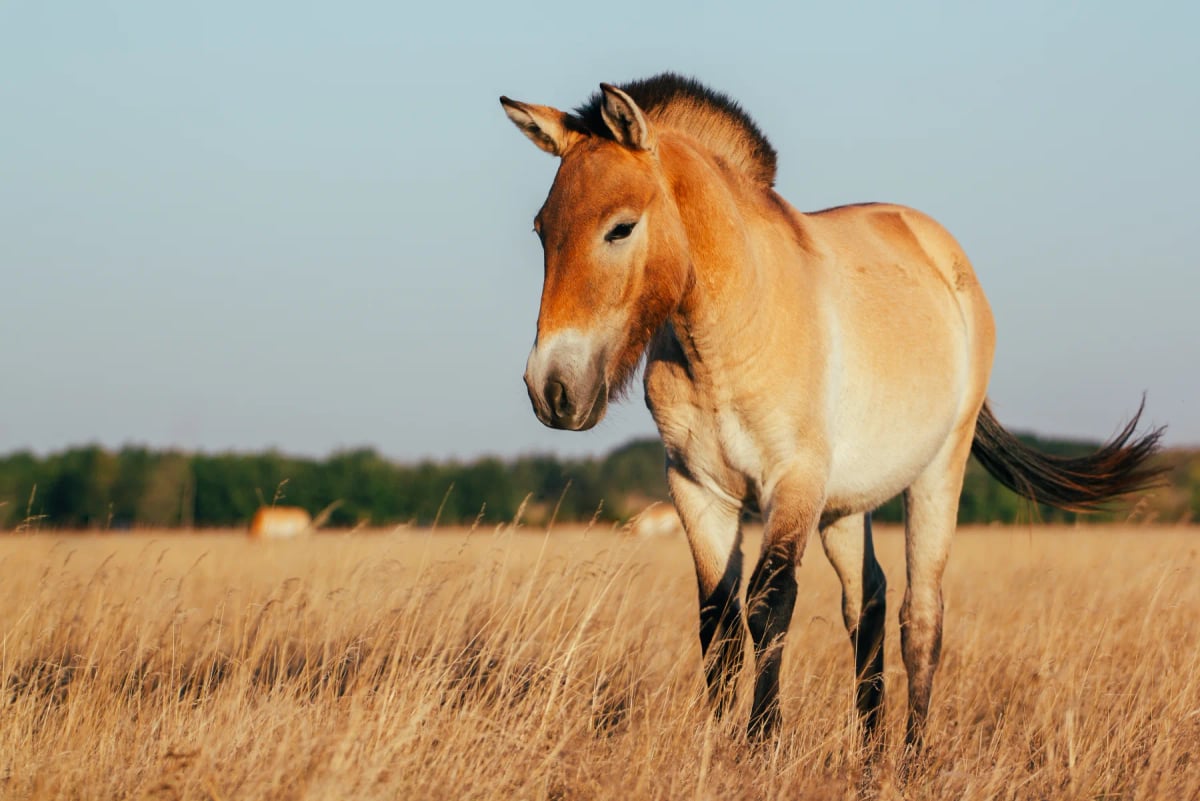
Few large mammals are as well equipped for life on the Central Asian steppe as this horse. Its body is noticeably stockier and heavier than that of domestic horses, a build that conserves heat efficiently in bitter winters. The coat thickens considerably as the cold season approaches, growing into a dense, shaggy layer that provides insulation against temperatures that can fall well below minus 40 degrees Celsius. Unlike domestic horses, Przewalski's Horse has a stiff, upright mane with no forelock, a natural feature rather than the result of grooming. Its broad, tough hooves are well suited to hard, rocky ground and to breaking through ice and frozen soil. The digestive system can extract nutrition from coarse, dry plant material that would offer little value to many other grazers, making it possible to survive on steppe vegetation when nothing better is available.
Conservation
The story behind this species is one of the most remarkable in modern conservation. By the late 1960s, Przewalski's Horse had disappeared entirely from the wild, surviving only in zoo collections around the world. A coordinated international breeding program, built on a very small founding population, kept the species from extinction and gradually increased numbers in captivity. From the 1990s onward, horses bred in European and American zoos were transported to Mongolia and released into protected areas. Today the wild population numbers over 2,000 individuals according to IUCN estimates, a genuine recovery from zero. Despite this progress, the species remains listed as Endangered. The total population is still small, genetic diversity is limited due to the narrow founding base, and the horses depend on continued habitat protection, veterinary support, and management by conservation organizations working across national borders.
Researched and written by Juan Pablo. Sources: IUCN Red List, scientific literature and regional field guides. Last updated: .
Technical factsheet




Frequently Asked Questions
Is Przewalski's Horse really a wild horse?
Yes, it is the only horse that has never been domesticated. Every other horse breed in the world descends from animals tamed by humans thousands of years ago. Przewalski's Horse kept a completely separate lineage and was never broken in or selectively bred for human use. That makes it genuinely wild in a biological sense, not a feral horse that escaped from captivity.
Where does Przewalski's Horse live today?
The main populations live in Mongolia, particularly in Hustai National Park and the Khomiin Tal reserve. A separate group roams the Kalamaili Nature Reserve in Xinjiang, China. All these sites share open steppe grasslands with wide horizons and access to water. The species vanished from the wild in the 1960s and was brought back through international breeding programs, so every wild individual today is descended from zoo-born horses.
What does Przewalski's Horse eat?
Grasses are the foundation of its diet all year round. The horses spend many hours each day grazing slowly across the steppe, eating coarse vegetation including sedges and feather grasses. In winter, when snow covers the ground for months, they use their hard hooves to dig down to dry plant material underneath. This digging behavior is called cratering and is a key survival skill during the coldest months of the year.
How did Przewalski's Horse come back from extinction in the wild?
When the last wild individuals disappeared in the late 1960s, a small number survived in zoo collections. Zoos in Europe and North America joined forces to breed these animals carefully over several decades. Starting in the 1990s, horses born in captivity were transported to Mongolia and released into protected reserves. Today more than 2,000 individuals live in the wild, making this one of the most successful rewilding efforts ever carried out for a large mammal.
How do Przewalski's Horses live in groups?
They live in family bands made up of one adult stallion, several mares, and their young. The stallion actively protects the group, placing himself between the mares and any threat. Young males are eventually pushed out and join bachelor groups until they can form a band of their own. Bonds within the group are strengthened through mutual grooming, and horses communicate mood and intention through body posture, ear position, and vocalizations.
What threats does Przewalski's Horse still face?
Despite its recovery, the species remains Endangered. The total wild population is still small and carries limited genetic diversity because all living individuals trace back to a very narrow group of founders. Habitat loss, competition with livestock for grazing land, and harsh winters are ongoing pressures. The horses also depend heavily on active management, including veterinary care and protection of the reserves where they live, so the recovery is far from self-sustaining.
How is Przewalski's Horse different from a domestic horse?
There are several clear differences. Przewalski's Horse is stockier and more compact, with a larger head and a stiff, upright mane that has no forelock at all. It also has 66 chromosomes, while domestic horses have 64. Its coat grows very thick in winter to handle extreme cold on the steppe. Behaviorally, it has never been tamed and retains the full range of instincts and social structures typical of horses living completely free from human influence.