Meerkat
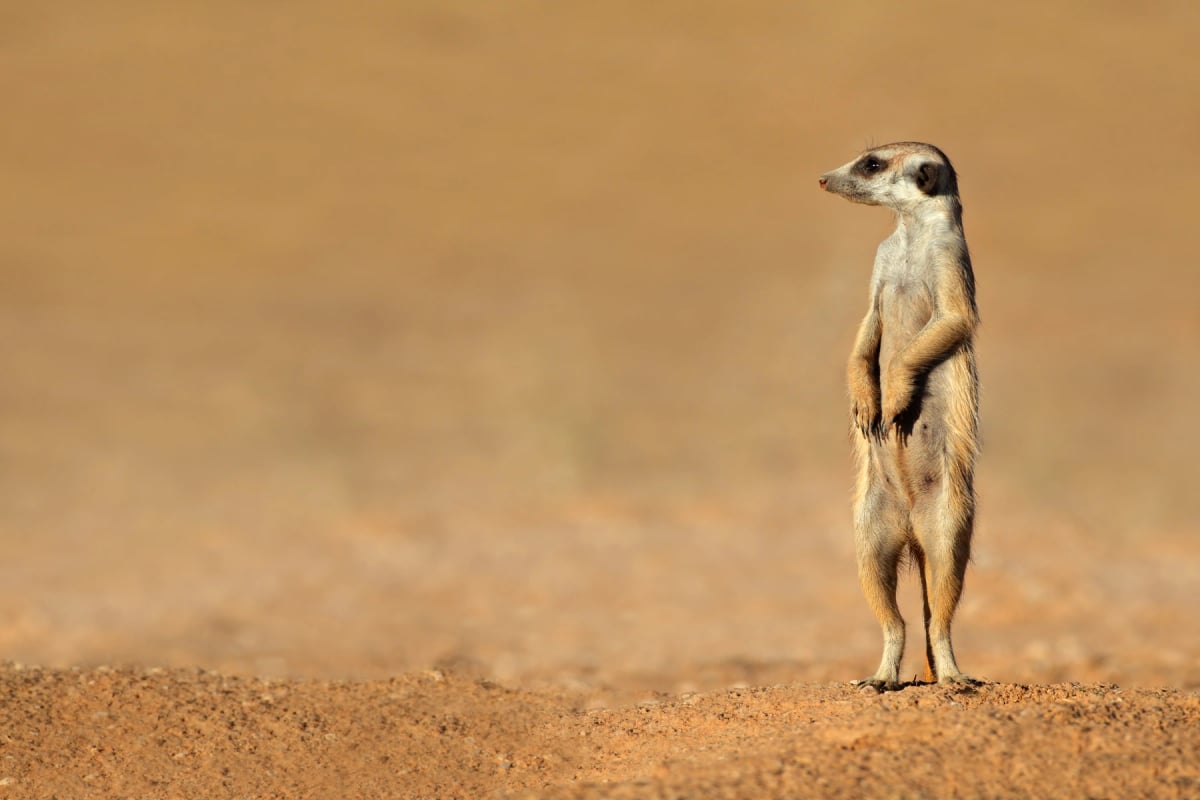
The meerkat is a small member of the mongoose family native to the arid regions of southern Africa, living across Namibia, Botswana, Angola and South Africa. It is best known for standing bolt upright on its hind legs to scan for predators such as eagles, jackals and snakes. Meerkats form tight family groups called mobs or clans of up to around 30 individuals, all sharing duties like foraging, pup care and sentinel watch. They dig extensive burrow networks that provide shelter from heat and predators alike. Their diet covers a wide range, from beetles and termites to scorpions, lizards and plant roots. Remarkably, young meerkats must be taught by adults which prey is safe to eat. They are immune to several venoms, including that of some scorpions and snakes found in their range. The IUCN lists them as Least Concern.
Habitat and distribution
Meerkats are found across the arid and semiarid landscapes of southern Africa, ranging through Namibia, Botswana, Angola and South Africa. The Kalahari Desert, shared by Botswana and South Africa, holds some of the densest populations, while the Namib Desert in Namibia also supports healthy numbers. They favor open ground with short vegetation, where wide sightlines help sentinels spot approaching predators. Sandy or hard soil that is easy to dig is equally important, since meerkats depend on extensive burrow networks for shelter from intense daytime heat and cold desert nights. They rarely stray into areas with dense plant cover or permanently waterlogged ground. Because they obtain most of their moisture from the prey and roots they eat, access to standing water is not a requirement for survival.
Diet
Foraging takes up most of a meerkat's day, and the menu is surprisingly varied. Beetles, termites, grubs and other insects make up the bulk of what they eat, but scorpions are also a regular prey item. Adults are largely immune to scorpion venom, an ability young meerkats do not possess at birth. They must be taught by experienced adults to handle and eat scorpions safely, making this one of the few known examples of deliberate teaching in a nonhuman species. Lizards, small snakes, centipedes, spiders and bird eggs round out the diet, along with plant roots and tubers when other food is scarce. Meerkats forage by digging and nosing through soil, using their keen sense of smell to locate buried prey rather than relying on sight.
Social structure
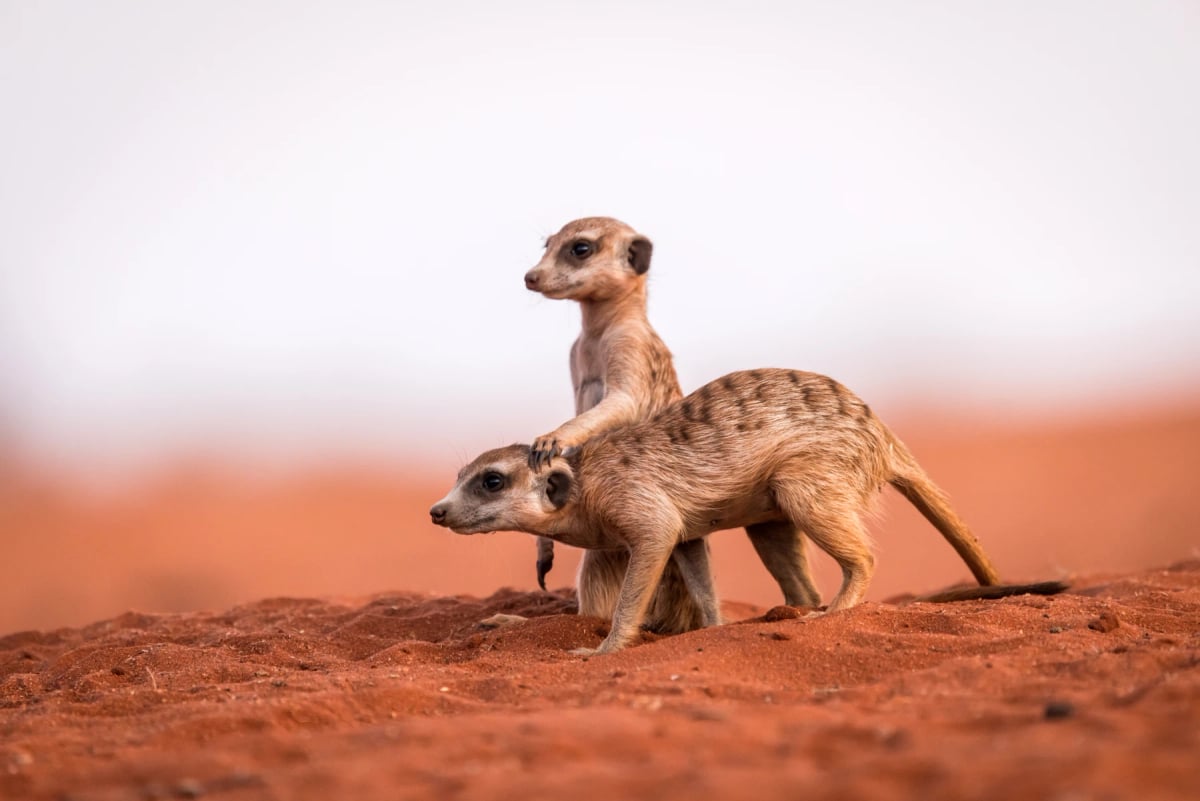
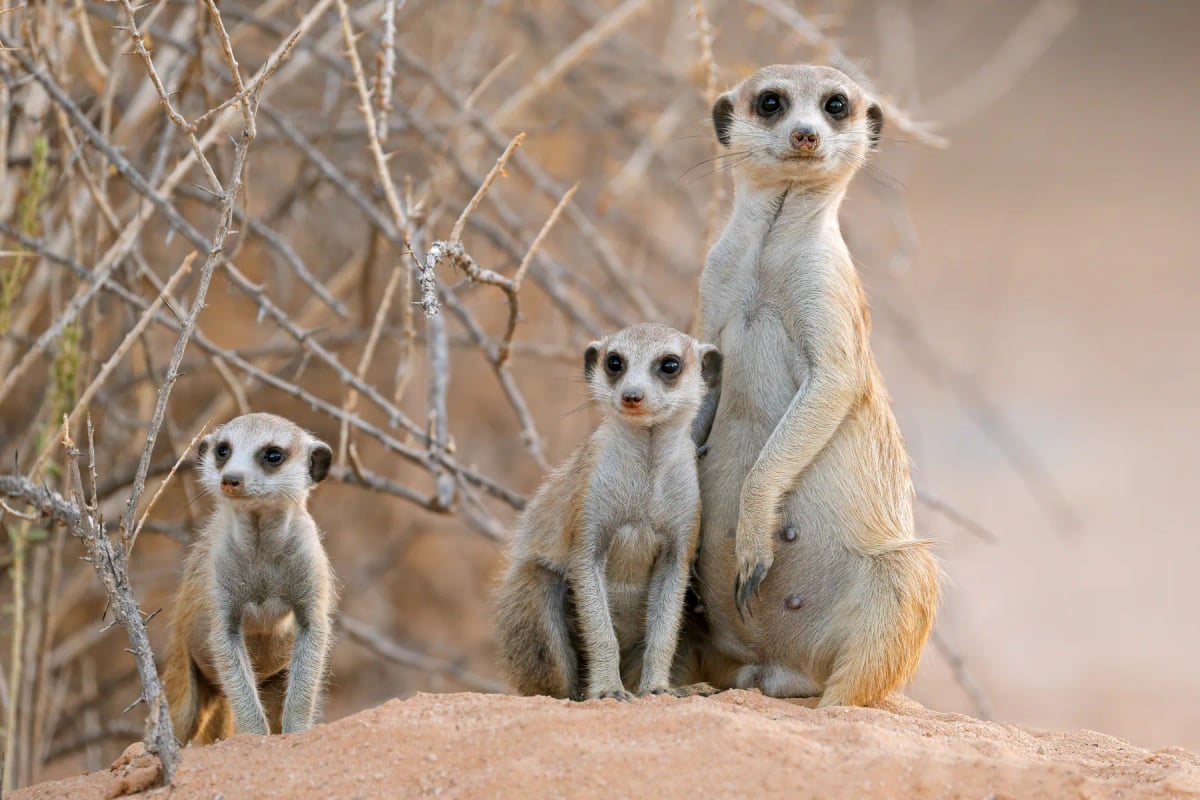
Few animals are as cooperative as the meerkat. Groups, known as mobs or clans, typically contain between 10 and 30 individuals, though larger groups have been recorded. Each clan is led by a dominant breeding pair that produces the majority of offspring. Other adults in the group take on roles as helpers, contributing to pup care, burrow maintenance and sentinel duty without necessarily breeding themselves. This kind of cooperative breeding is central to the clan's success, as pups grow faster and survive at higher rates when more helpers are present. Clan members communicate constantly through a wide range of calls and also use scent marking to define their territory. Rival clans do clash at shared boundaries, and these encounters can occasionally turn aggressive.
Vigilance
Standing upright on their hind legs, with their pale belly turned toward the morning sun to warm up, is one of the most recognizable things a meerkat does. That same posture doubles as the sentinel position. At any given time, at least one clan member will climb to an elevated spot such as a rock, termite mound or shrub and scan the sky and surrounding ground for danger. Sentinels produce a continuous soft call to let the group know all is well, and switch to sharp alarm calls the moment a threat appears. Crucially, different calls correspond to different types of predators, allowing the group to respond appropriately. An aerial predator like a martial eagle triggers an immediate dash into a burrow, while a ground predator such as a jackal prompts a different set of behaviors.
Threats
Predation is the most constant pressure meerkats face. Martial eagles and other large raptors attack from the air, while jackals, cape foxes and snakes such as cobras threaten them at ground level. Burrows provide critical protection, but a meerkat caught far from shelter is extremely vulnerable. Beyond natural predators, human activity creates additional risks in some parts of their range. Roads that cut through meerkat habitat cause vehicle strikes, and habitat disturbance linked to livestock farming can reduce the availability of suitable foraging ground. The illegal capture of meerkats for the exotic pet trade has also been documented and puts pressure on local populations, particularly in areas where the trade is difficult to monitor and control.
Conservation
The IUCN classifies the meerkat as Least Concern, reflecting a population that remains widespread and stable across its southern African range. Protected areas such as the Kgalagadi Transfrontier Park, which straddles the border of Botswana and South Africa, support thriving colonies and provide relatively undisturbed habitat. The species also persists in many unprotected areas, showing a reasonable tolerance for land that has been modified for livestock grazing as long as open ground and diggable soil remain available. Research projects, particularly long running field studies in the Kalahari, have produced a deep body of knowledge about meerkat behavior and ecology that helps inform conservation planning. Responsible wildlife tourism that focuses on habituated groups also generates local income and builds public support for protecting the broader desert ecosystem.
Researched and written by Juan Pablo. Sources: IUCN Red List, scientific literature and regional field guides. Last updated: .
Technical factsheet

Frequently Asked Questions
What do meerkats eat?
Meerkats eat a wide variety of prey, including beetles, termites, grubs, scorpions, lizards, small snakes, spiders and bird eggs. When insects and animals are scarce, they also dig up plant roots and tubers. They find most of their food by sniffing through soil rather than hunting by sight. Interestingly, adults are immune to scorpion venom, but young meerkats have to be taught by adults how to handle scorpions safely before eating them.
Where do meerkats live?
Meerkats live in the arid and semiarid regions of southern Africa, mainly across Botswana, Namibia, South Africa and Angola. The Kalahari Desert is home to some of the largest populations. They prefer open, flat terrain with short vegetation and sandy or firm soil that is easy to dig, since they rely on burrow networks for shelter. They get most of their water from food, so they do not need to live near rivers or waterholes.
Why do meerkats stand on their hind legs?
Meerkats stand upright to scan their surroundings for predators such as eagles, jackals and snakes. One member of the group acts as a lookout, or sentinel, climbing to a high spot and watching in all directions while the rest of the clan forages. The sentinel uses different alarm calls depending on the type of threat, so the group knows exactly how to react. They also stand upright in the morning to warm up by facing the sun.
Are meerkats immune to venom?
Adult meerkats have a strong resistance to several types of venom, including that of scorpions and certain snakes found within their range. This makes scorpions a safe and regular part of their diet. However, young meerkats are not born with this immunity at full strength, which is why adults actively teach pups how to deal with venomous prey before the youngsters try to eat it on their own. It is one of the rare cases of deliberate teaching in animals.
How do meerkats live together as a group?
Meerkats live in family groups called mobs or clans, usually made up of 10 to 30 individuals. A dominant pair leads the clan and produces most of the pups, while other adults help raise the young, maintain the burrows and take turns on sentinel duty. This teamwork means pups grow faster and have better chances of survival. Clan members communicate through a rich set of calls and mark their territory with scent to keep rival groups away.
What are the main threats to meerkats?
Meerkats face threats from predators above and on the ground. Large birds of prey, especially martial eagles, attack from the air, while jackals, cape foxes and cobras are dangers at ground level. Roads crossing meerkat habitat also cause vehicle strikes. In some areas, meerkats are captured illegally for the exotic pet trade, which puts pressure on local populations. Despite all of this, the species remains widespread and is currently listed as Least Concern by the IUCN.
Are meerkats good pets?
Meerkats are wild animals and do not make suitable pets. They have complex social needs that cannot be met in a home environment, and without a clan they can become stressed and aggressive. Their natural behaviors, like constant digging, can also cause significant damage indoors. In many countries it is illegal to keep a meerkat as a pet. Conservation groups actively discourage the exotic pet trade in meerkats, as capturing wild individuals harms local populations.