Jaguarundi
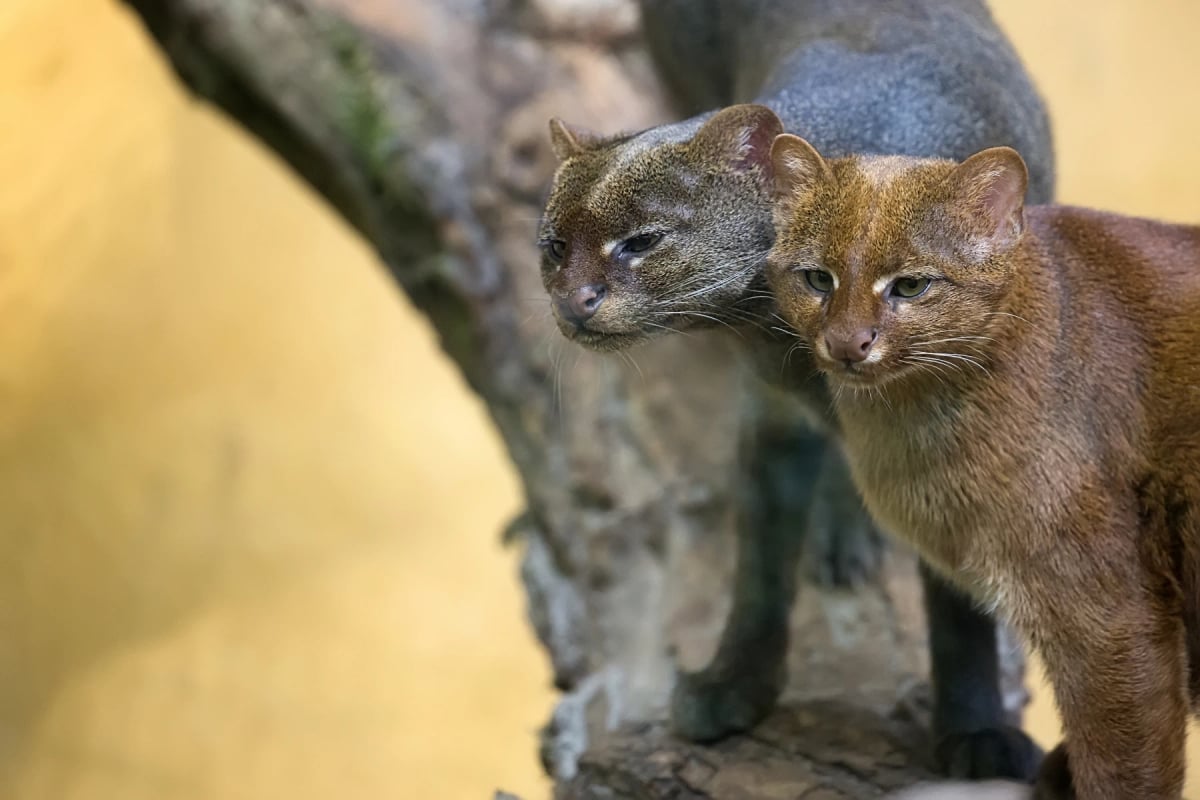
The jaguarundi (Herpailurus yagouaroundi) is a small wild cat native to the Americas, found from northern Mexico south through Central America to Argentina. It looks strikingly different from other New World cats: its coat carries no spots or rosettes, coming instead in two color forms, either reddish brown or gray, and both can appear in the same region. Its body is long and low to the ground, with short legs and a tail of considerable length, giving it a passing resemblance to an otter or weasel. This cat is one of the few felids that is genuinely active by day, hunting birds, small mammals, lizards, frogs, and insects across forests, scrublands, grasslands, and wetlands. Though listed as Least Concern by the IUCN, it faces pressure from habitat loss and is sometimes killed by farmers who see it as a threat to poultry.
Habitat and distribution
Across its range, the jaguarundi shows a remarkable ability to adapt to many different environments. It is found from the southern tip of Texas and northern Mexico all the way down through Central America to northern Argentina, though it is no longer considered present in Uruguay. This cat occupies forests, thorny scrublands, grasslands, and wetland edges, generally preferring areas with dense ground cover that offer good concealment. It tends to avoid deep primary forest in favor of secondary growth and woodland borders. Elevation is no barrier either, as individuals have been recorded at several thousand meters above sea level in the Andes. Despite this flexibility, the species has disappeared from parts of its former range in the United States, where confirmed sightings are now extremely rare.
Diet
Food is rarely in short supply for a hunter as versatile as the jaguarundi. Birds make up a significant share of its diet, and this cat is quick enough to catch them on the ground or flush them from low cover. Small mammals such as rats and mice are also taken regularly, along with lizards, frogs, and large insects. Fruit has been recorded in stomach contents as well, suggesting the species is willing to supplement its meals with plant matter when animal prey is scarce. Most hunting takes place at ground level, though individuals will climb into shrubs to pursue prey. Because it is active by day, the jaguarundi competes for some of the same prey as diurnal birds of prey sharing the same habitat.
Behavior
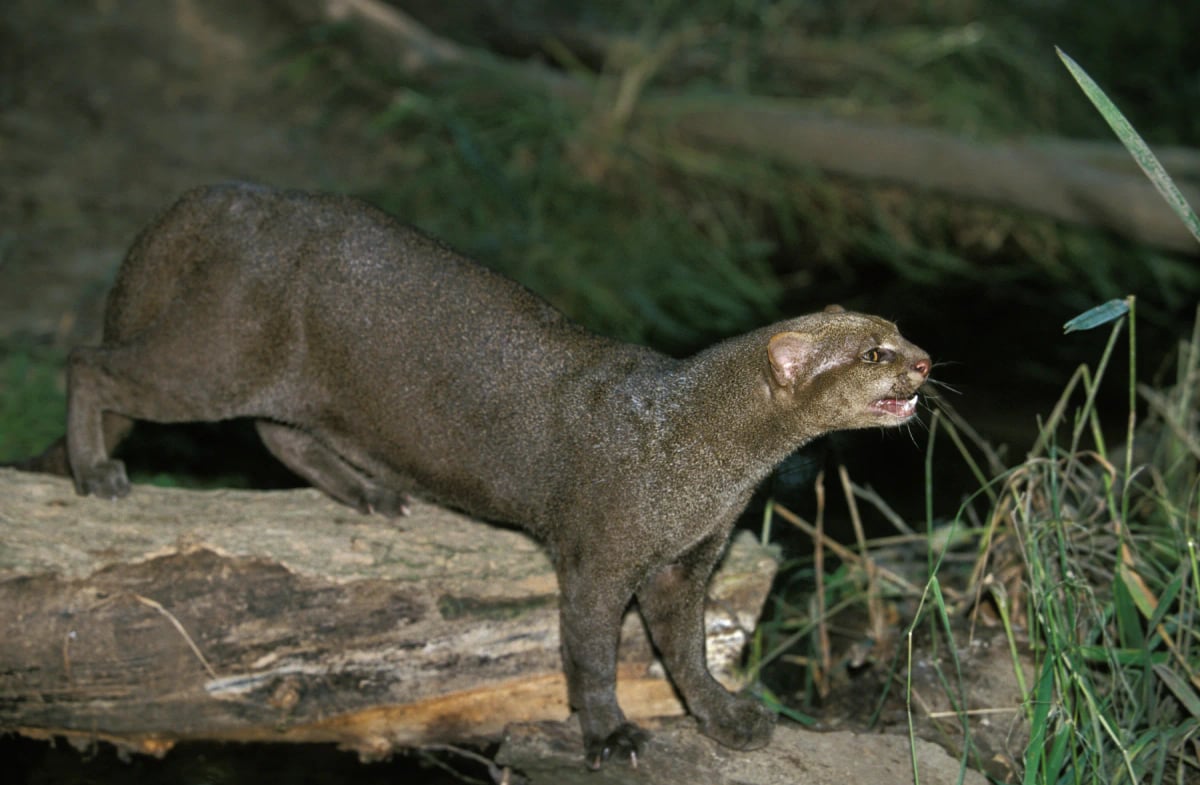
One of the most distinctive things about the jaguarundi is its habit of being active during the day. While most wild cats are nocturnal or crepuscular, this species does the bulk of its hunting in daylight hours, with peaks of activity recorded in the morning and late afternoon. It is largely solitary, and individuals mark their territories with scent and scratch marks on trees. Home ranges of males are generally larger than those of females and may overlap with the territories of several females. The jaguarundi is also unusually vocal for a cat, producing a wide variety of calls including chirps, whistles, and purrs. Mothers raise their young alone, typically giving birth to litters of one to four kittens after a gestation period of around 70 days.
Appearance
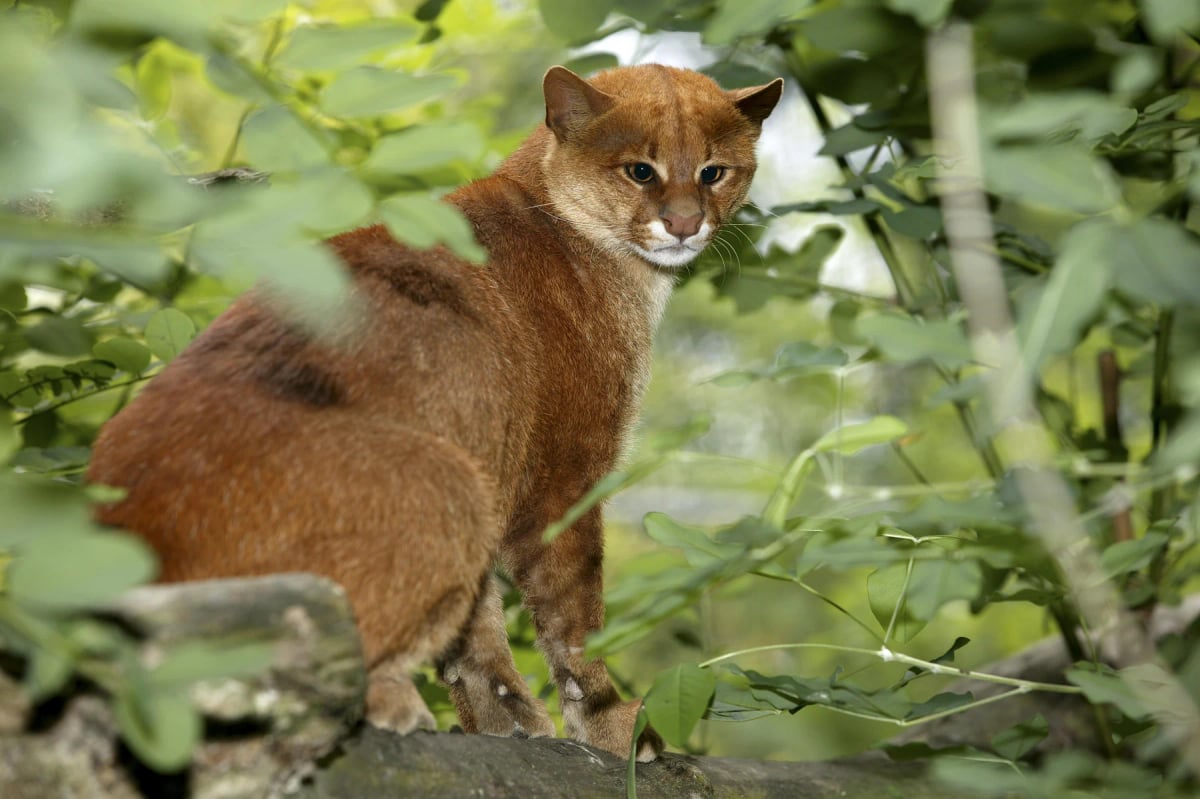
At first glance, the jaguarundi looks less like a cat and more like a large weasel or an otter. Its body is long and low to the ground, its legs are short relative to its trunk, and its tail is notably lengthy, often accounting for more than half the animal's total body length. The head is small and flat, with rounded ears set wide apart. Perhaps the most unusual feature of the coat is its complete lack of spots or markings of any kind. Two color forms exist: one is a warm reddish brown, the other is gray to dark charcoal. Both can be found living side by side in the same area, and they are not separate subspecies. Adults typically weigh between three and nine kilograms, making this one of the smaller wild cats in the Americas.
Conservation
The IUCN currently classifies the jaguarundi as Least Concern, reflecting its broad distribution and its ability to tolerate disturbed habitats. That said, the species is not without pressures. Deforestation and the conversion of natural land for agriculture have reduced and fragmented its habitat across parts of Central and South America. Road collisions kill individuals in areas where development has expanded into formerly wild terrain. Farmers sometimes shoot jaguarundis they suspect of preying on chickens, even though poultry makes up only a small fraction of its diet. The species receives legal protection in most of the countries where it lives, and it is listed on Appendix II of CITES. Continued monitoring is important, as population trends in many parts of its range are still poorly understood.
Where it is found
The Jaguarundi can be found in places such as:
Researched and written by Juan Pablo. Sources: IUCN Red List, scientific literature and regional field guides. Last updated: .
Technical factsheet


Frequently Asked Questions
What does a jaguarundi eat?
The jaguarundi eats a wide variety of prey. Birds are a big part of its diet, caught on the ground or flushed from low vegetation. It also hunts small mammals like rats and mice, lizards, frogs, and large insects. It will even eat fruit when animal prey is hard to find. Most hunting happens at ground level, though it will climb into shrubs to chase prey.
Where does the jaguarundi live?
The jaguarundi is found across a huge stretch of the Americas, from northern Mexico and the southern tip of Texas all the way down to northern Argentina. It lives in a wide range of environments, including forests, scrublands, grasslands, and wetland edges. It prefers areas with dense ground cover and often uses secondary growth and woodland borders. It has even been recorded at high elevations in the Andes.
Is the jaguarundi active during the day or at night?
Unlike most wild cats, the jaguarundi is mainly active during the day. It does the bulk of its hunting in daylight, with the busiest periods in the morning and late afternoon. This makes it quite unusual among felids, most of which prefer to hunt at night or at dusk and dawn. Because of its daytime habits, it sometimes competes for prey with birds of prey that share its habitat.
Why does the jaguarundi look like a weasel?
The jaguarundi has a body shape that really does resemble a weasel or even an otter. It has a long, low body, short legs, a small flat head with rounded ears, and a very long tail. Its coat has no spots or markings at all, which is unusual for a wild cat. All of these features together give it a look that is quite different from any other cat in the Americas.
Is the jaguarundi endangered?
The jaguarundi is currently listed as Least Concern by the IUCN, which means it is not considered at risk of extinction. Its wide range and ability to adapt to disturbed habitats help it hold on in many areas. However, it does face real threats: habitat loss from deforestation, road accidents, and being killed by farmers who worry about their chickens. Its populations in some regions are not well monitored.
How many colors can a jaguarundi be?
The jaguarundi comes in two color forms: a warm reddish brown and a gray that can range to dark charcoal. Interestingly, both color forms can be found living in the same area at the same time. They are not separate subspecies, just natural variation within the species. Either way, the coat is always plain with no spots, stripes, or rosettes of any kind, which sets this cat apart from most other wild cats.
Does the jaguarundi make sounds?
Yes, and quite a few of them. The jaguarundi is considered one of the more vocal wild cats. It produces a range of sounds including chirps, whistles, and purrs, which is more varied than what you would expect from a cat its size. These calls are used for communication between individuals. Scientists have recorded more than a dozen distinct vocalizations from this species, which is unusually high for a small felid.