Walrus
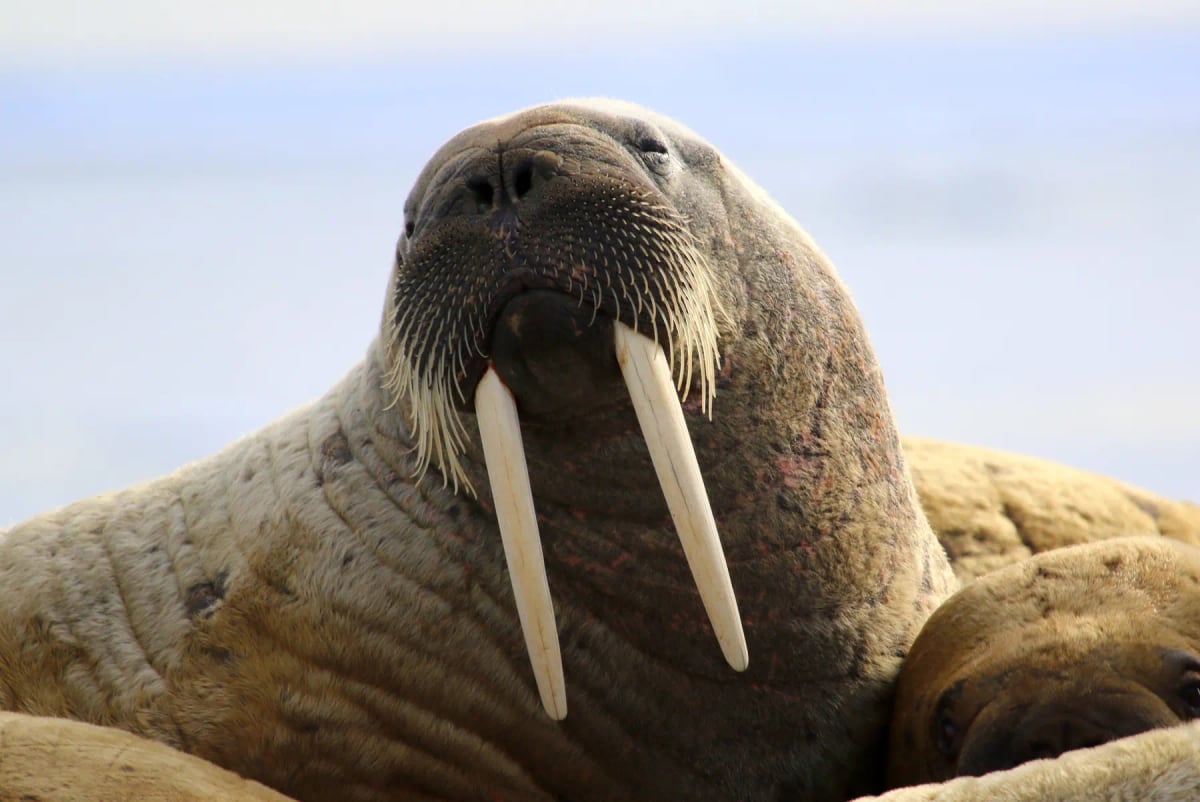
The walrus is one of the largest pinnipeds on Earth, instantly recognizable by its ivory tusks, wrinkled skin and dense mat of stiff whiskers. Both males and females carry tusks, which they use to haul themselves onto ice, assert rank within the group and occasionally defend against predators. Adult males can reach 3.6 metres in length and tip the scales at over 1,700 kg. Walruses spend much of their lives along Arctic coastlines and on floating sea ice, diving to the seabed to forage for clams, mussels and other invertebrates, which they locate through touch using their highly sensitive vibrissae. They are gregarious animals, gathering in herds that can number in the thousands. After centuries of commercial hunting for blubber and ivory, populations have partially recovered under international protection, though loss of sea ice driven by climate change now poses a serious ongoing threat.
Habitat and distribution
Walruses are found across the Arctic Ocean and subarctic seas, with two recognized subspecies splitting the population between the Atlantic and Pacific. The Atlantic subspecies ranges across northern Canada, Greenland, Svalbard and the Russian Arctic, while the Pacific subspecies is concentrated in the Bering and Chukchi seas between Russia and Alaska. Both groups depend heavily on sea ice, using it as a resting platform between dives, a place to give birth and a refuge from predators. Shallow coastal waters, typically no deeper than 80 metres, are preferred feeding grounds since walruses forage on the seabed. During summer, when ice retreats, large numbers haul out onto beaches and rocky shores, sometimes gathering in herds of several thousand animals at a single site.
Appearance
Few marine mammals are as immediately recognizable as the walrus. Adult males can reach 3.6 metres in length and weigh more than 1,700 kilograms, making them among the largest pinnipeds on Earth. Females are considerably smaller but share many of the same striking features. The skin is thick, deeply wrinkled and ranges in colour from pale cinnamon to a darker brown, though animals often appear almost pinkish when warm blood flows close to the surface. Both sexes carry ivory tusks, which are elongated upper canine teeth that can exceed one metre in length in older males. A broad, flat muzzle is covered in several hundred stiff, touch-sensitive whiskers called vibrissae, which are essential tools for finding food on the ocean floor.
Diet
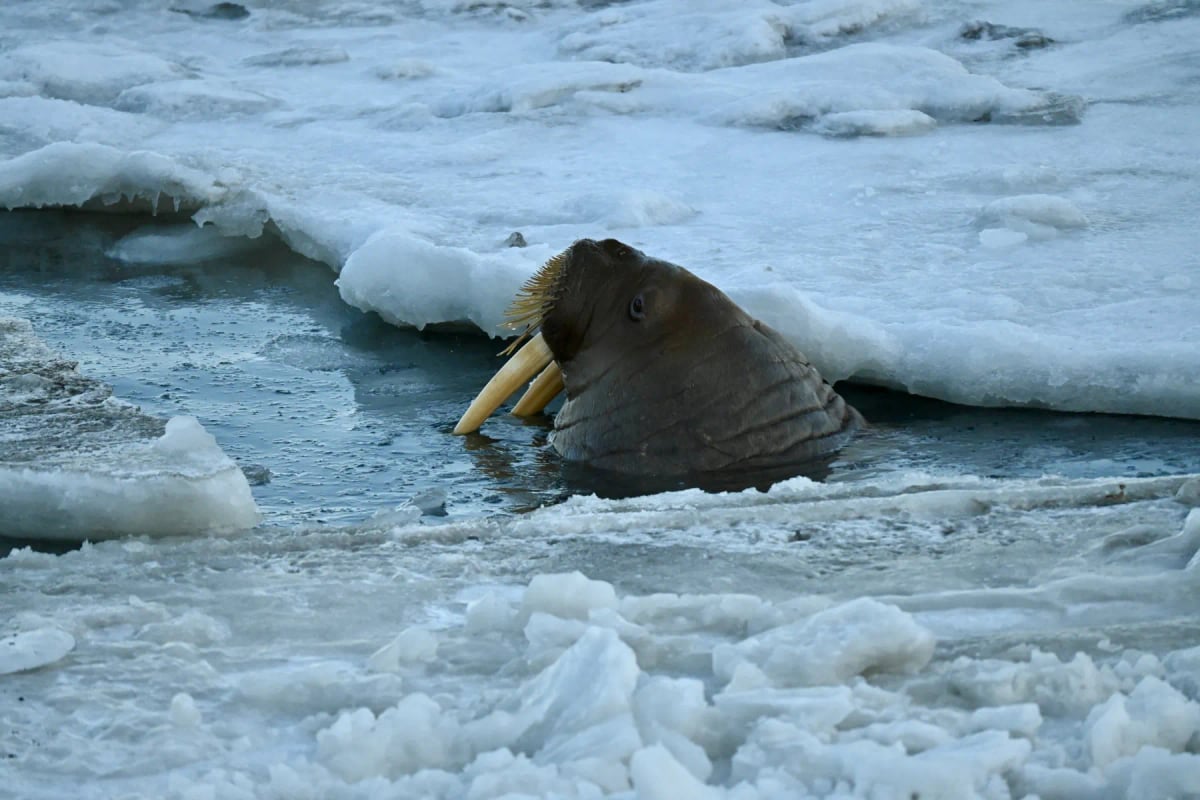
Clams and mussels make up the bulk of the walrus diet, though these animals are opportunistic feeders that will also take worms, snails, sea cucumbers and other invertebrates living on or just beneath the seabed. A walrus locates its prey not by sight but through touch, sweeping its sensitive vibrissae across the muddy bottom to feel for shells and movement. Once prey is found, the walrus creates a powerful suction by pressing its tongue against the roof of its mouth, pulling soft tissue directly out of the shell rather than crushing it. A single adult can consume thousands of clams in one feeding session. Dives typically last five to ten minutes, and walruses usually feed in water shallower than 80 metres where benthic prey is most abundant.
Behavior
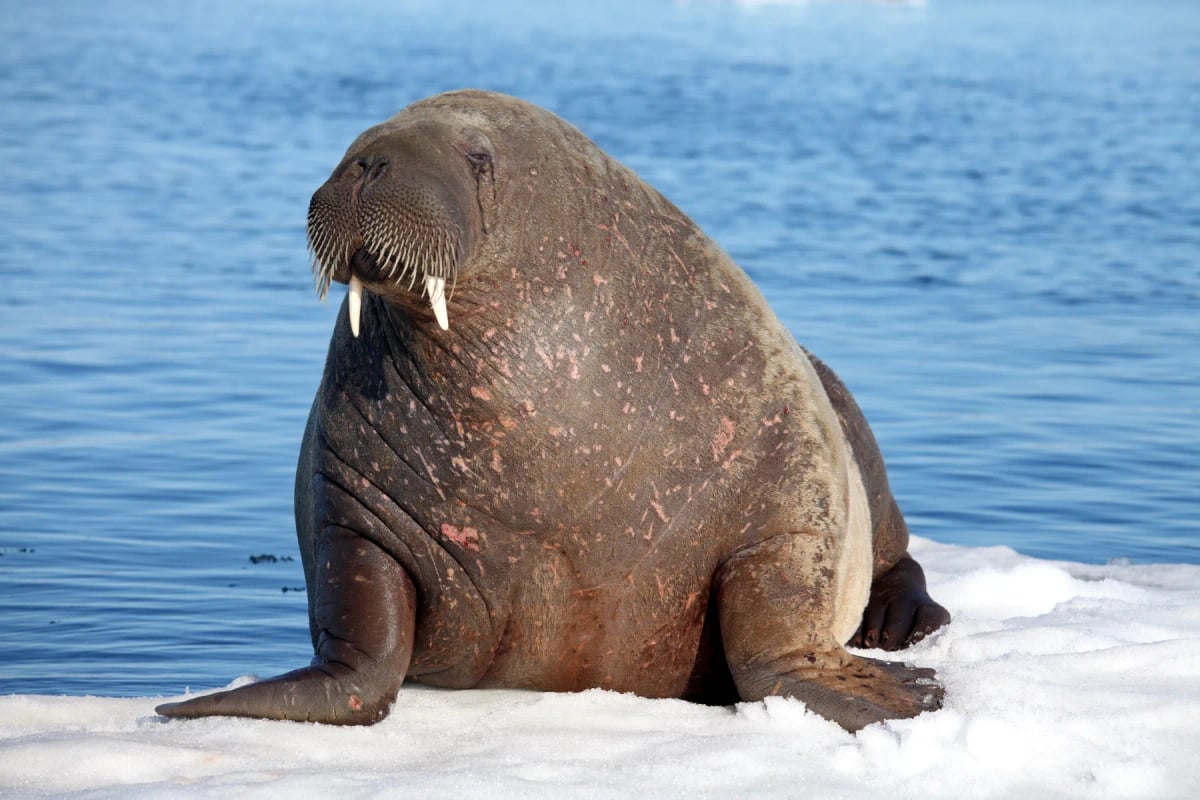
Sociable by nature, walruses spend a great deal of their lives packed tightly together on ice floes or beaches in herds that can run into the thousands. These gatherings are loud affairs, filled with grunts, bellows and the clacking of tusks. Among males, the tusks serve as a clear signal of rank: larger tusks generally belong to older, more dominant individuals who win preferred resting spots and access to females without necessarily fighting. During the breeding season, males also produce a remarkable variety of calls, including bell-like sounds produced underwater, to attract females. Walruses are capable swimmers and can travel considerable distances between feeding grounds and haul-out sites. They sleep both on land and at sea, sometimes hanging vertically in the water using air sacs in the throat to stay afloat.
History
For thousands of years, Indigenous peoples of the Arctic hunted walruses sustainably, relying on them for food, oil, hide and ivory. That balance shifted dramatically from the 17th century onward as European and American commercial hunters entered Arctic waters in large numbers. Driven by demand for lamp oil and carved ivory, hunters slaughtered walruses by the hundreds of thousands, causing populations in many regions to collapse entirely. By the late 19th century the Atlantic walrus had been wiped out from areas it had previously occupied in abundance. International agreements in the 20th century, including protections under the Marine Mammal Protection Act in the United States, brought commercial hunting largely to an end and allowed some populations to rebuild. Today, only indigenous communities maintain the right to subsistence hunting in most of the walrus's range.
Threats
The single greatest threat to walruses today is the rapid loss of Arctic sea ice caused by climate change. Sea ice is not simply a resting platform. It positions walruses directly above their shallow-water feeding grounds, allows mothers to nurse calves safely away from predators and gives exhausted animals a place to rest between dives. As ice disappears earlier each summer and returns later each autumn, walruses are forced to swim to shore in large numbers and crowd onto coastal beaches. These mass gatherings can trigger deadly stampedes, particularly when polar bears or low-flying aircraft disturb the herd. Calves are especially vulnerable in such events. Oil and gas exploration in Arctic waters adds further pressure, and increased shipping traffic through the region as ice retreats brings additional noise disturbance and the risk of pollution.
Where it is found
The Walrus can be found in places such as:
Researched and written by Juan Pablo. Sources: IUCN Red List, scientific literature and regional field guides. Last updated: .
Technical factsheet

Frequently Asked Questions
What do walruses eat?
Walruses feed mainly on clams and mussels, which they find by sweeping their sensitive whiskers across the seabed. Once they locate a clam, they use powerful suction to pull the soft flesh out of the shell rather than crushing it whole. They also eat worms, snails and sea cucumbers. A hungry adult can consume thousands of clams in a single feeding session, diving in water no deeper than about 80 metres.
Where do walruses live?
Walruses live along the coastlines and floating sea ice of the Arctic Ocean and surrounding subarctic seas. There are two groups: the Atlantic walrus, found from northern Canada across Greenland to the Russian Arctic, and the Pacific walrus, concentrated in the Bering and Chukchi seas between Russia and Alaska. They prefer shallow coastal waters where they can reach the seabed to find food.
Why do walruses have tusks?
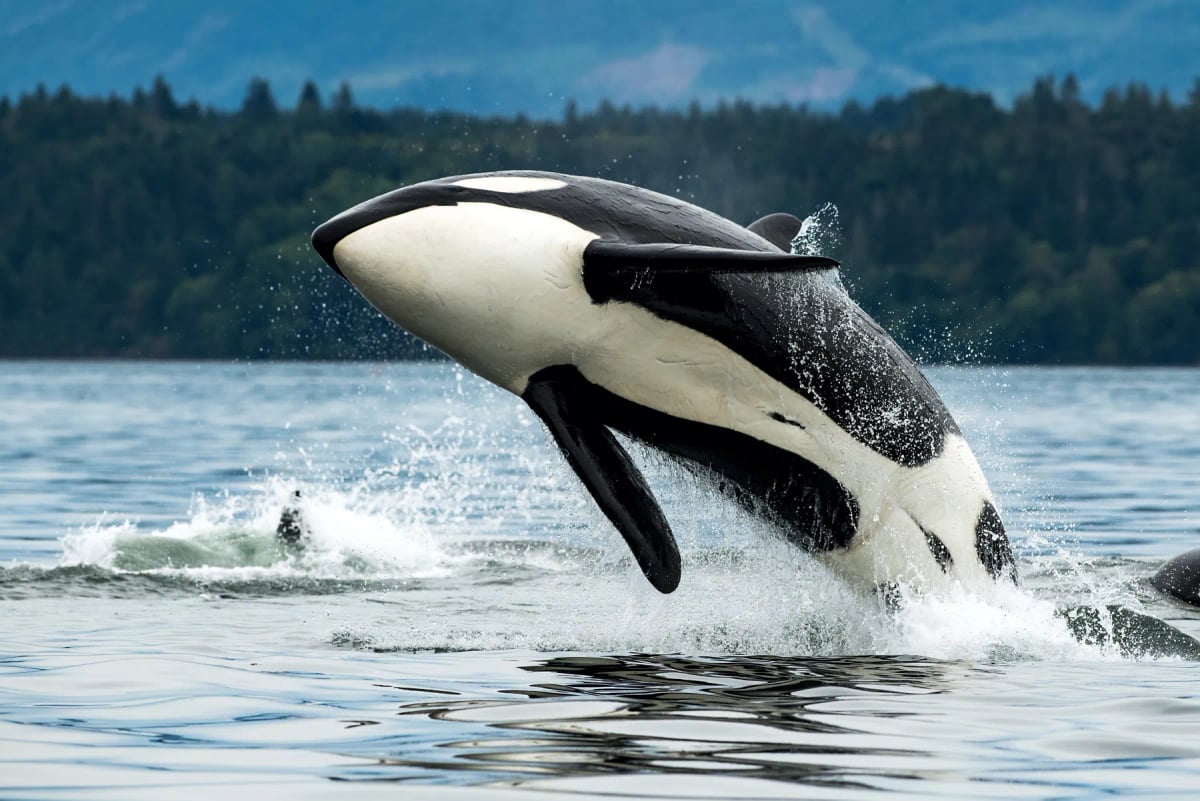
Walrus tusks are elongated upper canine teeth that serve several purposes. Both males and females use them to pull themselves out of the water and onto ice. Among males, larger tusks signal higher rank, helping them claim the best resting spots and access to females without needing to fight. Occasionally, walruses also use their tusks to defend themselves against polar bears or orcas.
Are walruses endangered?
The walrus is currently listed as Vulnerable on the IUCN Red List. Populations collapsed during centuries of commercial hunting but have partially recovered since international protections were put in place. Today, the biggest threat is the loss of sea ice due to climate change. Less ice means fewer resting platforms over feeding grounds, and it forces walruses into crowded coastal beaches where deadly stampedes can occur.
How do walruses sleep in the ocean?
Walruses can sleep in the water without drowning, thanks to a pair of air sacs in their throats that inflate and act like a built-in life jacket. This allows them to float upright at the surface and rest between dives. They also sleep on land and ice. Adult males can sleep deeply enough that they are difficult to wake, and large groups often pile on top of one another on shore.
How big do walruses get?
Walruses are among the largest pinnipeds on Earth. Adult males can reach 3.6 metres in length and weigh more than 1,700 kilograms. Females are noticeably smaller, though they share the same tusks and thick, wrinkled skin. Most of that impressive bulk comes from a thick layer of blubber beneath the skin, which keeps them warm in freezing Arctic waters and acts as an energy reserve during months when food is scarce.
Why do walruses turn pink?
When a walrus gets warm, its skin can shift from the usual brown or cinnamon color to a striking pinkish tone. This happens because warm temperatures cause blood vessels near the surface of the skin to expand, bringing more blood close to the surface to release heat into the air. It is essentially the walrus equivalent of blushing, and it works in the opposite direction in cold water, when the skin darkens as blood moves away from the surface.