Sloth
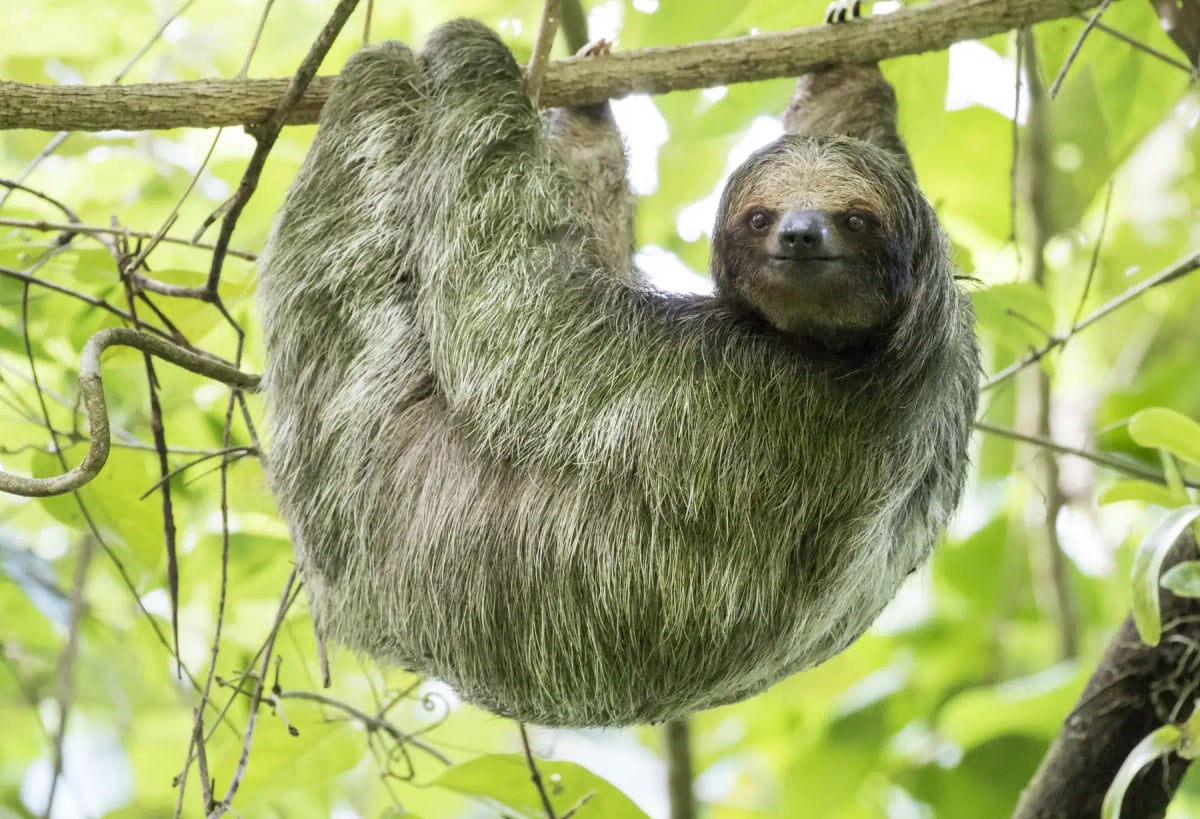
Sloths (suborder Folivora) are slow-moving arboreal mammals native to the tropical and subtropical forests of Central and South America. Six species exist, divided into two groups: two-toed sloths (genus Choloepus) and three-toed sloths (genus Bradypus). They spend nearly their entire lives hanging upside down from tree branches, relying on their strong curved claws for grip. Their diet consists mostly of leaves, which offer little energy, so sloths conserve resources through one of the slowest metabolisms of any mammal. A single meal can take up to a month to digest fully. Their coarse fur often hosts colonies of algae that give the coat a greenish tint, providing natural camouflage in the forest canopy. Despite their reputation for stillness, sloths are capable swimmers. Conservation status varies widely across the six species, ranging from Least Concern to Critically Endangered.
Adaptations and speed
A sloth's metabolism runs at roughly half the rate expected for a mammal of its size, and that slowness is the key to its survival. Leaves are tough to digest, low in calories, and toxic in large quantities, yet sloths thrive on them because their bodies extract every bit of available energy over weeks of digestion. A single stomach full of leaves can take up to a month to process completely. Moving slowly also keeps muscle activity to a minimum, which means less energy burned and less heat produced. On the ground, a sloth covers only about 38 metres per hour. In the canopy, where it spends almost all of its life, it moves just fast enough to stay hidden. Predators such as eagles and ocelots rely on spotting motion, so near stillness is one of the sloth's best defences.
Species
Six species of sloth are alive today, split into two distinct families. The two species of two-toed sloths, Hoffmann's and Linnaeus's, belong to the family Megalonychidae. The four species of three-toed sloths, including the pale-throated, brown-throated, maned, and pygmy three-toed sloth, belong to Bradypodidae. Despite the shared name and lifestyle, the two families are not closely related and evolved their similarities independently. Conservation status differs sharply across the group. The brown-throated three-toed sloth is listed as of Least Concern, while the pygmy three-toed sloth, found only on a single small island off Panama, is listed as En peligro crítico due to its tiny population and restricted habitat. Habitat loss from deforestation is the main pressure facing most species across Central and South America.
Appearance
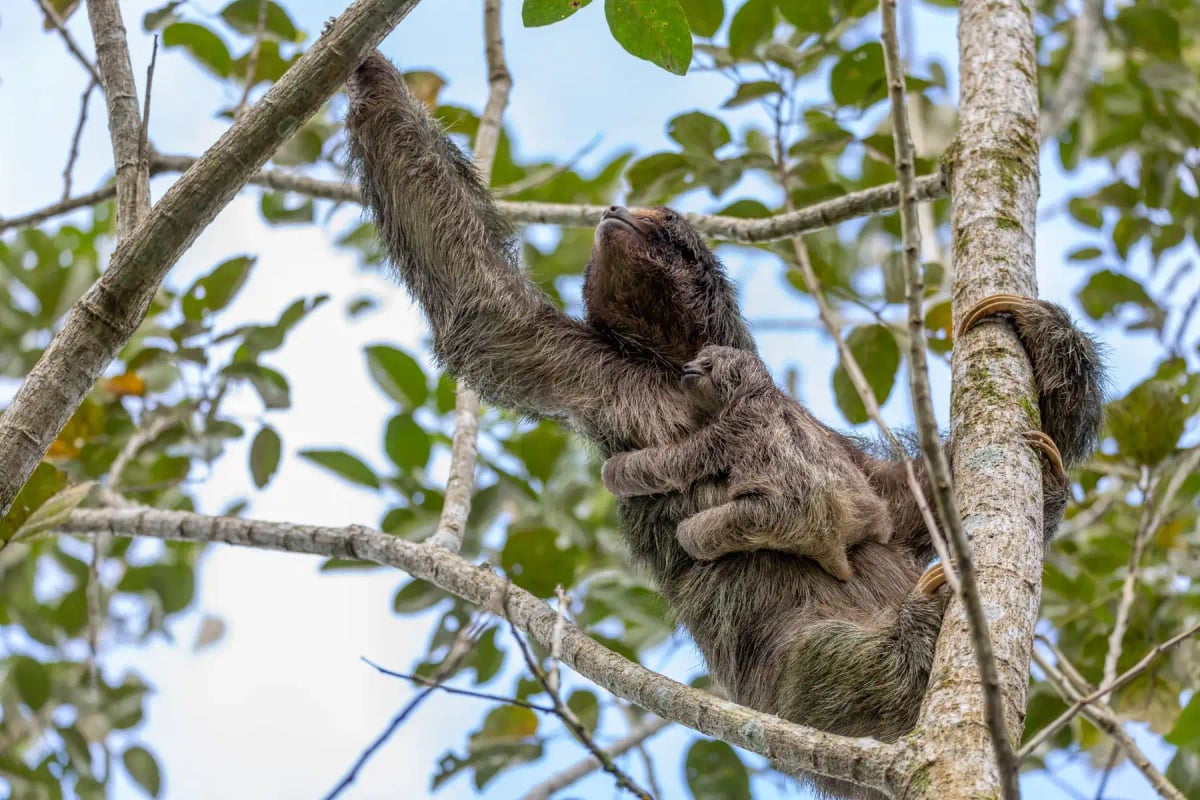
Few mammals look quite like a sloth. The coat is coarse and shaggy, growing in a direction opposite to that of most mammals: from the belly toward the back. This allows rainwater to run off easily while the animal hangs upside down. Grooves along each hair shaft trap moisture and give the fur an unusual relationship with the surrounding environment. Colonies of cyanobacteria and green algae grow within those grooves, tinting the coat a faint green that blends with the leaves of the canopy. The same fur also shelters a surprising variety of other life, including moths, beetles, and mites that complete parts of their life cycles on the sloth itself. Body size varies by species, with adults ranging from roughly 50 to 75 centimetres in length and weighing between 3.5 and 8 kilograms depending on the species.
Behavior and swimming
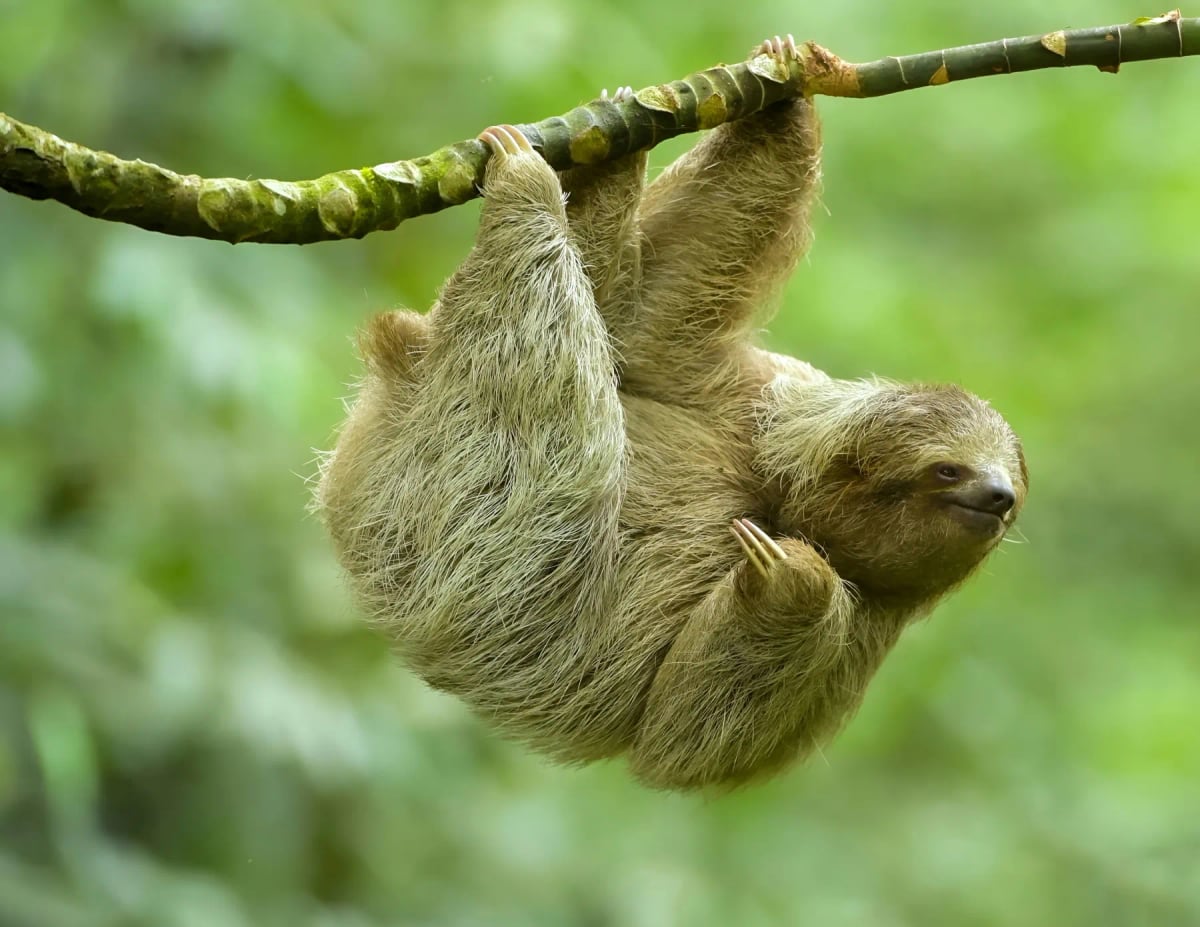
Spending up to 20 hours a day resting, sloths are among the most sedentary mammals on the planet. They navigate the forest canopy almost entirely by hanging and pulling themselves along branches with their curved claws, rarely coming down to the ground. When they do descend, the most common reason is to defecate, which they do only about once a week, or to move between trees that are not connected by overlapping branches. In water, however, sloths are genuinely capable swimmers. Their buoyancy comes partly from gas trapped in their large, slow-digesting stomach. They paddle with their front limbs and can cross rivers of considerable width. Estimates suggest they move through water roughly three times faster than they travel on land, making river crossings a practical way to expand their range or escape a threat.
Interaction with humans
Sloths rarely seek out contact with people, and under normal circumstances they pose no threat. Their claws, which can reach up to 10 centimetres in length on some species, are designed for gripping branches rather than for attack, but a sloth that feels cornered or handled roughly will swipe with enough force to cause a serious wound. The bigger concern runs the other way: human activity is the primary danger to sloths. Deforestation removes the canopy they depend on, power lines crossing cleared land electrocute individuals that try to cross between forest fragments, and the illegal wildlife trade takes animals from the wild for use in tourism photo operations. Sanctuaries across Costa Rica, Panama, and Brazil work to rehabilitate injured and orphaned sloths, though releasing hand-raised individuals back to the wild successfully remains genuinely difficult.
Where it is found
The Sloth can be found in places such as:
Researched and written by Juan Pablo. Sources: IUCN Red List, scientific literature and regional field guides. Last updated: .
Technical factsheet

Frequently Asked Questions
What do sloths eat?
Sloths feed mostly on leaves, along with occasional buds, tender shoots, and fruit depending on the species. Leaves provide very little energy and contain toxins, so sloths eat slowly and in small amounts. Their multi-chambered stomach breaks down this tough diet over weeks. Some two-toed sloths are a bit more flexible and will also eat insects or small lizards when the opportunity arises.
Can sloths swim?
Yes, and they are surprisingly good at it. Sloths use their front limbs to paddle through the water and can cross rivers of considerable width. Gas produced during digestion in their large stomach helps them stay buoyant. They actually move through water roughly three times faster than they travel on land, making swimming a practical way to cross between forest patches or escape a threat on the ground.