Nile Crocodile
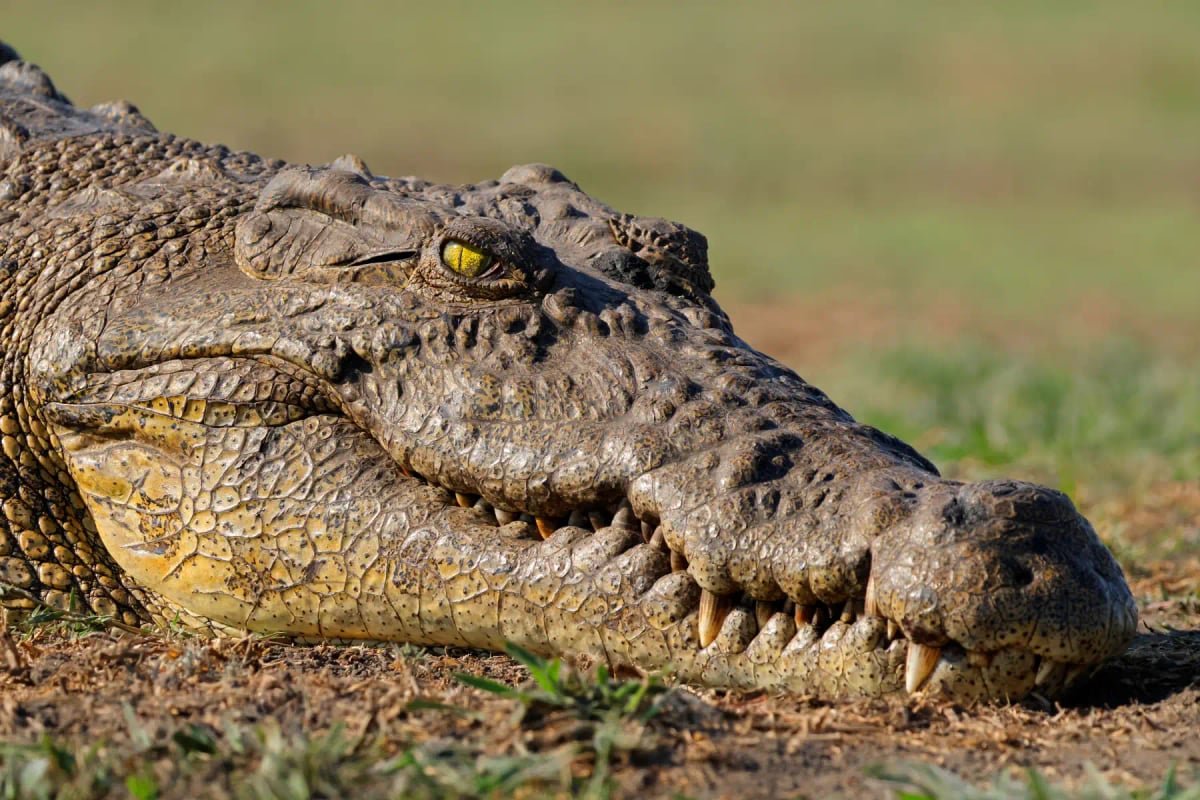
The Nile crocodile is the largest reptile in Africa and one of the biggest in the world, with large adults reaching up to 5.5 metres in length and weighing as much as 750 kilograms. Found across rivers, lakes and wetlands throughout sub-Saharan Africa and Madagascar, it thrives in both freshwater and occasionally brackish environments. A powerful predator, it feeds on fish, birds and mammals, and large individuals are capable of overpowering animals as big as buffalo and zebra. Its hunting method relies on patience: it lies motionless at the water's edge, then strikes with remarkable speed, clamping prey in its jaws and pulling it underwater. Despite being listed as Least Concern by the IUCN, populations in certain areas face pressure from habitat loss, hunting and conflict with local communities that depend on rivers and lakes for their livelihoods.
Habitat and distribution
Across sub-Saharan Africa and Madagascar, the Nile crocodile occupies a remarkable range of aquatic environments. It is most commonly found in large rivers, lakes, swamps and estuaries, where slow or still water gives it the advantage during hunting. The species tolerates both freshwater and brackish conditions, and individuals have occasionally been recorded in coastal areas. Key populations exist in places such as the Nile basin, the Zambezi River, Lake Turkana and the wetlands of the Okavango Delta. Within its range, it tends to favour sites with gently sloping banks, dense surrounding vegetation and reliable access to prey. During the dry season, individuals may travel considerable distances overland to reach permanent water sources, demonstrating a strong attachment to aquatic habitats throughout the year.
Diet
Fish form the backbone of the Nile crocodile's diet for much of its life, but as individuals grow larger their meals become considerably more ambitious. Adults regularly prey on birds, monitor lizards, turtles and mammals ranging from impala and wildebeest to buffalo and zebra. Smaller individuals focus on insects, frogs and small fish, gradually shifting to larger prey as they increase in size. The crocodile is also an opportunistic scavenger and will consume carrion when fresh prey is scarce. One well-documented feeding behaviour involves groups gathering at river crossings during seasonal migrations of wildebeest and other ungulates, where the concentration of animals in the water gives the crocodiles an exceptional hunting opportunity. Prey is swallowed whole or in large pieces torn off by rolling powerfully in the water.
Behavior
Patience is the defining quality of the Nile crocodile as a hunter. It can spend hours, even days, barely moving at the water's edge before launching a strike of extraordinary speed. Once prey is seized in its jaws, the crocodile drags it underwater and may perform a rolling motion to disorient it or tear off manageable pieces of flesh. Outside of hunting, Nile crocodiles are known to bask on riverbanks to regulate their body temperature, as they are ectothermic animals that rely on external heat sources. They are also more social than many people expect: groups often share basking spots and feeding sites with relatively little aggression. Females show strong maternal instincts, guarding their nests and carrying hatchlings to the water in their mouths after the eggs hatch.
Relation with humans
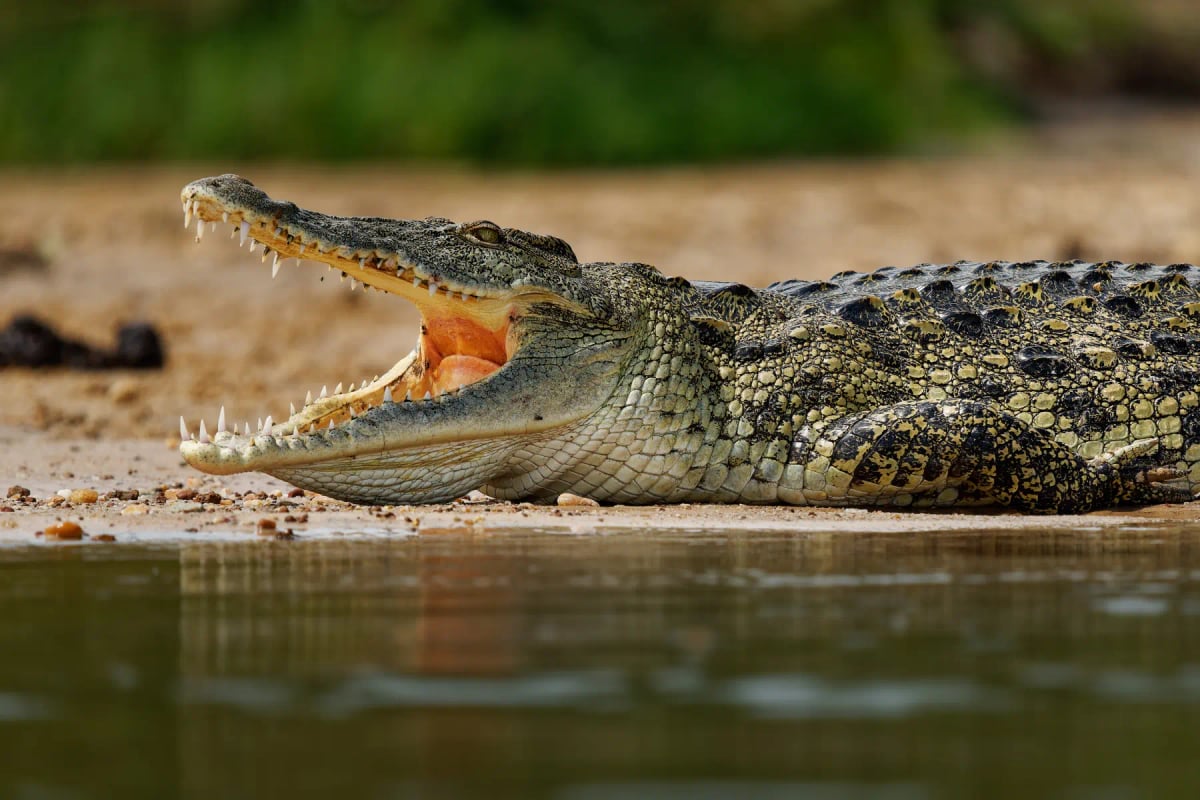
Few wild animals have as complicated a relationship with people as the Nile crocodile. It is responsible for a significant number of attacks on humans each year, many of them fatal, making it one of the deadliest large animals on the continent. Most incidents occur when people are fetching water, fishing or washing at the river's edge, activities that bring them into direct contact with an animal built for ambush. Communities living alongside major river systems have developed a deep cultural awareness of the crocodile, and it features prominently in the folklore, religion and art of many African societies. At the same time, the species is valued economically through regulated trophy hunting and the trade in its skin, which is used in the leather industry and represents a source of income in several range countries.
Conservation
The IUCN currently lists the Nile crocodile as Least Concern overall, but that broad status masks real pressures on populations in specific parts of its range. During the twentieth century, intense hunting for the leather trade caused serious declines across much of Africa, and legal protections introduced from the 1960s onward allowed numbers to recover in many areas. Today the main threats are habitat loss driven by agricultural expansion, pollution of river systems and ongoing conflict with local communities. In some countries populations remain fragile and are closely monitored. Conservation programmes combining community engagement, regulated sustainable use and protected area management have proven effective in several regions. The species is listed on Appendix I or II of CITES depending on the country, reflecting the need for continued oversight of trade in its skins and other products.
Where it is found
The Nile Crocodile can be found in places such as:
Researched and written by Juan Pablo. Sources: IUCN Red List, scientific literature and regional field guides. Last updated: .
Technical factsheet

Frequently Asked Questions
How big do Nile crocodiles get?
Nile crocodiles are the largest reptiles in Africa. Large adults can reach up to 5.5 metres in length and weigh as much as 750 kilograms. Males tend to grow bigger than females. Their size plays a big role in what they eat: smaller individuals stick to insects and fish, while fully grown adults are powerful enough to take down buffalo and zebra.
What do Nile crocodiles eat?
Fish are the main food source for younger crocodiles, but adults have a much wider menu. They hunt birds, turtles, monitor lizards and large mammals like wildebeest, impala and even buffalo. They are also opportunistic scavengers and will eat carrion when live prey is not available. Groups sometimes gather at river crossings during wildlife migrations to take advantage of the large number of animals in the water.
Where do Nile crocodiles live?
Nile crocodiles are found across sub-Saharan Africa and Madagascar. They live in rivers, lakes, swamps and estuaries, favouring spots with slow or still water and gently sloping banks. Important populations exist along the Nile basin, the Zambezi River and Lake Turkana, among other places. They tolerate both freshwater and brackish conditions, and during the dry season some individuals travel long distances overland to find permanent water.
How do Nile crocodiles hunt?
The Nile crocodile is one of the most patient hunters in the animal kingdom. It can lie almost completely still at the water's edge for hours, waiting for the right moment to strike. When prey comes close enough, it lunges with remarkable speed, grabs it in powerful jaws and pulls it underwater. It may then roll its body repeatedly to disorient the animal or tear off pieces small enough to swallow.
Are Nile crocodiles dangerous to humans?
Yes, the Nile crocodile is considered one of the most dangerous animals in Africa. It is responsible for a significant number of attacks on people every year, many of them fatal. Most incidents happen when people are collecting water, fishing or washing near rivers. Its ability to stay hidden and strike without warning makes it especially hazardous in areas where communities rely on rivers and lakes for their daily needs.
Do Nile crocodiles take care of their young?
Females are surprisingly attentive mothers. After laying eggs in a nest on land, they guard the site closely until the eggs hatch. When the hatchlings are ready to emerge, the mother carries them gently to the water in her mouth. She continues to watch over them for a period after that. This level of parental care is unusual among reptiles and shows a more complex social side to an animal many people see only as a threat.
Is the Nile crocodile endangered?
The Nile crocodile is currently listed as Least Concern by the IUCN, meaning the species as a whole is not at immediate risk of extinction. However, populations in certain areas face real pressures from habitat loss, river pollution and conflict with local communities. Intense hunting during the twentieth century caused serious declines, and ongoing conservation efforts, including trade regulations under CITES, help ensure numbers stay stable across its range.