Yellow Anaconda
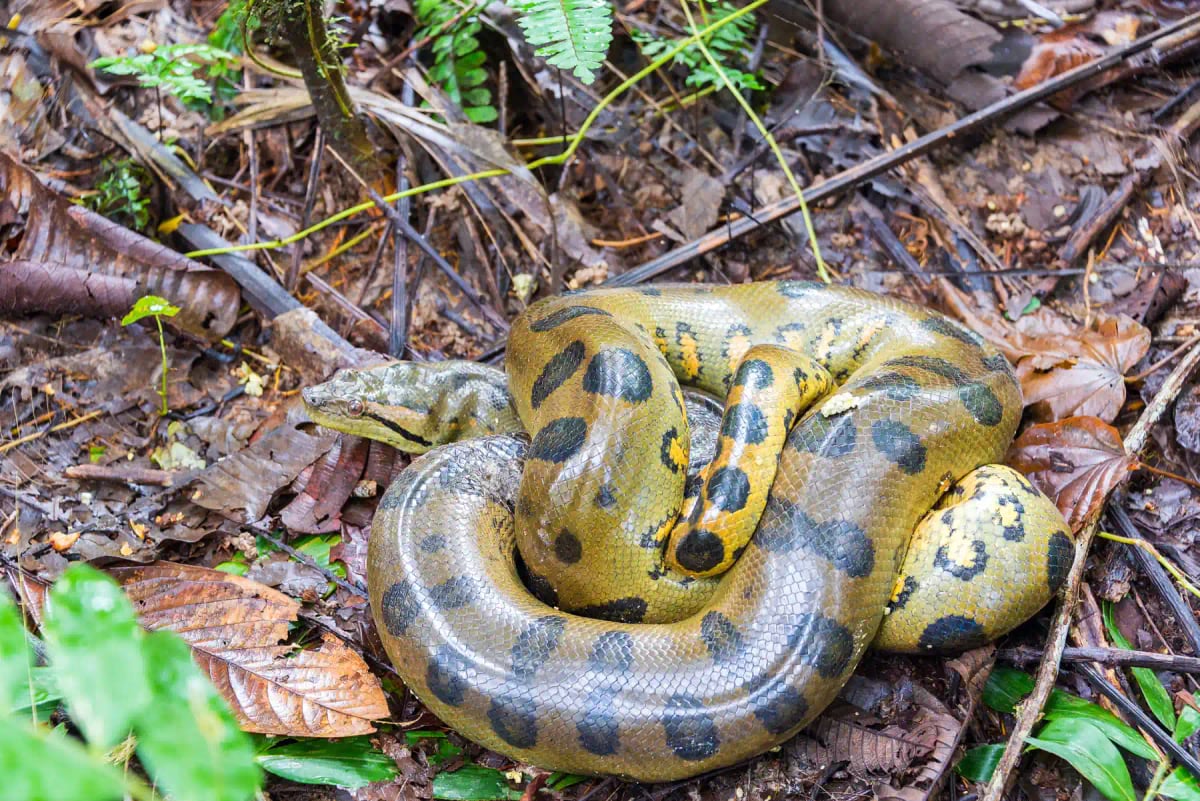
The yellow anaconda (Eunectes notaeus), also known as the Paraguayan anaconda, is one of the largest snakes in South America, native to the wetlands and flooded grasslands of the Paraguay-Paraná basin. Females can exceed four meters and are significantly larger than males, a pattern common in large constrictors. It hunts by ambush, lying in wait at the water's edge and using sensory pits on its jaw to detect the body heat of nearby prey, then striking and killing by constriction. Fish, birds, caimans and capybaras are among its main targets.
Habitat and distribution
The yellow anaconda is native to the wetlands and seasonally flooded savannas of south-central South America, with its range centered on the Paraguay-Paraná river basin. The Pantanal, shared between Brazil, Bolivia and Paraguay, is one of its most important strongholds. It is also widespread across the Gran Chaco wetlands and the Iberá marshes in northeastern Argentina. In eastern Bolivia it occupies lowland river systems connected to the same basin. In Uruguay it has been recorded near the northern border, though whether a stable breeding population exists there has not been fully confirmed by researchers.
Diet
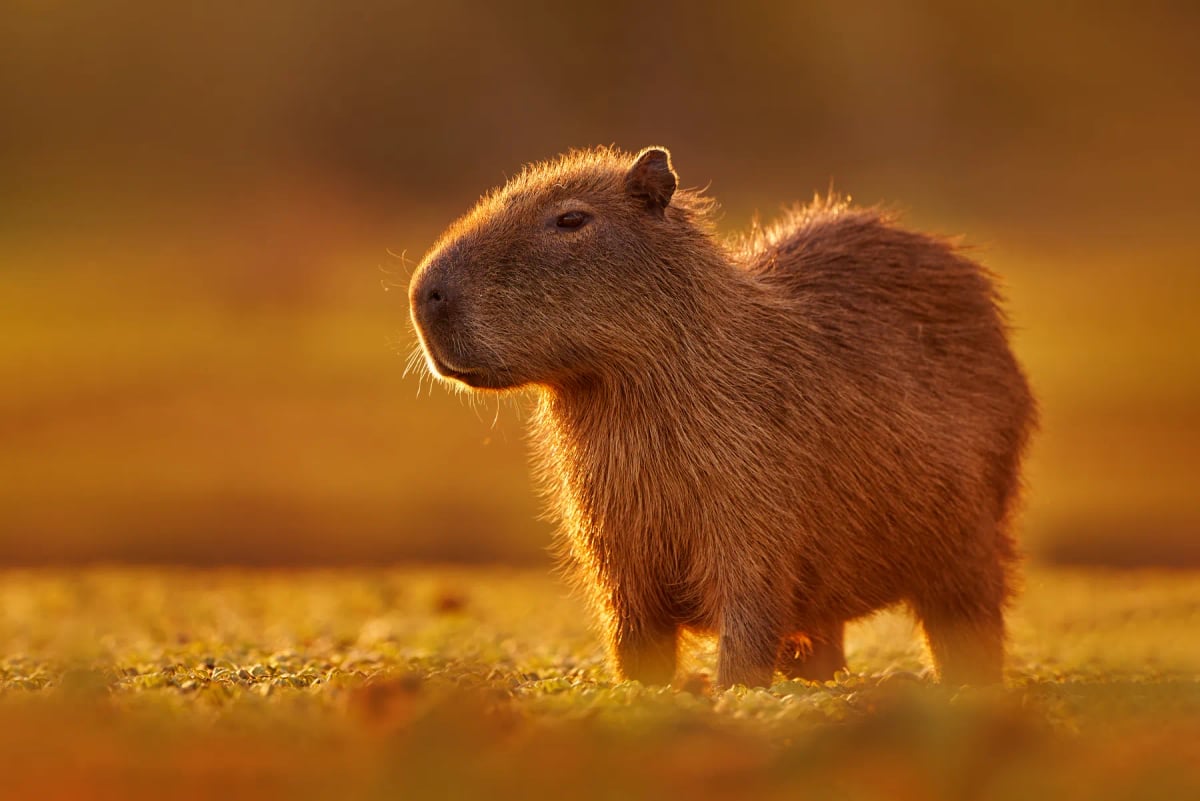
The yellow anaconda is a generalist carnivore that takes whatever prey is available in its wetland habitat. Fish, waterbirds and their eggs, small and medium mammals, caimans, turtles, lizards and other snakes all feature in its diet. Capybaras, the world's largest rodent and a common presence in the same wetlands, are among its more remarkable prey. It hunts by ambush, lying motionless in shallow water or at the water's edge and using sensory pits along its jaw to detect the body heat of nearby prey even in complete darkness. After striking, it kills by constriction.
Behavior
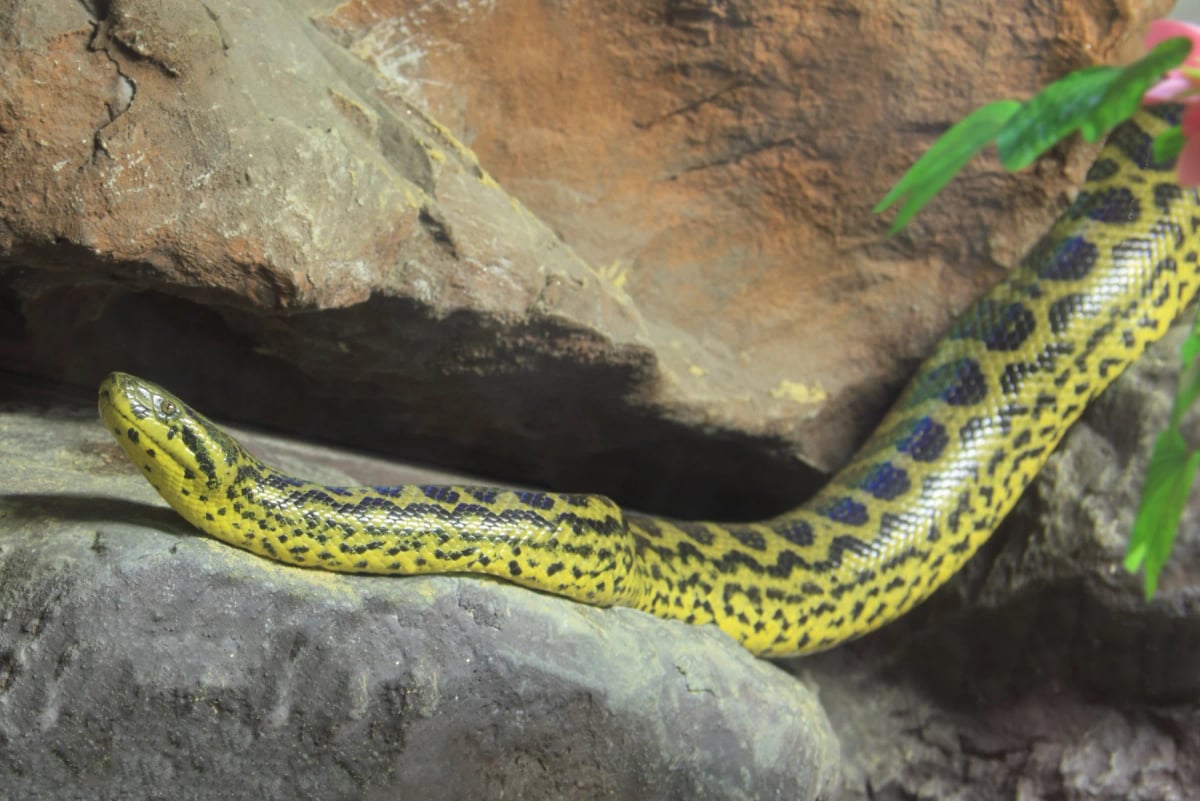
The yellow anaconda spends much of its time in the water, with its dorsally positioned eyes and nostrils kept just above the surface. It is largely solitary outside the breeding season and can be active both during the day and at night, though it tends to favor the cooler nighttime hours for hunting. It basks on riverbanks and floating vegetation to regulate its body temperature, retreating to the water when disturbed. Despite its size, it is a secretive animal and rarely encountered by people in its range, even in areas where it is locally common.
Reproduction
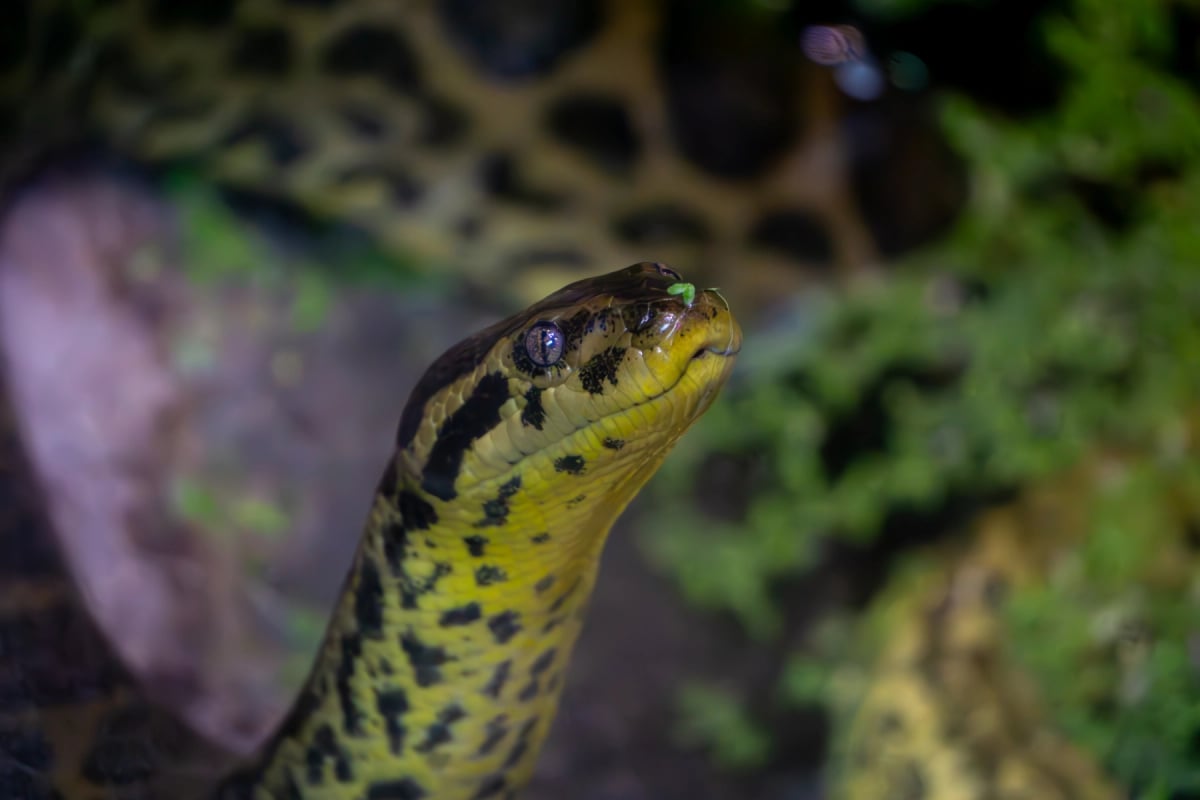
The yellow anaconda breeds between April and May. During this period, several males may congregate around a single female in what researchers call a breeding ball, competing for the opportunity to mate. After a gestation period of around six months, females give birth to fully developed live young, a characteristic shared with all boas. Litter sizes vary widely, from a handful to over 80, though most fall between ten and forty. Neonates measure around 55 to 60 centimeters at birth and are completely independent from the moment they are born, receiving no parental care.
Conservation
The yellow anaconda is listed as Least Concern by the IUCN and is included on Appendix II of CITES, which regulates international trade. Between the mid-1940s and the late 1980s, between 10,000 and 60,000 skins were exported annually from Argentina, mostly to the United States and Europe. Argentina banned hunting in 1986, and since 2001 the province of Formosa has run a regulated program that allows limited harvest under a management plan, which has been studied as a model for sustainable use of wild reptiles. Wetland loss from agriculture, drainage and damming remains the primary threat over the long term.
Where it is found
The Yellow Anaconda can be found in places such as:
Researched and written by Juan Pablo. Sources: IUCN Red List, scientific literature and regional field guides. Last updated: .
Technical factsheet

Frequently Asked Questions
How big does a yellow anaconda get?
Yellow anacondas typically reach between two point five and four meters in length, with females growing significantly larger than males, a pattern common among large constrictors. Adults usually weigh between twenty five and thirty five kilograms, though large females in healthy wetland habitat can exceed that range. This makes the yellow anaconda one of the largest snake species found in South America.
Is the yellow anaconda venomous?
No, the yellow anaconda is not venomous. It kills its prey through constriction, wrapping its powerful body around the animal and tightening with each exhale until breathing and blood flow stop. This method allows it to subdue prey as large as caimans or capybaras without relying on any toxin. Its strength and ambush tactics, rather than venom, make it an effective predator in its wetland habitat.
Where does the yellow anaconda live?
The yellow anaconda lives in the wetlands and seasonally flooded grasslands of south-central South America, with its range centered on the Paraguay-Paraná river basin. It is found in Argentina, Paraguay, Brazil, Bolivia and the northeastern edge of Uruguay, with the Pantanal and the Iberá wetlands among its most important strongholds. It favors slow moving rivers, marshes and flooded plains rather than dense forest.
What does a yellow anaconda eat?
The yellow anaconda is a generalist predator that feeds on fish, waterbirds and their eggs, small and medium mammals, caimans, turtles, lizards and other snakes. Capybaras, the world's largest rodent, are among its more notable prey items in the wetlands it shares with them. It hunts by ambush, lying motionless near the water and using heat sensing pits along its jaw to detect nearby prey even in total darkness.
Is the yellow anaconda dangerous to humans?
The yellow anaconda is generally not considered dangerous to humans, since it is shy, avoids confrontation and typically retreats into the water when it senses people nearby. Attacks on adults are extremely rare and there are no confirmed records of it preying on humans, unlike some exaggerated popular accounts suggest. Caution is still recommended around very large individuals, but most encounters end with the snake fleeing rather than attacking.
How many babies does a yellow anaconda have?
Yellow anacondas give birth to live young rather than laying eggs, with litter sizes ranging widely from a handful up to more than eighty, though most fall between ten and forty. After a gestation of around six months, the newborns measure roughly fifty five to sixty centimeters and are completely independent from birth, receiving no care from either parent. Several males often compete around a single female in a group known as a breeding ball before mating occurs.
Is the yellow anaconda endangered?
The yellow anaconda is listed as Least Concern by the IUCN, meaning it is not currently considered at risk of extinction. Past commercial hunting for its skin once removed tens of thousands of individuals annually from Argentina, but legal protections introduced in 1986 reduced this pressure significantly. The species' main long term threat now comes from wetland loss caused by agriculture, drainage and dam construction rather than direct hunting.