Sun Bear
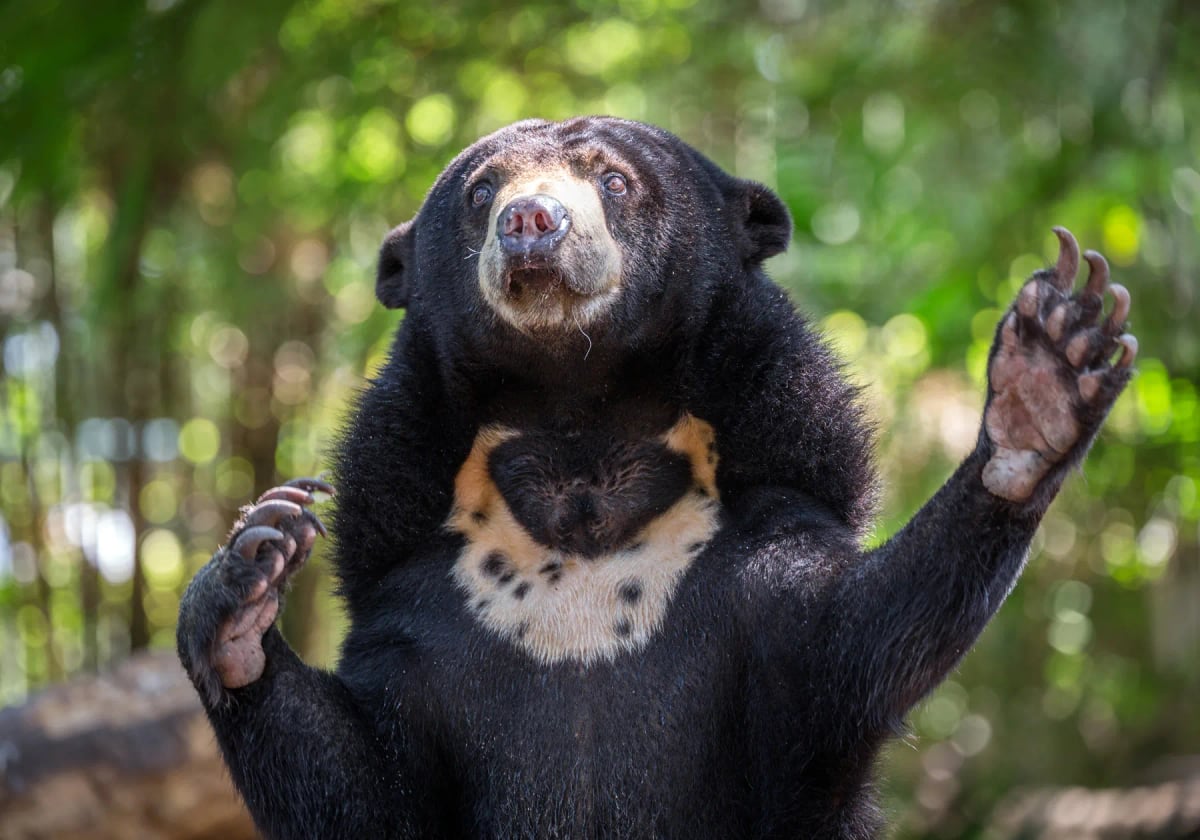
The sun bear is the smallest bear species in the world and lives in the tropical forests of Southeast Asia. It is easy to recognize by its short, glossy black coat and the pale orange or cream patch shaped like a crescent on its chest. Each bear has a unique chest marking, much like a fingerprint. A powerful climber, it spends a great deal of time in the treetops resting and foraging. Its tongue can reach up to 25 cm in length, making it perfectly suited for pulling honey and insects out of tree cavities. Sun bears eat fruit, termites, beetles, small lizards, and birds. They are mostly active at night and tend to live alone. Sadly, populations have dropped sharply in recent decades due to forest loss, poaching for bear bile, and the illegal pet trade.
Habitat and range
Sun bears are found across a broad sweep of Southeast Asia, from the forests of northeastern India and Bangladesh in the west to the islands of Sumatra and Borneo in the south. Their range also covers Myanmar, Thailand, Cambodia, Laos, Vietnam, peninsular Malaysia, and Brunei. They are strongly tied to tropical lowland rainforests, where dense tree cover provides both food and shelter. They can also turn up in hill forests at moderate elevations. Because sun bears depend so heavily on large, intact forest blocks, they are particularly sensitive to habitat fragmentation. As logging and land conversion have pushed deeper into the region over recent decades, suitable forest has shrunk considerably, squeezing populations into smaller and more isolated patches across their range.
Diet
Few animals in Southeast Asia have a diet as varied as the sun bear's. Fruit makes up a large part of what it eats, and it will travel considerable distances to reach trees in season. It also tears into rotting logs and termite mounds in search of insects, larvae, and beetles. Honey is a particular favorite, and sun bears will raid wild bee nests whenever they get the chance. Their tongue, which can reach up to 25 cm, is perfectly shaped for probing deep into tree cavities and comb structures to lap up honey and grubs. Small vertebrates such as lizards and birds round out the menu. This flexible diet helps sun bears cope with the seasonal swings in food availability that are common across tropical forests.
Special adaptations
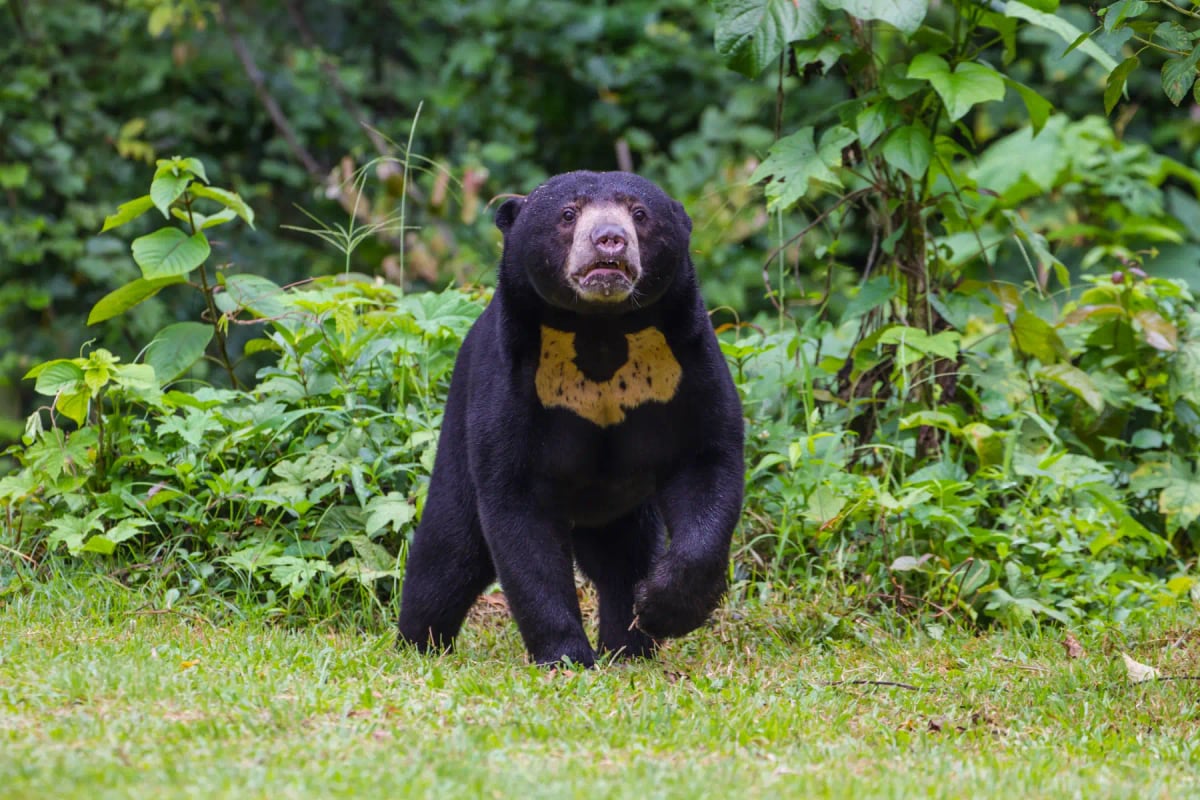
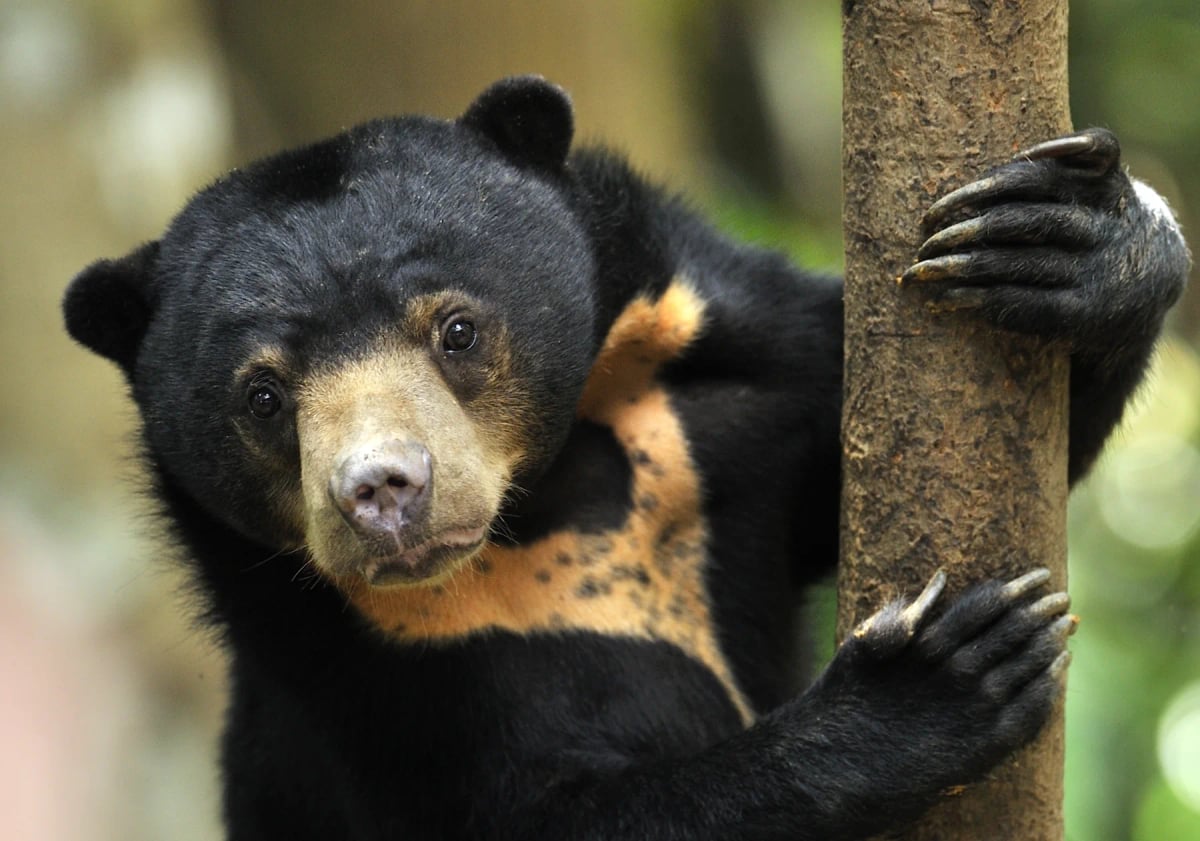
Everything about the sun bear seems built for life in the trees. Its paws are turned slightly inward, and its curved claws are remarkably long and strong, giving it a secure grip on bark as it hauls itself up even the tallest trunks. The chest patch, which ranges from pale cream to deep orange, is unique to each individual, much like a fingerprint. Scientists believe this marking may play a role in communication between bears. The skin around the neck and shoulders is notably loose, which allows the bear to twist and bite back if grabbed by a predator. Its short, dense coat repels rain and dries quickly in humid forest conditions. Together, these features make the sun bear one of the most capable climbers among all bear species.
Behavior
Unlike most bears in cooler climates, sun bears do not hibernate. The stable warmth of tropical forests means food is available throughout the year, so there is no need to enter a long period of dormancy. They are largely nocturnal, doing most of their foraging after dark, though daytime activity has been recorded. Sun bears tend to be solitary outside of mating or when a mother is raising cubs. Up in the canopy, they build rough sleeping nests by bending and folding branches, and they return to rest in these platforms during the day. Despite their small size, they can be fierce when threatened and will stand on their hind legs to appear larger. Adult bears are generally quiet but communicate with a range of vocalizations, including soft grunts and louder distress calls.
Threats
The pressures bearing down on sun bear populations come from several directions at once. Deforestation for palm oil plantations, logging, and agricultural expansion has destroyed vast areas of lowland forest across Southeast Asia, removing the habitat these bears depend on. Poaching remains a serious problem: sun bears are killed for their bile, which is used in some traditional medicine practices, and for their paws and other body parts. Cubs are also captured and sold into the illegal pet trade, with mothers often killed in the process. When forests are cleared and bears venture into farmland in search of food, they sometimes come into conflict with local communities. Each of these pressures on its own would be significant. Together, they have driven a population decline estimated at more than 30 percent over the past three bear generations.
Conservation
Listed as Vulnerable on the IUCN Red List, the sun bear is protected by law in every country where it lives, though the strength of enforcement varies widely. National parks and wildlife reserves across Borneo, Sumatra, and mainland Southeast Asia provide some refuge, and transboundary conservation efforts in areas such as the Heart of Borneo initiative aim to protect large connected forest landscapes. Rescue and rehabilitation centers, most notably the Bornean Sun Bear Conservation Centre in Sabah, Malaysia, care for bears rescued from the pet trade and work to educate the public. Research using camera traps and genetic sampling is gradually building a clearer picture of population sizes and movements. Reducing demand for bear bile products and cracking down on illegal wildlife markets remain among the most urgent priorities for keeping this species from sliding toward greater danger.
Where it is found
The Sun Bear can be found in places such as:
Researched and written by Juan Pablo. Sources: IUCN Red List, scientific literature and regional field guides. Last updated: .
Technical factsheet

Frequently Asked Questions
What do sun bears eat?
Sun bears eat a wide variety of foods, including fruit, honey, termites, beetles, larvae, and small animals like lizards and birds. Honey is a particular favorite, and their tongue, which can stretch up to 25 cm, is perfect for reaching deep into bee nests and tree cavities. They also rip apart rotting logs to find insects. This varied diet helps them survive through seasons when certain foods are scarce.
Where do sun bears live?
Sun bears live in the tropical rainforests of Southeast Asia. Their range stretches from northeastern India and Bangladesh across Myanmar, Thailand, Cambodia, Laos, Vietnam, and the Malaysian peninsula, all the way to the islands of Sumatra and Borneo. They prefer lowland forests with dense tree cover but can also be found at moderate elevations. They rely on large, intact forest areas, so deforestation is a major threat to their survival.
Are sun bears dangerous to humans?
Sun bears are generally shy and avoid people whenever possible. However, they can become aggressive if they feel cornered or threatened, and a mother protecting her cubs can be especially fierce. Despite being the smallest bear species in the world, they are strong and equipped with long, sharp claws. Most incidents involving humans occur when bears wander into farmland after their forest habitat has been cleared. Giving them space is always the safest approach.
Why is it called a sun bear?
The sun bear gets its name from the pale patch on its chest, which is shaped like a crescent or a rising sun. The marking ranges in color from cream to deep orange and is completely unique to each individual bear, much like a fingerprint. No two sun bears share the same chest pattern. Scientists think this marking may help bears communicate with one another, though research into its exact purpose is still ongoing.
Do sun bears hibernate?
No, sun bears do not hibernate. Unlike bears that live in cold climates, sun bears enjoy warm tropical temperatures throughout the year, which means food is available in every season. Without the need to survive a long winter, they stay active year round. They are mostly nocturnal, doing the bulk of their foraging at night. During the day, they rest in rough nests made from bent and folded branches up in the forest canopy.
How endangered is the sun bear?
The sun bear is classified as Vulnerable on the IUCN Red List. Populations have dropped by more than 30 percent over the past three bear generations, mainly due to deforestation, poaching for bear bile used in some traditional medicines, and the illegal pet trade. The species is legally protected in all countries where it lives, but enforcement is uneven. Conservation centers and national parks provide some protection, though much more action is needed to stop the decline.
How good are sun bears at climbing trees?
Sun bears are exceptional climbers and spend a large part of their lives in the treetops. Their paws turn slightly inward and their claws are long, curved, and very strong, giving them a reliable grip on bark even on tall, smooth trunks. Up in the canopy, they forage for fruit and honey, and they build rough sleeping platforms from bent branches. Of all bear species in the world, the sun bear is considered one of the most capable climbers.