Red Deer
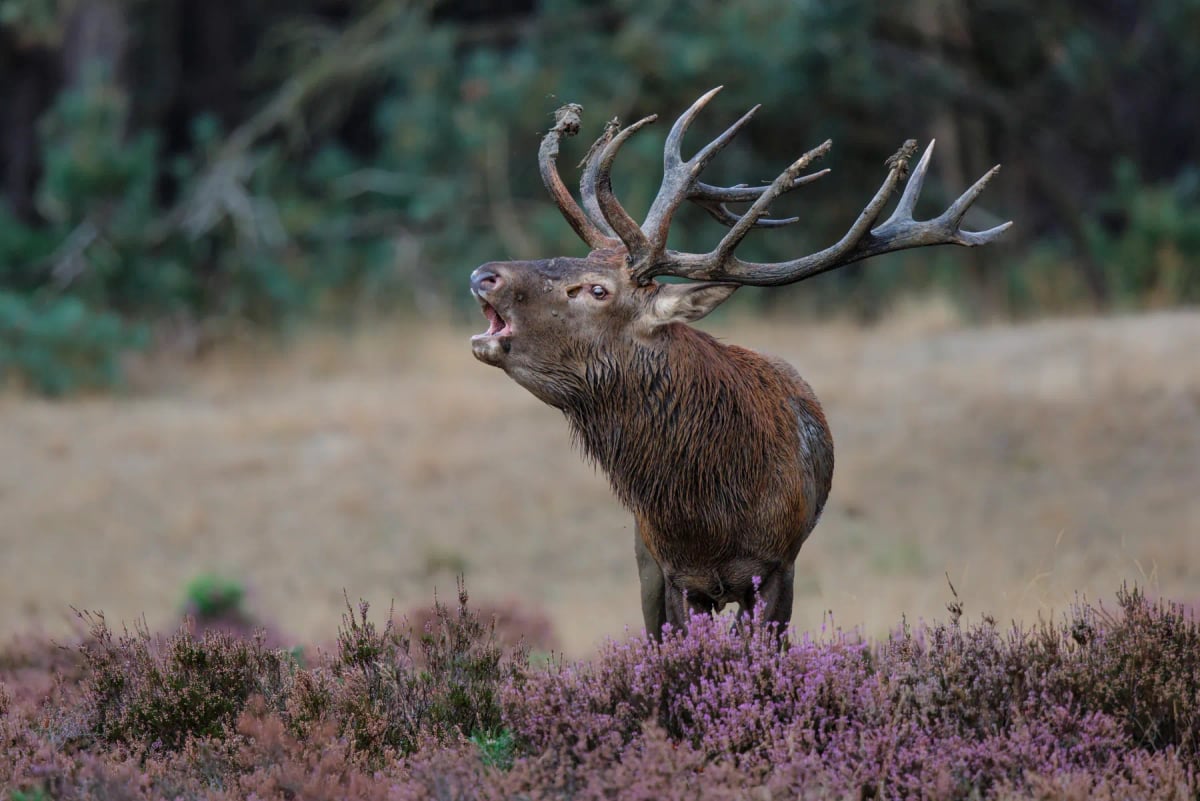
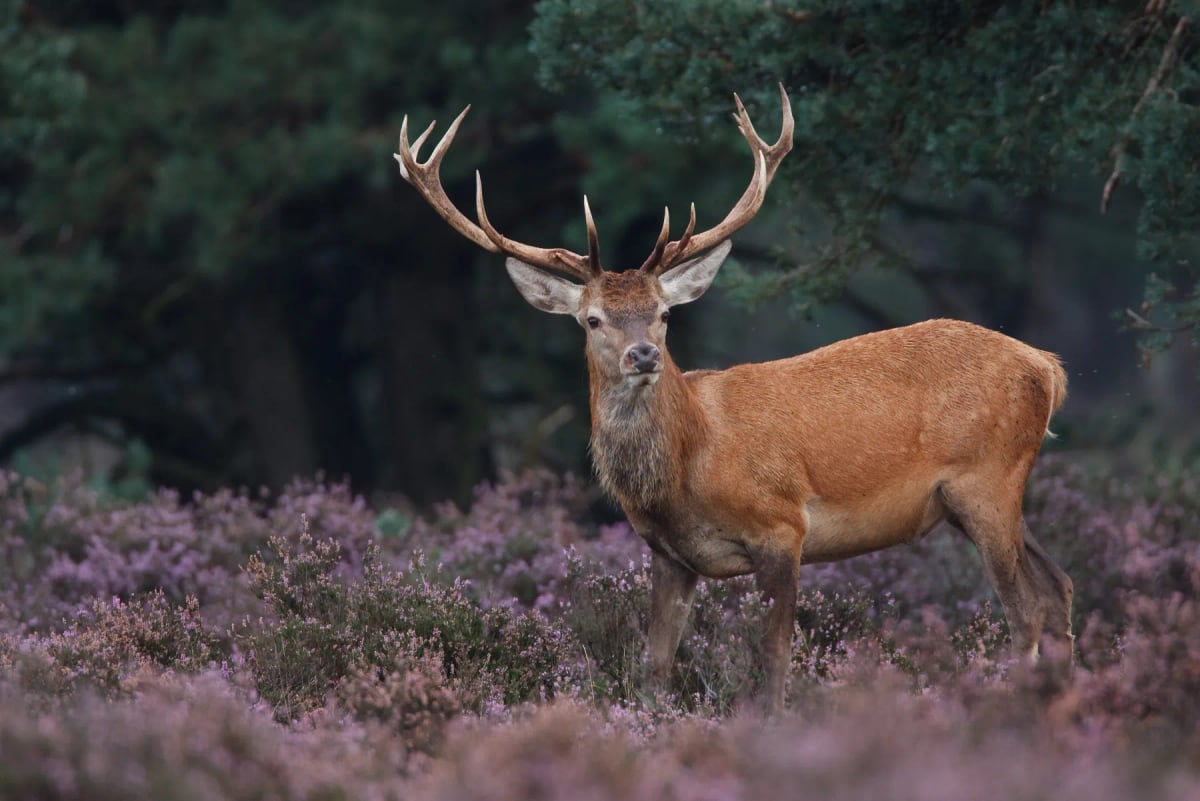
The red deer (Cervus elaphus) is one of the largest deer species in the world, native to Europe, western Asia and isolated parts of North Africa. Adult males, known as stags, carry impressive antlers that can branch into many points and are shed and regrown every year. Stags are also famous for their deep, rolling roars during the autumn rut, when they compete for groups of females called hinds. Outside the breeding season, males and females typically live in separate groups. Red deer are grazers and browsers that feed on grasses, heather, leaves and bark, and their feeding habits shape the structure of the woodlands and uplands they inhabit. The species is listed as Least Concern by the IUCN, and populations across much of Europe are stable or growing thanks to regulated hunting, habitat protection and reintroduction efforts.
Habitat and distribution
Red deer are found across a wide sweep of the Northern Hemisphere, from the Atlantic coasts of Western Europe through central Asia, with small isolated populations in Algeria, Morocco and Tunisia. They thrive in a broad range of environments: dense temperate forests, open moorland, mountain valleys, and coastal grasslands. In Scandinavia and the Scottish Highlands, populations live at high elevations during summer and move to sheltered lowland valleys once winter sets in. In central Europe, mixed woodland provides both cover and food year round. The species has also been introduced to South America, Australia and New Zealand, where it is now well established. Across their native range, red deer tend to favor habitats where forest edges meet open ground, giving them access to both grazing and shelter.
Diet
Food choices for red deer shift considerably with the seasons. In spring and summer, grasses and flowering plants make up the bulk of their diet, and deer actively seek out the most nutritious growth to build up body condition ahead of the rut. As autumn arrives, they begin stripping leaves and browsing shrubs more heavily. In winter, when snow covers the ground, they rely on bark, heather, mosses and any dried vegetation they can find. Red deer are also known to seek out soil rich in minerals, licking exposed earth or rocks to supplement their intake of calcium and other nutrients. A mature stag needs to eat a large volume of plant material each day to maintain its size, and the collective grazing pressure of a herd can strongly influence the structure and composition of local vegetation.
Behavior
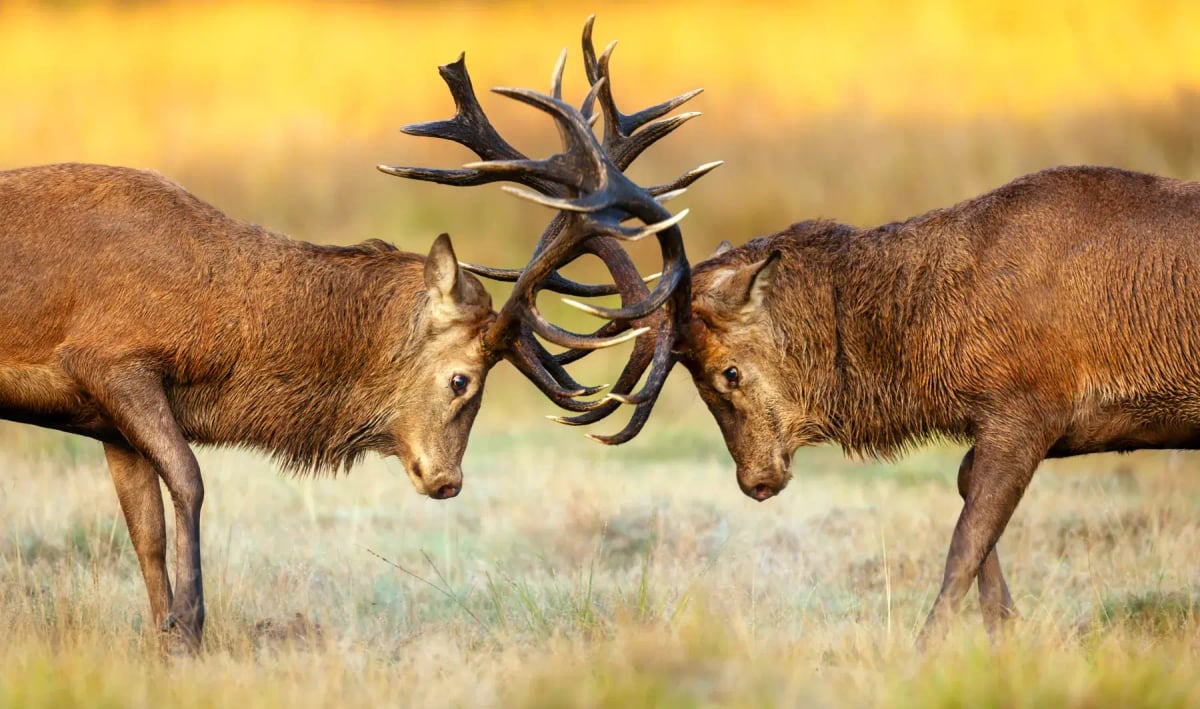
For most of the year, red deer live in groups organized by sex. Hinds, calves and young deer form their own herds, while mature stags tend to gather separately. This changes dramatically each autumn during the rut, which in Europe typically peaks in October. Stags return to the hinds' ranges and announce their presence with deep, resonant roars that carry far across open hillsides. These calls allow rivals to assess each other's size and strength before committing to a physical contest. When two evenly matched stags do fight, they lock antlers and push hard against each other, which can result in serious injury. The dominant stag earns the right to mate with a group of hinds and will defend them aggressively for several weeks. Calves are born in late spring, and hinds raise them without any involvement from the stag.
Relation with humans
Few wild animals are as deeply woven into European culture as the red deer. Cave paintings, heraldic symbols and centuries of royal hunting traditions all reflect a long and close relationship between this species and people. Today, red deer are managed as a game animal across much of their range, and venison remains a popular and commercially valuable meat. Wildlife tourism, particularly in Scotland and the Alps, brings significant income to rural communities through deer stalking and wildlife watching. However, red deer can also come into conflict with human interests: large populations cause considerable damage to young trees in commercial forests, and crop raiding is a persistent problem in agricultural areas close to woodland. Vehicle collisions involving deer are also common on rural roads throughout Europe, posing risks to both drivers and the animals.
Conservation
The IUCN lists the red deer as Least Concern, and across most of Europe populations are stable or increasing. Regulated hunting has played a central role in keeping numbers at levels that forests and farmland can support, and many countries have well established management programs in place. In areas where the species was wiped out historically, successful reintroductions have restored populations. That said, not all populations are thriving equally. Several subspecies face more difficult circumstances: the Barbary stag of North Africa, recognized as a distinct subspecies, is confined to scattered patches of forest in Algeria, Morocco and Tunisia, and remains vulnerable to habitat loss and poaching. In parts of the Caucasus, populations are also small and fragmented. Habitat protection, cross border cooperation and careful monitoring are all essential to securing the future of the species as a whole.
Where it is found
The Red Deer can be found in places such as:
Researched and written by Juan Pablo. Sources: IUCN Red List, scientific literature and regional field guides. Last updated: .
Technical factsheet

Frequently Asked Questions
How big do red deer get?
Red deer are among the largest deer in the world. Adult stags typically weigh between 160 and 240 kilograms and stand around 1.2 metres at the shoulder. Hinds are noticeably smaller. Stags also grow large, branching antlers that can span over a metre from tip to tip. The size of a stag varies quite a bit depending on where it lives and how much food is available.
What do red deer eat?
Red deer eat a wide variety of plants depending on the season. In spring and summer they graze on grasses and flowering plants. In autumn they browse leaves and shrubs more heavily. During winter they survive on bark, heather and dried vegetation. They also seek out soil rich in minerals to supplement nutrients like calcium. A large stag needs to consume a considerable amount of plant material every single day.
Why do red deer roar in autumn?
The roaring you hear in autumn is part of the rut, the annual breeding season. Stags use their deep, rolling calls to advertise their presence to hinds and to warn off rival males. A powerful roar signals size and strength, often convincing a weaker rival to back down without a fight. The rut peaks in October across most of Europe, and the sound can carry for several kilometres across open hillsides.
Where do red deer live?
Red deer are found across a vast area stretching from Western Europe through central Asia, with small populations in North Africa. They adapt well to many different environments, including forests, moorlands, mountain valleys and coastal grasslands. They tend to favor places where forest edges meet open ground, as this gives them both food and shelter. The species has also been introduced to South America, Australia and New Zealand.
Do red deer lose their antlers every year?
Yes, stags shed their antlers every year, usually between February and April, and then grow a completely new set over the following months. The new antlers are covered in a soft, blood vessel rich skin called velvet, which supplies the nutrients needed for growth. By late summer the velvet dries up and is rubbed off. Each year the antlers tend to grow larger, with more points, until the stag reaches old age.
Are red deer dangerous to humans?
Red deer are generally not aggressive toward people and will usually flee if approached. However, stags during the rut can be unpredictable and have been known to charge if they feel threatened. Hinds with young calves may also react defensively. In practical terms, the biggest risk red deer pose to people comes from road collisions, which are common on rural roads across Europe and can cause serious accidents.
Is the red deer endangered?
No, the red deer is listed as Least Concern by the IUCN, and populations across most of Europe are stable or growing. Regulated hunting, habitat protection and reintroduction programs have all helped the species recover in many areas. However, some subspecies face more pressure. The Barbary stag of North Africa is restricted to scattered forests in Algeria, Morocco and Tunisia and remains at risk from habitat loss and poaching.