Bottlenose Dolphin
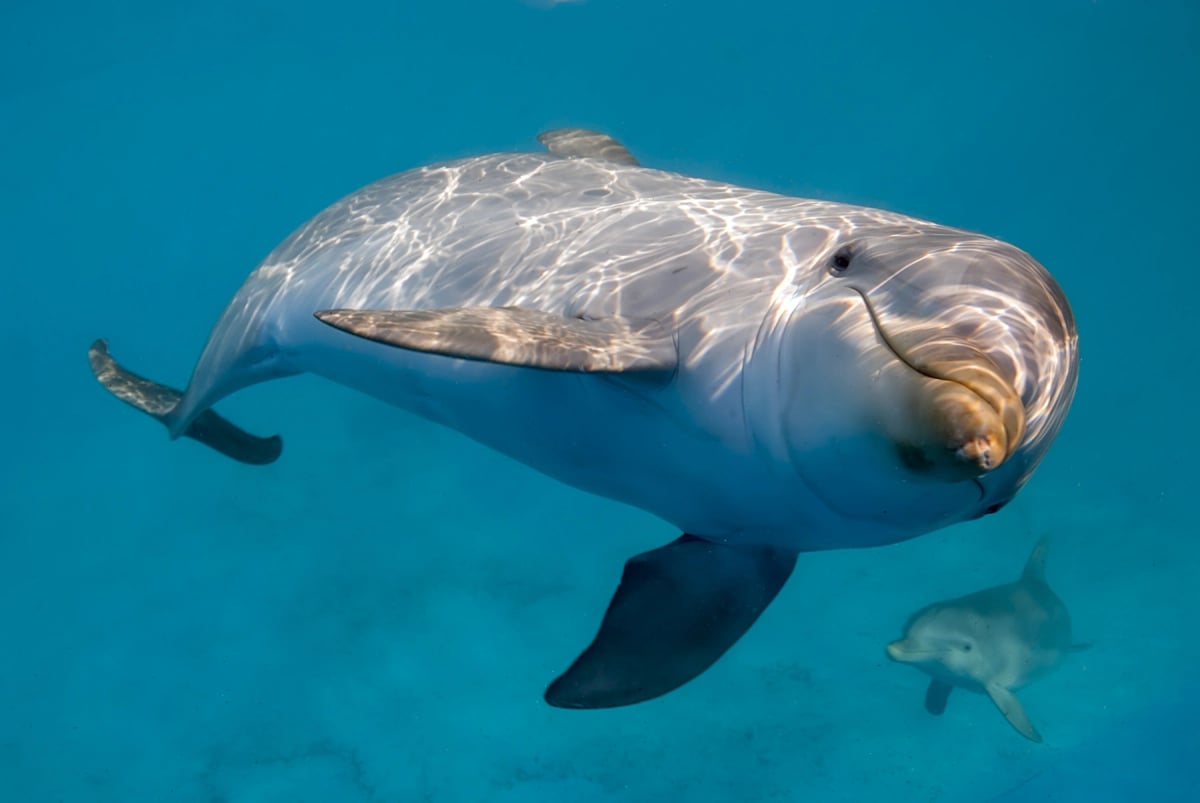
The bottlenose dolphin (Tursiops truncatus) is among the most recognizable marine mammals on Earth, found in warm and temperate coastal waters across all major ocean basins. Adults typically reach between 2 and 4 meters in length and can weigh up to 650 kilograms, with males generally larger than females. They live in fluid social groups called pods, ranging from a handful of individuals to several dozen, and maintain bonds through a sophisticated system of clicks, burst pulses, and signature whistles. Each dolphin develops a unique whistle that functions much like a name. They hunt fish, squid, and crustaceans, often working together to herd schools into tight balls near the surface. Bottlenose dolphins are cathemeral, meaning they are active at all hours of the day and night. They are highly adaptable, thriving in open ocean, shallow bays, estuaries, and even large river mouths. The IUCN classifies the species as Least Concern globally.
Habitat and distribution
Bottlenose dolphins are among the most widely distributed cetaceans on the planet. They occupy warm and temperate coastal waters across every major ocean basin, including the Atlantic, Pacific, Indian Ocean, and Mediterranean Sea. Nearshore populations tend to favour shallow bays, estuaries, lagoons, and the mouths of large rivers, while offshore populations range into much deeper water and can be found hundreds of kilometres from land. The species shows remarkable adaptability, tolerating a broad range of water temperatures and salinities. Some populations are resident in a particular area year round, while others shift seasonally following prey. In total, the species is present along the coastlines of well over 100 countries, making it one of the most geographically widespread marine mammals alive today.
Diet
Fish form the core of the bottlenose dolphin's diet, though squid and crustaceans also feature regularly depending on what is locally available. Individuals are opportunistic feeders, adjusting their foraging strategies to suit the environment. In shallow coastal waters, some dolphins have been observed driving fish onto mudflats or sandy banks in a technique known as strand feeding, briefly beaching themselves to snatch prey before sliding back into the water. In open water, groups work together to herd schools of fish into tight balls near the surface, making it easier to pick off individuals. Adults typically consume around 8 to 15 kilograms of food per day. The species uses echolocation to detect prey in conditions of low visibility, emitting rapid clicks and interpreting the returning echoes with impressive precision.
Intelligence
Few marine animals have been studied as thoroughly as the bottlenose dolphin, and the findings consistently point to a level of cognitive ability that rivals that of great apes. Each individual develops a unique signature whistle within the first few months of life, a vocal label that others in the pod recognise and actively use to address that specific animal. Bottlenose dolphins pass the mirror self recognition test, placing them in a select group of animals with a demonstrable sense of self. They use tools: populations off Shark Bay in Western Australia carry marine sponges on their rostrums to protect themselves while foraging on the seafloor. Cultural transmission of learned behaviours from mothers to offspring has also been well documented, further highlighting the depth of their social intelligence.
Behavior with humans
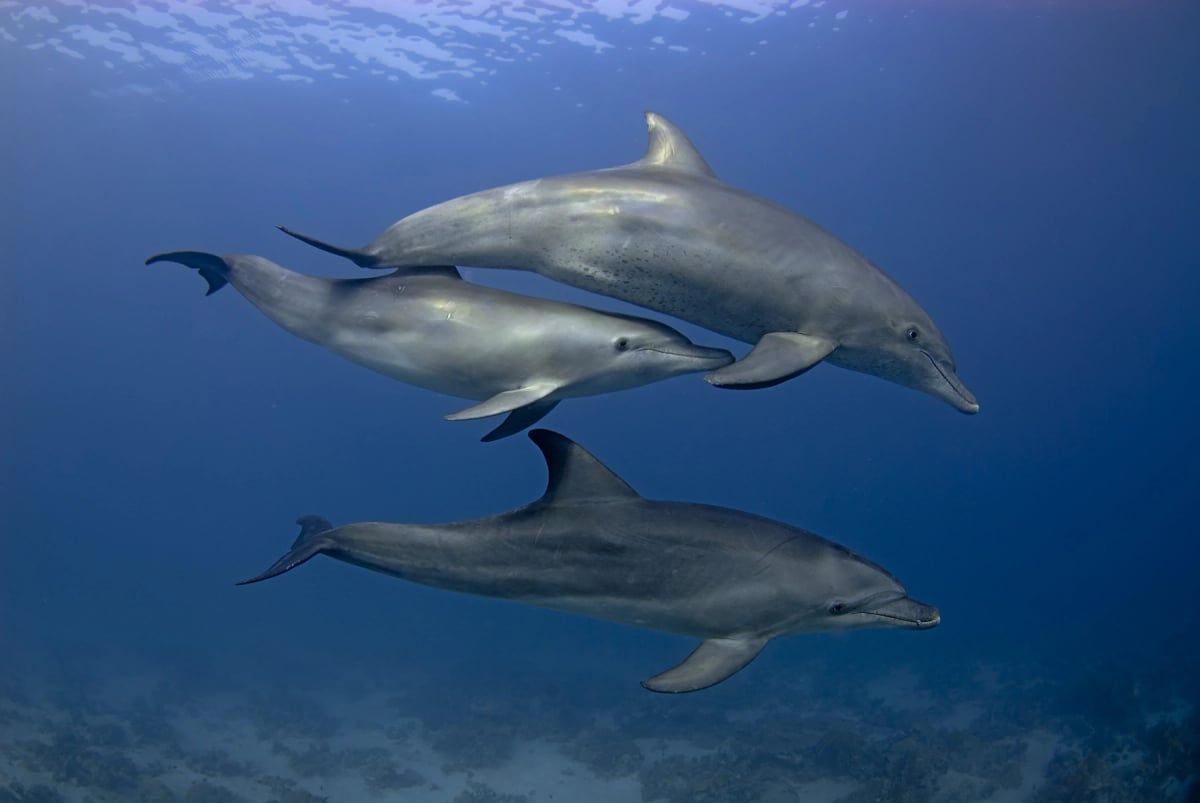
Wild bottlenose dolphins frequently approach boats to ride the pressure waves at the bow, a behaviour that appears to be genuinely playful rather than driven by any immediate need. Encounters with swimmers are generally calm, and the animals often show curiosity rather than aggression. However, problems arise when people feed wild dolphins, which disrupts their natural foraging behaviour, causes them to associate humans with food, and can lead to bold or even aggressive interactions. Mothers with young calves may become defensive if approached too closely. Regulations in many countries now prohibit feeding or harassing wild cetaceans, precisely because repeated human contact can alter dolphin behaviour in ways that put both animals and people at risk. Observing them from a respectful distance remains the safest approach.
Captivity
Bottlenose dolphins are the cetacean species most commonly held in aquariums and marine parks around the world, a position they have occupied since the mid twentieth century. Their sociability and trainability made them the subject of early research into dolphin communication and cognition, some of which contributed genuine scientific value. Today, however, the practice is the focus of serious ethical debate. Studies indicate that captive dolphins experience chronic stress, reflected in elevated cortisol levels and stereotypic behaviours not seen in wild animals. Average lifespans in captivity are generally shorter than those recorded in well studied wild populations, where females in particular can live well into their forties. Growing public concern and evolving legislation in several countries have led some facilities to phase out dolphin programmes entirely.
Conservation
The IUCN classifies the bottlenose dolphin as Least Concern at the global level, reflecting the species' broad distribution and large overall population. That broad picture, however, masks the precarious state of certain regional groups. Several geographically isolated populations face pressures severe enough to warrant individual concern. Bycatch in fishing gear remains one of the most significant sources of mortality worldwide. Pollution is another serious threat: bottlenose dolphins accumulate high concentrations of persistent organic pollutants and heavy metals through their position near the top of the food chain, and these contaminants can impair reproduction and immune function. Underwater noise from shipping, sonar, and construction disrupts communication and echolocation. Coastal development reduces the quality of nearshore habitats on which inshore populations depend. Targeted conservation efforts for the most vulnerable populations remain essential.
Where it is found
The Bottlenose Dolphin can be found in places such as:
Researched and written by Juan Pablo. Sources: IUCN Red List, scientific literature and regional field guides. Last updated: .
Technical factsheet

Frequently Asked Questions
How long do bottlenose dolphins live?
Bottlenose dolphins can live surprisingly long lives. Females tend to outlive males, with some individuals in well-studied wild populations reaching their late forties. Males typically live into their twenties or thirties. Factors such as food availability, pollution, and entanglement in fishing gear all influence how long a given animal survives. Researchers track individuals by the unique nicks and markings on their dorsal fins, which makes it possible to build accurate records over decades.
Are bottlenose dolphins dangerous to humans?
In the vast majority of encounters, bottlenose dolphins are curious and calm around people. Serious incidents are rare, but they do happen, usually when dolphins have been fed by humans and have lost their natural wariness. A dolphin conditioned to expect food can become pushy or aggressive. Mothers with young calves may also react defensively if approached too closely. Watching from a respectful distance is always the safest option for both the animal and the person.
How do bottlenose dolphins communicate?
Bottlenose dolphins use a rich combination of clicks, burst pulses, and whistles to stay in contact with each other. Most remarkably, every individual develops its own signature whistle within the first months of life, and other dolphins use that whistle to address that specific animal, much like calling someone by name. They also communicate through body postures and physical contact. This system of vocal labels is one of the most sophisticated forms of animal communication known to science.
Where in the world can you find bottlenose dolphins?
Bottlenose dolphins are found in coastal and offshore waters across all major ocean basins, including the Atlantic, Pacific, Indian Ocean, and Mediterranean Sea. They are present along the coastlines of well over 100 countries, from Norway in the north to the tip of South America in the south. Some populations stay in one area throughout the year, while others move seasonally as they follow prey. Few marine mammals match this species in terms of geographic reach.
What are the biggest threats to bottlenose dolphins?
The most widespread threat is accidental entanglement in fishing nets, which kills thousands of dolphins every year around the world. Pollution is another major concern: these animals sit near the top of the food chain and build up high levels of toxins in their bodies over time, which can affect reproduction and the immune system. Underwater noise from shipping and construction disrupts their ability to communicate and hunt. Coastal development also degrades the shallow habitats that many populations depend on.
Do bottlenose dolphins use tools?
Yes, and it is one of the most striking examples of tool use in any marine animal. Dolphins in Shark Bay, Western Australia, have been observed carrying marine sponges on the tips of their rostrums while foraging on the seafloor. The sponge appears to protect the snout from sharp rocks and bottom-dwelling creatures. This behaviour is learned from mothers and passed down through generations, which makes it a clear example of cultural transmission in a non-human animal.
Are bottlenose dolphins endangered?
At the global level, the IUCN rates the bottlenose dolphin as Least Concern, which reflects a large overall population spread across a vast range. That said, certain isolated regional populations face pressures serious enough to put them at genuine risk. The situation varies considerably depending on location. Ongoing threats such as bycatch, pollution, and habitat loss mean that even a species with a healthy global status requires active monitoring and targeted protection in its most vulnerable areas.