Black Rhinoceros
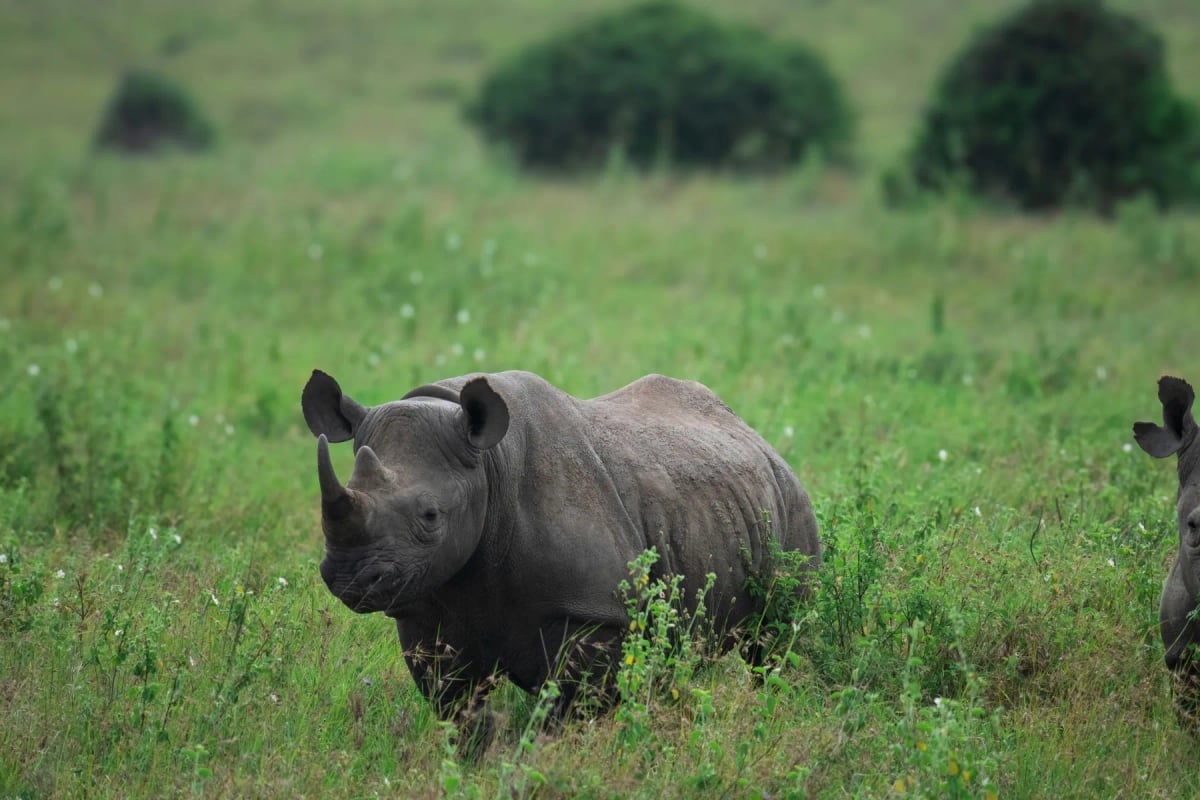
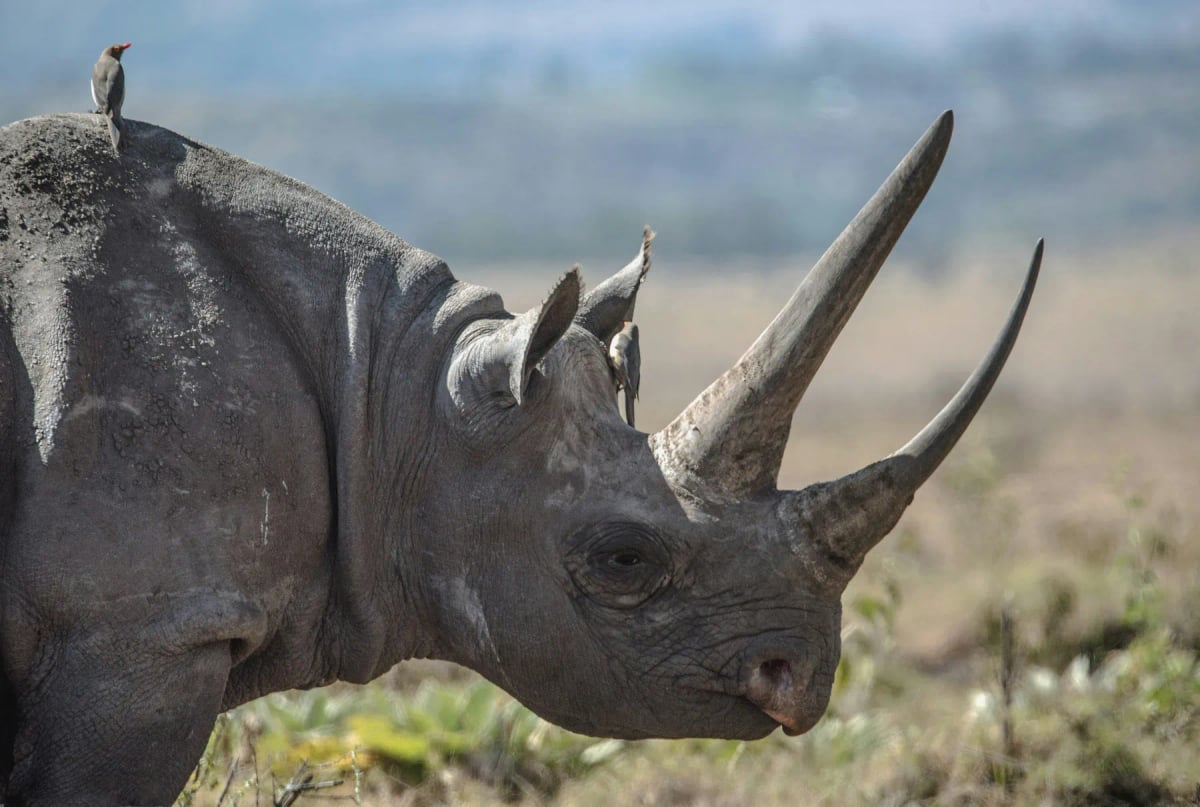
The black rhinoceros is the smaller of Africa's two rhino species, recognized by its pointed, prehensile upper lip that allows it to grip and pull leaves and twigs from shrubs and small trees. It roams the savannas, thickets, and semi-arid bushlands of eastern and southern Africa, where it plays a meaningful role in shaping woody vegetation. Adults carry two horns made of keratin, the front one often growing to impressive lengths, and these have made the species a relentless target for poachers. The population collapsed from an estimated 65,000 animals in 1970 to fewer than 2,500 by the early 1990s. Sustained conservation efforts, strict protection, and carefully managed translocations have since brought numbers back to roughly 6,500. The black rhinoceros remains Critically Endangered, and continued investment in anti-poaching programs is essential for its survival over the long term.
Habitat and distribution
The black rhinoceros occupies a broad range of habitats across eastern and southern Africa, including dry woodlands, thornbush thickets, semi-arid shrublands, and open savanna. It shows a strong preference for areas with dense vegetation that provides both food and cover. The species requires reliable access to water, typically drinking every one to two days, though individuals in the Namib Desert have adapted to going longer between water sources. Core populations today are found in South Africa, Namibia, Zimbabwe, and Kenya, with smaller groups established in Tanzania, Botswana, Rwanda, and Eswatini. Many animals now live within fenced reserves and national parks, a practical response to decades of poaching pressure that reduced the species to scattered, vulnerable groups across its former range.
The prehensile lip and other key adaptations
The black rhinoceros is a dedicated browser, and its pointed, prehensile upper lip is its most distinctive physical feature. This flexible lip works much like a finger, curling around branches and twigs to pull foliage directly into the mouth with precision. This sets it apart from the white rhinoceros, which has a wide, flat lip suited to grazing grass. The black rhino's relatively compact, agile body allows it to move through thick bush more easily than its larger cousin. Its skin, though tough and imposing, offers little protection from biting insects, so individuals frequently wallow in mud to create a protective barrier. Highly developed senses of smell and hearing help compensate for its poor eyesight, allowing it to detect approaching threats well before making visual contact.
Behavior and social life
Black rhinoceroses are largely solitary animals. Adult males maintain territories that they mark with dung middens and urine spraying, and they will confront rivals that enter their range. Females are less territorial and their home ranges often overlap with those of males and other females. Despite a reputation for aggression, charges are frequently bluff runs triggered by poor eyesight and a tendency to react first to unfamiliar sounds or smells. The species is most active during the cooler hours of early morning, late afternoon, and night. Mothers invest heavily in their young, with calves staying close for two to four years before becoming independent. Communication relies on a range of vocalizations including snorts, squeals, and rumbles, alongside scent marking as a primary means of conveying information between individuals.
Conservation
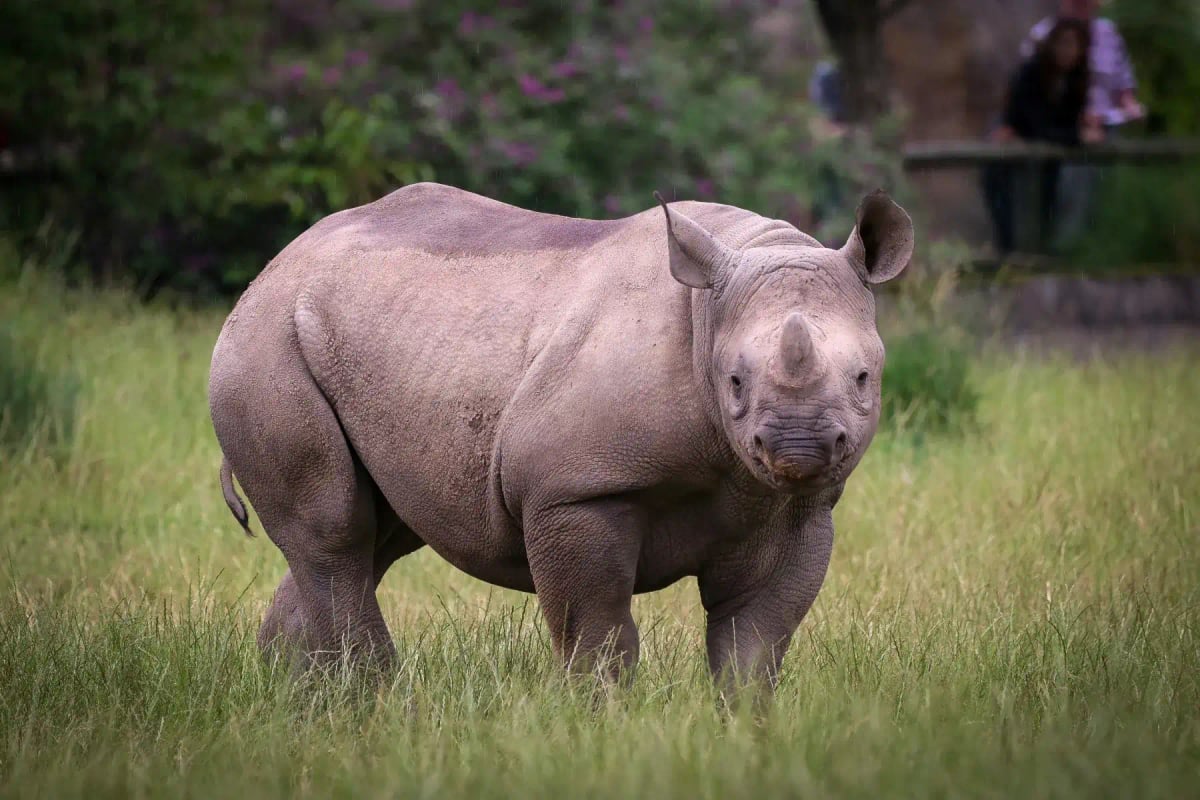
The black rhinoceros is listed as Critically Endangered on the IUCN Red List, a status that reflects one of the most dramatic population collapses in wildlife history. Numbers fell from around 65,000 in 1970 to fewer than 2,500 by the early 1990s, driven almost entirely by poaching for the commercial horn trade. Coordinated efforts by governments, conservation organizations, and private landowners have brought the global population back to approximately 6,500 individuals. Key strategies include intensive anti-poaching patrols, dehorning programs in high-risk areas, and carefully managed translocations to establish new populations in suitable habitat. South Africa and Namibia together hold the majority of animals. The illegal horn trade, fueled largely by demand in parts of Asia, remains the single greatest ongoing threat to the species' recovery.
Where it is found
The Black Rhinoceros can be found in places such as:
Researched and written by Juan Pablo. Sources: IUCN Red List, scientific literature and regional field guides. Last updated: .
Technical factsheet


Frequently Asked Questions
What does the black rhinoceros eat?
The black rhinoceros is a browser, feeding on leaves, shoots, fruit, and bark from a wide variety of shrubs and trees. It can consume over 200 different plant species depending on what is available in its habitat. Its pointed upper lip allows it to select specific plant parts with great precision. It tends to favor thorny plants that other large herbivores avoid, giving it access to food sources that face less competition.
How big does a black rhinoceros get?
Adult black rhinoceroses typically weigh between 800 and 1,400 kilograms and stand around 1.4 to 1.8 meters tall at the shoulder. Body length generally ranges from 3 to 3.8 meters. Males and females are similar in size, though males tend to be slightly larger. Despite their bulk, they are surprisingly quick and can reach speeds of up to 55 kilometers per hour in short bursts when threatened or charging.
How long do black rhinoceroses live?
In the wild, black rhinoceroses generally live between 35 and 50 years. In managed care, some individuals have reached the higher end of that range under the right conditions. They reach sexual maturity at around five to seven years of age, though females typically give birth for the first time somewhat later. Given their slow reproductive rate, with females producing only one calf every two and a half to five years, population recovery takes considerable time.
Why are black rhinoceroses hunted?
Black rhinoceroses are poached almost exclusively for their horns. The horn is made of keratin, the same protein found in human fingernails, yet it commands extremely high prices on illegal markets, particularly in parts of Asia where it is used in traditional medicine and as a status symbol. A single horn can fetch tens of thousands of dollars, making the black rhinoceros one of the most financially targeted animals on the planet despite international trade bans.
How many subspecies of black rhinoceros exist?
There are four recognized subspecies of black rhinoceros. The southwestern black rhinoceros lives in Namibia and parts of South Africa. The eastern black rhinoceros is found mainly in Kenya and Tanzania. The southern central black rhinoceros has the widest distribution across Zimbabwe, Zambia, and nearby countries. The western black rhinoceros, once found in central-west Africa, was declared extinct by the IUCN in 2011, underscoring how quickly a subspecies can disappear without adequate protection.
Do black rhinoceroses live alone or in groups?
Black rhinoceroses are primarily solitary, though the degree of social interaction varies. Mothers and calves form the most consistent bonds, staying together for several years. Temporary groupings do occur at shared water sources or mineral licks, and these encounters are generally tolerated rather than confrontational. Young males sometimes associate loosely before establishing their own ranges. This solitary lifestyle means that population losses are difficult to recover from quickly, as individuals rarely cluster in ways that boost reproduction rates.
What is the difference between a black rhinoceros and a white rhinoceros?
Despite their names, both species are actually grey. The most practical distinction lies in the shape of their lips: the black rhinoceros has a pointed, flexible upper lip for browsing on shrubs, while the white rhinoceros has a wide, square lip for grazing on grass. The white rhinoceros is also considerably larger, with adults commonly exceeding 2,000 kilograms. The two species also differ in posture, with the white rhinoceros holding its head lower to the ground while feeding.