Roe Deer
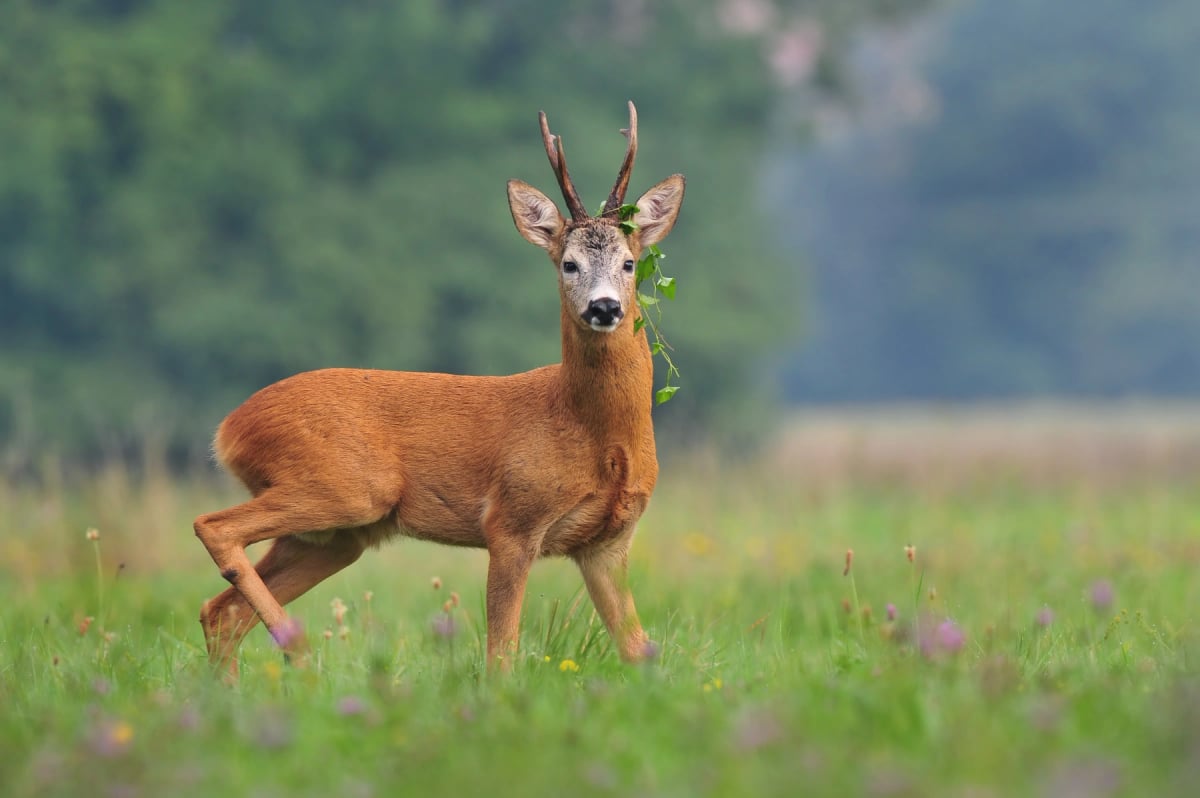
The roe deer (Capreolus capreolus) is one of Europe's most familiar wild mammals, found from the forests of Iberia and Scandinavia to the foothills of the Caucasus and parts of the Middle East. It is a small, nimble deer that thrives along forest edges, in scrubland, and across mixed farmland. Its coat shifts from warm russet in summer to grey brown in winter, and the white patch on its rump flares outward as a warning signal when the animal flees. Only bucks grow antlers, which are short and typically carry three tines. The roe deer feeds selectively on leaves, buds, shoots, herbs, and berries rather than grazing on grass. It is most active at dawn and dusk. One of its most remarkable traits is embryonic diapause: mating takes place in summer, but development of the embryo pauses for several months so that fawns are born in spring, when food is most plentiful.
Habitat and distribution
Roe deer are among the most widespread wild mammals in Europe, ranging from the forests of Portugal and northern Spain across virtually all of continental Europe to the Caucasus mountains and parts of Iran, Iraq, Syria, and Turkey. They do best in places where woodland meets open ground: forest edges, hedgerows, riverside thickets, and farmland broken up by patches of trees or scrub all suit them well. Roe deer avoid large, unbroken blocks of dense forest and wide open grassland with no shelter. This preference for varied, patchy landscapes means they cope surprisingly well in agricultural regions and even in countryside close to towns, provided there is enough cover for resting and raising young.
Diet
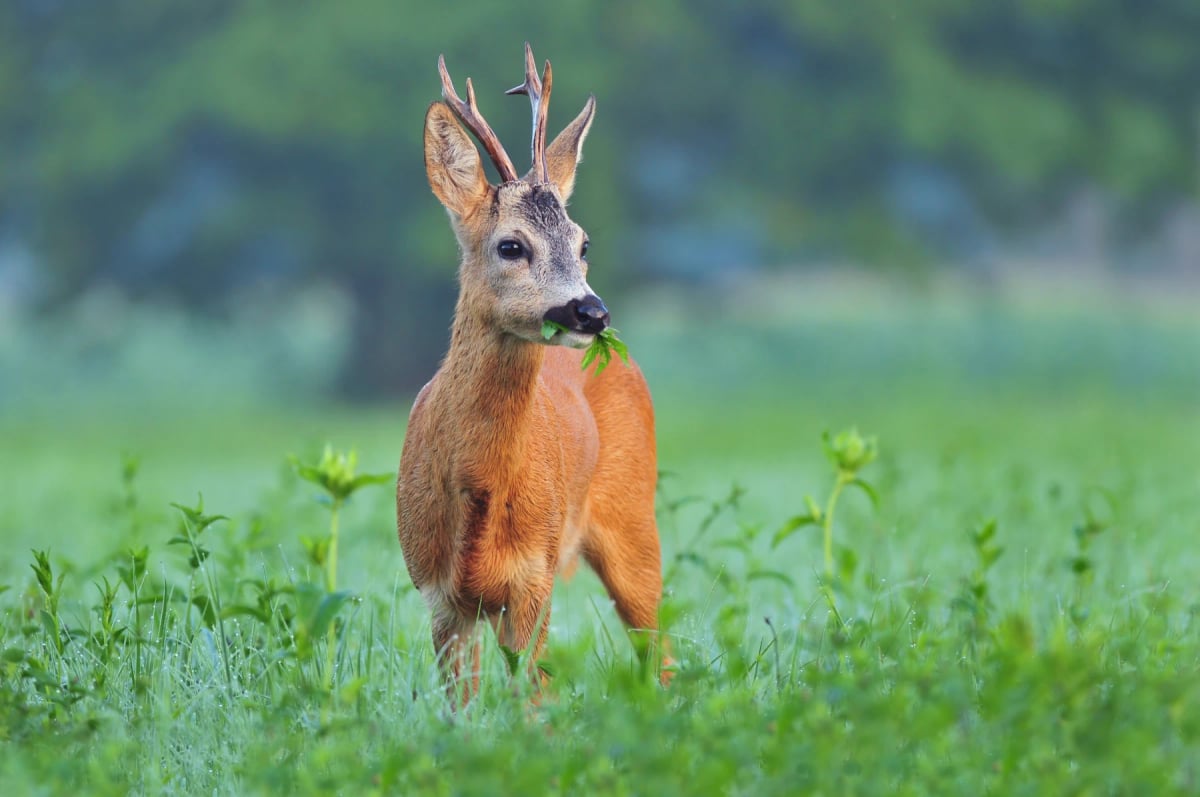
Rather than grazing on grass like many larger deer, roe deer are browsers that pick and choose their food with care. They favour young leaves, buds, and soft shoots from a wide variety of shrubs and trees, and they supplement this with field herbs, fungi, and berries when available. Because they have a small stomach designed for easily digested, nutrient rich plant material, they need to feed frequently throughout the day, with peaks at dawn and dusk. Their diet shifts noticeably through the year: fresh growth dominates in spring and summer, while they turn to ivy, bramble, and bark in autumn and winter when other food becomes scarce. This seasonal flexibility is key to their success across such a broad range of habitats.
Behavior
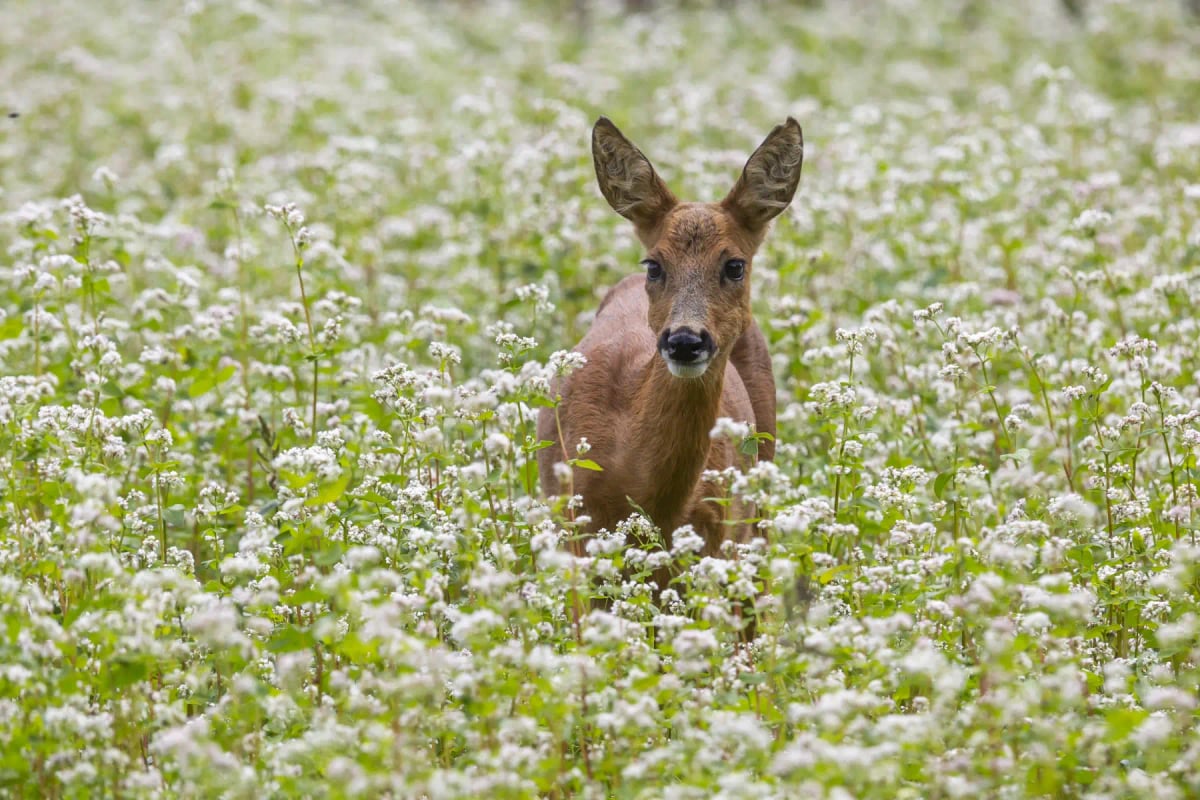
For most of the year, roe deer lead largely solitary lives, though loose groupings sometimes form on open farmland in winter. They are most active around sunrise and sunset, resting in thick cover during the middle of the day and through the night. Bucks establish and defend territories in spring and summer, marking boundaries by scraping bark from trees and leaving scent from glands on their foreheads. When threatened, roe deer produce a sharp, repeated bark that carries well through woodland and alerts other animals nearby. During the rut in July and August, bucks pursue does in tight circles around trees or bushes, wearing down rings of bare ground known as roe rings. Fawns are born spotted, a pattern that helps them blend into dappled woodland light.
Embryonic diapause
One of the most extraordinary things about the roe deer is a process called embryonic diapause, something not recorded in any other deer species in the world. Mating takes place during July and August, but the fertilised egg does not begin to develop straight away. Instead, it drifts freely in the uterus in a dormant state for around five months, before implanting in the uterine wall in late December or January. From that point, active development proceeds quickly, and fawns are born in May or June when vegetation is lush and food is easy to find. This delayed implantation allows the roe deer to time births perfectly to spring conditions while still taking advantage of the summer rut, when bucks and does are in peak condition.
Relation with humans
Roe deer have lived alongside people for centuries and have shown a real ability to thrive in countryside shaped by farming and forestry. They are a popular quarry for hunters across much of Europe, and regulated hunting plays a role in managing population size in many countries. On the other hand, their browsing habits can cause damage to young tree plantations and garden plants, and they are involved in a significant number of road collisions each year, particularly at dawn and dusk when they are most active. In the United Kingdom, roe deer populations have grown and expanded their range considerably since the mid twentieth century. Wildlife crossings and wildlife friendly road design are increasingly used to reduce the number of animals killed on roads.
Conservation
The roe deer is assessed as Least Concern on the IUCN Red List, reflecting a population that is stable or growing across most of its range. In parts of western and central Europe, numbers have actually increased in recent decades, helped by reforestation and the deer's ability to use farmland. Despite this overall positive picture, habitat quality is declining in some areas. The removal of hedgerows, the spread of intensive farming with little cover, and the fragmentation of woodland by roads all reduce the quality of the landscape for roe deer over the long term. Populations in parts of the Middle East, at the southern edge of the range, face greater pressure from habitat loss and hunting. Sensible land management that retains field margins, hedgerows, and woodland patches benefits roe deer and a great many other species at the same time.
Where it is found
The Roe Deer can be found in places such as:
Researched and written by Juan Pablo. Sources: IUCN Red List, scientific literature and regional field guides. Last updated: .
Technical factsheet




Frequently Asked Questions
What do roe deer eat?
Roe deer are browsers, not grazers. They pick young leaves, buds, soft shoots, herbs, fungi, and berries from a wide range of shrubs and trees. Their small stomach is built for food that is easy to digest, so they eat little and often rather than filling up on grass. In autumn and winter, they rely more heavily on ivy, bramble, and bark when fresh growth is harder to find.
Where do roe deer live?
Roe deer are found across almost all of Europe, from Portugal and northern Spain to the Caucasus mountains, and into parts of Iran, Iraq, Syria, and Turkey. They prefer places where woodland meets open ground, such as forest edges, hedgerows, and farmland with patches of trees or scrub. They avoid wide open fields with no shelter and also large blocks of dense, unbroken forest.
Are roe deer solitary or do they live in groups?
Roe deer are mostly solitary animals. Adults spend the greater part of the year on their own, though loose groups can gather on open farmland during winter. Bucks hold and defend territories in spring and summer, marking trees with scent glands on their foreheads. Does raise their fawns alone. This solitary lifestyle sets roe deer apart from many other deer species that live in herds.
What is embryonic diapause in roe deer?
Roe deer mate in summer, but the fertilised egg does not start developing straight away. It stays dormant in the uterus for around five months before implanting in late December or January. This process, called embryonic diapause, is unique among all deer species in the world. It means fawns are born in May or June, when spring vegetation is lush and food is plentiful, giving them the best possible start.
What are the main threats to roe deer?
Roe deer are not threatened overall, but they do face real pressures in some areas. Road collisions are a significant cause of death, especially at dawn and dusk. The loss of hedgerows, intensive farming with little cover, and the fragmentation of woodland by roads all reduce habitat quality. Populations in parts of the Middle East face heavier pressure from hunting and habitat loss. In most of Europe, numbers remain stable or are increasing.
How can you tell a roe deer apart from other deer?
Roe deer are noticeably smaller than red or fallow deer. Their coat is bright russet in summer and grey brown in winter. The white patch on the rump is one of the easiest features to spot, as it flares outward when the deer is alarmed. Bucks grow short antlers with typically three tines. Roe deer also lack a visible tail, which helps tell them apart from other European species at a glance.
What is the conservation status of the roe deer?
The roe deer is listed as Least Concern on the IUCN Red List. Its population is stable or growing across most of its range, and in parts of western and central Europe numbers have actually risen in recent decades. The species has benefited from reforestation and its ability to adapt to farmland. It remains one of the most abundant wild deer in Europe, though habitat quality is declining in some areas.