Fruit Bat
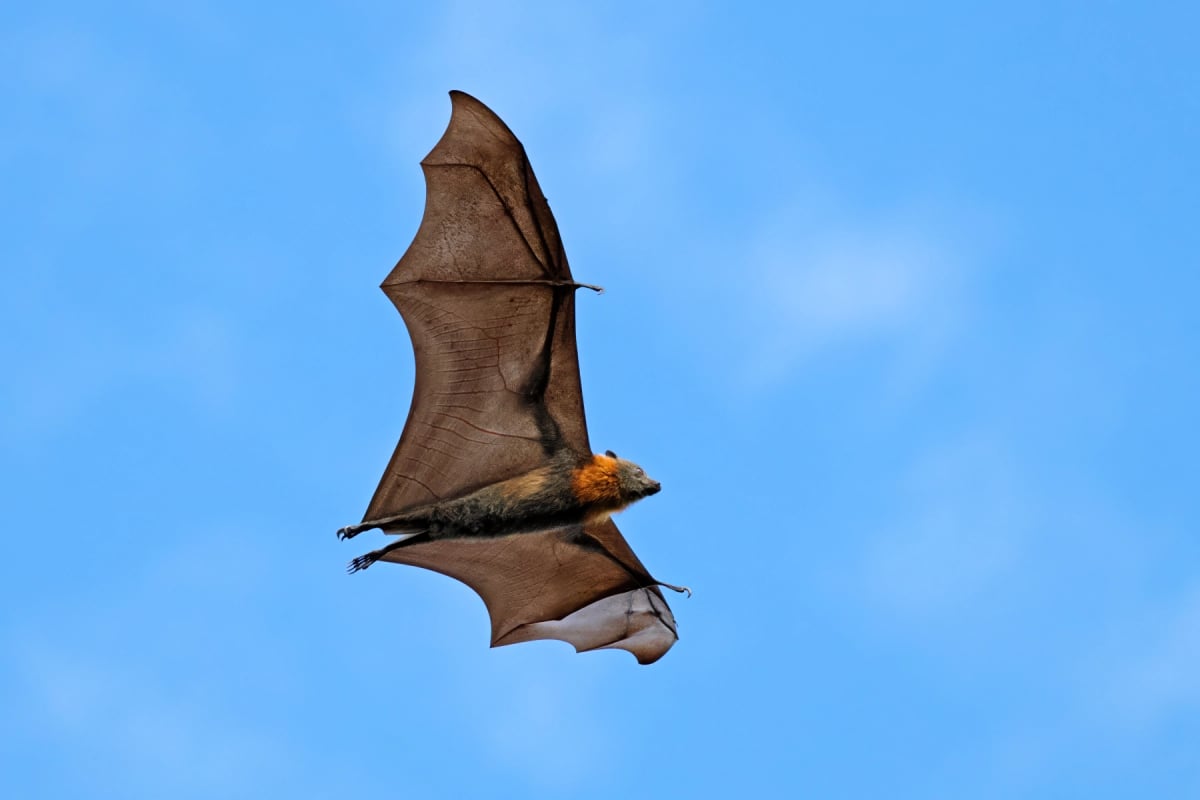
Fruit bats, also known as flying foxes, belong to the family Pteropodidae and are found across Africa, South and Southeast Asia, and the Pacific islands. They are among the largest bats in the world, with some species reaching a wingspan of up to 1.5 metres. Their faces are elongated and fox-like, quite unlike the rounded features of most other bats. Rather than relying on echolocation, they navigate and find food using sharp eyesight and a well-developed sense of smell. They feed mainly on ripe fruit, nectar, and flowers. During the day they rest in large, noisy colonies in the treetops or in caves, hanging upside down. At night they travel considerable distances in search of food. As they move between flowering and fruiting trees, they scatter seeds and carry pollen, making them essential partners for the health of tropical forests and island ecosystems.
Habitat and range
Fruit bats occupy an enormous range stretching from West Africa and the Indian subcontinent through Southeast Asia and out across the Pacific to islands as far as Fiji and Australia. Within this range they settle in tropical rainforests, mangroves, wooded savannas, and even gardens on the edges of cities. Many species show a strong preference for forest patches near rivers or coastlines, where fruit trees are plentiful year round. Although they can travel tens of kilometres in a single night to track seasonal food sources, most colonies return each morning to the same roost sites, sometimes using the same trees for decades. Island populations in the Philippines, Indonesia, and Papua New Guinea tend to be the most diverse, with multiple species sharing the same forest canopy.
Diet
Food for fruit bats revolves around ripe, soft fruits such as figs, mangoes, bananas, and guavas, though nectar and pollen from flowering trees also form an important part of their diet. Unlike the majority of bats, they do not use echolocation to hunt. Instead, they depend on large eyes that perform well in low light and a sense of smell sensitive enough to detect ripe fruit from a considerable distance. Their teeth and jaw muscles are built for crushing tough fruit flesh and extracting juice. Some species have long, brush-tipped tongues specially suited to reaching deep inside flowers. After feeding, they often spit out or drop seeds some distance from the parent tree, a habit that plays a direct role in how forests renew themselves.
Behavior
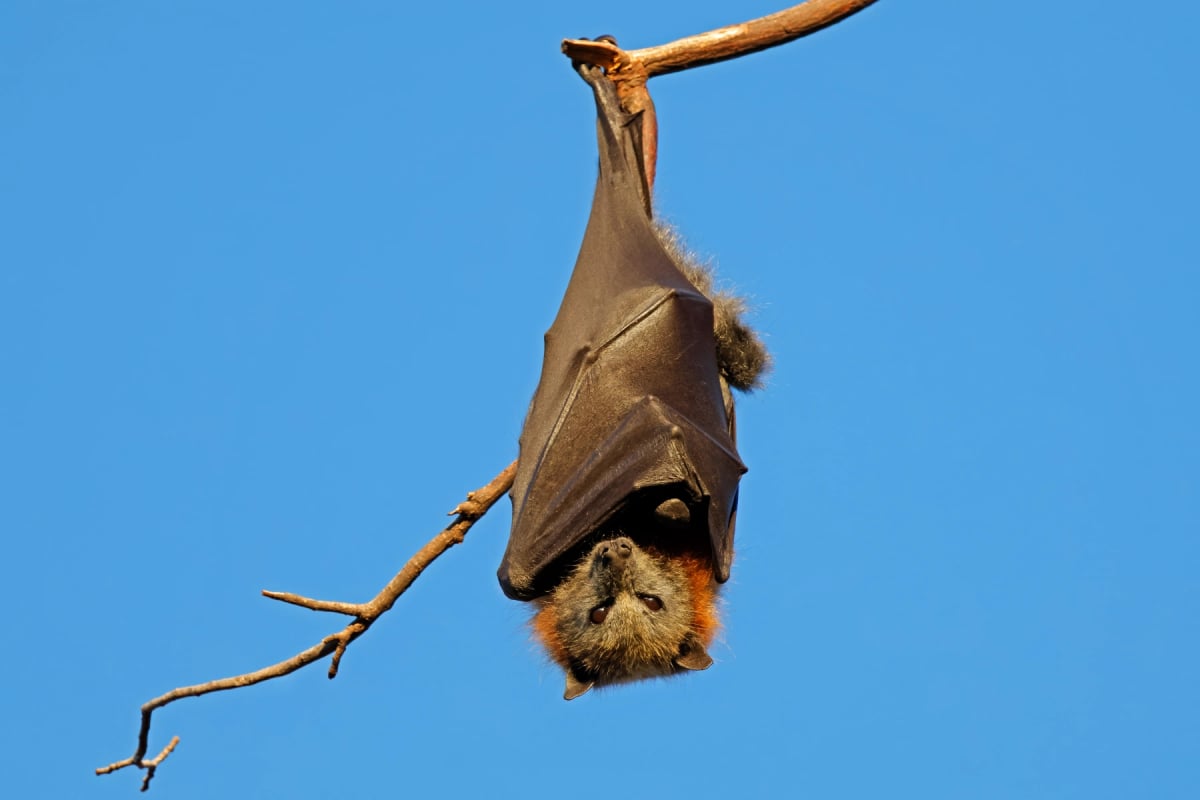
During the day, fruit bats gather in roosts that can hold anywhere from a few dozen individuals to several hundred thousand. These roost sites, called camps in Australia, are often spectacularly noisy, with bats jostling for position, calling constantly, and fanning themselves with their wings in warm weather. As soon as the light fades, the colony takes to the air. Navigation relies on memory of familiar routes and a keen sense of smell rather than the sonar used by other bats. Most species are social and maintain loose bonds within a colony, though mothers form especially close ties with their pups. Young bats cling to their mothers for the first few weeks of life before they are strong enough to fly independently.
Ecological role
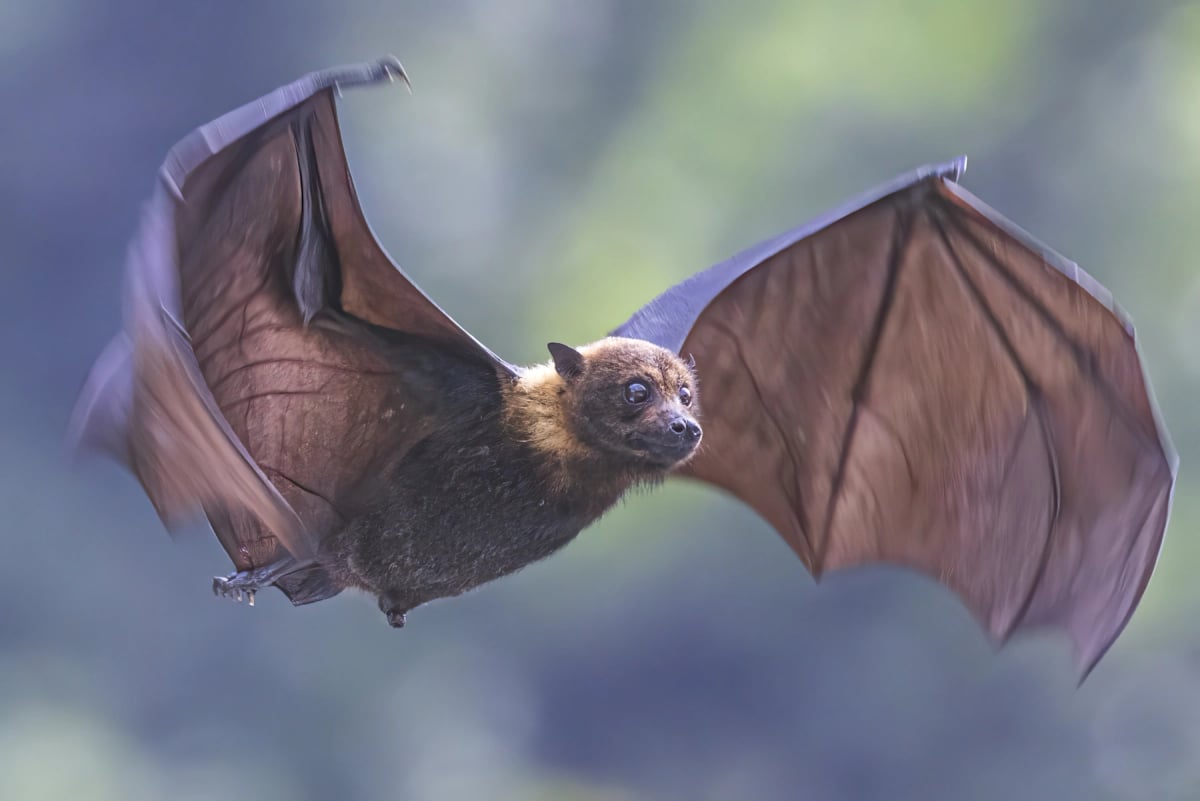
Few animals contribute as much to tropical forest health as fruit bats do. As they move between trees each night, they carry pollen on their fur and faces, effectively acting as pollinators for plants that bloom at night and attract few insects. The seeds they drop in flight or pass through their digestive system land across wide areas, giving new trees a chance to sprout far from the shade of their parent. Studies in Africa and Southeast Asia have shown that some tree species depend almost entirely on fruit bats for seed dispersal. On islands where bat populations have declined, forest regeneration has measurably slowed. Their role becomes even more critical after storms or fires, when fast recovery of vegetation depends on seeds arriving from healthy forest patches nearby.
Conservation
The family Pteropodidae as a whole is listed as Least Concern by the IUCN, but this broad classification masks serious problems for individual species. Dozens of fruit bat species are threatened or endangered, particularly on islands where populations are small and confined. Hunting is a major pressure across much of their range. In parts of Indonesia, the Philippines, and West Africa, large numbers of bats are killed for food each year, sometimes in quantities that local populations cannot sustain. Deforestation strips away the roosting trees and fruiting trees that colonies depend on. Some species are also killed by farmers who see them as pests. Conservation programmes that protect key roost sites, regulate hunting, and work with local communities have had measurable results in several countries.
Where it is found
The Fruit Bat can be found in places such as:
Researched and written by Juan Pablo. Sources: IUCN Red List, scientific literature and regional field guides. Last updated: .
Technical factsheet





Frequently Asked Questions
What do fruit bats eat?
Fruit bats feed mainly on ripe, soft fruits like figs, mangoes, and bananas. They also drink nectar and eat pollen from flowers. They find food using sharp eyesight and a strong sense of smell rather than echolocation. Some species have long, brush-tipped tongues perfect for reaching deep into flowers. After eating, they drop or spit out seeds, which helps new trees grow across wide areas of forest.
Where do fruit bats live?
Fruit bats are found across a huge area spanning Africa, South and Southeast Asia, and the Pacific islands, including places like the Philippines, Indonesia, Australia, and Fiji. They prefer tropical rainforests, mangroves, and wooded areas near rivers or coastlines where fruit trees are available all year. Some species also roost in caves or tall trees on the edges of cities.
How big do fruit bats get?
Fruit bats are among the largest bats in the world. The biggest species, often called flying foxes, can reach a wingspan of up to 1.5 metres, which is roughly the same as the arm span of a grown adult. Despite their impressive size, they are not aggressive and feed entirely on fruit, nectar, and flowers rather than insects or other animals.
Are fruit bats dangerous to humans?
Fruit bats are generally not dangerous to humans. They are shy animals that avoid direct contact with people. However, like all wild mammals, they can carry viruses, and it is important never to handle them without proper protection. The risk of disease transmission is extremely low in normal circumstances. Fruit bats are far more valuable to people as pollinators and seed dispersers than they are a threat.
Why are fruit bats important to the environment?
Fruit bats play a vital role in keeping tropical forests healthy. As they fly between trees at night, they spread pollen and drop seeds across wide areas, helping forests regenerate. Some tree species depend almost entirely on them for pollination or seed dispersal. On islands where bat numbers have fallen, forest recovery has noticeably slowed down. Without fruit bats, many tropical ecosystems would struggle to survive.
Are fruit bats endangered?
The fruit bat family as a whole is listed as Least Concern by the IUCN, but that does not tell the full story. Many individual species, especially those living on islands, are threatened or endangered. Hunting for food, loss of forest, and conflict with farmers all put pressure on local populations. Conservation efforts focused on protecting roost sites and working with local communities have helped in several countries.
Do fruit bats use echolocation like other bats?
Most fruit bats do not use echolocation. Instead, they rely on large eyes that see well in the dark and an excellent sense of smell to find ripe fruit and flowers. This sets them apart from the majority of bat species, which use sound to navigate in complete darkness. Their fox-like faces, with forward-facing eyes and a long snout, are perfectly shaped for this more visual and smell-based way of finding food.