Great White Shark
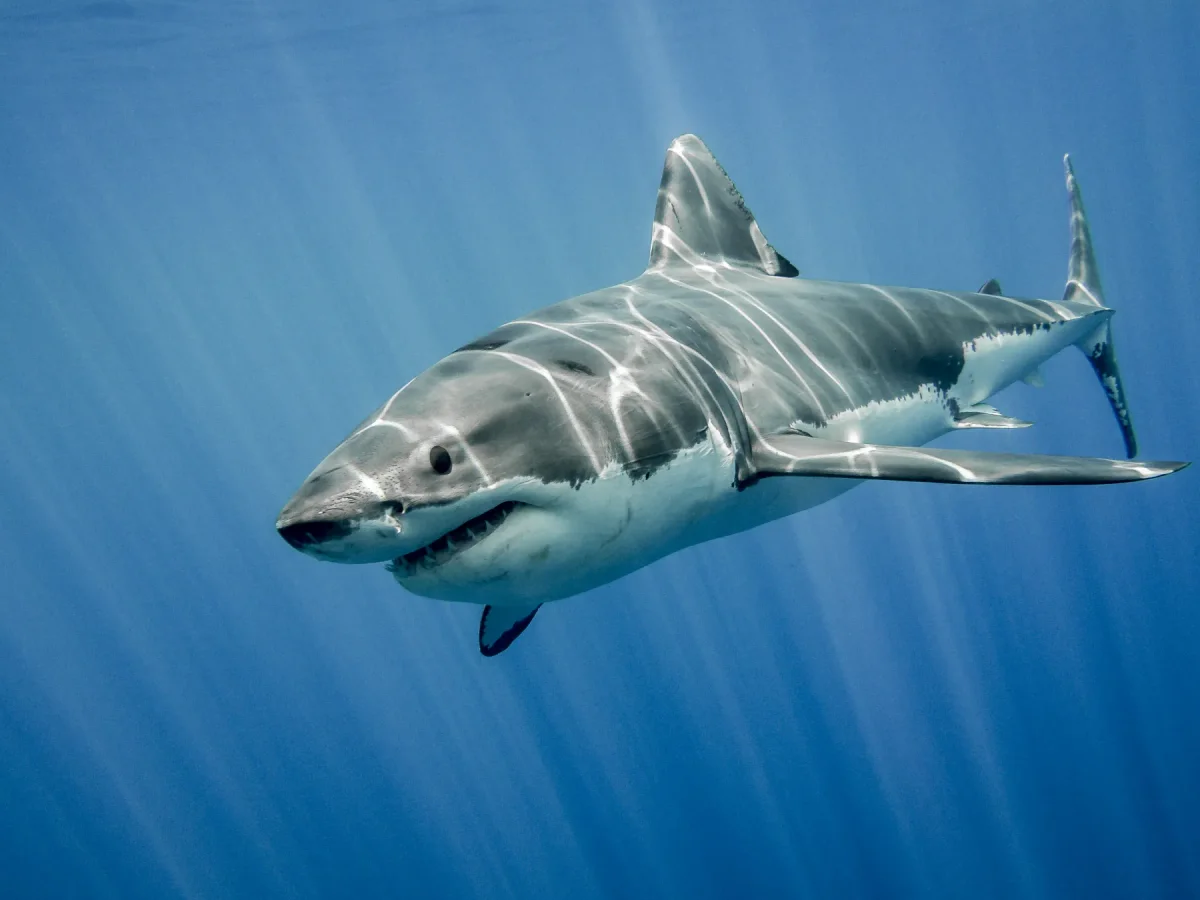
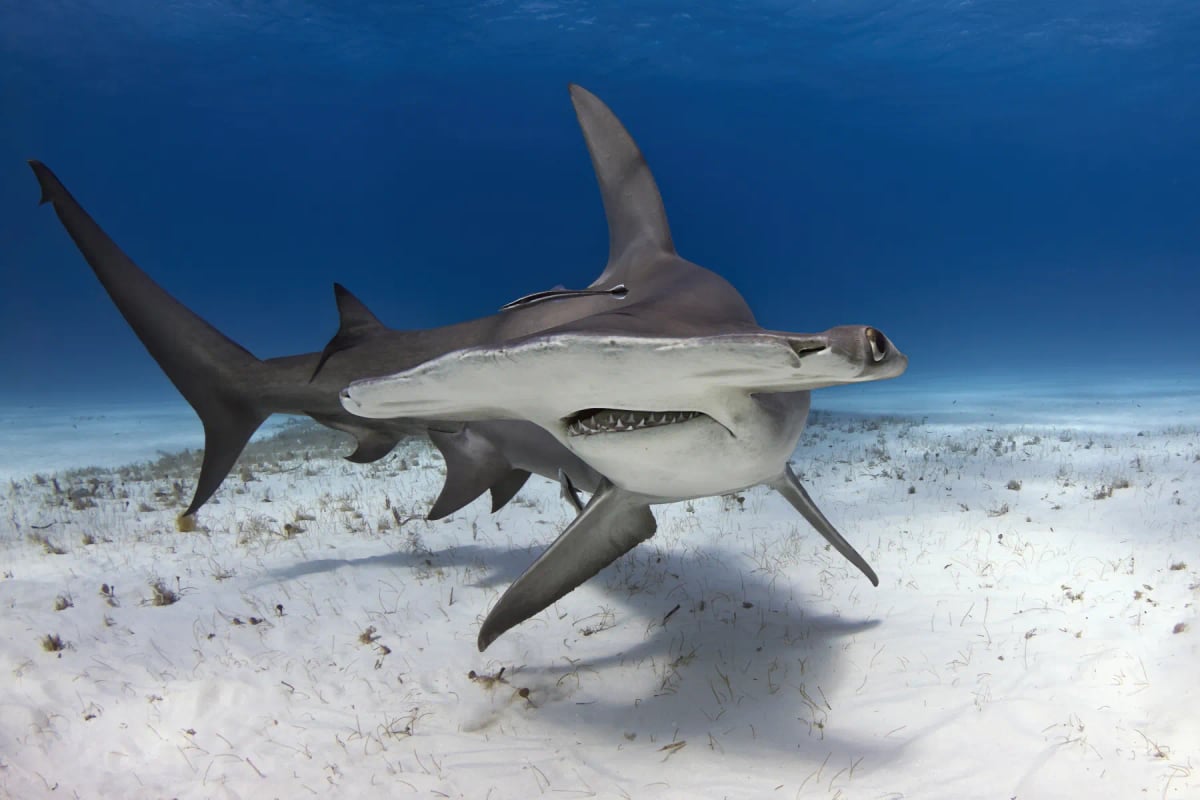
The great white shark is the largest predatory fish in the ocean and one of the most recognisable animals alive. Adults commonly reach four to five meters, with exceptional females approaching six, and weigh over a tonne. Its body is built for ambush: a torpedo shape, a countershaded grey back over a white belly that makes it hard to spot from above or below, and rows of serrated triangular teeth that are replaced continuously through life. Unlike most fish, it keeps its body warmer than the surrounding water, which lets it hunt effectively in cold seas. Great whites live in temperate coastal waters around the world, cross entire oceans on migrations, and feed mainly on seals, sea lions, fish and rays. Despite its reputation, it is a slow growing species that reproduces late and is classified as vulnerable.
Habitat and distribution
Great white sharks occupy temperate and subtropical coastal waters in every ocean, favouring places where water temperature sits roughly between twelve and twenty four degrees. The best known concentrations are off South Africa, southern Australia, New Zealand, central California, Guadalupe Island in Mexico and the northeastern coast of the United States, all sites where seal or sea lion colonies provide reliable prey. They also appear throughout the Mediterranean, along the Atlantic coast of Africa and in the waters of Japan and eastern Asia, though in much lower numbers. Satellite tagging revealed that these sharks are far from coastal residents: individuals cross the Indian Ocean between South Africa and Australia, and others spend months in the open Pacific in a zone researchers nicknamed the white shark cafe.
Diet
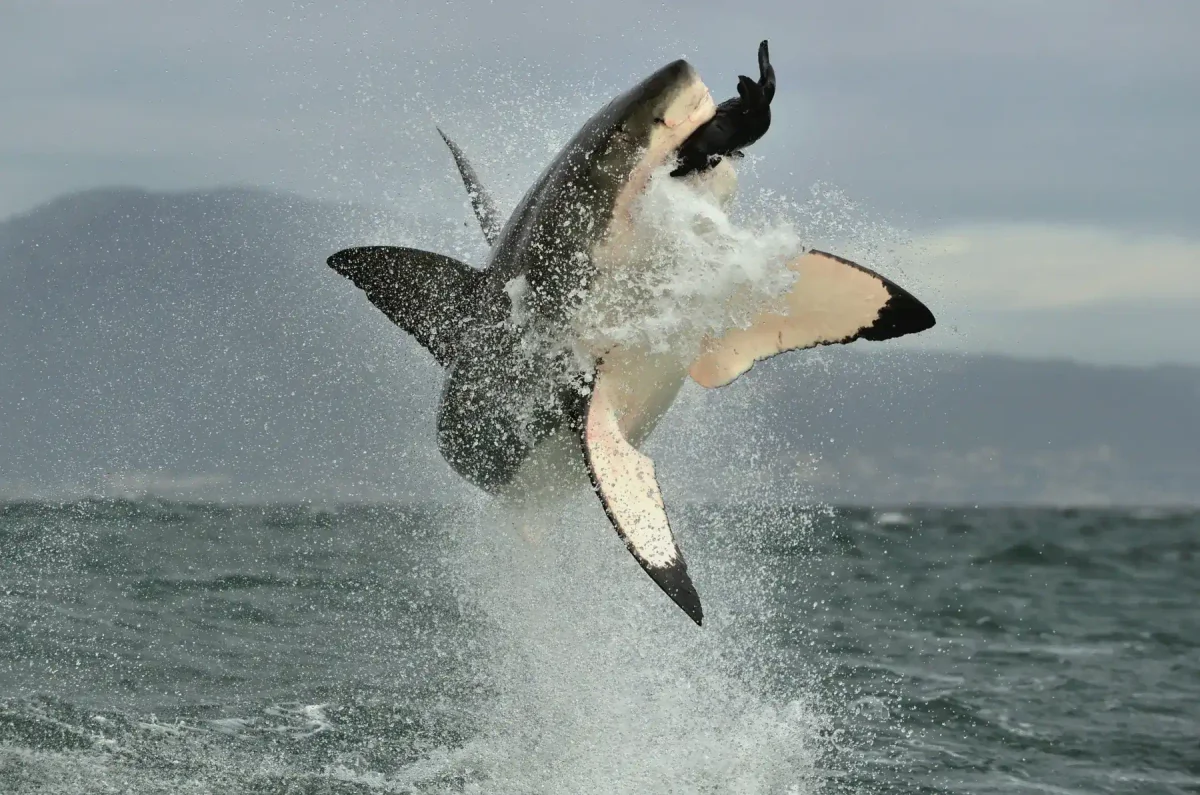
Diet changes dramatically with age. Young great whites feed mostly on fish, rays and smaller sharks, since their jaws and teeth are not yet built for large prey. Once they pass around three meters, the teeth broaden and marine mammals enter the menu: seals, sea lions and dolphins, along with the occasional whale carcass, which can draw several sharks to feed together. The classic hunting technique is a vertical ambush from below, using the dark back as camouflage against the seabed, ending in a strike so fast that the animal sometimes leaves the water entirely. Great whites are opportunists rather than constant hunters, and a large meal of fat rich blubber can sustain an adult for days or even weeks before it needs to feed again.
Behavior
Great whites are mostly solitary but not asocial. Where several gather at a seal colony, they establish a loose hierarchy based on size, and confrontations are usually settled by posture and display rather than fighting. They can raise their body temperature well above the surrounding water, an unusual ability among fish that lets them stay active in cold seas and digest large meals efficiently. Their senses are extraordinary: they detect blood in extremely low concentrations and sense the faint electrical fields produced by muscle movement, which allows them to locate prey buried in sand or hidden in murky water. Curiosity is a strong trait. Sharks often investigate unfamiliar objects with their mouths, which explains many encounters that get reported as attacks.
Sharks and people
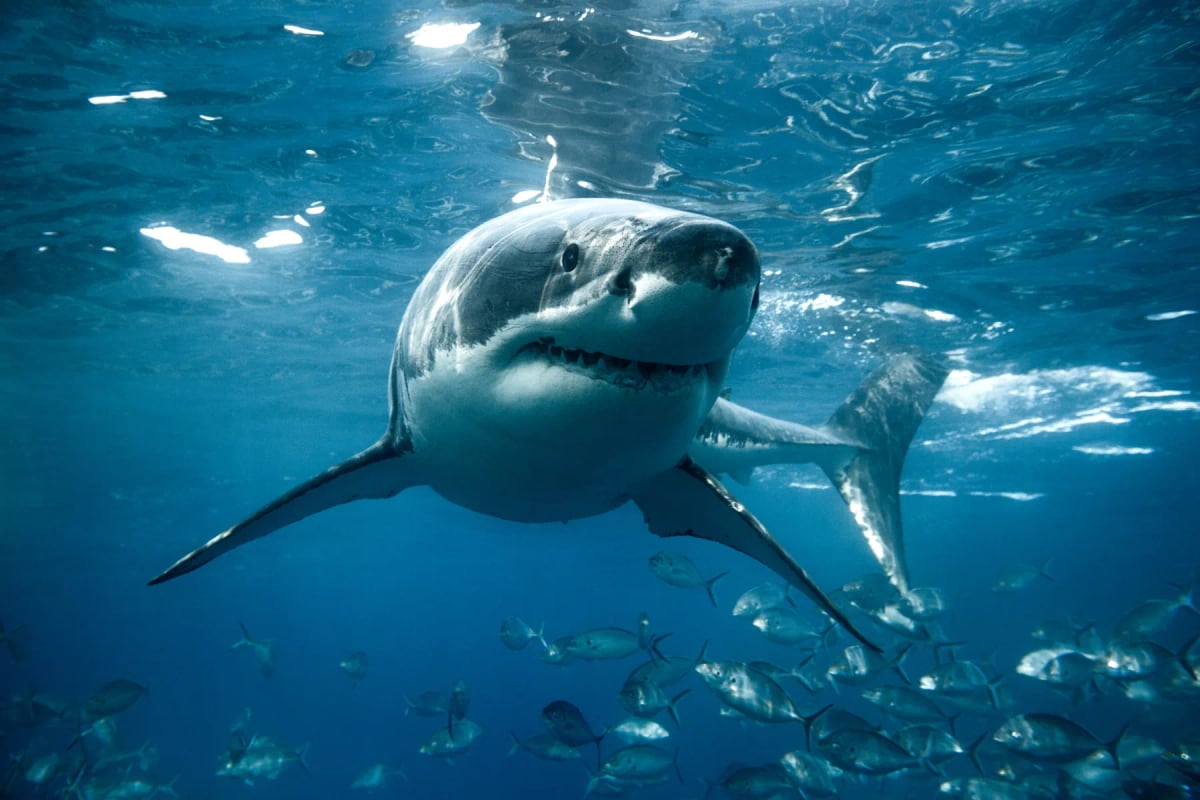
No animal has a reputation further from its actual behavior. The great white is involved in more recorded incidents with people than any other shark, yet the global total is only a handful each year and fatalities are rarer still. Most encounters appear to be exploratory bites that end when the shark disengages, since a human offers little of the fat content it seeks. Jaws, released in 1975, reshaped public perception and triggered decades of hostility toward the species, something its own author later regretted publicly. Today the relationship is shifting: cage diving in South Africa, Mexico and Australia turned the shark into an economic asset, and tagging programs have made it one of the best studied large predators in the sea.
Conservation
The great white is listed as vulnerable, and its biology leaves little margin for error. Females mature at around thirty years and produce small litters after a gestation thought to last more than a year, so any population takes decades to recover from losses. The main pressures are accidental capture in fishing gear, targeted fishing for jaws, teeth and fins, and shark control nets set off bathing beaches, which kill large numbers of animals in some regions. Prey depletion and coastal development add further strain. The species is now legally protected in South Africa, Australia, New Zealand, the United States and the European Union, and international trade is regulated, but enforcement across open ocean remains a persistent difficulty.
Where it is found
The Great White Shark can be found in places such as:
Researched and written by Juan Pablo. Sources: IUCN Red List, scientific literature and regional field guides. Last updated: .
Technical factsheet







Frequently Asked Questions
How big is a great white shark?
Adults usually measure between 3.5 and 5 meters and weigh from 500 to over 1,100 kilograms. The largest reliably measured individuals were females close to 6 meters, since females grow considerably larger than males. Reports of 7 meter sharks circulate widely but none has been verified. A newborn already measures over a meter, one of the largest sizes at birth of any fish.
Are great white sharks dangerous to humans?
They are capable of causing serious harm and account for more recorded incidents than any other shark, but the numbers are small: worldwide there are typically fewer than ten unprovoked bites a year involving this species, and deaths are rarer. Most bites appear exploratory and end quickly. Statistically, the risk to any individual swimmer or surfer is extremely low.
What do great white sharks eat?
Young sharks feed mainly on fish, rays and smaller sharks. Once they exceed about three meters their teeth change shape and marine mammals become the priority: seals, sea lions and dolphins, plus whale carcasses when available. They hunt by ambushing from below at high speed. A single fat rich meal can sustain an adult for days or even weeks before it needs to hunt again.
Where can you see great white sharks?
The main destinations are Gansbaai and Mossel Bay in South Africa, Guadalupe Island in Mexico, the Neptune Islands in South Australia and the Farallon Islands off California. These sites combine seal colonies with clear water, and most offer cage diving under regulated conditions. Sightings are seasonal, tied to when seals gather, so timing matters more than luck.
How long do great white sharks live?
Around 70 years, according to radiocarbon dating of their vertebrae, a finding that surprised researchers who had long assumed a much shorter lifespan. Growth is slow and maturity comes late: males at roughly 26 years and females at around 33. That combination of slow growth and late reproduction is exactly what makes the species so vulnerable to fishing pressure.
Why are there no great whites in aquariums?
Because they do not survive captivity. Great whites need to swim continuously to breathe, cover long distances daily and refuse to feed in enclosed spaces, often injuring themselves against tank walls. The Monterey Bay Aquarium kept a juvenile for over six months in 2004, the longest on record, before releasing it. Every attempt since has ended in release or death.
Is the great white shark endangered?
It is classified as vulnerable. There is no reliable global population figure, but regional studies point to significant declines in several areas. The main causes are accidental capture in fishing gear, targeted fishing for jaws and fins, and shark control nets on bathing beaches. Recovery is slow because females mature at around 33 years and produce small litters.