White faced Capuchin
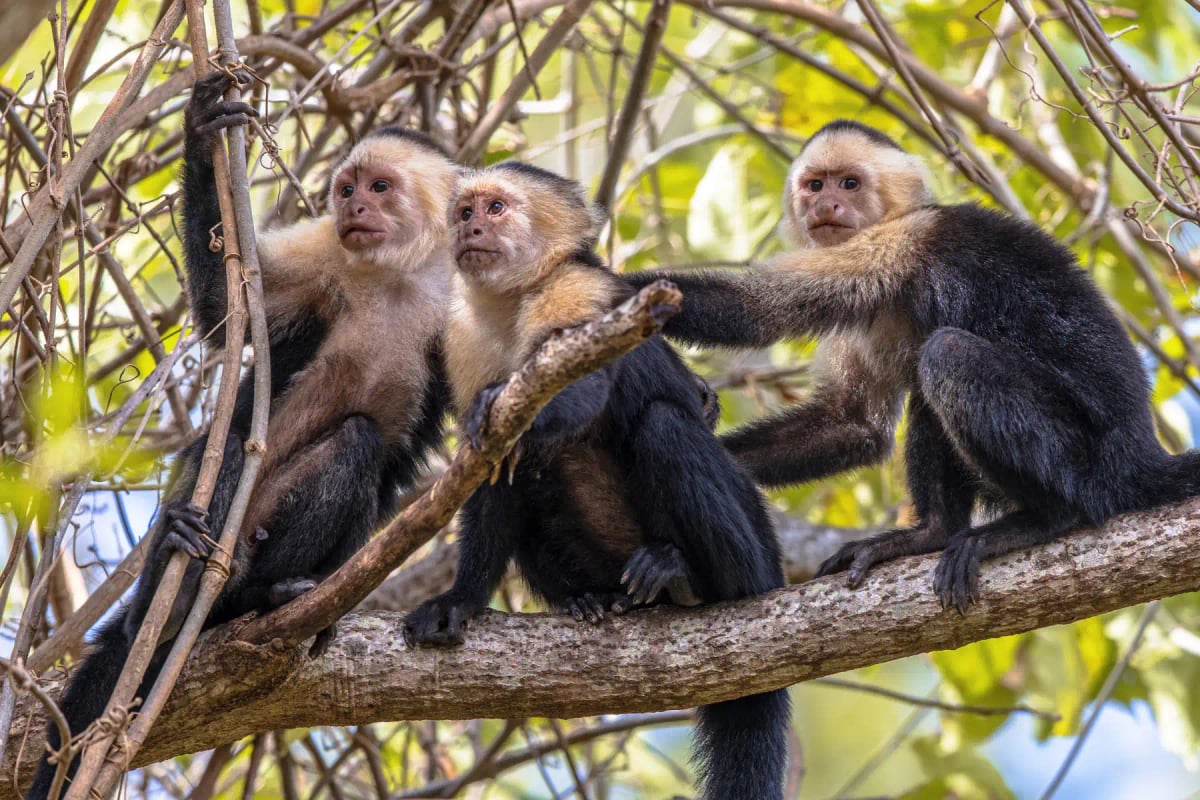
The white faced capuchin (Cebus capucinus) is one of the most recognizable primates in the Americas. Its pale face and chest stand out sharply against a body covered in black fur, making it easy to spot in the forest canopy. This monkey lives in groups of up to thirty individuals, with a clear social hierarchy led by a dominant male. Groups communicate through a rich mix of calls, gestures, and facial expressions. Capuchins are true omnivores, eating fruit, insects, frogs, lizards, bird eggs, and small mammals depending on the season. They are also among the few wild primates known to use tools, cracking open nuts and shellfish with rocks or sticks. Found from Honduras to northwestern South America, they adapt well to a wide range of forested environments, including mangroves and dry woodland.
Habitat and distribution
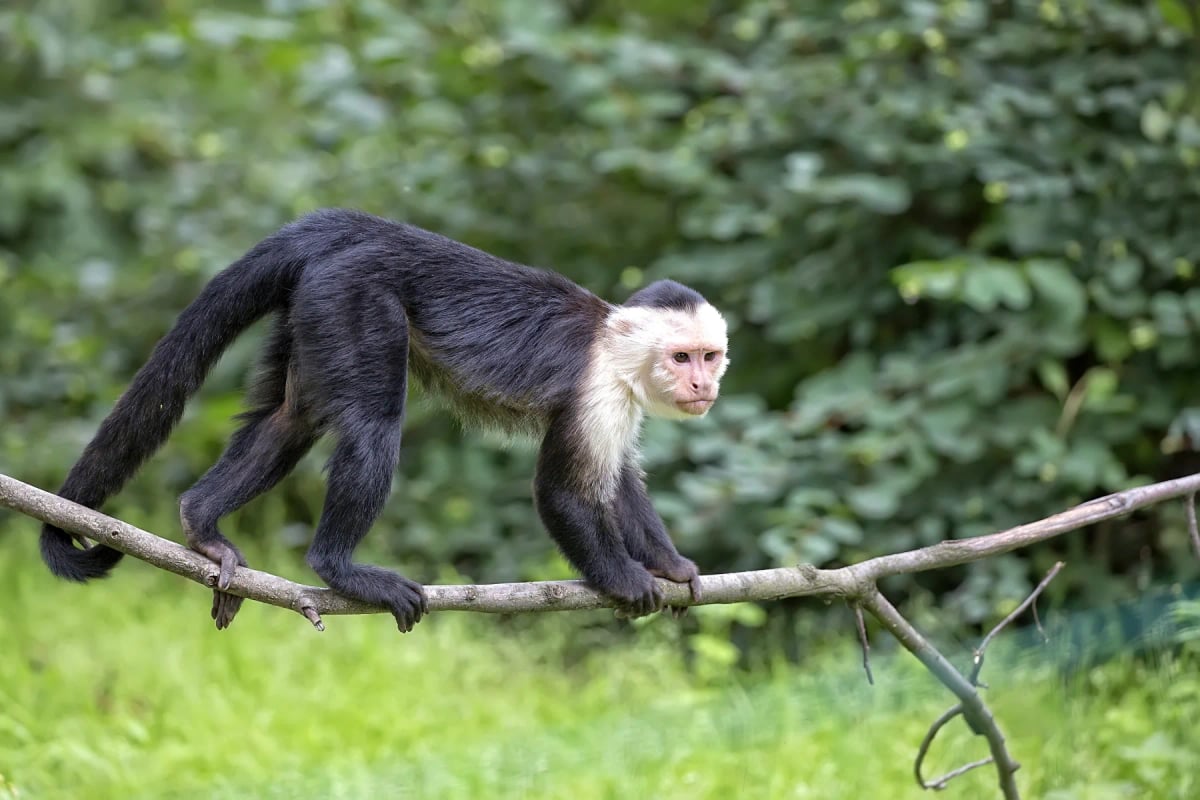
White faced capuchins are found across a broad stretch of Central and South America, from Honduras and Nicaragua south through Costa Rica and Panama, continuing into northwestern Colombia and a small portion of Ecuador. Few primates in the region match their ability to settle into such a variety of environments. They do well in humid tropical rainforests, seasonally dry woodlands, mangrove swamps, and forest fragments close to human settlements. This flexibility means they can persist in areas where other primates have disappeared. They tend to spend most of their time in the middle and upper layers of the forest canopy, though they regularly descend to the ground to search for food or move between trees. Elevation is rarely a barrier, and populations have been recorded at several hundred metres above sea level.
Diet
Fruit makes up the largest share of the white faced capuchin's diet, but these monkeys are genuinely opportunistic and will eat almost anything that provides nutrition. Insects and other invertebrates are taken year round, while frogs, lizards, bird eggs, and occasionally small mammals are added to the menu when the opportunity arises. During the dry season, when ripe fruit is harder to find, capuchins shift toward plant material such as seeds, flowers, and bark. One of the most striking aspects of their feeding behaviour is their use of tools. Groups have been observed using rocks to crack open hard nuts and shellfish, a skill that younger individuals learn by watching experienced adults. This combination of a broad diet and practical problem solving allows them to thrive where food availability changes with the seasons.
Behavior and intelligence
Social life is at the heart of everything the white faced capuchin does. Groups typically number between ten and thirty individuals, organised around a clear hierarchy in which a dominant male leads and protects the troop. Communication is remarkably rich, combining a wide range of vocal calls with precise gestures and facial expressions that convey meaning to other group members. Capuchins groom each other regularly, which helps reinforce bonds and reduce tension within the group. Their intelligence stands out even among primates. They have been documented using stones and sticks as tools, inspecting unfamiliar objects with careful curiosity, and adjusting their behaviour in response to specific situations. Young capuchins have a long period of learning alongside their mothers and other adults, which is key to acquiring the survival skills the group depends on.
Reproduction
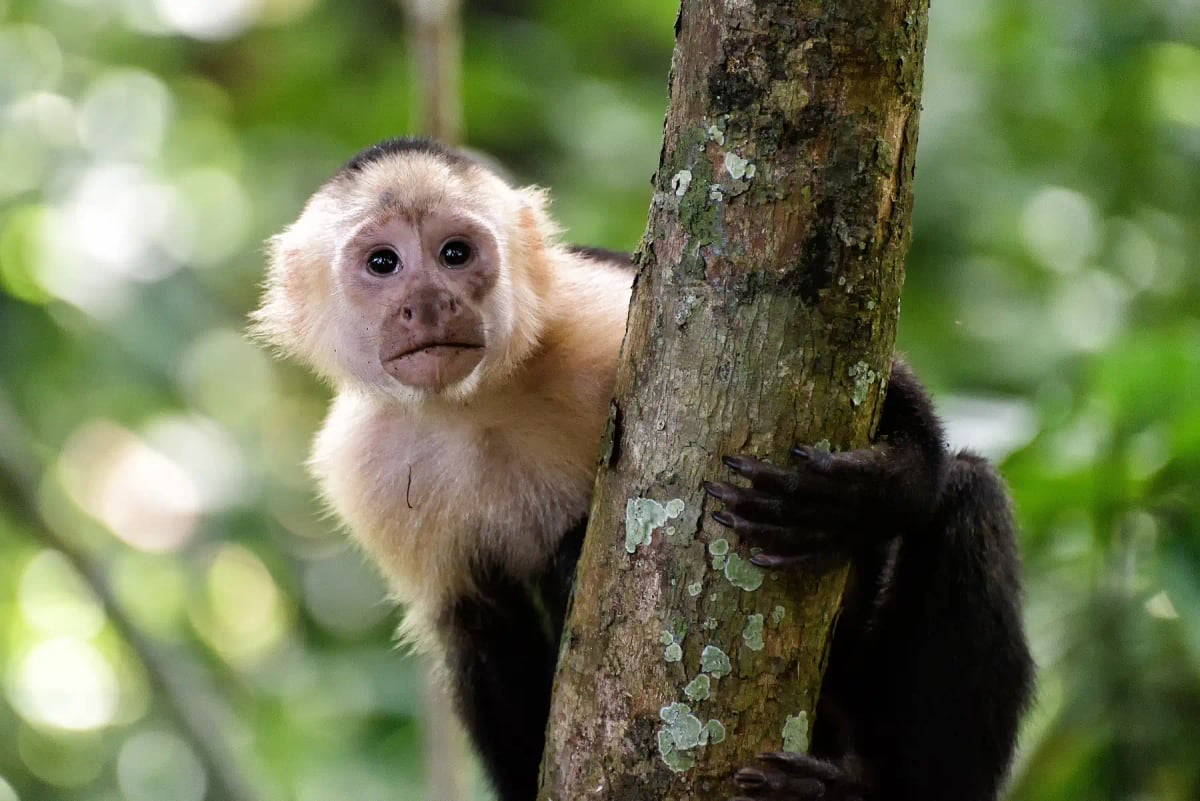
Breeding in white faced capuchins does not follow a strict seasonal pattern, though births tend to be more common during the dry season in some parts of their range. After a gestation period of roughly 160 days, the female gives birth to a single infant. Twins are extremely rare. For the first weeks of life, the newborn clings tightly to its mother's belly, later moving to ride on her back as it grows stronger. Mothers provide almost all of the direct care, though other females in the group will sometimes assist. Young capuchins are not fully independent until around two years of age, and females do not reach sexual maturity until they are around four years old. In the wild, capuchins can live for more than twenty years, giving each individual a long window in which to contribute to the group.
Conservation
The IUCN currently lists the white faced capuchin as Least Concern, reflecting the fact that the species remains relatively common across much of its range. That does not mean pressures are absent. Deforestation driven by agriculture, cattle ranching, and urban expansion continues to shrink and fragment the forests these monkeys depend on. In some areas they are also captured for the illegal pet trade or hunted for bushmeat, which takes a local toll even where overall numbers are stable. Capuchins tolerate disturbed habitats better than many primates, and this resilience has helped them hold on in landscapes where forest cover has been reduced. Protected areas across Central America and Colombia provide important refuges, and the species is well represented in several national parks throughout its range.
Researched and written by Juan Pablo. Sources: IUCN Red List, scientific literature and regional field guides. Last updated: .
Technical factsheet










Frequently Asked Questions
What do white faced capuchins eat?
White faced capuchins eat a wide variety of foods, including fruit, insects, frogs, lizards, bird eggs, and small mammals. When ripe fruit is scarce, they turn to seeds, flowers, and bark. They are also known to crack open hard nuts and shellfish using rocks or sticks. This flexible diet is one of the main reasons they survive so well across different forest types and seasons.
Where do white faced capuchins live?
White faced capuchins are found from Honduras and Nicaragua down through Costa Rica and Panama, and into northwestern Colombia and a corner of Ecuador. They are highly adaptable and live in tropical rainforests, dry woodlands, mangrove swamps, and even forests close to towns and farms. This ability to thrive in a range of environments sets them apart from many other primates in the Americas.
Are white faced capuchins dangerous to humans?
In the wild, white faced capuchins are generally cautious around people and pose little threat. However, individuals kept as pets can become aggressive as they grow older, since they are still wild animals with strong social instincts. Capuchins have sharp teeth and can bite if they feel threatened. Keeping them as pets is also illegal in many countries and harmful to their wellbeing.
Do white faced capuchins really use tools?
Yes, and it is one of the things that makes them so remarkable. White faced capuchins have been observed using rocks to crack open hard nuts and shellfish, making them one of the few wild primates known to use tools. Young monkeys learn this skill by watching experienced adults in their group, which shows that the behaviour is passed down socially rather than being purely instinctive.
How long do white faced capuchins live?
In the wild, white faced capuchins can live for more than twenty years, which is quite long for a monkey of their size. In captivity, some individuals have lived even longer. Their long lifespan gives each monkey plenty of time to learn complex skills, build social bonds within the group, and pass knowledge on to younger members. This extended period of learning is key to the group's success.
Are white faced capuchins endangered?
The white faced capuchin is currently listed as Least Concern by the IUCN, meaning the species as a whole is not at immediate risk of extinction. That said, deforestation, the illegal pet trade, and hunting do affect local populations in parts of their range. Their ability to adapt to disturbed habitats has helped them hold on in areas where many other primates have struggled to survive.
How do white faced capuchins communicate?
White faced capuchins communicate in a surprisingly rich variety of ways. They use a wide range of vocal calls to signal danger, food, or social intentions. They also rely on gestures and facial expressions to convey meaning to other group members. Regular grooming sessions are another important form of communication, helping to reinforce friendships and ease tension within the troop. Few primates of their size have such a complex social language.