Spectacled Bear
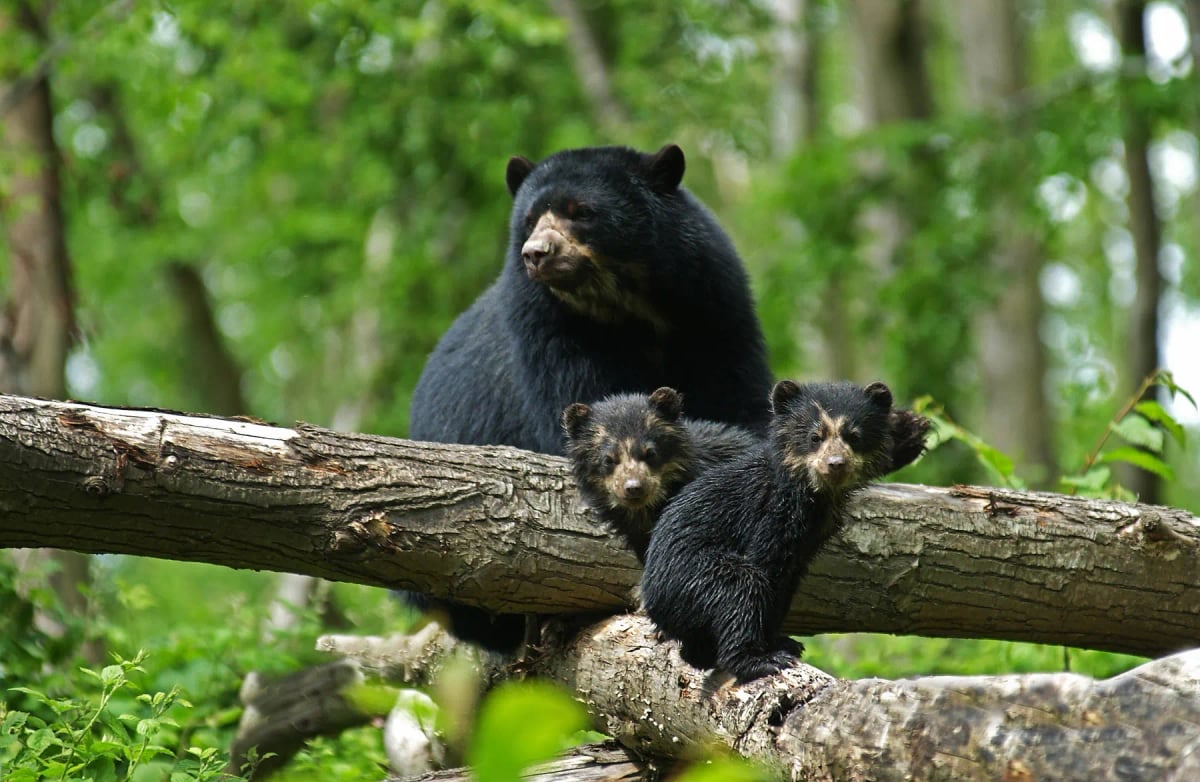
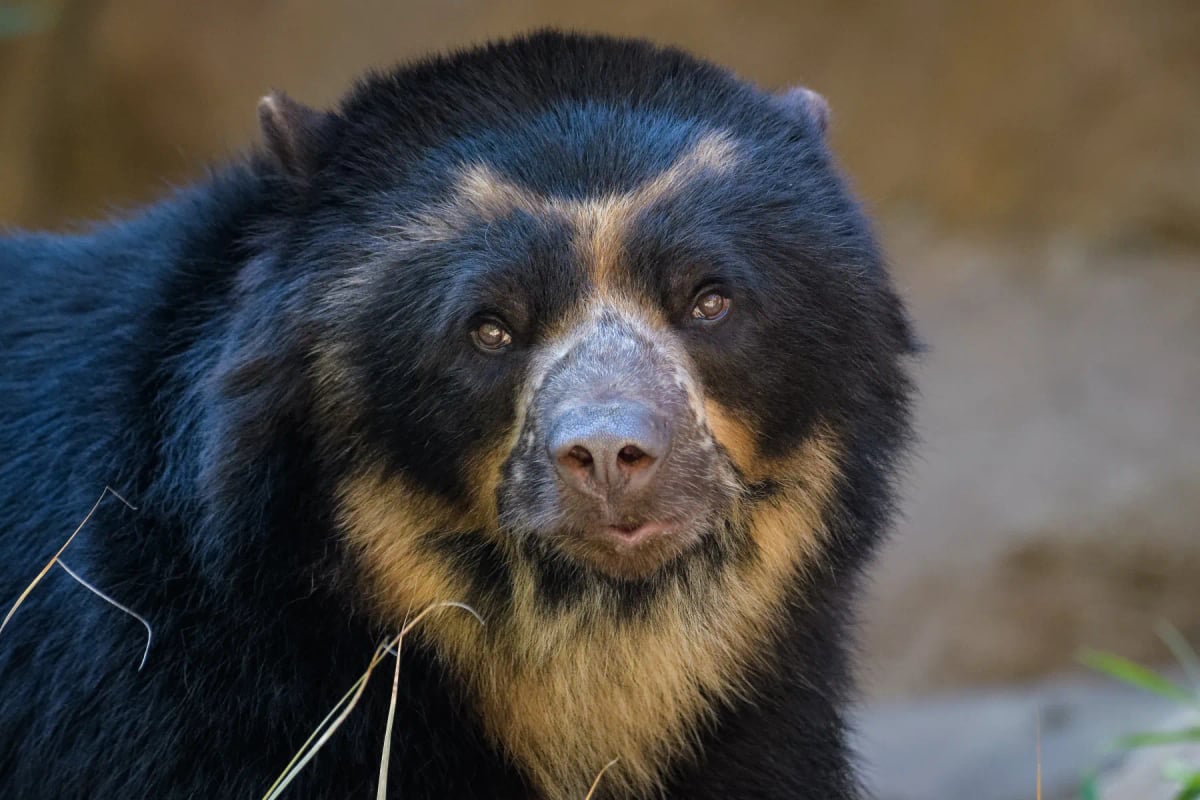
The spectacled bear (Tremarctos ornatus), also called the Andean bear, is the only bear species native to South America and the last surviving member of the short-faced bear family. It ranges across the Andes from Venezuela to Bolivia, living anywhere from lowland forests at around 500 meters to high páramo grasslands above 4,700 meters. The pale rings around its eyes give the species its common name, though the exact pattern differs from one individual to the next. Its diet is mainly plant based, centered on bromeliads, fruits, palm hearts, and cactus pads, with insects and small animals making up a smaller share. A capable climber, it builds resting platforms in trees and uses branches to cache food. The IUCN lists the species as Vulnerable, with habitat loss and hunting among the key pressures on its populations.
Habitat and distribution
Spectacled bears live along the Andes mountain chain, ranging from western Venezuela south through Colombia, Ecuador, and Peru to Bolivia. They are remarkably adaptable, occupying a wider variety of environments than most people expect. Cloud forests on steep montane slopes are their stronghold, offering dense cover and reliable food sources throughout the year. They also move through dry scrublands, tropical forests at lower elevations around 500 meters, and open páramo grasslands above 4,700 meters. This vertical range is one of the broadest of any bear species in the world. Individual bears may shift between elevations with the seasons, following the fruiting cycles of the plants they depend on. Forests in the foothills of Peru and Ecuador hold some of the largest remaining populations.
Diet
Plants make up the overwhelming majority of what spectacled bears eat, with estimates suggesting that well over 70 percent of their diet comes from vegetation. Bromeliads are a cornerstone food, and bears will tear apart the tough outer layers to reach the soft, nutritious hearts inside. Fruits of many kinds are eagerly sought, and a bear may climb high into the canopy to reach a ripe crop. Cactus pads, palm hearts, orchid bulbs, and the soft inner wood of certain trees round out the plant portion of the diet. Insects, small rodents, and carrion are also eaten when the opportunity arises, though these animal foods play a secondary role. In agricultural areas, bears sometimes raid maize and sugarcane fields, which brings them into direct conflict with farming communities.
Behavior
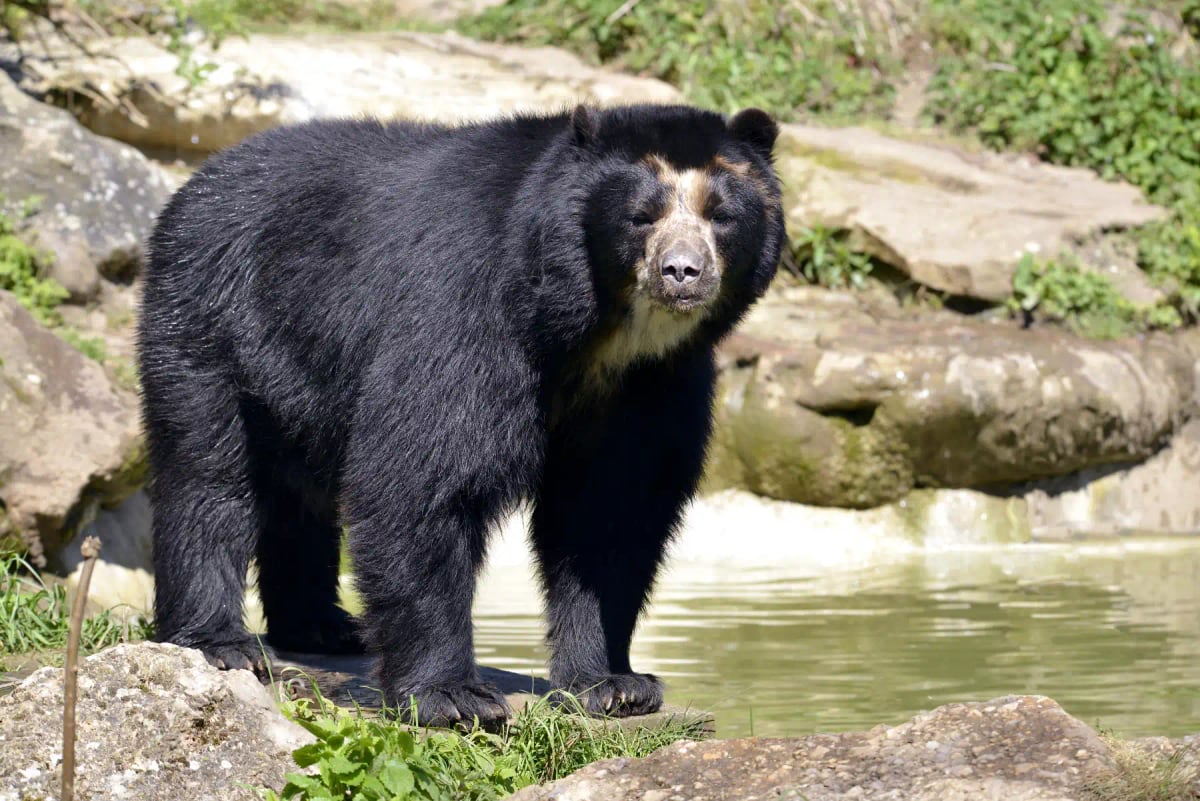
Quiet and largely elusive, spectacled bears are rarely seen even in areas where they are known to live. They are active mainly at dawn and dusk, spending the hottest hours of the day resting in the shade of the forest. Climbing is a natural strength. Bears use their curved, sturdy claws to move through the canopy with real confidence, and they often construct rough platforms from broken branches wedged into the forks of trees. These platforms serve as resting spots and as places to store food between feeding sessions. Outside of mothers raising cubs, individuals live alone and avoid one another. Home ranges vary considerably depending on food availability. Bears communicate through scent marks left on tree trunks, and vocalizations have been recorded in cubs and between mothers and their young.
Reproduction
Breeding takes place mainly between April and June, though records suggest some flexibility in timing across different parts of the range. One of the more remarkable aspects of spectacled bear reproduction is delayed implantation, a process in which the fertilized egg does not immediately attach to the uterine wall. Instead, development is paused for weeks or months, allowing the female to give birth at a time when food is more plentiful. Cubs are typically born between November and February, with litters of one or two being most common. Newborns are small and helpless, weighing only around 300 grams. They stay with their mother for up to a year, learning foraging skills and safe routes through their habitat. Females do not breed again until their cubs are fully independent.
Conservation
The IUCN lists the spectacled bear as Vulnerable, and populations are believed to be declining across most of the range. Deforestation driven by agriculture, cattle ranching, and mining has removed large areas of the Andean forest the species depends on. As bears lose habitat, they come into closer contact with people, and individuals that raid crops are frequently killed in retaliation. Hunting for body parts used in traditional medicine also remains a pressure in some areas. The spectacled bear has no natural predators as an adult, so human activity is the primary driver of its decline. Protected areas exist across its range in all five countries where it occurs, and several conservation programs focus on reducing conflict with farmers. Connecting fragmented forest patches is seen as essential for survival over the long term.
Where it is found
The Spectacled Bear can be found in places such as:
Researched and written by Juan Pablo. Sources: IUCN Red List, scientific literature and regional field guides. Last updated: .
Technical factsheet



Frequently Asked Questions
Is the spectacled bear dangerous to humans?
Spectacled bears are naturally shy and tend to avoid people. Attacks on humans are extremely rare. When threatened, they usually retreat rather than confront. However, like any wild animal, they can become defensive if surprised or cornered. People living near their habitat should keep a respectful distance and avoid leaving food or livestock unattended, as this can draw bears closer to homes.
Why is it called the spectacled bear?
The name comes from the pale, creamy markings that encircle its eyes, resembling a pair of spectacles. These patterns vary from one individual to another, so no two bears look exactly alike. Some bears have very visible rings, while others have only faint markings on their face or chest. Scientists can actually use these unique patterns to tell individual bears apart in the wild.
How big do spectacled bears get?
Spectacled bears are the largest land predators in South America, though their diet is mostly plant based. Males typically weigh between 100 and 200 kilograms and can measure around 150 to 180 centimeters in length. Females are notably smaller, usually weighing between 35 and 82 kilograms. Despite their size, they are agile climbers and spend a good portion of their time up in the trees.
Do spectacled bears hibernate?
No, spectacled bears do not hibernate. Unlike bears in cold northern climates, they live in regions where food is available throughout the year, so there is no need to enter a long sleep during winter. They remain active all year, foraging daily across their home range. Females do spend time in dens when giving birth and raising newborn cubs, but this is not the same as true hibernation.
What is the biggest threat to the spectacled bear?
Habitat loss is the main threat. As forests are cleared for farming, cattle ranching, and mining, bears lose the space they need to find food and raise young. Hunting is also a serious problem, as some bears are killed to protect crops or livestock, and others are targeted for illegal trade. The combination of these pressures has reduced their populations across much of the Andes.
Is the spectacled bear the only bear in South America?
Yes, it is the only bear species native to South America and the only surviving member of the short-faced bear family, a group that once included much larger relatives that lived across the Americas thousands of years ago. This makes the spectacled bear quite unique from an evolutionary standpoint. Its closest relatives are not other living bears but rather ancient species that have long been extinct.
How high up in the mountains do spectacled bears live?
Spectacled bears are found at a wide range of elevations, from around 500 meters above sea level in lower forest areas all the way up to about 4,750 meters in the high Andean páramo. Their ability to thrive across such a broad range of altitudes makes them one of the most adaptable large mammals in South America. Cloud forests at mid elevations tend to be their preferred and most commonly used habitat.