Wildebeest
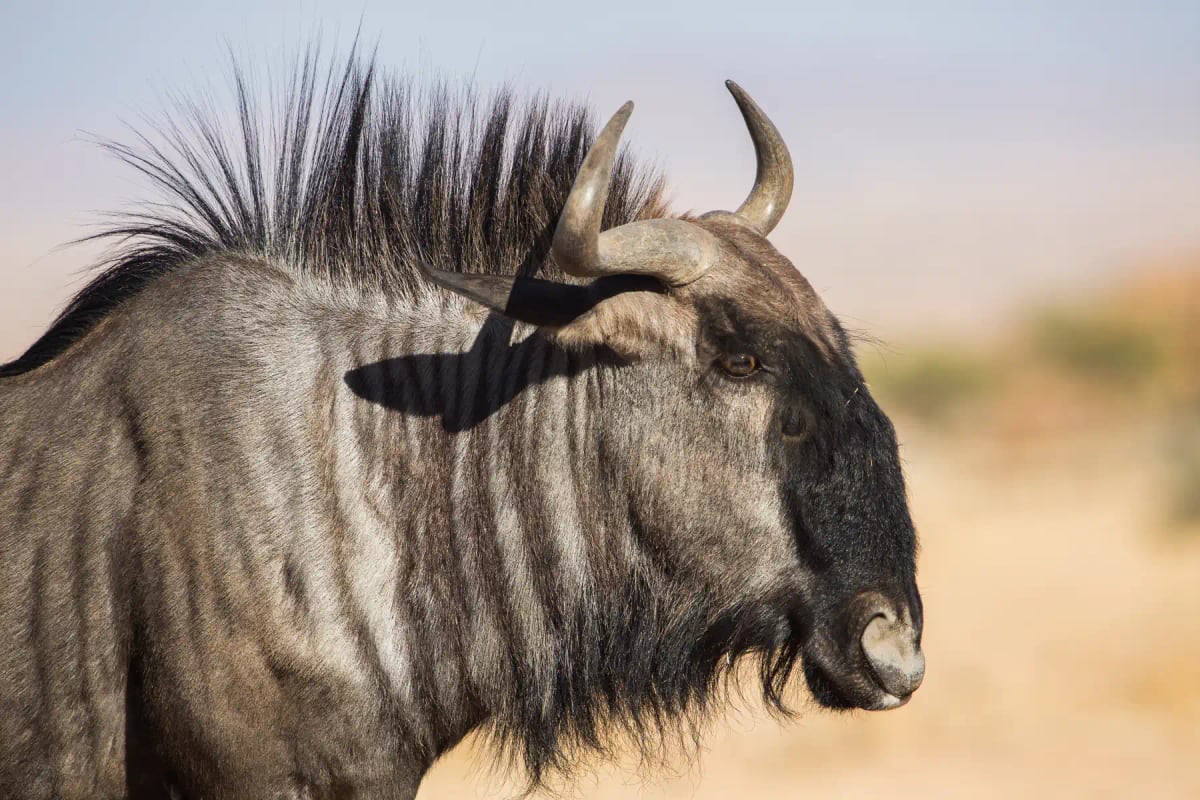
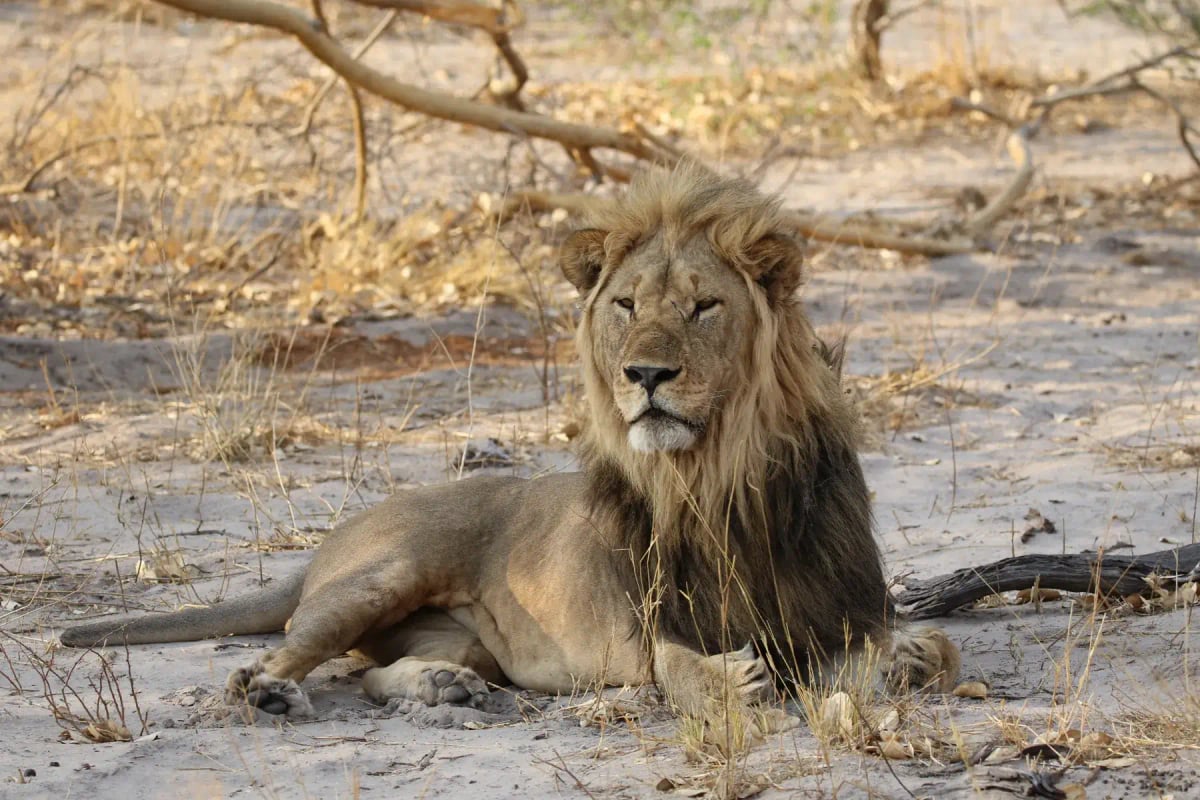
Wildebeest are large antelopes found across the savannas and grasslands of eastern and southern Africa. Two species exist: the blue wildebeest, which roams from Tanzania and Kenya south into Botswana and Namibia, and the black wildebeest, which is native to the highlands of South Africa. Both carry the same unmistakable silhouette: a heavy front end, sloping back, curved horns, and a shaggy beard beneath the chin. They graze almost exclusively on short grasses and gather in herds that can reach into the hundreds of thousands during the wet season. The blue wildebeest is famous for the annual Great Migration across the Serengeti and Maasai Mara, one of the largest movements of land mammals on Earth. Lions, spotted hyenas, wild dogs, and Nile crocodiles all depend on wildebeest as a primary source of food.
Species
Two species of wildebeest share the African continent, and while they look similar at a glance, they are quite distinct. The blue wildebeest (Connochaetes taurinus) is the larger of the two, with a silvery grey coat and a dark mane. It ranges widely across eastern and southern Africa, from Tanzania and Kenya down through Botswana and Namibia. The black wildebeest (Connochaetes gnou) is smaller and darker, with forward curving horns and a cream coloured tail. It is native to the open highlands of South Africa and was once pushed to the edge of extinction by colonial era hunting before careful conservation efforts brought it back. Today both species are listed as Least Concern on the IUCN Red List.
Habitat and distribution
Across much of eastern and southern Africa, wildebeest are a defining feature of open grasslands and broad savannas. The blue wildebeest favours short grass plains and is found across Tanzania, Kenya, Botswana, Namibia, Zimbabwe, Zambia, Mozambique, and South Africa. It tends to avoid dense woodland, preferring flat or gently rolling terrain where visibility is high and grass is plentiful. The black wildebeest occupies a smaller range concentrated in the central plateau of South Africa, particularly in the Free State and Northern Cape provinces, and in Eswatini. Both species need access to water, often staying within a reasonable distance of rivers or waterholes, especially in the dry season when surface water becomes scarce.
Migration
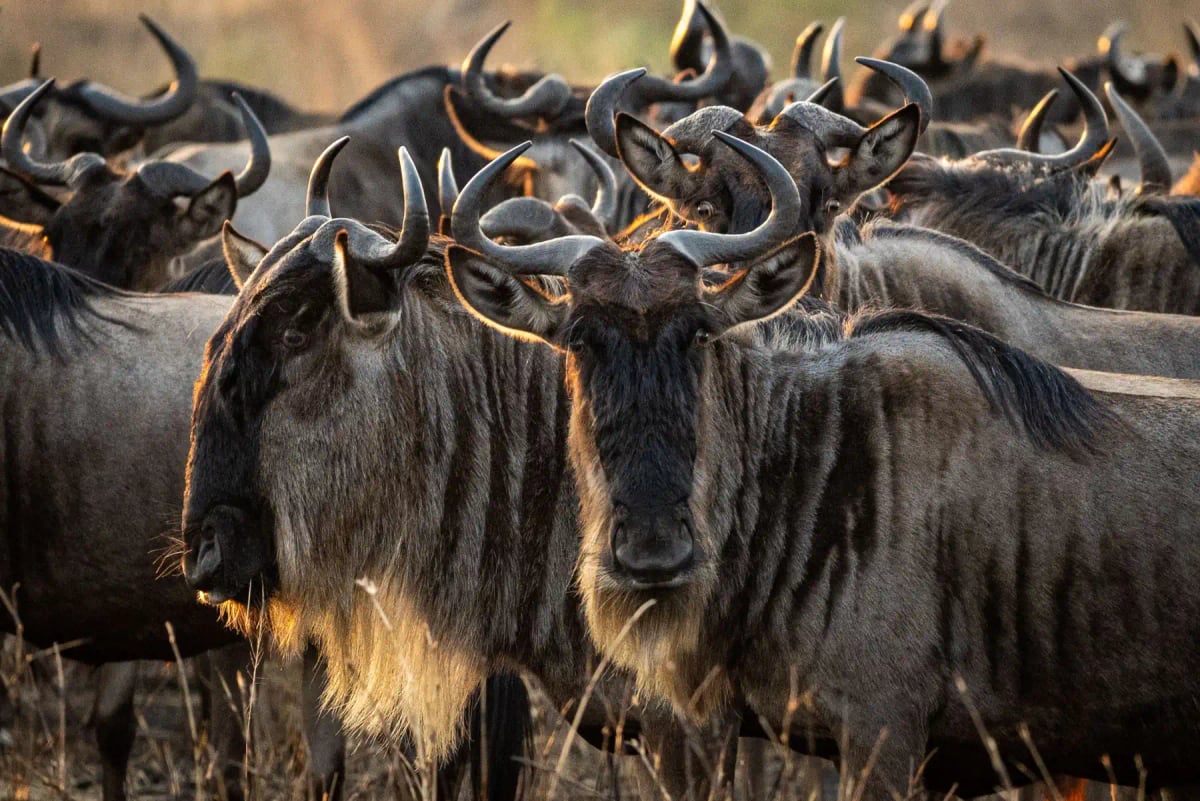
Few wildlife events on Earth can match the scale of the Great Migration. Each year, more than 1.5 million blue wildebeest, along with hundreds of thousands of zebras and gazelles, travel a circular route of roughly 1,800 kilometres through the Serengeti in Tanzania and the Maasai Mara in Kenya. The movement follows the seasonal rains, as the herds chase fresh grass growth across the ecosystem. One of the most dramatic moments comes at river crossings, where wildebeest plunge into crocodile patrolled waters in enormous groups. Calving takes place mainly in February on the short grass plains of the southern Serengeti, with around 500,000 calves born within a few weeks, an event that briefly overwhelms predators with sheer numbers.
Ecological role
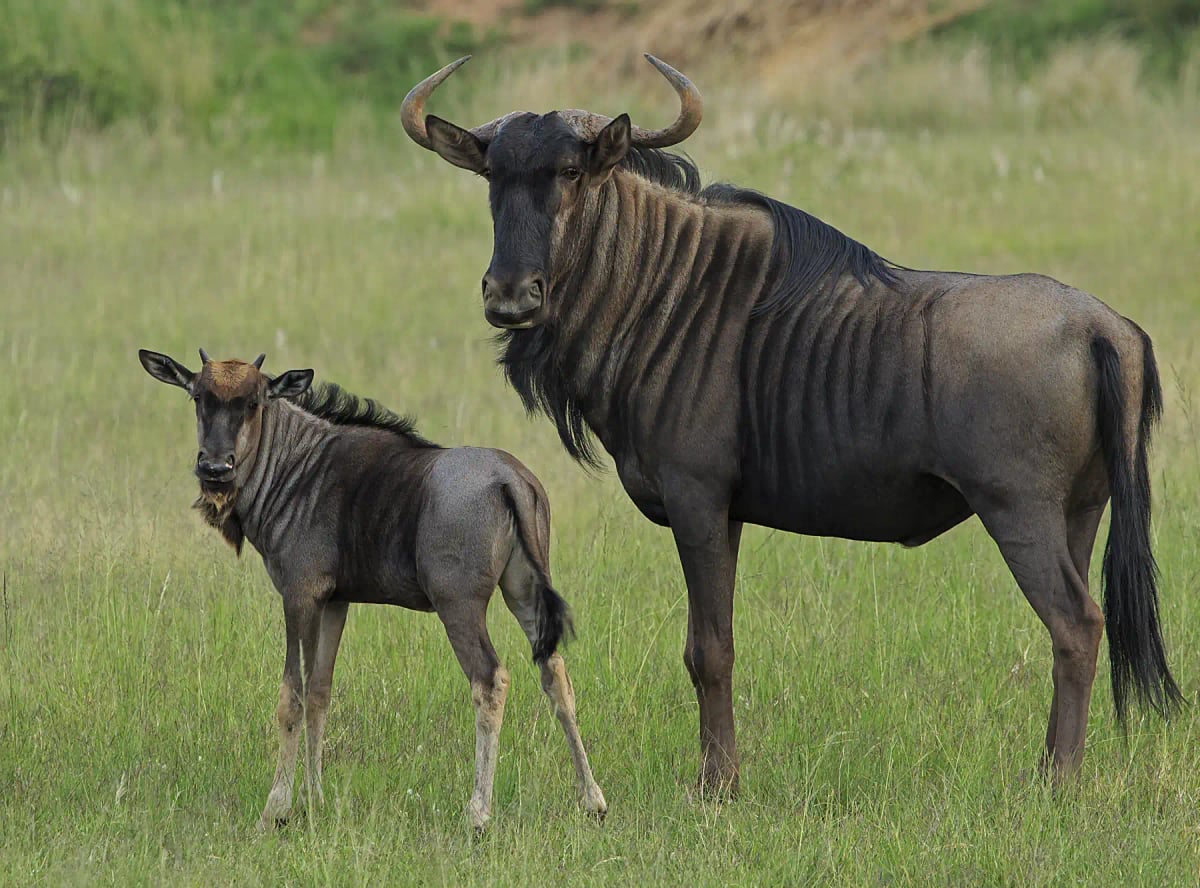
Wildebeest do far more for their ecosystem than simply graze. By cropping short grasses at a consistent level, they prevent the buildup of dry plant material that could fuel wildfires, which in turn helps maintain the open structure of savanna habitats. Their dung fertilises the soil, encouraging new grass growth that benefits a wide range of other grazers. As prey animals, wildebeest are central to the diets of lions, spotted hyenas, African wild dogs, cheetahs, and Nile crocodiles. When wildebeest die near rivers, their carcasses provide nutrients that feed fish and other aquatic life. The sheer number of animals moving across the land also churns soil and spreads seeds, making wildebeest one of the most important shapers of the savanna landscape.
Conservation
The IUCN currently lists both species of wildebeest as Least Concern, reflecting populations that remain large in protected areas. Even so, the picture is not entirely positive. Outside national parks and reserves, blue wildebeest populations have declined in several countries due to the expansion of farmland, the fencing of former migration corridors, and illegal hunting. The black wildebeest, which once numbered only in the hundreds, has recovered thanks to protection on private farms and game reserves in South Africa, but its total wild population remains relatively small. Maintaining open land that allows seasonal movement is one of the greatest conservation challenges facing wildebeest today. Reserves such as the Serengeti, Maasai Mara, and Kruger National Park play a vital role in securing their future.
Where it is found
The Wildebeest can be found in places such as:
Researched and written by Juan Pablo. Sources: IUCN Red List, scientific literature and regional field guides. Last updated: .
Technical factsheet

Frequently Asked Questions
What do wildebeest eat?
Wildebeest are grazers and feed almost entirely on short grasses. They are highly selective, preferring young, green shoots over tall or dry grass. During the Great Migration, entire herds follow the seasonal rains specifically to reach fresh pasture. When grass is scarce in the dry season, they will sometimes eat leaves and other low vegetation, but grass makes up the overwhelming majority of their diet year round.
How fast can a wildebeest run?
Wildebeest can reach speeds of around 80 kilometres per hour over short distances, which makes them surprisingly quick for such large animals. That speed is their main defence against predators like lions and hyenas. They are also highly agile for their size, capable of making sharp turns at full pace. Over longer distances, they can sustain a steady gallop that outlasts many pursuers.
Why do wildebeest migrate?
Wildebeest migrate to follow the rains and the fresh grass that grows in their wake. As the dry season sets in across one part of the ecosystem, the herds move toward areas that have recently received rainfall and offer better grazing. This circular journey of roughly 1,800 kilometres through Tanzania and Kenya is driven entirely by the need for food and water, not by temperature or instinct tied to a fixed calendar.
What are the main predators of wildebeest?
Lions and spotted hyenas are the predators that take the most wildebeest each year. Cheetahs and African wild dogs target calves, which are far more vulnerable than adults. During river crossings, Nile crocodiles pull wildebeest under the water in some of the most dramatic predator and prey interactions seen anywhere on Earth. Even with so many natural enemies, wildebeest survive through safety in numbers and their considerable speed.
How long do wildebeest live?
In the wild, wildebeest typically live between 20 and 40 years, though most do not reach old age due to predation, disease, and the physical demands of migration. In captivity, where threats are reduced, individuals have been recorded living past 20 years with greater regularity. The first year of life is the most dangerous, as calves face intense pressure from predators shortly after birth.
Are wildebeest dangerous to humans?
Wildebeest are generally not aggressive toward people, but they are large, powerful animals and can cause serious injury if they feel cornered or threatened. In the wild, they typically flee from humans rather than confront them. Incidents involving wildebeest and people are rare compared to other large African mammals. Tourists observing them from vehicles during the Great Migration are in no real danger as long as a safe distance is maintained.
How many wildebeest are left in the world?
Current estimates put the total population of blue wildebeest at around 1.5 million individuals, the majority of which live in and around the Serengeti and Maasai Mara ecosystem. The black wildebeest has a much smaller population of roughly 18,000 animals, found mainly in South Africa. Both species are listed as Least Concern by the IUCN, though blue wildebeest numbers outside protected areas have fallen steadily due to habitat loss and fencing of migration routes.