Cuban Trogon
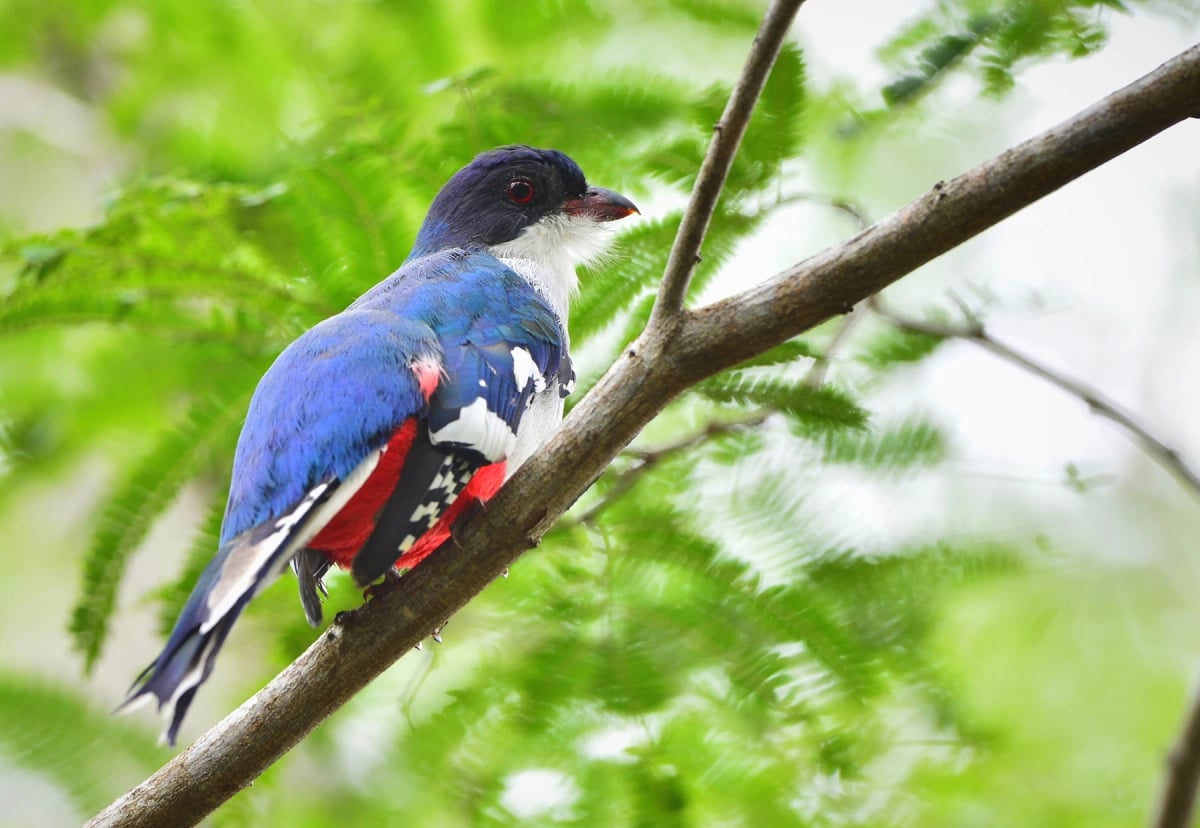
The Cuban Trogon, known locally as the tocororo, is the national bird of Cuba and one of the island's most striking endemic species. Its plumage combines deep red on the belly, white on the chest, blue on the crown, and vivid green on the back. Those colors so closely mirror the Cuban flag that the bird has become a living emblem of national identity. It lives across a wide range of wooded habitats throughout the island, from humid forests to coffee plantations and forest edges. It feeds on fruits, berries, flowers, and insects, and plays a modest role in seed dispersal. The tocororo is an active and vocal bird, moving restlessly through the tree canopy in pairs or small groups. Although listed as Least Concern by the IUCN, ongoing deforestation across Cuba puts local populations under pressure, making forest protection essential for its future.
National symbol
Few animals carry the weight of national identity the way the tocororo does. Cuba's national bird earns that status not through legend or decree alone, but through something far more visible: its feathers. The deep red of its belly, the white of its chest, and the vivid blue of its crown mirror the three colors of the Cuban flag with striking precision. That coincidence turned the tocororo into a living symbol of the island's spirit long before it was officially designated as the national bird. Cubans across generations have celebrated it in poetry, art, and music. Because it cannot survive in captivity, it has also come to represent something deeper: a creature that belongs to no cage, a quiet but powerful idea of freedom tied to the land itself.
Habitat
Across Cuba, the tocororo shows a remarkable ability to thrive in a wide variety of wooded settings. It is found in humid forests, dry forests, coffee and cocoa plantations, forest edges, and patches of secondary growth. This flexibility means the bird is not restricted to pristine wilderness; it can persist in landscapes shaped by human activity, provided enough tree cover remains. It tends to occupy the middle and upper levels of the canopy, where fruit and insects are most accessible. The tocororo is present throughout the main island and on the Isla de la Juventud as well. While it tolerates some degree of habitat modification, it still depends on areas with sufficient tree density, making large scale deforestation the most serious threat to its local populations.
Diet
Like all trogons, the tocororo is an opportunistic feeder that adjusts its diet to what the forest offers at any given time of year. Fruits and berries form the backbone of its diet, and the bird is known to eat flowers as well, taking petals and nectar from a variety of plant species. Insects and other small invertebrates round out its meals, providing the protein that fruits alone cannot supply. The tocororo plucks food while hovering briefly in front of foliage or branches, a feeding style typical of the trogon family. By consuming fruits and moving through the forest, it contributes in a modest way to seed dispersal, helping forest plants spread across the landscape. This role, though small, connects the tocororo to the broader health of Cuba's woodland ecosystems.
Behavior
Watching a tocororo in the wild quickly reveals a bird that is rarely still. It moves through the canopy with energy and purpose, calling frequently with a loud, repeated cry that many Cubans find deeply familiar. The call itself is thought to be the origin of the name tocororo, an echo of the sound it produces. The species is typically seen in pairs or small groups rather than alone, and pairs appear to maintain close bonds throughout the year. Nesting takes place in natural cavities in trees, and like other trogons, the tocororo does not excavate its own holes but instead relies on existing hollows or old woodpecker cavities. This dependence on tree cavities means that forests with mature, large trees are especially important for successful breeding.
Conservation
The IUCN currently lists the tocororo as Least Concern, reflecting the fact that its overall population remains stable and its range covers much of Cuba. That broad status, however, does not mean the bird faces no pressure. Deforestation has been an ongoing issue across Cuba, reducing and fragmenting the wooded habitats the tocororo depends on. Local declines have been recorded in areas where forest cover has been removed for agriculture or urban expansion. Because the species cannot survive in captivity, there is no safety net of captive populations to fall back on if wild numbers drop. Protecting Cuba's remaining forests, especially those with mature trees that provide nesting cavities, is the most direct way to secure the future of this bird. Its status as a national symbol gives conservation efforts an added layer of public meaning and support.
Researched and written by Juan Pablo. Sources: IUCN Red List, scientific literature and regional field guides. Last updated: .
Technical factsheet

Frequently Asked Questions
What does the Cuban Trogon eat?
The tocororo eats fruits, berries, flowers, and insects. It hovers briefly in front of branches or leaves to pluck food, a technique shared by all trogons. Fruits and berries make up the largest part of its diet, while insects provide the protein that plant matter alone cannot offer. It also nibbles on petals and sips nectar from flowers, making it a surprisingly varied eater for a bird of its size.
Where does the Cuban Trogon live?
The tocororo is found only in Cuba. It lives across the main island and on the Isla de la Juventud, in a wide range of wooded environments including humid forests, dry forests, coffee plantations, and forest edges. It is not limited to untouched wilderness and can adapt to areas shaped by human activity, as long as enough tree cover remains. It spends most of its time in the middle and upper levels of the canopy.
Why is the Cuban Trogon the national bird of Cuba?
The tocororo was chosen as Cuba's national bird largely because of its colors. Its belly is deep red, its chest is white, and its crown is vivid blue, the same three colors that appear on the Cuban flag. Beyond that visual connection, the bird has long stood for freedom in Cuban culture, partly because it cannot survive in captivity. Those two qualities together, patriotic colors and an untameable spirit, made it a natural symbol for the country.
Can the Cuban Trogon be kept as a pet?
No. The tocororo cannot survive in captivity. This is one of the most well known facts about the species and a major reason it has become a symbol of freedom in Cuban culture. Even under the best care, the bird does not adapt to life in an enclosure and will not thrive. Because no captive populations exist, wild habitat protection is especially critical. If wild numbers were to fall sharply, there would be no captive group to help restore them.
What threats does the Cuban Trogon face?
The biggest threat to the tocororo is deforestation. As forests across Cuba are cleared for agriculture and urban growth, the bird loses both feeding grounds and nesting sites. It nests in natural tree cavities and old woodpecker holes, so it depends on forests with mature, large trees. Local population declines have already been recorded in heavily deforested areas. While the species is not globally threatened, continued loss of forest cover could put more local groups at risk over time.
How does the Cuban Trogon get its name?
The name tocororo is widely believed to come from the bird's own call. It produces a loud, repeated cry that many people hear as "tocororo", and over time that sound became the name most Cubans use for it. This kind of naming, where a word imitates a natural sound, is called onomatopoeia. The scientific name, Priotelus temnurus, refers to features of its tail feathers rather than its call. Most people in Cuba and beyond simply know it as the tocororo.
Is the Cuban Trogon endangered?
No, the tocororo is currently listed as Least Concern on the IUCN Red List, which means its overall population is considered stable. It is found across a wide area of Cuba and can adapt to different types of wooded habitat. That said, deforestation has caused local declines in some parts of the island, and the species cannot fall back on captive populations if things change. Keeping Cuba's forests intact is the most important step for protecting the tocororo over the long term.