Sable Antelope
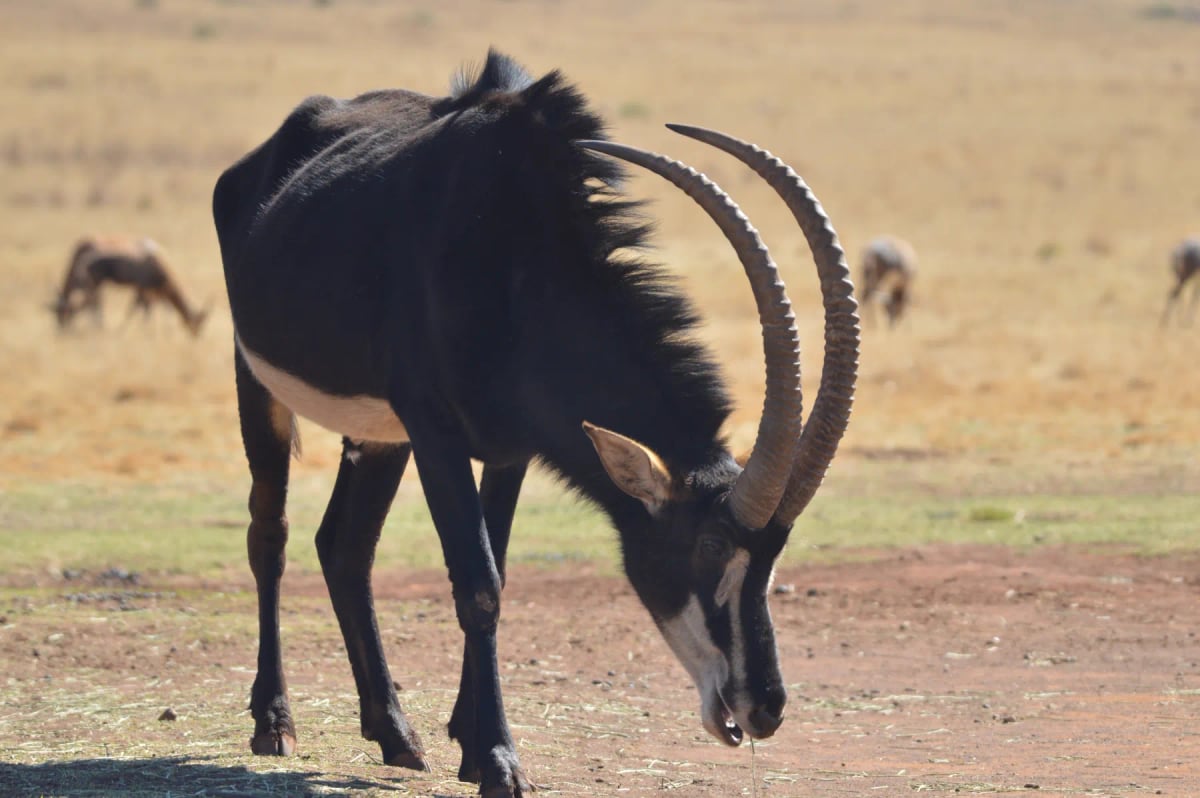
The sable antelope (Hippotragus niger) is one of Africa's most visually striking large antelopes. Adult males develop a coat of deep, glossy black and carry sweeping horns that curve sharply backward, often reaching well over a meter in length. Females and younger animals wear a warm chestnut to dark brown coat. This species occupies savannas, open woodlands, and grasslands across southern and eastern Africa, always staying near water sources during the dry season. Herds are organized around a single dominant male, who holds his territory through displays and combat. Sable antelopes are grazers for most of the year but will browse on leaves and herbs when dry conditions reduce grass quality. The IUCN lists the species as Least Concern overall, though several regional populations have declined due to poaching and the conversion of natural habitat to farmland.
Habitat and distribution
Sable antelopes are found across a broad stretch of southern and eastern Africa, ranging from Angola and Zambia in the west through Tanzania, Kenya, Mozambique, Zimbabwe, Botswana, Malawi, and South Africa. They favor open woodlands, grassy savannas, and the edges of miombo forests, where both shelter and open grazing ground are close at hand. Access to water is essential, especially during the dry season, so herds rarely stray far from rivers, springs, or waterholes. The species tends to avoid dense forests and very open floodplains. Within this range, populations are now largely concentrated inside national parks and game reserves, where land is protected from agricultural conversion and illegal hunting.
Appearance
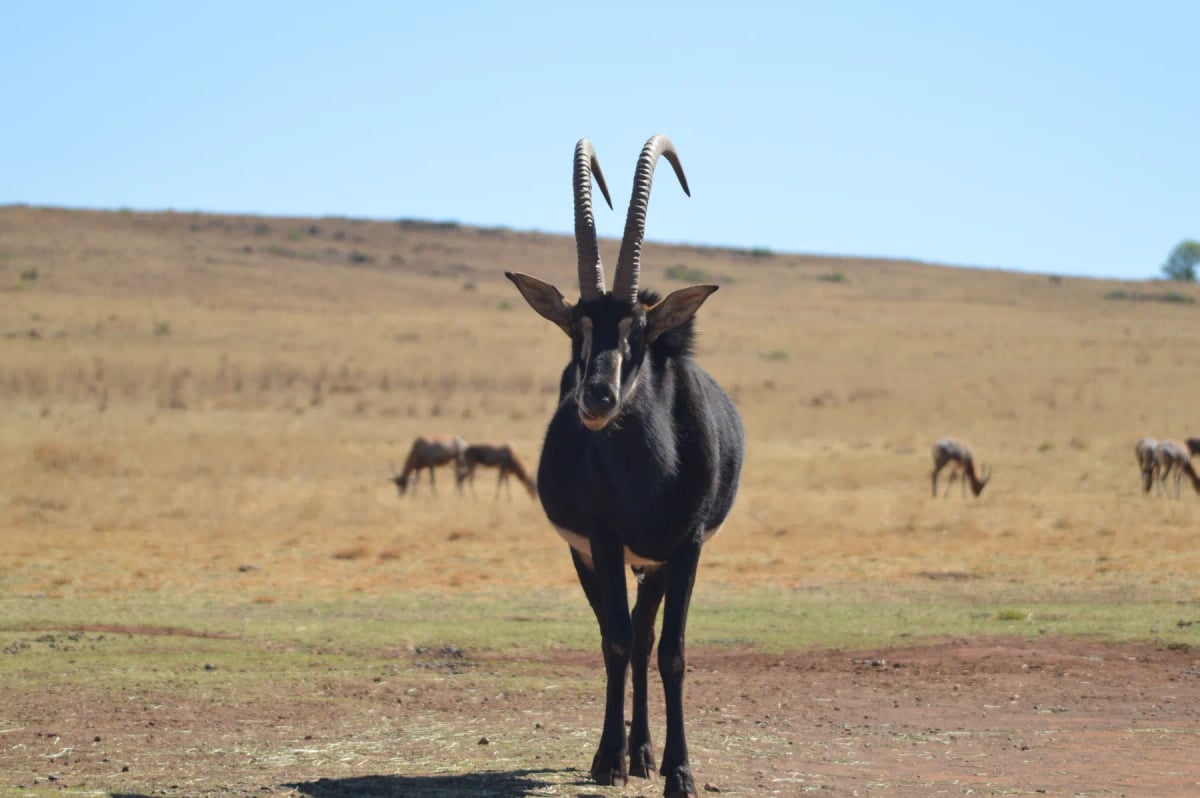
Few African antelopes are as immediately recognizable as the sable. Adult males develop a coat of deep, glossy black as they mature, contrasting sharply with a bright white belly and white facial markings. Females and young animals wear a warm chestnut to dark brown coat, which can sometimes be mistaken for the related roan antelope. Both sexes carry the species' most famous feature: long horns that sweep backward in a pronounced curve. In males these horns regularly exceed one meter and can reach close to 1.65 meters in exceptional individuals, placing them among the longest horns of any antelope species on Earth. A thick, upright mane runs along the neck, adding to the animal's bold and powerful appearance.
Diet
Grazing makes up the bulk of the sable antelope's diet for most of the year. Medium and tall grasses are the preferred food, and herds will move across their range to follow areas where fresh growth is available. During the wet season, when grass is abundant and nutritious, they rarely need to look elsewhere for food. As the dry season sets in and grass quality drops, sable antelopes begin to supplement their diet by browsing on leaves, herbs, and low shrubs. They are also known to visit mineral licks, where they consume soil rich in salts and minerals that are otherwise difficult to obtain from plant matter alone. Access to fresh water remains a daily necessity throughout the year.
Conservation
The IUCN currently lists the sable antelope as Least Concern at the species level, but this broad status masks serious problems in several parts of its range. Populations in Kenya and some areas of East Africa have declined sharply, while others across southern Africa remain more stable. The main threats are poaching, the loss of habitat to farming, and disruption caused by fencing that blocks traditional movement routes between grazing areas and water. Several subspecies face much greater pressure: the giant sable antelope of Angola, for example, was reduced to a tiny number of individuals and required dedicated camera trapping and protection programs to document and support its recovery. Continued monitoring and strong reserve management are essential to prevent further decline across the species as a whole.
National symbol
Angola has adopted the giant sable antelope, known locally as the palanca negra gigante, as its national animal. The choice reflects just how deeply this subspecies is woven into Angolan identity. Its image appears on banknotes, postage stamps, and official emblems, and it has been used to represent the country in international contexts for decades. During Angola's long civil war, the palanca negra became a symbol of resilience precisely because it survived against extraordinary odds in the remote forests of Malanje province. Today it continues to carry that meaning, and conservation efforts to protect the remaining population are seen by many Angolans not only as a matter of ecology but as the preservation of something genuinely irreplaceable in the country's cultural life.
Where it is found
The Sable Antelope can be found in places such as:
Researched and written by Juan Pablo. Sources: IUCN Red List, scientific literature and regional field guides. Last updated: .
Technical factsheet


Frequently Asked Questions
What do sable antelopes eat?
Sable antelopes are primarily grazers, feeding on medium and tall grasses throughout most of the year. When the dry season reduces grass quality, they supplement their diet by browsing on leaves and shrubs. They also visit mineral licks, consuming soil rich in salts their body needs. Fresh water is a daily requirement, so herds always stay within reach of a reliable water source.
How long are sable antelope horns?
Sable antelope horns are among the longest of any antelope in the world. In males, they regularly exceed one meter and can reach close to 1.65 meters in exceptional individuals. The horns curve backward in a dramatic sweep and are used in fights between males competing for dominance. Females also have horns, though they are shorter and less curved than those of the males.
Where do sable antelopes live?
Sable antelopes are found across southern and eastern Africa, in countries including Angola, Zambia, Tanzania, Zimbabwe, Mozambique, and South Africa. They prefer open woodlands and grassy savannas, especially areas near rivers or waterholes. Today, most populations are concentrated inside national parks and game reserves, where they are protected from poaching and the loss of habitat to farming.
Are sable antelopes endangered?
The IUCN lists the sable antelope as Least Concern overall, but some regional populations have declined seriously. In Kenya and parts of East Africa, numbers have dropped sharply. The giant sable antelope of Angola, a subspecies, was reduced to very few individuals and required urgent conservation action. Poaching, habitat loss, and fencing that blocks movement routes remain the biggest threats across the species' range.
How do sable antelopes behave in herds?
Sable antelopes live in herds organized around a single dominant male, who controls a territory and defends it through displays and physical combat with rival males. Females and young animals form the core of the group. Males that have not yet earned a territory often gather in separate bachelor groups. The dominant male is highly protective and will confront even large predators to defend his herd.
What is the giant sable antelope?
The giant sable antelope, known in Angola as the palanca negra gigante, is a subspecies of the sable antelope found only in Angola. It is larger than other subspecies and carries exceptionally long horns. Angola's civil war made conservation extremely difficult, and the population fell to critically low levels. It is the national animal of Angola and appears on the country's banknotes and official emblems.
Can sable antelopes be dangerous?
Sable antelopes are not aggressive by nature, but they are far from defenseless. When cornered or threatened, they will lower their heads and use their long curved horns to fight back against predators, including lions. Dominant males are particularly bold and have been known to seriously injure or even kill large predators during confrontations. For this reason, they are considered one of Africa's more formidable antelope species.