Barbary Macaque
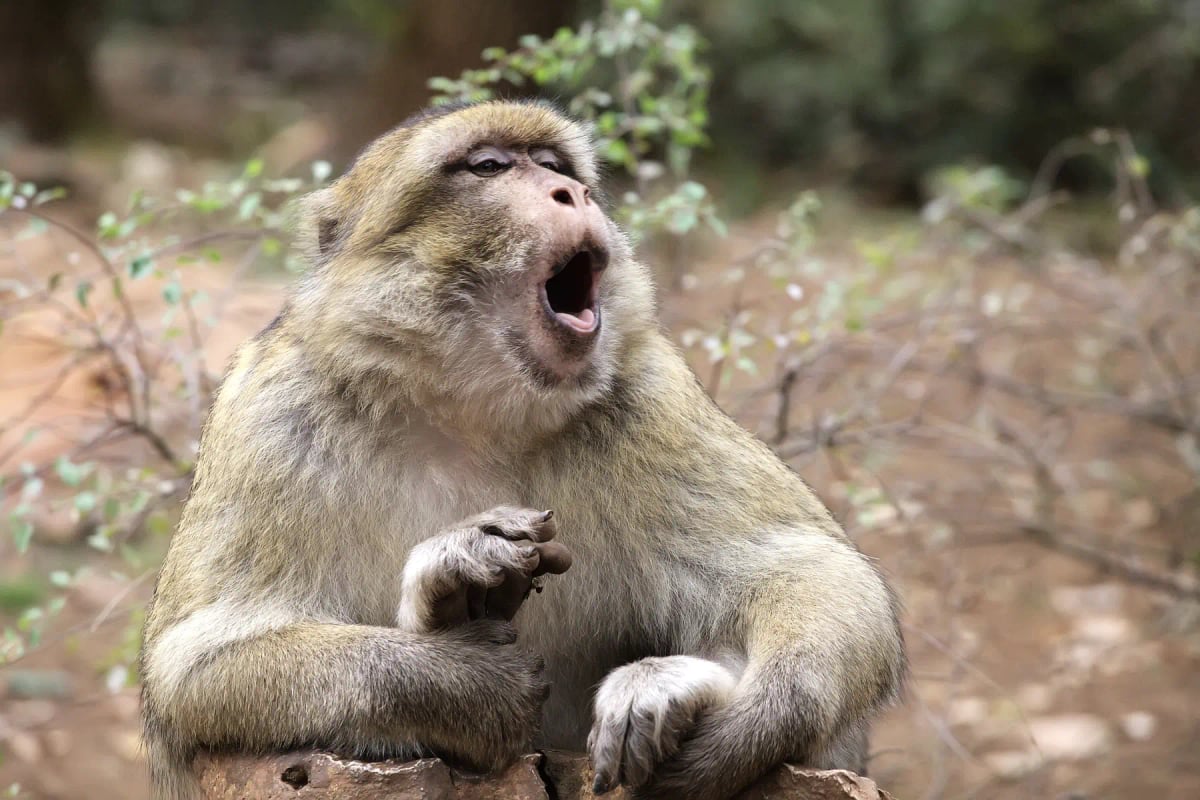
The Barbary macaque is the only primate living in the wild north of the Sahara, inhabiting mountain forests of Morocco and Algeria. It has dense golden brown fur and no tail. Highly social, it forms large troops and is known for an unusual behavior among primates: males actively carry and care for infants to strengthen social bonds. Populations have declined sharply due to deforestation, illegal capture for the pet trade, and conflict with humans. The IUCN classifies it as Endangered.
Habitat and range
The Barbary macaque is native to the cedar, oak, and mixed forests of the Atlas and Rif Mountains in Morocco and Algeria. It favors elevations between 1,200 and 2,200 meters, where the climate is cool and resources include roots, bark, and seasonal fruits. Populations in Algeria are smaller and more fragmented than those in Morocco, where the Middle Atlas holds the largest remaining groups. A small introduced colony has lived in Gibraltar for centuries, making it the only place in Europe where wild monkeys can be found.
Diet
The Barbary macaque is an omnivore with a flexible diet that shifts with the seasons. In spring and summer it relies heavily on leaves, grasses, and insects; in autumn it feeds on acorns, pine seeds, and wild fruits. Bark, roots, and fungi supplement the diet in winter when food is scarce. In Gibraltar, individuals often accept food from tourists, creating behavioral dependence and health concerns. Feeding them is strictly prohibited, as an unnatural diet and close contact with humans increase stress, disease risk, and aggressive behavior.
Behavior and society
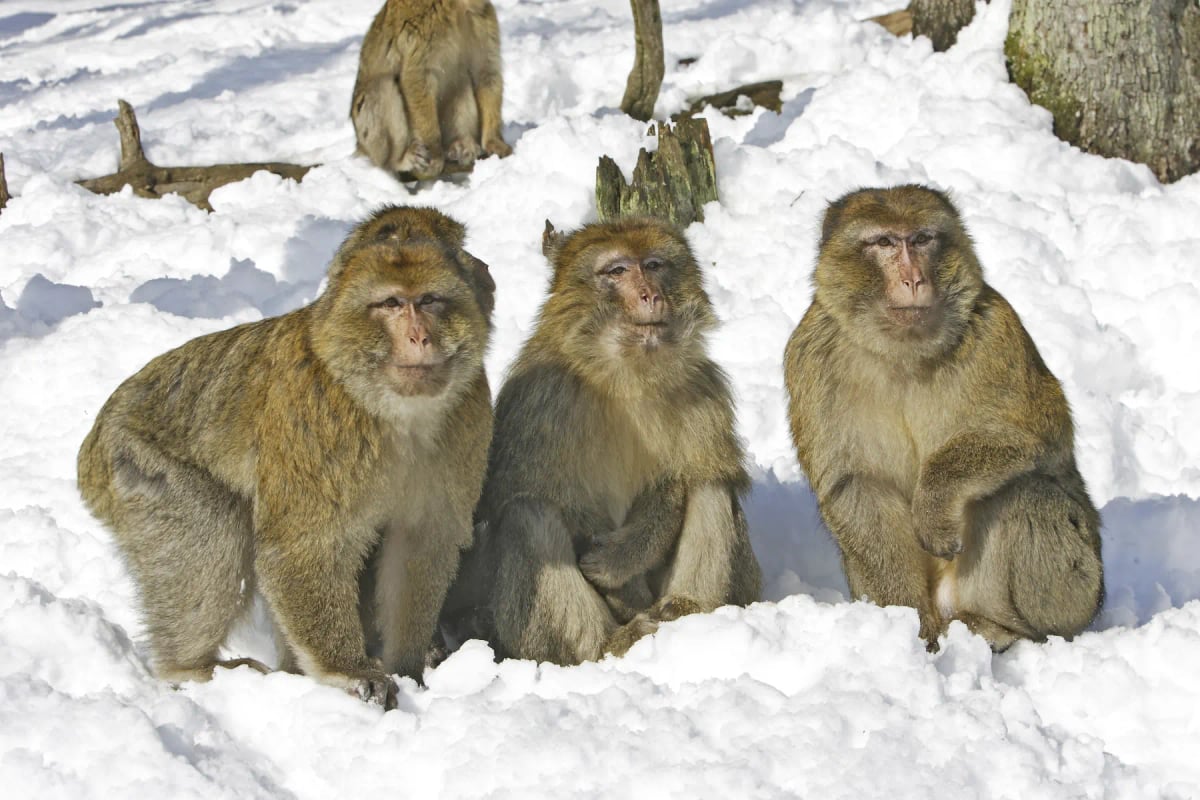
Barbary macaques are highly social primates that live in mixed groups of up to 70 individuals, with multiple males and females. Social grooming is central to group cohesion and stress reduction. One of their most distinctive behaviors is the practice of males carrying unrelated infants, using them as social tools to build alliances and reduce tensions within the group. This behavior is rare among primates. Dominance hierarchies are determined by females, and rank is inherited, meaning daughters tend to occupy a social position similar to that of their mothers.

Interaction with humans
The most visible interaction between Barbary macaques and humans occurs in Gibraltar, where a colony of around 300 individuals shares territory with a dense urban population. The monkeys are a major tourist attraction, but their boldness can lead to scratches, bites, and theft of food and belongings. Feeding them is strictly prohibited. In Morocco and Algeria, shrinking forest cover brings them increasingly into contact with agricultural communities. Crop raiding and competition for resources have made them a target for retaliatory killing in some areas, adding pressure to already declining populations.
Conservation
The Barbary macaque is classified as Endangered by the IUCN, with a total wild population estimated at 7,000 to 10,000 individuals, down from around 20,000 in the 1970s. The main threats are deforestation, overgrazing, illegal capture for the pet and entertainment trade, and climate change affecting forest cover. Conservation efforts focus on reforestation, community education, and anti-trafficking enforcement. Organizations such as Barbary Macaque Awareness and Conservation work with local communities in Morocco to reduce conflict and promote coexistence. The population trend is considered decreasing.
Researched and written by Juan Pablo. Sources: IUCN Red List, scientific literature and regional field guides. Last updated: .
Technical factsheet

Frequently Asked Questions
Where does the Barbary macaque live?
The Barbary macaque lives in the cedar, oak, and mixed forests of the Atlas and Rif Mountains in Morocco and Algeria, typically at elevations between 1,200 and 2,200 meters. A small introduced colony has also lived in Gibraltar for centuries, making it the only place in Europe where wild monkeys can be found. Populations in Morocco are larger and more stable than those in Algeria, where habitat fragmentation is more severe.
Why do male Barbary macaques carry babies?
Male Barbary macaques carry infants, including those that are not their own, as a social strategy to build alliances and reduce tensions within the group. By presenting or grooming an infant alongside another male, they create a peaceful context for interaction. This behavior is rare among primates and has been well documented in studies of the species. The infants are not harmed and appear to tolerate being used this way, as it does not disrupt their relationship with their mothers.
Is the Barbary macaque endangered?
Yes, the Barbary macaque is classified as Endangered by the IUCN. Its wild population is estimated at between 7,000 and 10,000 individuals, a significant drop from around 20,000 in the 1970s. The main threats are deforestation, overgrazing, and illegal capture for the pet and entertainment trade. Climate change is also affecting the mountain forests the species depends on. Conservation programs focus on reforestation, community education, and enforcement against wildlife trafficking.
Are the monkeys in Gibraltar Barbary macaques?
Yes, the monkeys in Gibraltar are Barbary macaques, the only wild primate population in Europe. The colony numbers around 300 individuals and has lived on the Rock of Gibraltar for centuries, though its exact origin is debated. According to local legend, British rule of Gibraltar will last as long as the monkeys remain, which has historically led authorities to replenish the colony when numbers dropped. Feeding them is strictly prohibited, as it causes behavioral problems and increases the risk of bites.
What does the Barbary macaque eat?
The Barbary macaque is an omnivore with a diet that varies by season. In spring and summer it feeds mainly on leaves, grasses, and insects. In autumn it shifts to acorns, pine seeds, and wild fruits. During winter, when food is scarce, it relies on bark, roots, and fungi. In Gibraltar, individuals often accept food from tourists, which creates dependency and health problems. This is why feeding them is prohibited in Gibraltar and strongly discouraged wherever they are encountered.
How many Barbary macaques are left in the wild?
Current estimates place the wild population of Barbary macaques at between 7,000 and 10,000 individuals, spread across fragmented forest patches in Morocco and Algeria. This represents a sharp decline from approximately 20,000 individuals recorded in the 1970s. The IUCN considers the population trend to be decreasing. The largest remaining groups are found in the Middle Atlas region of Morocco. Conservation organizations are working to slow the decline through habitat protection and anti-trafficking measures.