Soemmerring's Gazelle
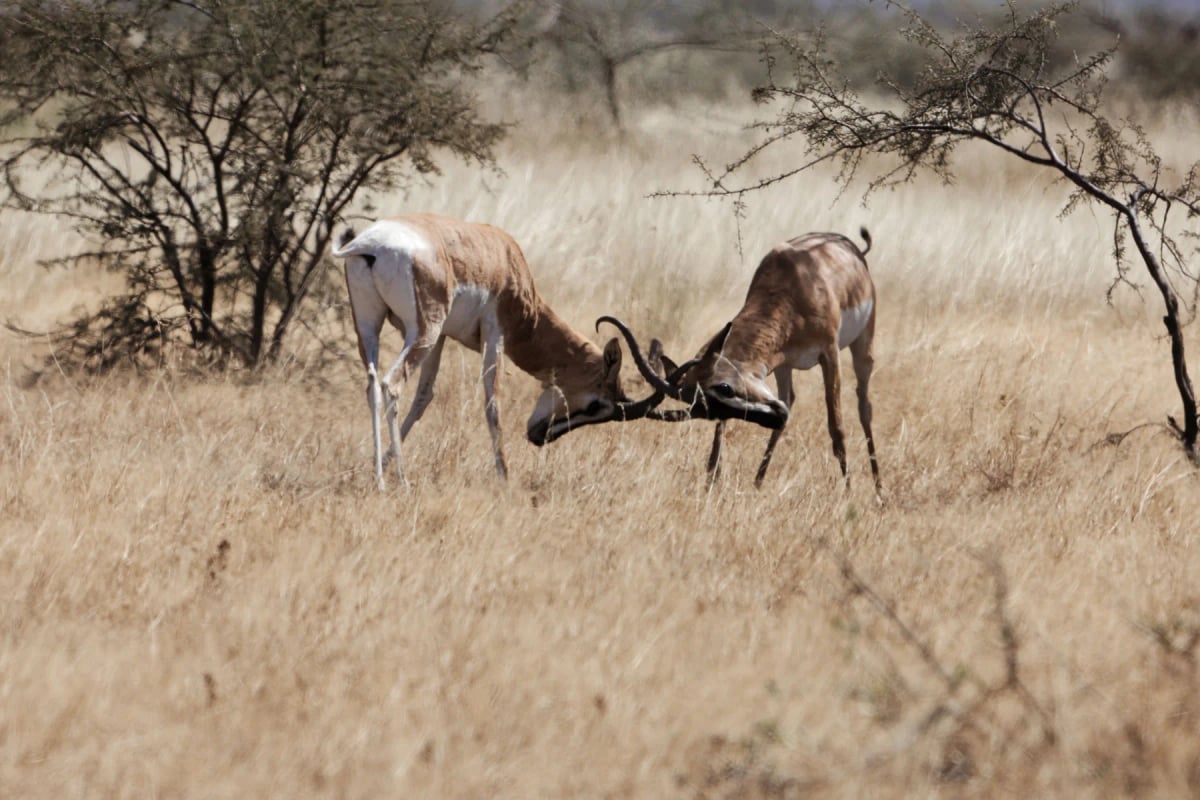
Soemmerring's gazelle is a medium-sized antelope found across the arid savannas and shrublands of the Horn of Africa. Its sandy coat, bold white rump patch, and long slender legs make it one of the more recognizable gazelles in the region. Both males and females grow ringed, lyre-shaped horns, though those of males are noticeably heavier. These gazelles form small herds and feed on grasses, leaves, and thorny shrubs. Like many desert-adapted ungulates, they extract much of their moisture from the plants they eat. Historically common across the region, their numbers have fallen sharply due to unregulated hunting, overgrazing by livestock, and the steady loss of suitable habitat. Today, populations survive in fragmented pockets across Djibouti, Eritrea, Ethiopia, Somalia, and Somaliland. The IUCN currently lists the species as Vulnerable, with the population trend continuing to decline.
Appearance
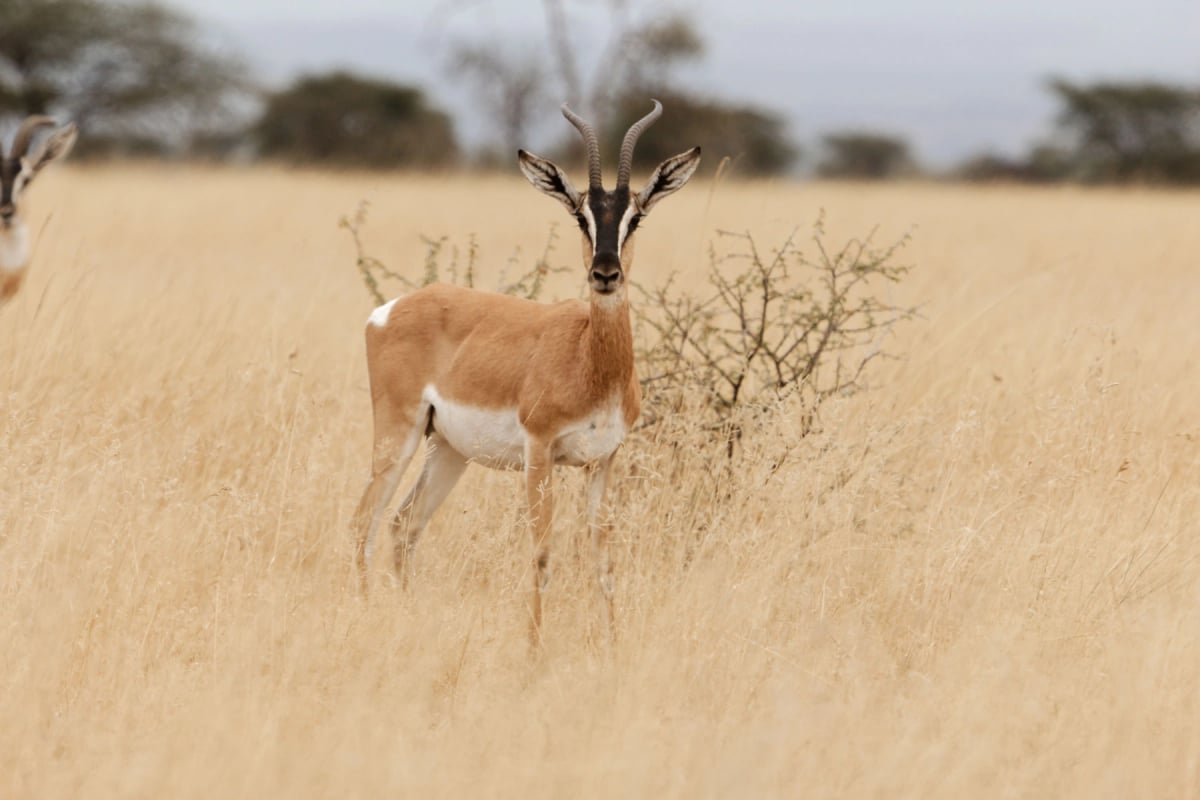
Soemmerring's gazelle is a medium-sized antelope with a coat of pale sandy brown on the back and sides, fading to white on the belly and the distinctive rump patch that makes it easy to spot at a distance. The face carries a subtle dark stripe running from the corner of each eye toward the muzzle, adding definition to its fine features. Both males and females grow ringed, lyre-shaped horns, though the male's are considerably thicker and more curved. Long, slender legs give the animal an elegant posture and allow it to cover ground quickly when threatened. Adults typically stand around 90 centimetres at the shoulder and weigh between 35 and 45 kilograms, with males generally being the larger of the two sexes.
Habitat and distribution
Across the Horn of Africa, this gazelle favors arid and semi-arid landscapes where open savanna gives way to dry shrubland and scattered acacia woodland. It tolerates harsh, rocky terrain as well as flat gravel plains, provided there is enough low vegetation to feed on. Its range spans Djibouti, Eritrea, Ethiopia, Somalia, and Somaliland, though populations today survive in fragmented pockets rather than as a continuous distribution. Elevations vary considerably across this range, and the species shows a degree of flexibility in moving between different habitat types depending on the season. Areas where livestock grazing is heavy tend to support far fewer individuals, as overgrazing strips away the plant cover these gazelles depend on throughout the year.
Diet
Feeding takes up a large part of each day for Soemmerring's gazelle. It is a mixed feeder, browsing on the leaves and stems of thorny shrubs and small trees as well as grazing on grasses when they are available. In the dry season, when grasses wither and water sources disappear, browsing becomes more important and the gazelle turns to succulents and other moisture-rich plants to stay hydrated. Like other desert-adapted ungulates, it can go for extended periods without drinking directly from a water source, extracting much of the moisture it needs from the vegetation it consumes. This ability to manage water carefully is one of the key traits that allows the species to survive in some of the harshest landscapes in Africa.
Behavior
Small herds are the norm for this species, typically made up of females and their young, sometimes accompanied by one or more adult males. Mature males can also be seen alone or in small bachelor groups outside of the breeding season. When a predator approaches, the herd's first response is to flee at speed, and these gazelles are capable of reaching impressive velocities over short distances. Vigilance is shared across the group, with individuals frequently raising their heads to scan the surroundings while others feed. The species is most active during the cooler parts of the day, resting in shade during the midday heat. Seasonal movements are common, with groups shifting their range in response to rainfall patterns and the availability of fresh vegetation.
Conservation
The IUCN lists Soemmerring's gazelle as Vulnerable, with its population continuing to decline. Unregulated hunting has historically been one of the most damaging pressures, and it remains a concern across much of the species' range today. Competition with domestic livestock for grazing land degrades the habitat these gazelles need, and ongoing conflict in parts of the Horn of Africa has made conservation efforts extremely difficult to sustain. The species has no significant presence in protected areas across much of its range, leaving most populations exposed. Captive populations exist in a number of zoos outside Africa, which provides some insurance against total loss, but protecting wild habitat and reducing hunting pressure are the most critical steps needed to give this gazelle a better chance of survival over the long term.
Where it is found
The Soemmerring's Gazelle can be found in places such as:
Researched and written by Juan Pablo. Sources: IUCN Red List, scientific literature and regional field guides. Last updated: .
Technical factsheet

Frequently Asked Questions
What does Soemmerring's gazelle eat?
Soemmerring's gazelle is a mixed feeder, meaning it both browses and grazes depending on what is available. It eats grasses, leaves, and the stems of thorny shrubs. During dry spells, it relies more heavily on succulents and moisture-rich plants to stay hydrated. This flexibility allows it to survive in landscapes where food and water can be hard to find for months at a time.
Where does Soemmerring's gazelle live?
This gazelle is found across the Horn of Africa, in Djibouti, Eritrea, Ethiopia, Somalia, and Somaliland. It favors dry savannas, open shrublands, and gravel plains where low vegetation is within easy reach. Today, populations are scattered in fragmented pockets rather than spread across a continuous range, largely because of habitat loss and pressure from livestock grazing.
Is Soemmerring's gazelle endangered?
The species is currently listed as Vulnerable on the IUCN Red List, and its population is still declining. The main threats are unregulated hunting, competition with livestock for grazing land, and habitat loss. Ongoing conflict in parts of the Horn of Africa makes it very difficult to monitor or protect these animals, and very few of them live inside protected areas.
Can Soemmerring's gazelle survive without drinking water?
Yes, for extended periods. Like other ungulates adapted to dry environments, Soemmerring's gazelle gets most of the moisture it needs directly from the plants it eats, especially succulents and leafy shrubs during the dry season. This means it can go a long time without drinking from a river or waterhole, which is a key advantage in one of the most arid regions in Africa.
Do both male and female Soemmerring's gazelles have horns?
Yes, both sexes grow horns, which is not the case in all gazelle species. The horns are ringed and curve outward in a lyre shape. Males develop horns that are noticeably thicker and more curved than those of females. Adults stand roughly 90 centimetres at the shoulder and weigh between 35 and 45 kilograms, with males tending to be the larger of the two.
How does Soemmerring's gazelle behave in a group?
This gazelle usually lives in small herds made up of females and young, sometimes joined by one or more adult males. Adult males can also roam alone or gather in small groups outside the breeding season. The herd shares the job of keeping watch, with individuals taking turns scanning for predators while others feed. The animals are most active during the cooler hours of the day.
Why is Soemmerring's gazelle important to its ecosystem?
As a grazer and browser, this gazelle helps shape vegetation in the arid landscapes it calls home. It is also an important source of food for predators such as cheetahs, lions, and large birds of prey. When gazelle populations drop, those effects ripple through the food chain. Their seasonal movements also help spread seeds across wide areas, contributing to the health of the broader ecosystem.