Rhea
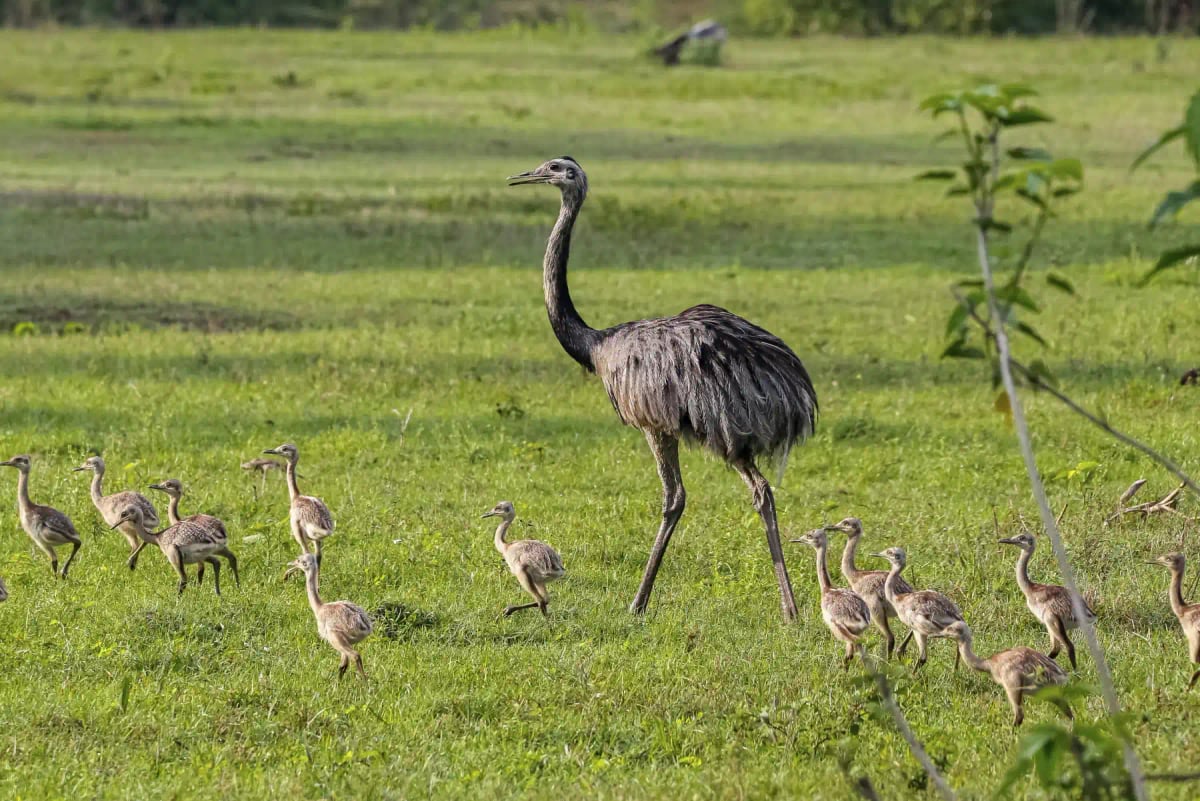
The greater rhea is the largest bird native to South America, standing up to 1.5 metres tall and weighing as much as 40 kilograms. It lives across the grasslands, open savannas and scrublands of Argentina, Brazil, Uruguay, Paraguay and Bolivia, often sharing territory with livestock on agricultural land. Though it cannot fly, it runs at speeds of up to 60 kilometres per hour, using its wings for balance and steering. It feeds on a broad range of plants, seeds, roots, fruits, insects and small vertebrates. One of its most remarkable traits is the breeding system: a male courts several females, then builds a ground nest where all of them lay their eggs. He alone incubates the clutch, which can contain 20 to 50 eggs, and raises the chicks entirely on his own for the first few months of their lives.
Habitat and distribution
Across South America, the greater rhea occupies a broad sweep of open country stretching from northeastern Brazil down through Bolivia, Paraguay, Uruguay and Argentina. It favours flat or gently rolling grasslands, dry savannas and thorny scrublands where visibility is good and it can spot danger from a distance. The Pantanal wetlands of Brazil and Bolivia also support populations, provided open ground is nearby. Over recent decades, rheas have proved surprisingly adaptable, moving into cattle ranches and soybean farms where natural vegetation has been cleared. They tolerate human activity reasonably well, and small groups are a common sight along rural roadsides throughout their range. Altitude is rarely a barrier either, with birds recorded at elevations above 2,000 metres in parts of Bolivia and northwestern Argentina.
Diet
Few large birds are as flexible in what they eat as the greater rhea. Broad, flat bills and a wide gape let it take in a remarkable variety of food, from leaves, shoots, roots and seeds to fruits, insects, lizards, frogs and even small snakes. Broadleaf plants make up the bulk of the diet during the wet season, while seeds and dry vegetation become more important in drier months. Rheas also swallow small stones to help grind tough plant material in the digestive system, a habit shared with several other large flightless birds. On farms they sometimes feed on crops, which can bring them into conflict with growers. Their appetite for locusts and other insects, however, makes them genuinely useful to agriculture across much of their range.
Reproduction
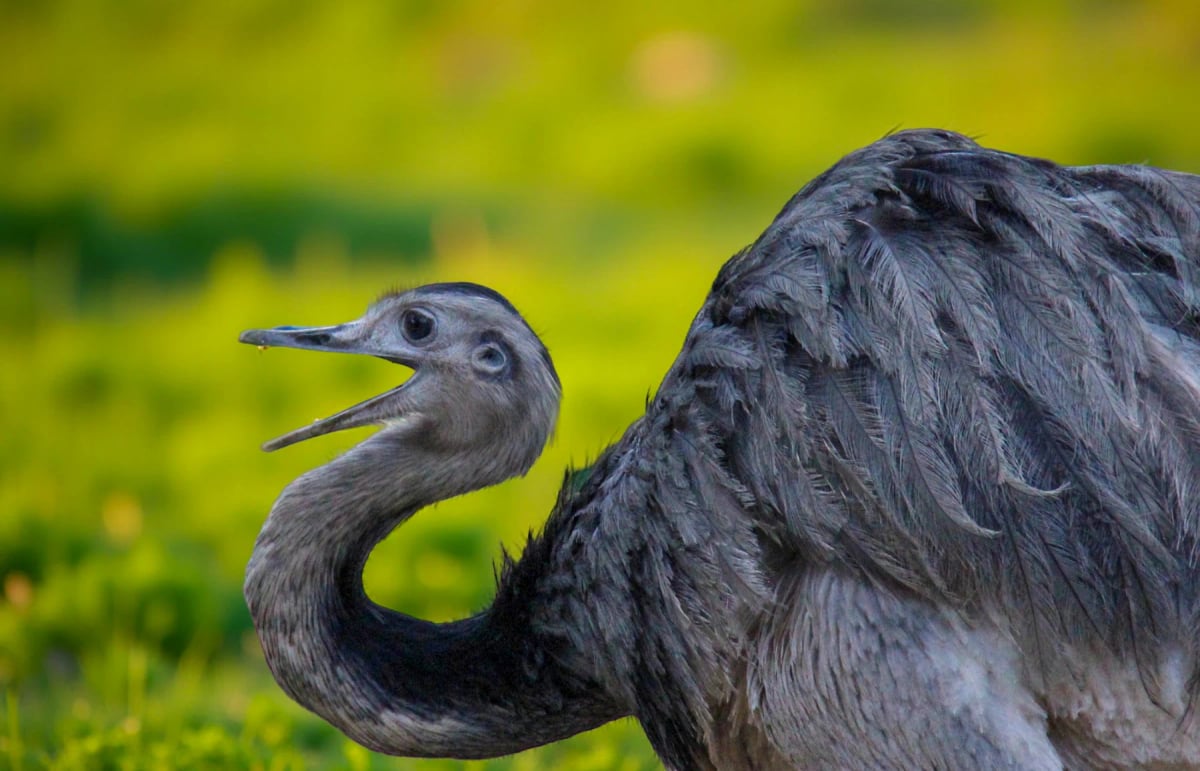
The breeding system of the greater rhea turns conventional parental roles upside down. During the breeding season, which runs roughly from August to January, a single male courts a small group of females, sometimes as many as twelve. He scrapes a shallow nest from dry ground, lining it with leaves and grass, and each female in the group deposits her eggs there over the course of several visits. The full clutch can contain anywhere from 20 to 50 eggs. Once laying is complete, the females move on and the male takes over entirely, incubating the eggs alone for about 40 days. After hatching, he keeps the chicks close and defends them fiercely from predators for up to six months, until they are large enough to fend for themselves.
Behavior
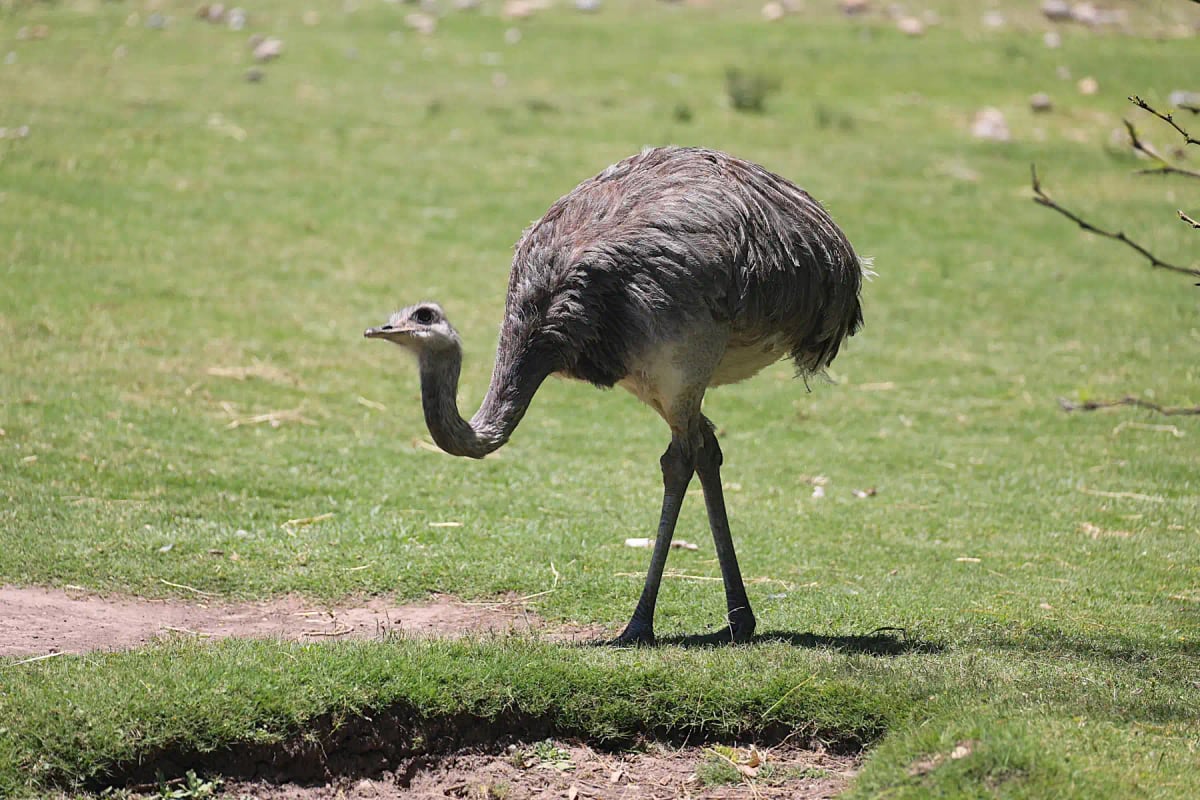
Outside the breeding season, greater rheas are sociable birds that gather in loose flocks of up to 30 individuals, and sometimes more. These groups typically include a mix of adults and young birds moving together across open ground in search of food and water. When threatened, a rhea's first response is to run. It can reach speeds of up to 60 kilometres per hour, and as it sprints, it spreads one wing and then the other to help it change direction suddenly, throwing a pursuing predator off course. Pumas, foxes and maned wolves are among the main predators of adults in the wild. Rheas also have keen eyesight and tend to stay alert at the edges of wooded areas, where their size and pale grey plumage make them easier to spot against the open landscape.
Conservation
The IUCN lists the greater rhea as Near Threatened, reflecting a population that, while still present across much of its range, has declined noticeably over time. The conversion of natural grasslands into soybean fields and cattle pastures is the single biggest pressure the species faces, shrinking the open habitat it depends on. Hunting for meat and feathers, and the collection of eggs for food, add further strain in many areas. In parts of Argentina and Brazil, rheas are also struck by vehicles on roads that cross their habitat. On the positive side, some ranchers tolerate or even welcome rheas on their land because the birds eat crop pests. Legal protections exist in all five countries where the species occurs, though enforcement varies considerably from region to region.
Researched and written by Juan Pablo. Sources: IUCN Red List, scientific literature and regional field guides. Last updated: .
Technical factsheet






Frequently Asked Questions
Can the greater rhea fly?
No, the greater rhea is completely flightless. Its wings are too small to lift a bird that can weigh up to 40 kilograms. Instead of flying, it relies on its powerful legs to escape danger, reaching speeds of up to 60 kilometres per hour. While running, it spreads its wings out to help it change direction quickly, which makes it surprisingly hard for predators to catch.
What does the greater rhea eat?
The greater rhea eats a wide variety of food. Plants, leaves, seeds, roots and fruits make up most of its diet, but it also catches insects, lizards, frogs and small snakes when the opportunity arises. On farmland, it sometimes feeds on crops, though it earns goodwill from many farmers by eating locusts and other pests. It also swallows small stones to help digest tough plant material.
Where does the greater rhea live?
The greater rhea is found across open landscapes in South America, including Argentina, Brazil, Uruguay, Paraguay and Bolivia. It prefers flat grasslands, dry savannas and scrublands where it can spot predators from far away. It has also adapted well to farmland and cattle ranches. Some populations live at elevations above 2,000 metres in parts of Bolivia and northwestern Argentina.
Is the greater rhea endangered?
The greater rhea is currently listed as Near Threatened on the IUCN Red List. Its population has declined over time, mainly because natural grasslands are being converted into soybean fields and cattle pastures. Hunting for meat and feathers, egg collection, and collisions with vehicles on rural roads also take a toll. Legal protections exist across all five countries where it lives, but enforcement is not always consistent.
How does the greater rhea raise its chicks?
The greater rhea has one of the most unusual parenting arrangements in the bird world. The male courts several females, all of whom lay their eggs in a single nest that he builds. He then incubates the clutch of up to 50 eggs entirely on his own for around 40 days. After the chicks hatch, the father guards and raises them alone for several months, protecting them fiercely from any predator that comes close.
How big is the greater rhea?
The greater rhea is the largest bird in South America and one of the biggest in the world. It can stand up to 1.5 metres tall and weigh as much as 40 kilograms. Males are generally larger than females. Despite its impressive size, it is a bird built for running rather than flying, with strong legs that can deliver a powerful kick when it feels threatened.
Do greater rheas live in groups?
Yes, outside the breeding season greater rheas are quite sociable. They gather in loose flocks that usually number around 30 birds, made up of adults and younger individuals travelling together across open ground. These groups offer safety in numbers, since more eyes make it easier to spot approaching predators. During the breeding season, however, males become territorial and separate from the flock to nest and raise their chicks.