Margay
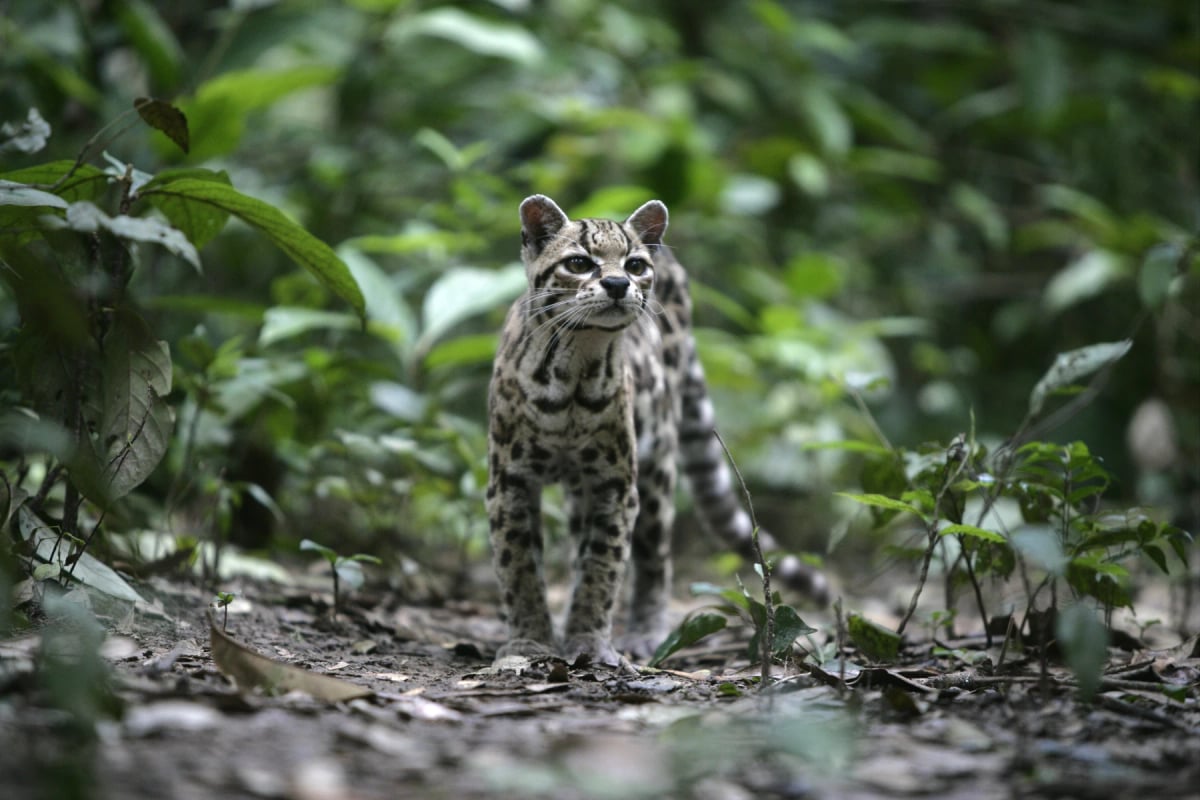
The margay (Leopardus wiedii) is a small spotted wild cat native to Central and South America, ranging from southern Mexico to northern Argentina. It looks a lot like an ocelot but is noticeably smaller, with eyes that are proportionally larger and a tail that is longer relative to its body. Adults typically weigh between 3 and 9 kg. What truly sets the margay apart is its mastery of the treetops. Its ankle joints can rotate up to 180 degrees, letting it run down vertical trunks headfirst and hang from branches by its hind feet, a skill shared by very few mammals. It is nocturnal and hunts birds, small mammals, lizards, frogs and insects in the forest canopy. Habitat loss through deforestation and pressure from the illegal pet and fur trades have caused steady population declines. The IUCN classifies it as Near Threatened.
Habitat and distribution
The margay is found across a broad stretch of the Americas, from the tropical lowlands of southern Mexico through every country in Central America and deep into South America as far as northern Argentina and Uruguay. It is above all a forest specialist. Dense tropical and subtropical rainforests are where it truly thrives, and it relies on a continuous canopy to move, hunt, and shelter. It also turns up in cloud forests and areas of secondary growth, provided enough tree cover remains. Margays are rarely found far from forest, and their presence in any given area is closely tied to how intact the woodland is. Open land and heavily degraded habitats offer little of what this cat needs to survive.
Diet
Hunting takes place almost entirely at night, when the margay moves quietly through the canopy in search of a meal. Small mammals such as squirrels and opossums make up a large part of its diet, alongside birds, lizards, tree frogs, and insects. Studies have also recorded margays eating fruit on occasion, which may supplement their diet during lean periods. Because they hunt so much in the trees, margays can reach prey that ground-level predators simply cannot. Researchers have even observed them mimicking the calls of pied tamarins to lure curious monkeys closer, a level of tactical thinking that is extremely rare among wild cats and shows just how resourceful this species can be.
Behavior
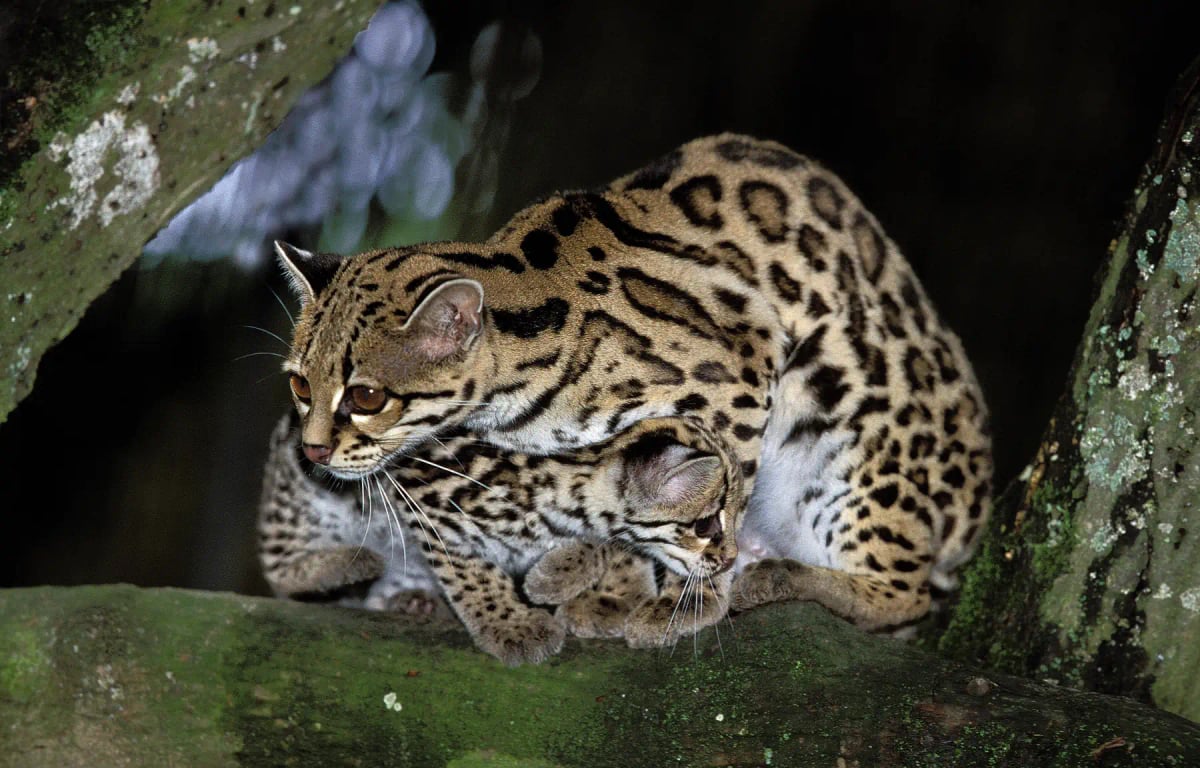
Like most wild cats, margays lead solitary lives. Adults hold territories that they mark with scent, and encounters between individuals outside of mating are uncommon. Activity peaks after dark, and during the day margays typically rest on branches or in dense vegetation high above the ground. They are among the most arboreal of all wild cats in the Americas, spending far more time in the trees than relatives such as the ocelot. Females give birth to a single kitten after a gestation period of around 80 days. The kitten grows slowly compared to other small cats, and mothers invest a great deal of care before the young margay is ready to live independently. Home ranges vary considerably depending on the quality and size of the surrounding forest.
Adaptations
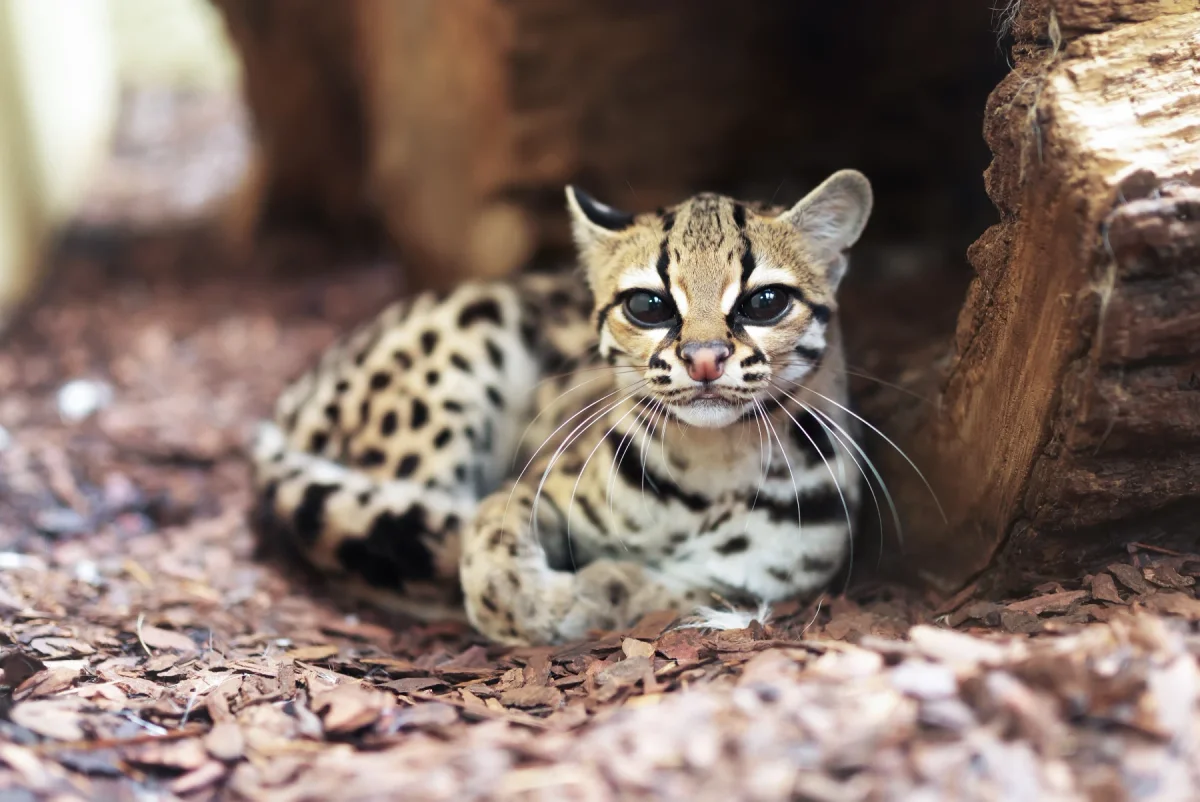
Few mammals are as well built for life in the trees as the margay. Its ankle joints can rotate up to 180 degrees, giving it the ability to descend vertical trunks headfirst and to hang from branches using only its hind feet. This places it in very select company: among wild cats, only the clouded leopard shares a similar ability. The margay also has broad, soft paw pads that grip bark effectively, and a long tail that helps with balance while moving through the canopy. Its large eyes are well suited to seeing in low light, which supports its nocturnal lifestyle. Proportionally, its eyes are among the largest of any cat relative to body size, a clear sign of how important good night vision is to this species.
Conservation
The IUCN classifies the margay as Near Threatened, reflecting a population that has declined steadily and continues to face serious pressure. Deforestation is the biggest problem. As tropical forests are cleared for agriculture, cattle ranching, and urban development, margays lose both the habitat they need and the prey that sustains them. The illegal wildlife trade has also taken a toll: for decades, margays were hunted heavily for their fur, and some individuals are still captured for the exotic pet market. The species receives legal protection across most of its range, and it appears in Appendix I of CITES, which bans international commercial trade. Conservation efforts focused on protecting large areas of intact forest are the most important factor for the survival of this species over the long term.
Where it is found
The Margay can be found in places such as:
Researched and written by Juan Pablo. Sources: IUCN Red List, scientific literature and regional field guides. Last updated: .
Technical factsheet



Frequently Asked Questions
What does a margay eat?
Margays hunt mostly at night and feed on small mammals like squirrels and opossums, as well as birds, lizards, tree frogs, and insects. They do most of their hunting up in the trees rather than on the ground. They have even been observed mimicking the calls of monkeys to lure them closer, which is a remarkably clever strategy that very few wild cats are known to use.
Where does the margay live?
The margay is found from southern Mexico through all of Central America and across much of South America, reaching as far as northern Argentina and Uruguay. It lives almost exclusively in forests, preferring dense tropical and subtropical rainforests with a solid canopy. It also appears in cloud forests and areas of secondary growth. Open land and heavily degraded habitats are generally unsuitable for this species.
Is the margay endangered?
The margay is classified as Near Threatened by the IUCN. Its population has been declining steadily, mainly due to deforestation and the illegal wildlife trade. For many years it was hunted for its fur, and some individuals are still captured for the exotic pet market. It is protected by law across most of its range and listed in Appendix I of CITES, which prohibits international commercial trade.
Can a margay climb down trees headfirst?
Yes, and this is one of the most remarkable things about the margay. Its ankle joints can rotate up to 180 degrees, which allows it to descend vertical trunks headfirst and even hang from branches using only its hind feet. Among wild cats, only the clouded leopard can do something similar. This ability makes the margay one of the most skilled climbers of any cat species in the world.
How big is a margay compared to an ocelot?
The margay looks very similar to an ocelot but is noticeably smaller. Adults typically weigh between 3 and 9 kg, while ocelots can reach around 16 kg. The margay also has proportionally larger eyes and a longer tail relative to its body size. These differences are not just about looks. The margay's body is built for life in the trees, whereas the ocelot spends much more time on the ground.
How does the margay behave in the wild?
Margays are solitary and nocturnal. They spend their days resting on branches or hidden in dense vegetation high up in the trees, and they become active after dark. Adults mark their territories with scent and rarely interact outside of mating season. Females raise a single kitten at a time, investing considerable care before the young cat is ready to live on its own. They are among the most tree-dwelling cats in the Americas.