Raccoon
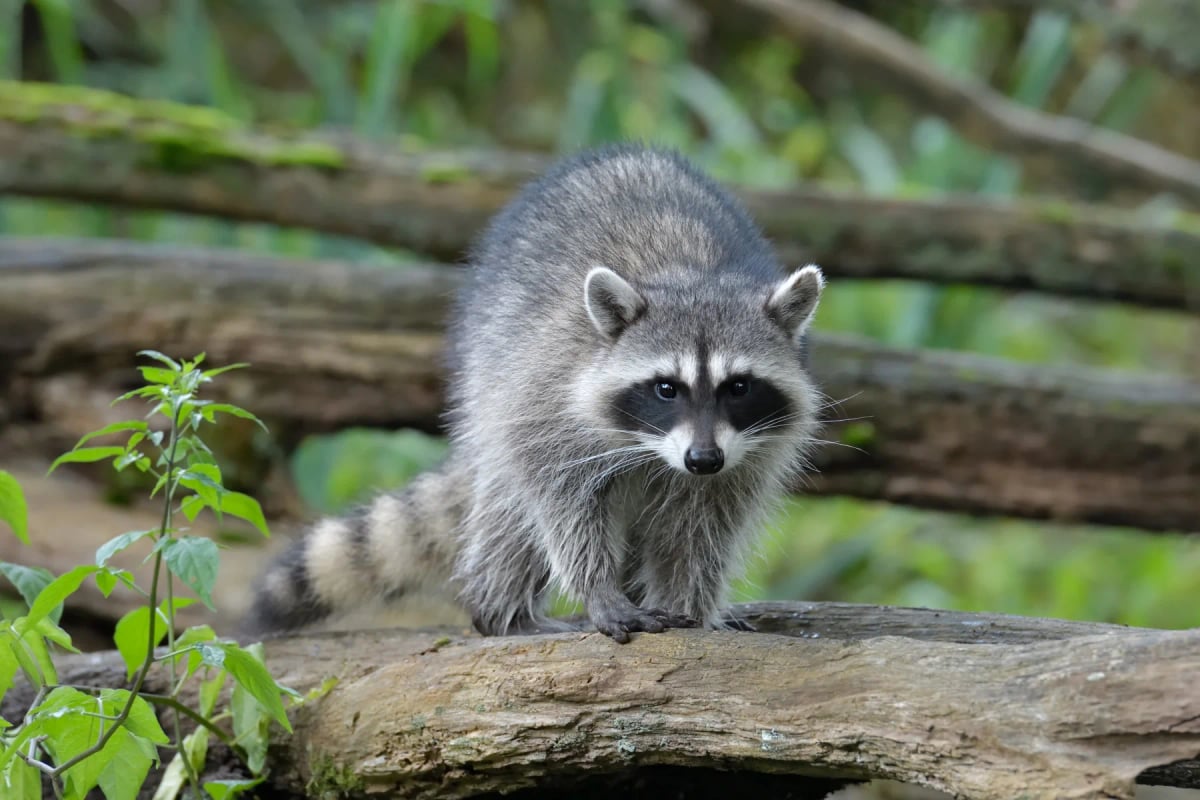
The raccoon is a medium-sized mammal native to North and Central America, instantly recognizable by the black mask across its face and the alternating dark and pale rings along its bushy tail. It thrives in forests, wetlands, and cities alike, adjusting its diet to whatever is available, from berries and crayfish to insects and food scraps left by people. Among its most distinctive features are its front paws, which have long, nimble fingers that allow it to feel for hidden food in water and to pry open containers with surprising skill. Raccoons do not hibernate, though they may spend extended cold spells resting in dens. Originally confined to the Americas, they were introduced to parts of Europe and Japan during the twentieth century and have since built substantial populations in those regions, where they are now managed as an invasive species.
Habitat and distribution
Raccoons are native to a broad stretch of the Americas, from the southern edge of Canada down through the United States, Mexico, and Central America all the way to Panama. They are remarkably flexible in where they live, occupying deciduous forests, coastal marshes, prairie edges, and city neighborhoods with equal ease. Access to water is one consistent preference: raccoons tend to settle near streams, ponds, and wetlands. During the twentieth century, populations were deliberately introduced to parts of Europe, including Germany and France, as well as to Japan, where they were brought over as exotic pets. Those animals and their descendants spread widely, and raccoons are now established across much of Central Europe and parts of the Caucasus, where wildlife managers treat them as an invasive species.
Diet
Few animals eat as wide a variety of food as the raccoon. Its diet shifts with the seasons and whatever the local environment offers. In spring and summer it hunts crayfish, frogs, fish, and insects along stream banks, while also taking bird eggs when it can reach them. Come autumn, wild berries, acorns, and other plant matter become a major part of the menu, helping the animal build up fat reserves before winter. In cities and suburbs, raccoons readily raid rubbish bins and compost piles, which is a key reason they thrive in urban areas. Their sensitive front paws allow them to feel for prey hidden under stones or in shallow water, giving them an advantage that purely vision-dependent foragers lack.
Behavior
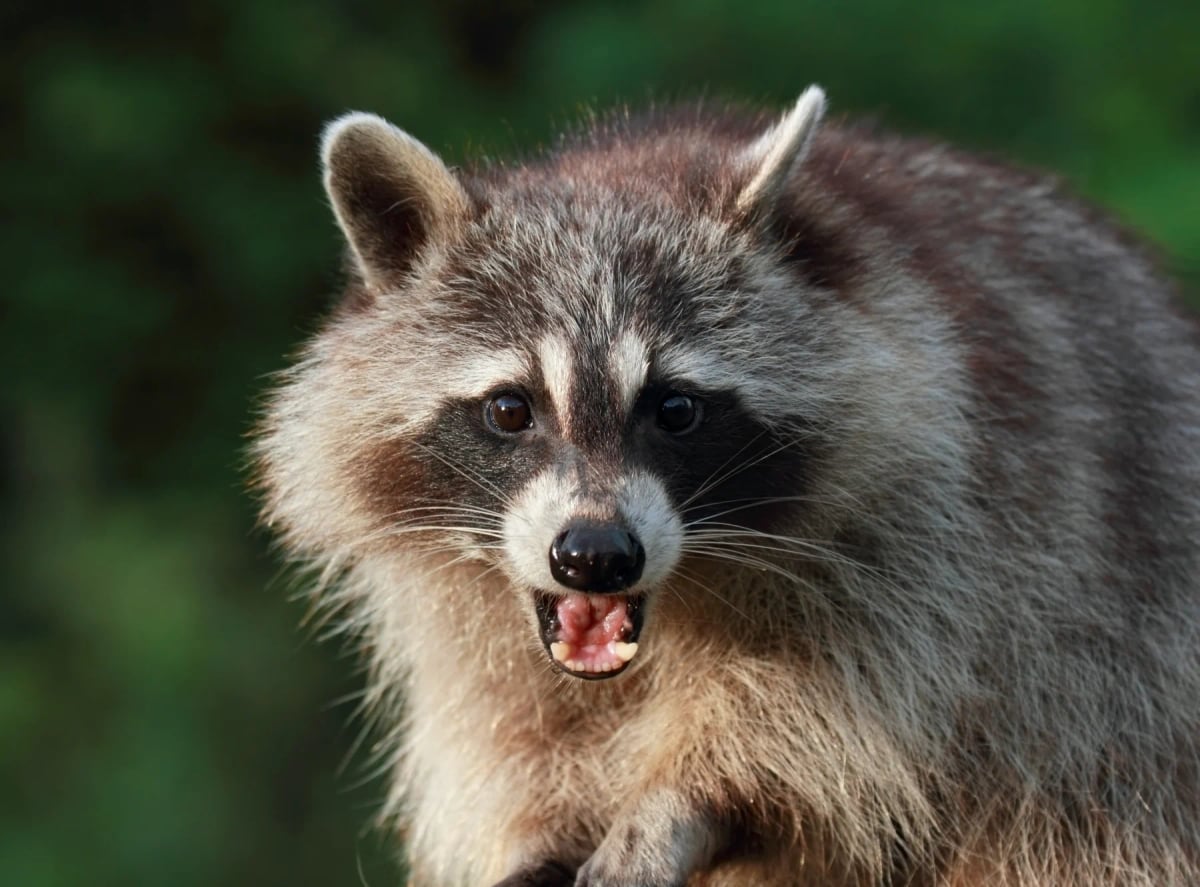
Mostly active after dark, raccoons spend their nights foraging across home ranges that can cover several kilometers depending on the availability of food. They are generally solitary, though females with young and groups of males sometimes share overlapping territories without serious conflict. Their front paws are among the most sensitive of any mammal, packed with nerve endings that sharpen when wet, allowing them to identify objects by touch alone. Den sites vary widely: tree hollows, rock crevices, crawl spaces under buildings, and storm drains all serve as resting places. Raccoons do not hibernate, but during stretches of very cold weather they may hole up in a den for days or even weeks at a time, living off the fat they stored in autumn.
Reproduction
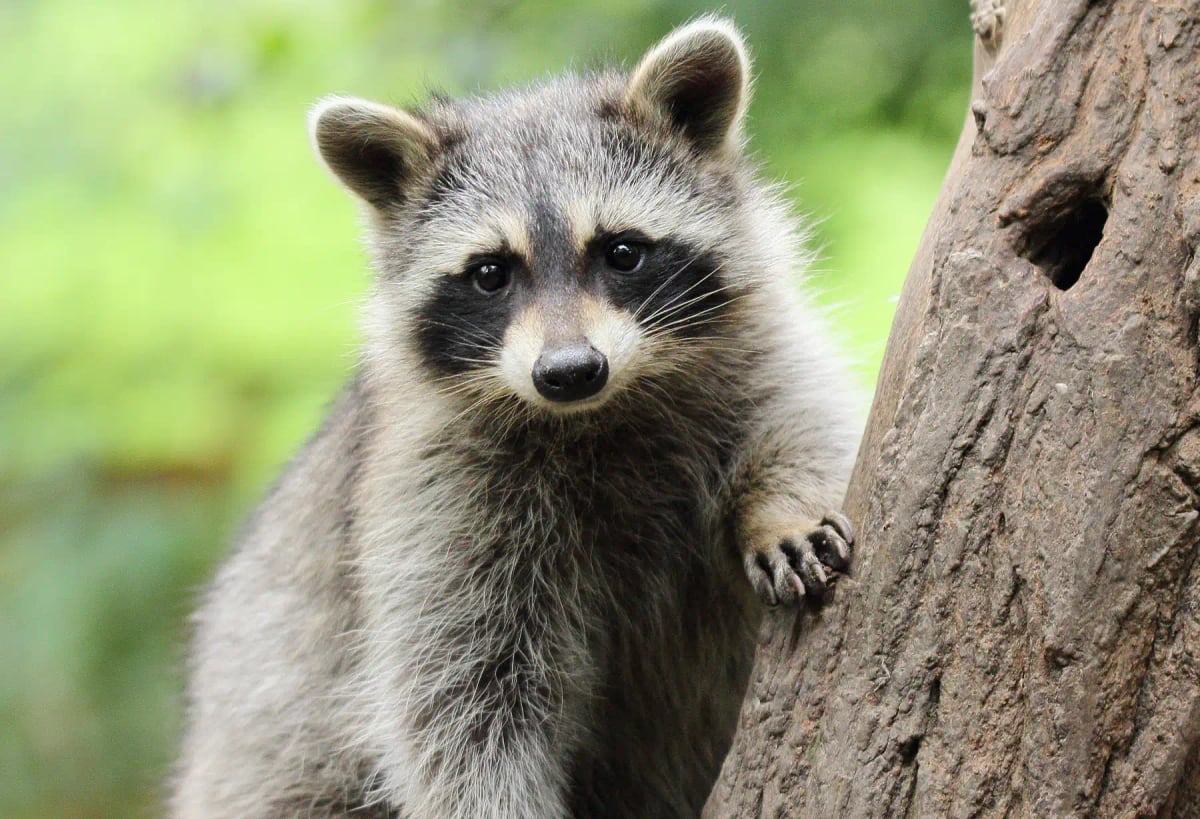
Mating takes place mainly between January and March, with the exact timing depending on latitude and local climate. After a gestation period of around 63 days, the female gives birth to a litter that typically contains two to five kits. The young are born with their eyes closed and weigh only about 75 grams each. Their eyes open at around three weeks, and they begin exploring outside the den at about two months old. The mother raises the kits entirely on her own, teaching them to forage through the summer and into early autumn. By the time they are four to five months old, the young raccoons are largely independent, though siblings often stay together through their first winter before going their separate ways.
Conservation
The IUCN lists the raccoon as Least Concern, a reflection of its large and stable population across its native range. Numbers have actually grown in many areas over recent decades, aided by the species' ability to exploit agricultural land and urban food sources. Hunting and trapping are regulated in parts of North America, both for the fur trade and to manage populations near human settlements. Outside its native range, the situation is very different. In Germany, France, Japan, and several other countries, raccoons are classified as invasive, and authorities actively work to limit their spread. Research in Europe has documented the damage they can cause to ground-nesting birds, native crayfish populations, and fruit crops, making control efforts an ongoing priority in those regions.
Where it is found
The Raccoon can be found in places such as:
Researched and written by Juan Pablo. Sources: IUCN Red List, scientific literature and regional field guides. Last updated: .
Technical factsheet







Frequently Asked Questions
What do raccoons eat?
Raccoons eat almost anything they can find. Their diet includes crayfish, frogs, insects, bird eggs, berries, acorns, and fruit. In cities, they are well known for raiding rubbish bins. Their remarkably sensitive front paws let them feel for food under rocks and in shallow water, which makes them effective hunters in a wide range of environments. This flexibility is a big part of why they do so well nearly everywhere they live.
Where do raccoons live?
Raccoons are native to North and Central America, from southern Canada down to Panama. They adapt to forests, wetlands, farmland, and cities, as long as water is nearby. During the twentieth century they were introduced to parts of Europe and Japan, where they have since spread widely. Today, countries like Germany, France, and Japan have established populations that are managed as an invasive species.
Are raccoons dangerous to people?
Healthy raccoons generally avoid direct contact with people and are not considered dangerous. However, they can carry rabies and a roundworm called Baylisascaris procyonis, which poses a health risk if their feces are handled without care. A raccoon that behaves strangely or approaches people without fear during the day should be treated with caution and reported to local wildlife authorities.
Why do raccoons wash their food?
Raccoons do not actually wash their food to clean it. What looks like washing is really a way of exploring it using touch. Their front paws become even more sensitive when wet, so dipping food in water helps them gather more information about what they are about to eat. This behavior is most common near streams or ponds and is one of the most distinctive and recognizable things raccoons do.
Do raccoons hibernate in winter?
Raccoons do not hibernate. When temperatures drop, they may spend several days or even a few weeks resting in a den, living off the fat they built up during autumn. But they do not enter the deep sleep associated with true hibernation. On milder winter days, they will come out to forage. This behavior is sometimes called torpor, and it helps them survive cold spells without burning too much energy.
How smart are raccoons?
Raccoons are considered highly intelligent animals. Studies have shown they can remember solutions to problems for up to three years. They are capable of opening latches, unscrewing lids, and figuring out how to access food that has been locked away. Much of this ability comes from their front paws, which give them an exceptionally refined sense of touch, combined with a curiosity that drives them to investigate and interact with their surroundings.
How long do raccoons live?
In the wild, most raccoons live between two and three years, largely due to hunting, traffic, and disease. Those that survive their first year can reach five years or more, and some individuals in areas with fewer threats have lived past ten years. In captivity, raccoons commonly live into their mid-teens. Their survival over the long term depends heavily on local conditions, food availability, and how much pressure they face from human activity.